



Best Way to Learn Turkish? TurkishClass101 In-Depth Review With Pros and Cons

Full disclosure: This post contains affiliate links. ?
What is TurkishClass101?
TurkishClass101 is part of the Innovative Language family of courses, built around structured audio and video lessons for learning Turkish from absolute beginner to advanced. Audio and video lessons taught by native speakers are its main feature.
- what it’s for:
- Learning Turkish from scratch, building a beginner-to-intermediate pathway, pronunciation and vowel harmony practice, adding a personal teacher, studying on the go via the app
- languages:
- Turkish
- level:
- Absolute Beginner to Advanced
+ PROS
- Explicit teaching of vowel harmony and the extra alphabet letters
- Three audio tracks plus line-by-line playback for pronunciation
- Well-built beginner-to-intermediate pathway
- Loads of lessons for the price
- Downloadable PDF lesson notes; cost-effective 1-on-1 teacher option
- CONS
- Upper Intermediate catalogue is noticeably thinner
- Dialogues stay short even at advanced level
- Flashcards show words in isolation
- No gamification
- The mobile app doesn’t have all the best features
Quick Fire Review
A well-built, affordable route through Turkish’s genuine hard parts, thinner only at the upper levels
Turkish has a reputation for being one of those languages people quietly rule out before they’ve even tried it. It sits in FSI Category III, the US State Department’s official “hard” tier, and their figure works out to just over 1,000 hours of study for a diplomat to reach working fluency. That puts it in the same bracket as Greek and Vietnamese, well past French or Spanish but nowhere near the brutal Category IV languages like Arabic or Japanese.
Our team at Fluent in 3 Months has used Innovative Language’s courses for years across different language missions, so when it came time to look properly at Turkish, TurkishClass101 was the obvious place to start. The question I wanted answered was a narrow one: does it handle the specific things that make Turkish hard, and does it handle them well enough to be worth your money?
What Makes Turkish Different
Turkish isn’t hard the way people assume. It’s not tonal, its spelling doesn’t fight you, and it doesn’t have the grammatical gender that trips up learners of French or German. What makes it hard is a small set of structural quirks that don’t exist in English at all, so there’s nothing to map them onto.
Agglutination. Turkish builds words by stacking suffixes onto a root in a fixed order, and each suffix adds a whole chunk of meaning. A single word can carry what English needs a full clause to say. Take evlenecekmişsiniz. Break it down and you get ev (home), plus -len (a verb-forming suffix that turns it into “to get married”), plus -ecek (future tense), plus -miş (a reported or inferential marker, roughly “apparently”), plus -siniz (you, plural or formal). Put it together and you get “apparently you’re going to get married.” That’s one word doing the work of a full English sentence. Turkish also has a famous party-trick word, muvaffakiyetsizleştiricileştiriveremeyebileceklerimizdenmişsinizcesine, which gets wheeled out on forums to show off the system. You’ll never need to say it; it’s a showcase of the grammar’s logical limits, not conversational Turkish.
Vowel harmony. Suffix vowels have to match the vowel that came before them, so the same suffix changes shape depending on the word it’s attached to. Turkish vowels split into two families, front (e, i, ö, ü) and back (a, ı, o, u), and a suffix has to pick a vowel from the same family as the word’s last vowel. The plural suffix is a clean example: kedi (cat) becomes kediler (cats), but dakika (minute) becomes dakikalar (minutes). Same suffix, different vowel, because kedi‘s last vowel is front and dakika‘s is back. You’ll see it again with köprü → köprüler (bridges) against telefon → telefonlar (telephones). Once the pattern clicks, it stops feeling arbitrary and starts to feel logical, but it takes deliberate practice to get there.
Verb-last word order. Turkish defaults to subject-object-verb, so the verb lands at the end of the sentence rather than in the middle the way it does in English. Because Turkish marks grammatical roles with suffixes rather than relying purely on word order, that order can shift around for emphasis without the sentence becoming ambiguous. Brilliant for native speakers who want flexibility, less so for a beginner used to English’s fairly rigid subject-verb-object habit, since it means holding a sentence in your head and waiting for the verb to land before you know quite what’s being said.
It’s more approachable than its reputation suggests. Most warnings about Turkish leave out how forgiving the rest of it is. It’s written in the Latin alphabet, so there’s no new script to learn, just six extra letters beyond the ones English speakers already know: ı/İ, ş, ğ, ç, ö and ü. There’s no grammatical gender at all, so no need to memorise whether a noun is masculine or feminine. There’s no word for “the,” so that’s one less thing to juggle. And the spelling is largely phonetic; once you know what sound each letter makes, you can read almost any word aloud correctly on the first try. Once you’re past the agglutination hump, Turkish is genuinely one of the more forgiving languages to read and pronounce.
Getting Started
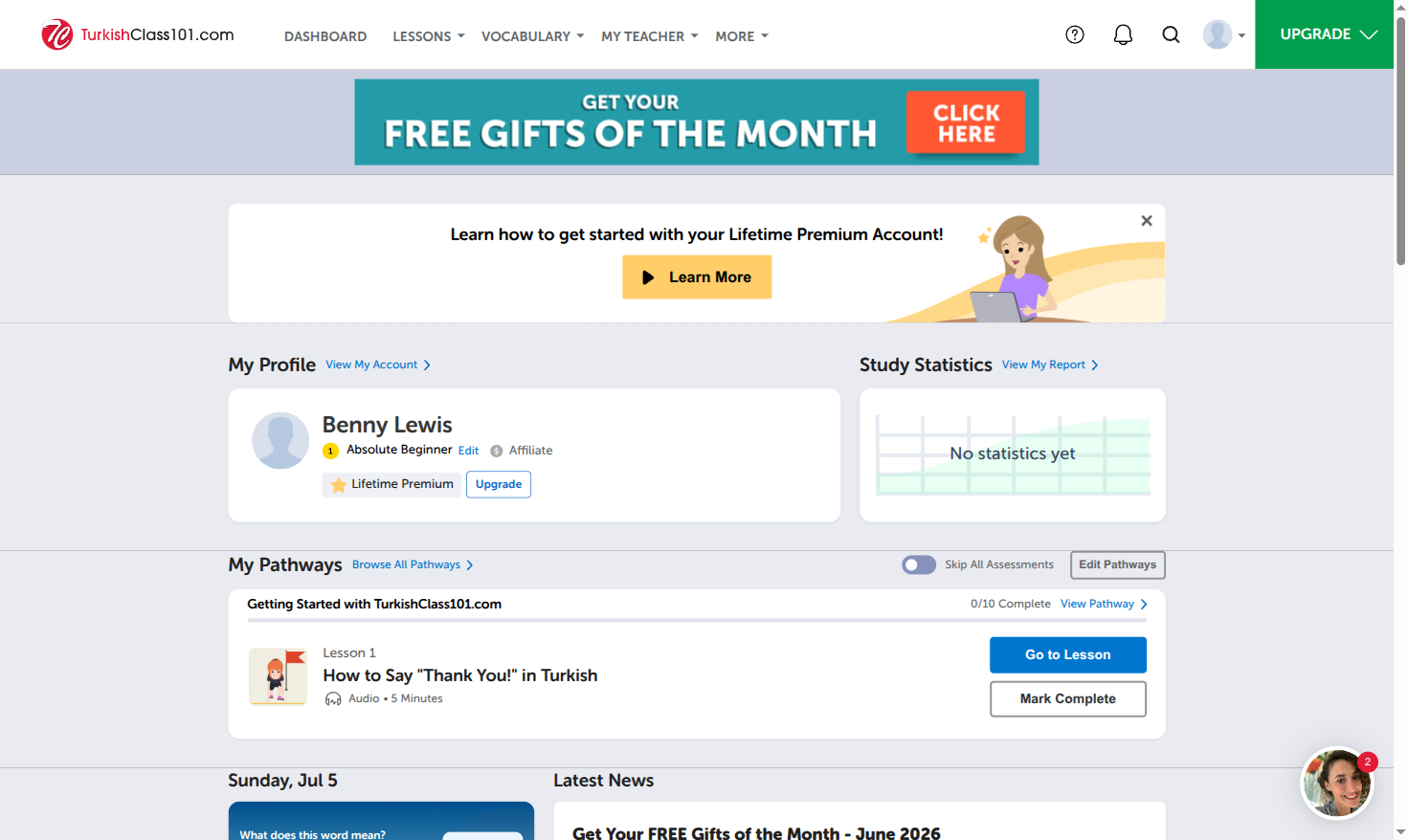
Signing up costs nothing. You create a free lifetime account with just an email address, no card required, and pick your starting level from Absolute Beginner, Beginner, Intermediate, Upper Intermediate or Advanced. If you’re not sure where you fit, you can change it later without losing anything. Once you’ve picked a level, TurkishClass101 builds you a guided learning path (they call it a pathway) that strings lessons together in a rough order so you’re not left guessing what to study next.
The Alphabet and Pronunciation
Because Turkish uses the Latin alphabet, TurkishClass101 doesn’t need to teach you a whole new writing system, and it puts that saved time into pronunciation instead. There’s a dedicated alphabet page covering all 29 letters with an English-analogue sound for each and a sample word to anchor it. The six letters that don’t exist in English get proper individual treatment: ğ has no sound of its own, it just lengthens the vowel before it, as in yoğurt; ı sounds roughly like the “a” in “about,” as in pahalı (expensive); ş is a straightforward “sh” sound, as in şerefe (cheers). There’s also coverage of the circumflex accents (â, î, û) that show up in loanwords, which is a nice touch most beginner courses skip entirely.
Beyond the alphabet page, there are dedicated pronunciation lessons like “Pronunciation of Consonants” and “Turkish Pronunciation Made Easy,” and vowel harmony gets its own explicit treatment in the grammar bank rather than being left for you to notice on your own. Every lesson comes with three separate audio tracks (a full version, a review version and a dialogue-only version), plus a clickable line-by-line audio tool that lets you play back individual sentences at a slower speed, and a built-in voice recorder so you can compare your own pronunciation against the native speaker’s. Learners on Turkish forums often say this course is what made the suffix system finally click for them instead of intimidating them, which lines up with how deliberately it’s all built in.
Inside a Lesson
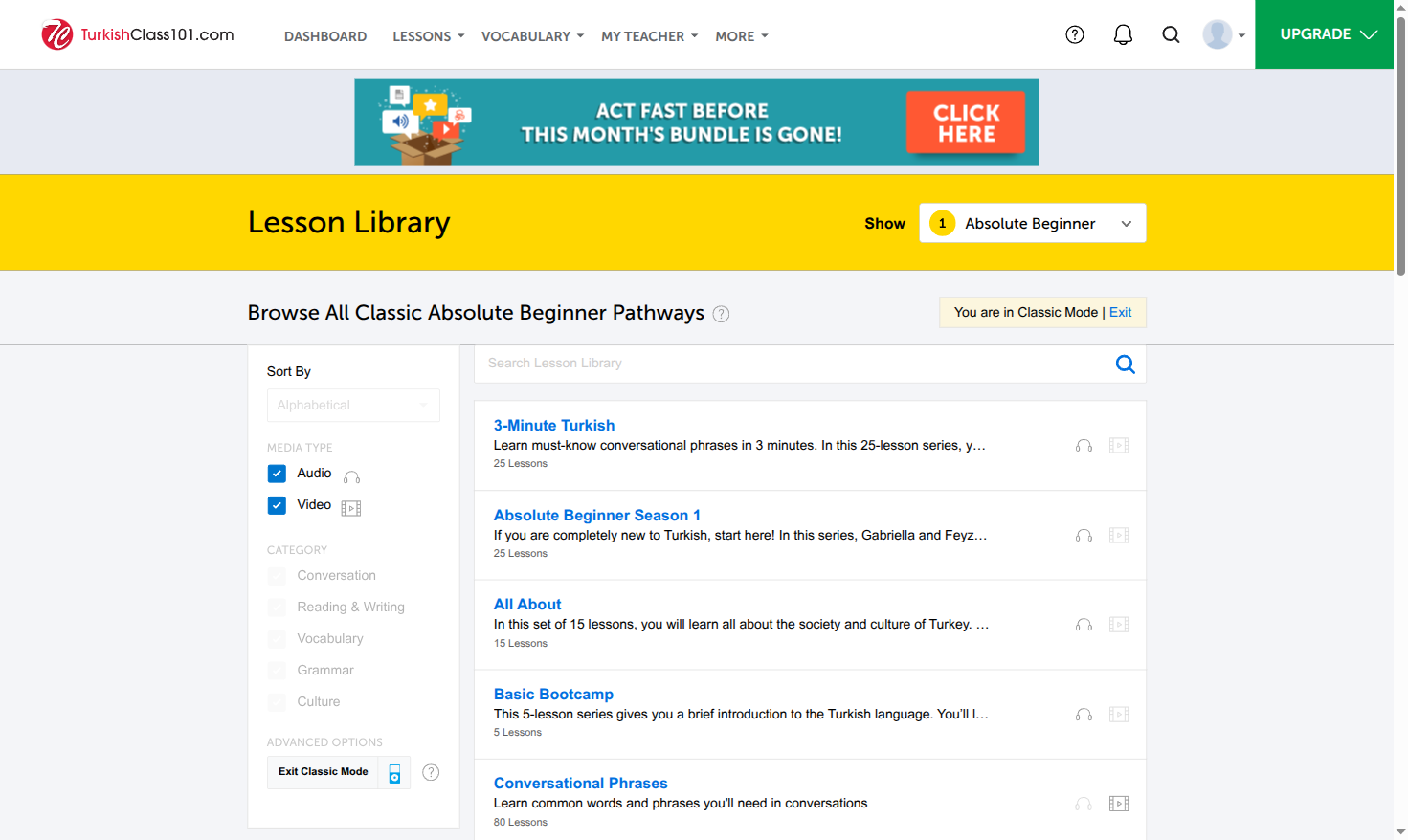
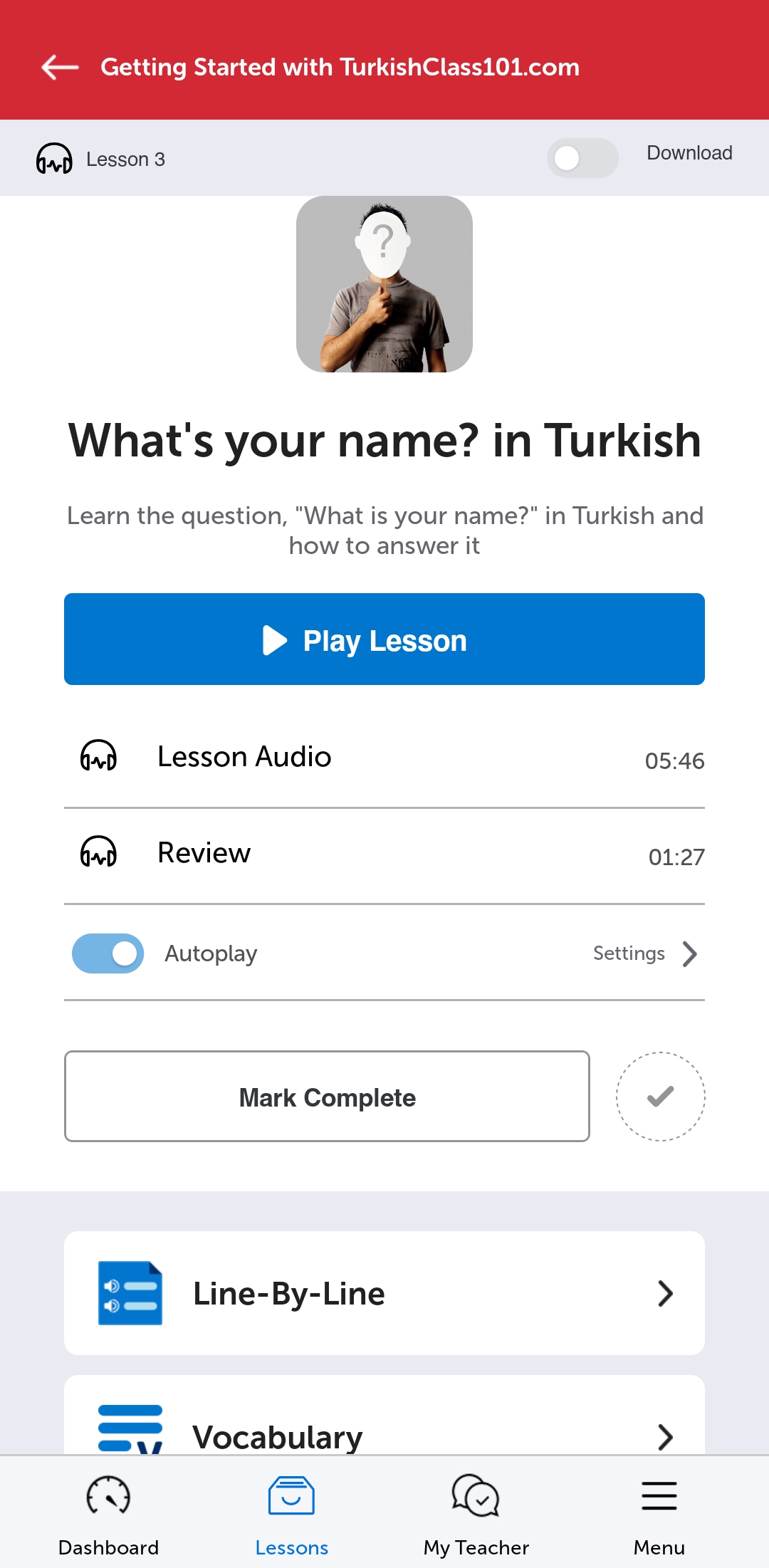
Most lessons run 10 to 15 minutes, with some shorter series available for quick sessions. The format is consistent: a short scripted dialogue in Turkish, a breakdown of that dialogue line by line, a vocabulary list pulled from it, a grammar point explained in plain English, and usually a cultural note tied to the topic. You can listen to the full audio, the dialogue on its own, or individual lines at a slower pace, and everything comes with a downloadable PDF of the lesson notes so you can study away from the screen. Higher levels layer in more natural back-and-forth between the hosts, which is useful listening practice even when the conversation wanders off-script for a moment.
Study Tools
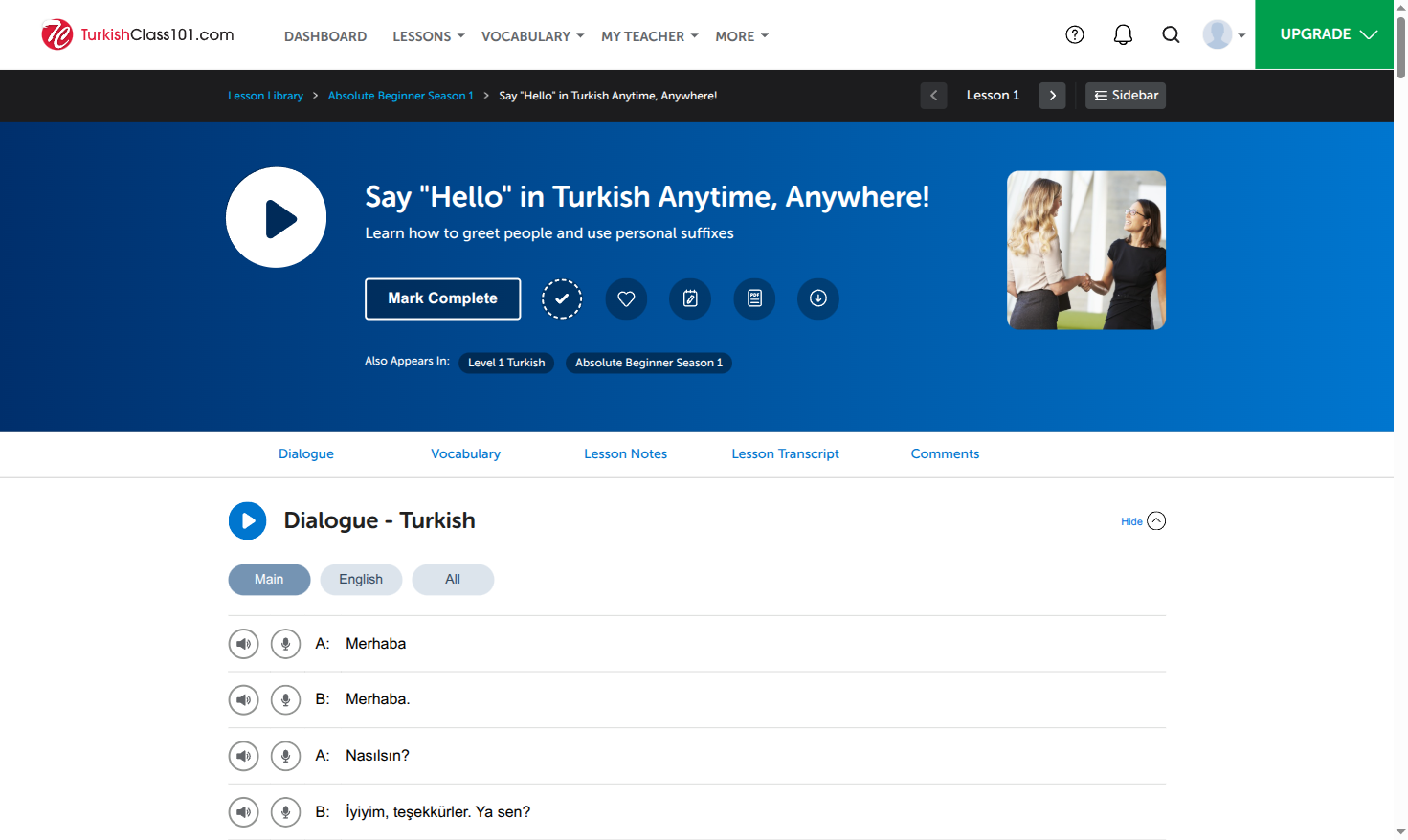
Premium is where TurkishClass101 turns from “listen and read” into something closer to an active study system. There’s a flashcard deck with spaced repetition, a word bank for saving vocabulary as you go, a grammar bank collecting every point covered across the pathway, assessments to check what’s actually sticking, the voice recorder mentioned earlier for pronunciation practice, and access to a curated list of 2,000 core Turkish words. It’s a properly useful set of tools, though the flashcards show words in isolation rather than in the sentence context they came from, so you’ll want a second tool like Anki if you prefer contextual recall over rote memorisation.
The App
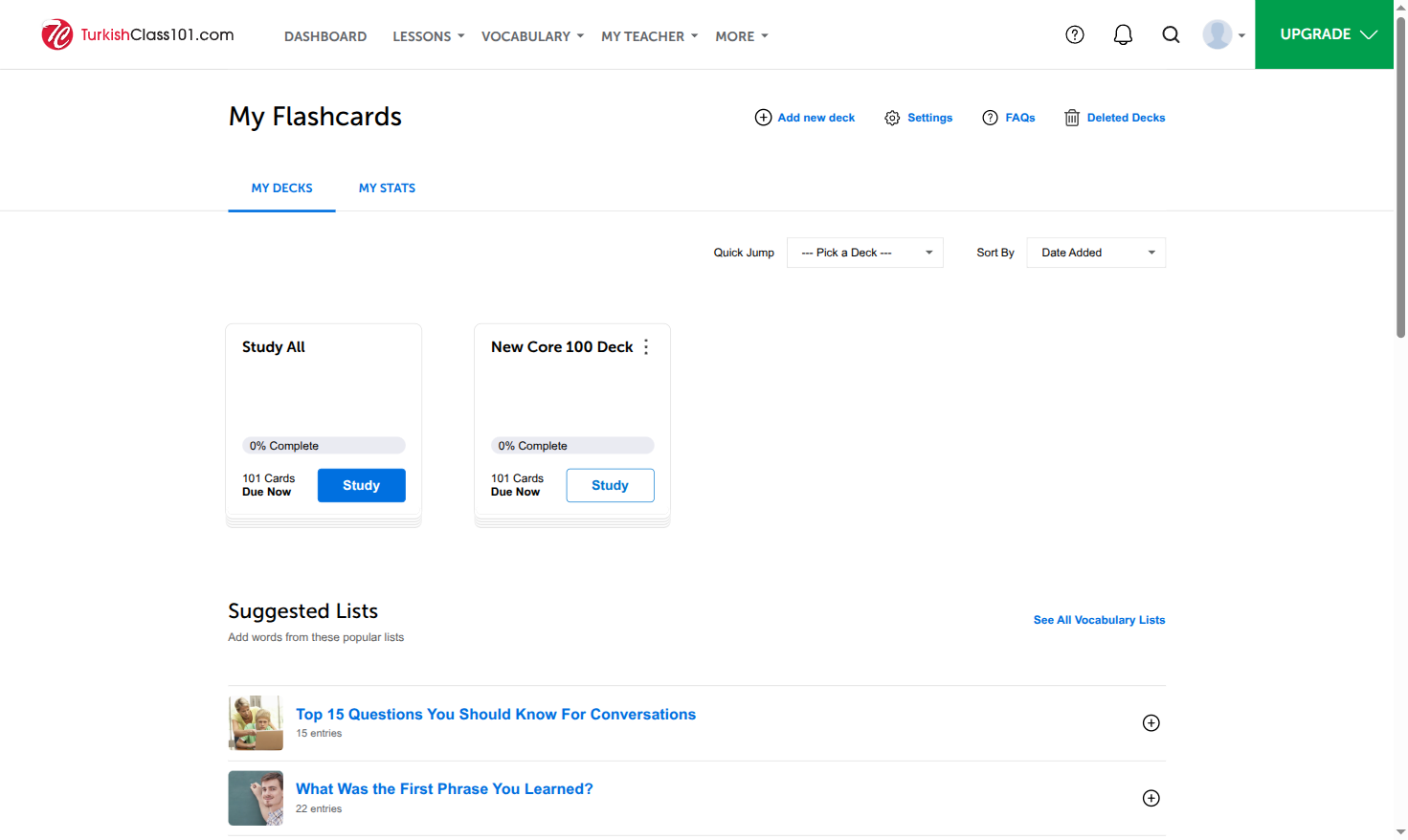
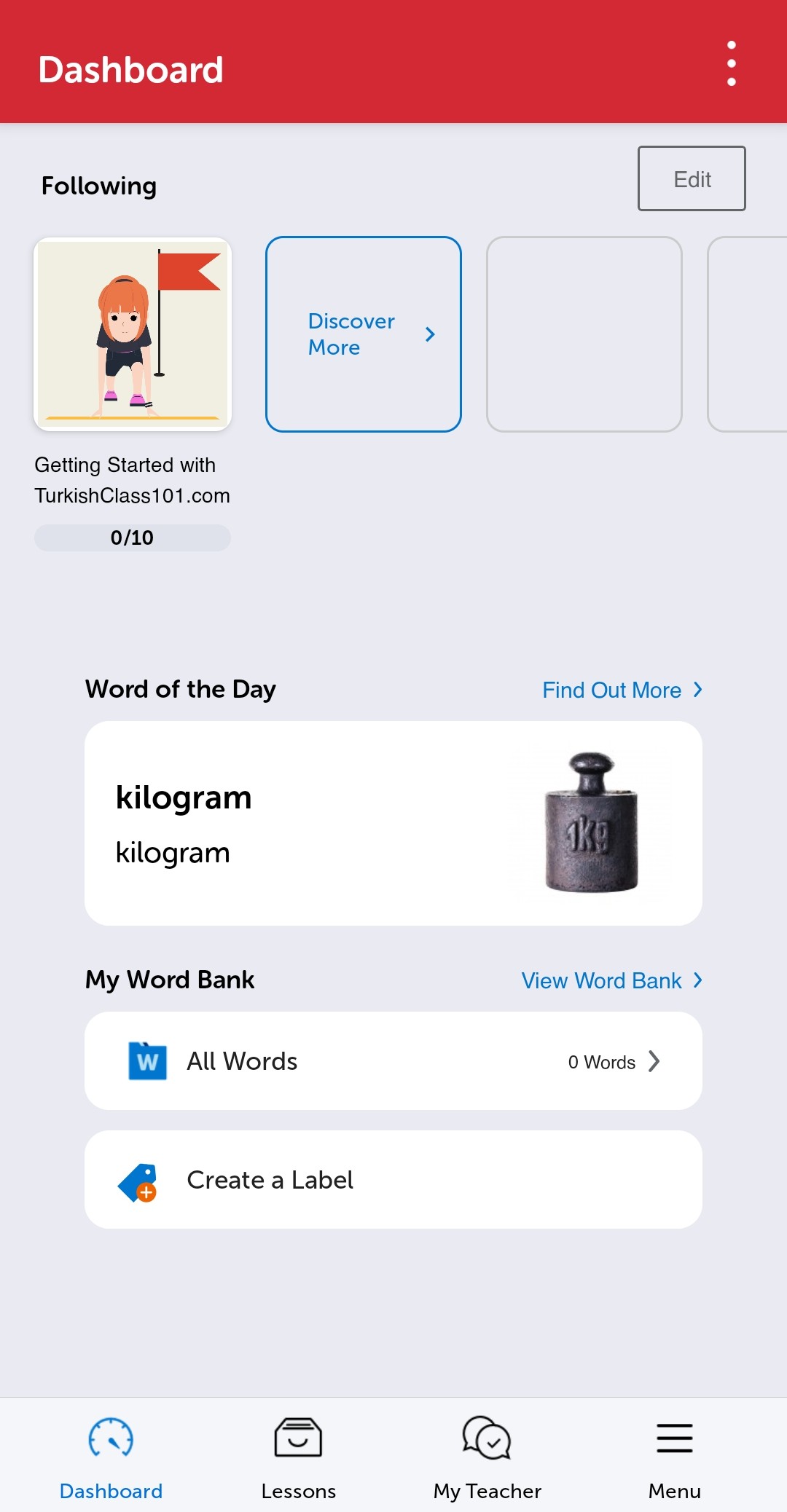
The Innovative Language app carries your account across devices, and anything you complete on the website or the app stays in sync either way. It’s noticeably lighter and more streamlined than the desktop site, which is nice for quick sessions on the move. The catch is that your structured learning pathway doesn’t carry over properly; on the app you just pick a season and an episode directly, since pathways jump between seasons in a way the app interface doesn’t handle well. My suggested workaround, the one Innovative Language users have landed on for years, is to pull the site up in your phone’s browser when you want to stick to your pathway, and use the native app for casual browsing or a quick lesson on the go.
What Other Learners Say
The shared Innovative Language Learning app sits at 4.7 stars from roughly 34,000 ratings on the App Store and 4.4 stars from over 42,000 ratings on Google Play, where it’s passed a million downloads.
The recurring praise matches what I found myself: a large volume of lessons, a beginner pathway that holds your hand well, strong lesson notes and grammar explanations, and bite-sized lessons that are easy to fit into a commute or a coffee break. Learners who add the Premium Plus tier also rate the 1-on-1 teacher option as good value next to paying an italki tutor directly for the same kind of feedback.
The honest complaints deserve a hearing too. Dialogues stay short even at the advanced level, often well under a minute of sustained listening, so if you’re chasing longer-form comprehension you’ll need to supplement elsewhere. There’s a fair amount of in-account upselling toward Premium and Premium Plus. Flashcards show words in isolation rather than in context. There’s no gamification layer at all, so if you’re used to Duolingo-style streaks and rewards, this will feel plain by comparison. And the pathways themselves jump between seasons in a way that can make the structure feel less linear than it should, particularly once you’re past Intermediate; Upper Intermediate specifically has a noticeably thinner catalogue than the levels either side of it. What I didn’t find anywhere is anyone saying vowel harmony or agglutination were taught badly, and that’s the exact thing you’d expect learners to complain about. If anything, the opposite: it’s one of the few areas people go out of their way to praise.
Pricing and Plans
| Plan | Roughly | Unlocks |
|---|---|---|
| Free | Free forever | First 3 lessons of every pathway, Survival Phrases, Word of the Day, 100+ vocab lists, the app, a 7-day Premium trial |
| Basic | ~$4/mo | All lessons plus in-depth lesson notes |
| Premium | ~$10/mo | Flashcards, word bank, line-by-line audio, assessments, grammar bank, the pronunciation tool, and the 2,000 core words list |
| Premium PLUS | ~$23/mo | A 1-on-1 teacher, hand-graded writing and pronunciation work, personalised guidance |
Those headline prices are the 24-month rate, and there’s usually a further discount applied at checkout on top of that, though the exact amount moves around, so check the checkout for whatever’s live when you sign up rather than trusting a number quoted anywhere online, including here. There’s also a 60-day money-back guarantee, which takes the risk out of trying Premium properly for a couple of months before deciding whether to stick with it. For most learners, Premium is the sweet spot: Basic on its own feels a bit stripped down once you realise the flashcards and pronunciation tools sit in the tier above it.
Pros and Cons
Pros:
- Vowel harmony and the extra alphabet letters get explicit, dedicated teaching rather than being left for you to absorb by osmosis
- Three audio tracks per lesson plus line-by-line playback make the pronunciation side properly practical
- The beginner-to-intermediate pathway is well built and easy to follow
- Loads of lessons for the price, especially against paying for a private tutor for the same hours
- Downloadable PDF lesson notes make offline review straightforward
- The Premium Plus teacher tier is a cost-effective way to add real feedback
Cons:
- Upper Intermediate has a noticeably thinner catalogue than the levels around it
- Dialogues stay short even at advanced level, so sustained listening practice needs supplementing elsewhere
- The mobile app doesn’t have all the best features, and it doesn’t follow your structured pathway
- Flashcards show vocabulary in isolation rather than in context
- No gamification, so it can feel plain next to app-first competitors
Who It’s For (and Who It Isn’t)
TurkishClass101 suits someone starting from zero who wants a proper guided path rather than a pile of unsorted lessons, and who’s happy to have their pronunciation corrected from day one rather than picking it up by ear later. It’s also a brilliant fit if you want the option of a real teacher without paying full private-tutor rates for it.
It’s less of a fit if you’re already comfortable at intermediate level and want deep, structured upper-intermediate or advanced material, since that’s where the catalogue thins out noticeably. It’s also not the right pick if you want a gamified, streak-driven app experience; TurkishClass101 is built around actual lesson content, not habit-loop mechanics.
Verdict: 4.3 Stars
Turkish earns its “hard” label on paper, but that’s really down to three specific things: agglutination, vowel harmony and verb-last word order, not the language as a whole. Once you accept those as the actual challenge rather than a vague sense that Turkish is “difficult,” TurkishClass101 handles them well, particularly the vowel harmony teaching, which is way more deliberate than I expected going in. Where it comes up short is the thinner Upper Intermediate catalogue and a mobile app that doesn’t quite match the structured pathway on desktop, which is enough to keep it out of the very top bracket without undermining what it does well.
If you’re starting from nothing and want a well-built, affordable way through Turkish’s genuine hard parts, with the option to add a real teacher later, TurkishClass101 is worth signing up for. Our link takes you to a plan-selection page with Innovative Language’s standing discount already applied, so you won’t be paying the full list price shown elsewhere on the site. Start with the free account, work through the alphabet and pronunciation lessons, and see how the vowel harmony teaching lands for you before deciding whether to upgrade. If you’d like a head start before your first lesson, our guides to essential Turkish words and saying hello in Turkish are a good warm-up.

Social