


Does drinking help you speak a foreign language?

Full disclosure: This post contains affiliate links. ?
This article began as my sober perspective on a night out in Prague. The anecdote is still mine, but the research question now has better evidence than it did when I wrote the post.
The nightlife in Prague was great, and I began socialising with Czech people and other international residents. Several language learners in the group drank before attempting to speak Czech.
Did alcohol improve their Czech, or did it change how willing they felt to speak? That distinction matters.
A note from the Fluent in 3 Months team before we get started: You can chat away with a native speaker for at least 15 minutes with the “Fluent in 3 Months” method. All it takes is 90 days. Tap this link to find out more.
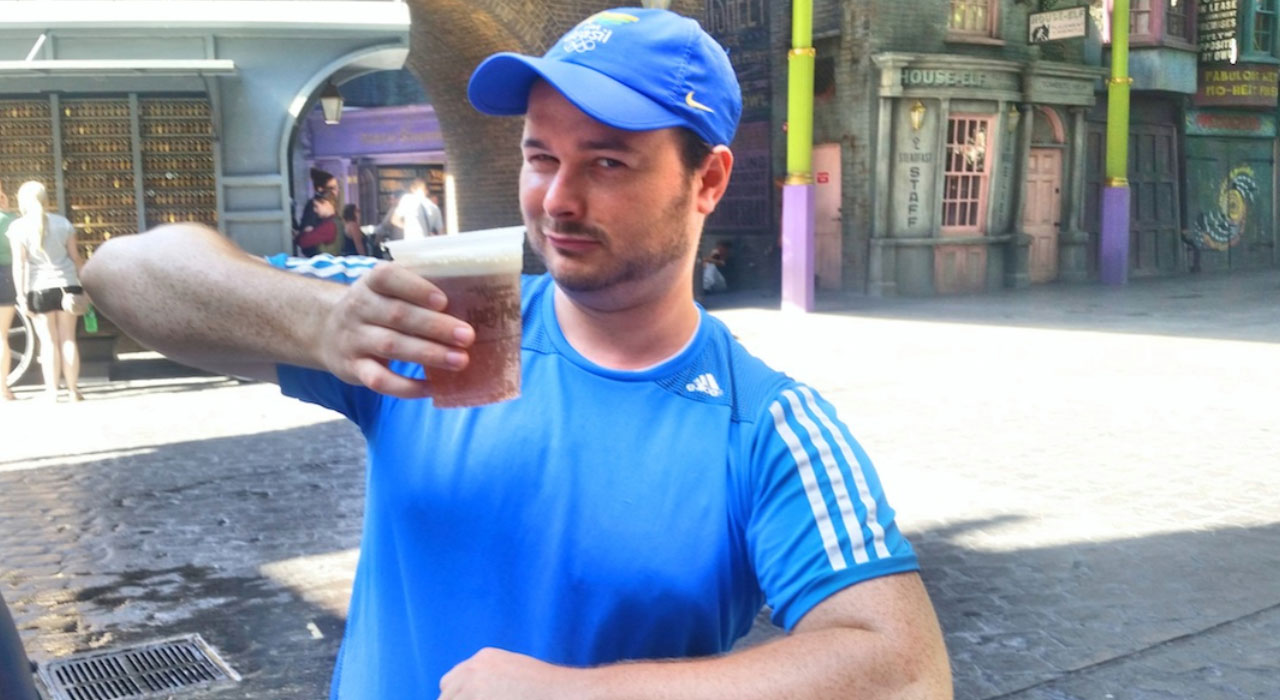
I don't drink
I do not use alcohol. I tasted beer once and disliked it, and social pressure never persuaded me to start. That choice shapes my perspective, so I should not pretend that my personal observation settles the research.
World Health Organization guidance is clear that alcohol is psychoactive, toxic and dependence-producing. Even low levels carry some health risk, and the US National Institute on Alcohol Abuse and Alcoholism says alcohol can impair speech, memory and judgement. Do not start drinking, or drink more, as a language-learning technique.
What the language studies found
When people ask me why I don't drink, instead of going down the path of a very boring conversation I don't want to have (again) in a nightclub when I'd rather be dancing, I remind them of the Asterix comic strip; Asterix drinks a magic potion that gives him superhuman strength
and he drinks it specifically when he needs to fight off the Romans or generally save the day. But Asterix's sidekick Obelix fell into the cauldron full of the magic potion as a boy, and so he's actually always strong and never needs to drink the potion.
This may just be a comic book, but the metaphor works for me; I'm Obelix! (Well, a little slimer!) I go out plenty, but I've never needed to drink to be able to enjoy myself. I'm always the first person to sing at karaokes and the first person on the dance floor, and I love talking to as many people as possible when I'm out. Based on this, and all of the many negative possibilities from drinking, you will have a hard time convincing me to try it; I just don't see why I would need it.
And this is true for many people; there are plenty of very social people that could very easily be more relaxed and sociable if they just tried instead of waiting for beer's permission to do so. Sorry for the big rant, but this is all leading up to the crucial point of people believing that they speak a foreign language better when they are drunk.
The evidence is narrow and mixed. In a small controlled study of German speakers learning Dutch, independent listeners rated pronunciation slightly better after a low dose of alcohol, while participants did not rate their own ability higher. A later study of Dutch speakers using English found no significant benefit to second-language accent ratings, while first-language pronunciation worsened as blood alcohol concentration rose.
- The first study measured a brief pronunciation sample, not overall fluency, learning or real-world communication.
- A group average does not predict what alcohol will do for one learner.
- Reduced inhibition can feel like confidence while judgement, memory, speech and safety are getting worse.
- Neither study supports using alcohol as a study aid.
You can train speaking confidence without alcohol
A language habit needs to work in ordinary life. Build it around repeatable sober practice, not a substance whose effects and risks vary by person, amount and context.
You can lower the pressure with a patient partner, a short prepared topic, permission to pause, and a goal such as asking one question. These do not guarantee instant confidence, but they let you practise the skill itself while sober.
CONFIDENCE
Why do you need alcohol to achieve this?
For language confidence, I try to separate useful correction from ridicule and notice evidence of progress. When my Czech was new, I told people honestly that I had been learning for six weeks. That set expectations and made it easier to attempt a conversation.
Encouragement helped me, but I no longer recommend using slang merely to trigger a laugh or engineering compliments. Ask a supportive partner for specific feedback: what was clear, what blocked understanding, and one thing to try next time.
If anxiety regularly stops you speaking, make the task smaller and talk with someone you trust. If it is severe or affects daily life, consider support from a qualified mental-health professional rather than self-medicating with alcohol.
MISTAKES
If you make mistakes, who cares?!! The other expats I was with definitely know more Czech than I do (I kept asking them how to say particular words, or how a particular case declension was for some word and they knew), and yet for the early part of the night they would either speak English to the Czechs (even though English isn't their native language), or simply not speak at all.
They waited until they had drunk enough so that they would be “ready” to speak. On the other hand, I was speaking non stop with an incredible amount of mistakes (I doubt I said a single sentence correctly all night), but I was communicating. I got to tell them about myself and learn about them, hear some jokes, make plans for the night etc.
Let me repeat that word; communicating.
This is what language is all about, not a list of grammar rules. If you wait until you don't make any mistakes you will probably never speak, because you have to practise to iron out those mistakes. While I talked, they occasionally corrected my more serious mistakes and I learned a lot! When I'm ready, I'll ask that they correct me more, but right now I'm focussing on communicating as best as I can.
My placebo of choice: Orange Juice!
Alcohol has pharmacological effects; it is not merely a state of mind or a placebo. My orange-juice ritual was simply a playful way to join the social occasion without drinking alcohol.
I used to order a dramatic “orange juice on the rocks”, act silly and jokingly blame the orange juice. The joke gave me permission to join in without pretending the drink changed my brain.
The useful part was the social cue, not the sugar or the drink itself. A non-alcoholic option, a familiar routine or a supportive friend can play that role.
My conclusion is narrower than the original rant: one small study found a pronunciation-rating difference under controlled conditions, another did not replicate a second-language accent benefit, and neither makes alcohol a sensible learning strategy. Practise the confidence, repair and risk-taking you want to use when sober.
Cheers!

Social