


20 ways to stay safe and prevent theft while travelling

Full disclosure: This post contains affiliate links. ?
In close to a quarter of a century of near-constant travel, through loads of places people had warned me were dangerous, I have had exactly one thing stolen from me in all that time. I got well off the safer tourist trails in South America, the Middle East and Asia, and my luck held the whole way. The one time it ran out wasn't somewhere exotic at all, but in California, where my rental car was broken into and my wallet (with several hundred dollars in it) and my smartphone were taken.
I never got mugged in Rio, drugged in Colombia, bugged in Egypt, swept under the rug in China or thugged in Eastern Europe, but I got broken into in the United States of America and lost well over a thousand dollars of stuff in the process. And here's the part that still surprises people: that single break-in remains, to this day, the only theft I've experienced in about a quarter of a century of travel. Mind you, it does make a handy retort whenever Americans tell me how scary the outside world is!
What happened was simple enough. I'd found a good deal online for kitesurfing lessons in Oakland, drove over, parked at the shore in broad daylight on a public beach with people coming and going, and left my things in the car so they wouldn't get wet. When I came back, the window was smashed in and everything was gone. Luckily my passport, laptop and other essentials were back at the apartment I was renting, and since I'd left the car keys with the instructor, at least the rental car itself was still there.
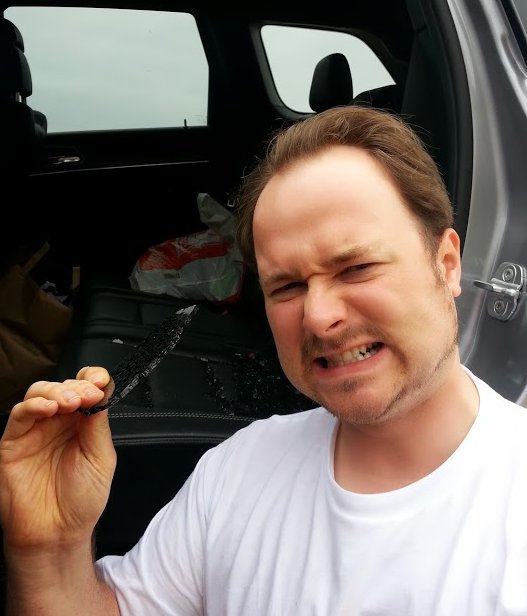
Before I get into the tips, I want to be clear about something, because I've met plenty of travellers just after they've been robbed, and the last thing anyone needs in that moment is a lecture. If someone steals from you, the thief is the one in the wrong. Full stop. You didn't deserve it, and some thefts really are pure wrong-place-wrong-time bad luck that no amount of planning would have prevented. But the odds aren't fixed. Looking back at my own break-in, I could see exactly which of my usual habits I'd let slip that day, and any one of them would have made me a way less appealing target.
So here are the habits that kept me theft-free through more than two decades of constantly moving to new places, and that would have protected me that day in Oakland too, if I'd followed my own advice.
1. Always be aware of your things
When I started travelling I got into the habit of tapping my pockets whenever I leave a building, to double check that phone, keys and wallet are all there. In travel mode I add passport and ticket to the list. Everything else is replaceable, or can be sent on to you if it turns up later.
The other half of this habit is the glance back. Whenever I get off a bus I've been sitting on for hours, leave an apartment I've been staying in, or even finish lunch in a restaurant, I do a quick scan over the space I was in and the ground around it, to make sure nothing has fallen out of my pockets or is getting left behind. That two-second glance has saved my skin loads of times, whether it was a phone still sitting on the table or something that had slipped out between the seat cushions.
It takes a little while to make automatic, but force yourself to do it every single time you change locations, in your daily life as much as on the road, and soon it becomes a reflex you don't even notice you're doing.
2. Carry a decoy wallet (and a cheap phone for riskier days)
For years I've travelled with a second wallet that comes out with me in places with a rough reputation. It holds an expired credit card, a few “filler” cards and about ten dollars in cash. If anyone were ever to aggressively demand my wallet, that's the one I'd hand over without a moment's hesitation. I've never had to use it, but knowing it's there buys a lot of peace of mind.
To be absolutely clear though: if you're ever threatened at knife or gun point and you don't have a decoy, or the thief wants more, hand over your real wallet immediately. Nothing inside it could possibly be worth risking your life over. The decoy simply means that if the worst happens, you lose ten dollars and some useless plastic instead of everything.
There's a phone version of this too. When I lived in Rio, before heading into parts of the city I knew were less safe, I'd swap my SIM card out of my smartphone and into an ancient phone that could only make calls and texts. If that got taken, I wouldn't lose a minute of sleep over it.
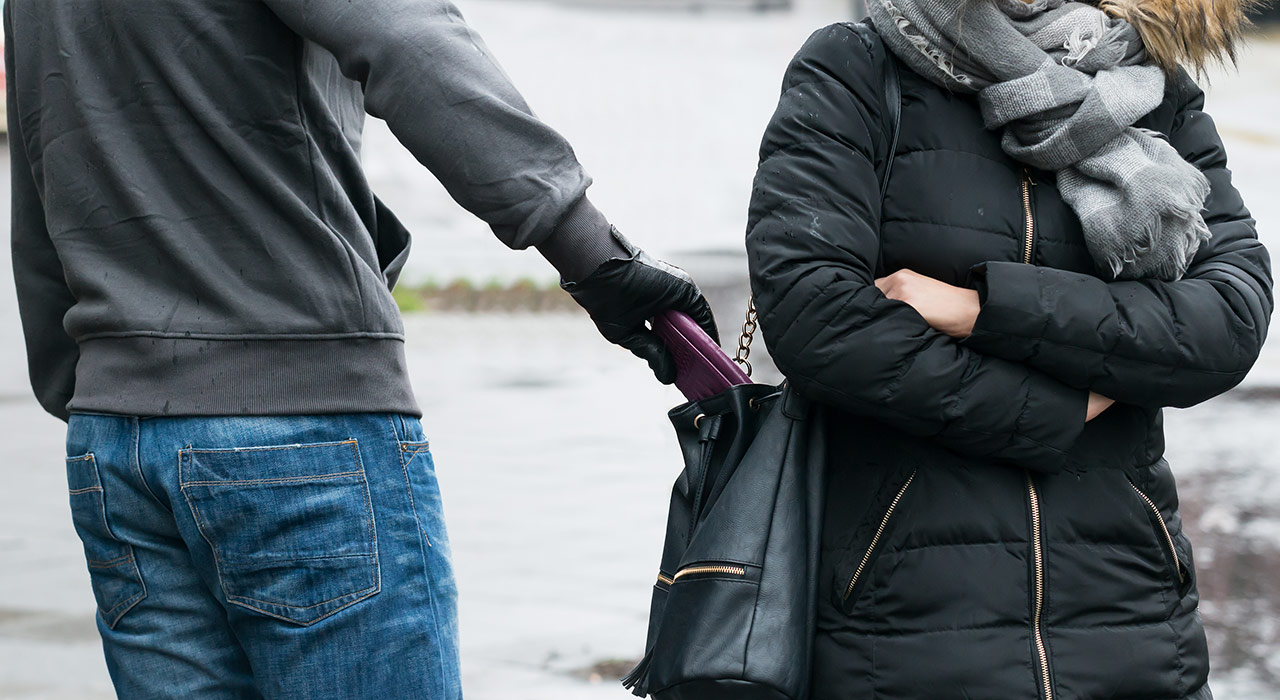
And wherever you are, keep your phone and wallet out of your back pocket. A back pocket can be emptied by someone brushing past you without you feeling a thing, while front pockets and zipped bags worn across your front are way harder to get at without drawing your attention.
3. Separate your sources of money
If everything you have is in one wallet and that wallet gets stolen, you're in a very rough situation when you're alone in a foreign country.
Credit card companies do have systems for sending you emergency cash when your card is stolen, but you have to be able to reach them by international phone call first. Rather than rely on that, leave your accommodation with EITHER your credit card OR your debit card, never both.
I almost always do this, but the day I went to the shore in Oakland was unfortunately not one of those days. What saved me was the backup plan: I had several hundred dollars in cash back at the apartment, which kept me going with no pressure at all while I sorted an alternative (I sent a friend money through PayPal and he withdrew cash for me from his own bank). Keep some emergency cash somewhere separate from your wallet, always.
4. Scan your travel documents as well as photocopying them
Among the things stolen from my car was my Irish driving licence, which can only be replaced in person in Ireland. Because I'd scanned it in advance, I could print a copy along with the police report (after a theft, cancel your cards and file that police report as soon as possible, before anything else). The scan also sped up the replacement application and gave me the licence number I needed for the rental car paperwork.
I keep scans of my passport and its entry stamps too, in case that ever goes missing. A digital scan beats a paper photocopy because it lives in cloud storage rather than among the very things that might get stolen. The easiest version: photograph all your documents with your phone and let them back up to the cloud automatically.
5. Be sceptical when strangers are a little too nice
After months in Buenos Aires blending in well thanks to adapting to local dress and body language, one day I went out with my camera to snap the downtown area I'd never photographed, and stood out as an obvious tourist. While I was taking a photo I felt something hit my leg, and looked down at what seemed to be bird droppings. I looked up cursing my luck when, far too conveniently, a nice-looking couple appeared with a handkerchief at the ready, offering to wipe it off.
If you're less cynical than me, you might think you'd just met the nicest couple in the world. Alarm bells went off in my head instead. The handkerchief had come out way too quickly and they went straight for my legs, exactly the kind of body contact that's perfect for lifting things off you while you're distracted. I refused their help despite their insistence, cleaned up in a restaurant bathroom, and saw it wasn't bird droppings at all but something that had probably been squirted at me from a distance. Locals later confirmed it's a regular con pulled on tourists in the city.
Similarly, in Rome some beggars followed me down the street, once again on a day I was out with my camera in full tourist mode, hands out, saying only “Please, please!” They started rubbing against me, an excellent distraction, until I felt my wallet beginning to slip out of my pocket. I slapped the hand away and yelled every Italian curse word I knew.
Both were close calls that failed because I stay a little sceptical of anyone who gets very close very fast, unless it's a social setting in a culture where that's normal. Genuine kindness from strangers is common on the road, and I've received masses of it, but genuine kindness rarely needs to touch you or rush you.
6. Don't advertise that you're a tourist
Both of those attempts on my wallet happened on days I'd broken my own rule and was wandering around with a camera out, snapping pretty buildings, unmistakably a visitor.
Thieves who target tourists go for the most obvious marks: the camera on permanent display, the expensive watch, the phone always in hand. I once had to insist that a Couchsurfer I knew in Recife, Brazil leave his Rolex at the house whenever we went out. There are places and times when looking flashy is fine, but an unfamiliar district of a foreign city isn't one of them.
Take a look at what locals your age actually wear and lean in that direction, keep the camera in a plain bag between shots, and you'll be surprised how much less attention you attract.
7. Do some research and ask locals what's safe
This was another of my own mistakes that day. Oakland sits right beside San Francisco, the city where you're meant to “be sure to wear some flowers in your hair”, so I simply never associated the area with crime. It turned out that at the time it had one of the highest crime rates in the entire country. The local police were so stretched that they couldn't send an officer to the scene, and told me to just drive home and file my report online.
Not reading up on where I was staying gave me far too high a sense of security. In genuinely dangerous cities I've stayed in before, I've made sure I knew exactly which parts were risky, stayed out of them alone at night, and taken extra precautions with my things when I did have to pass through, or simply left valuables somewhere more secure. Read the safety sections of guidebooks and Wikivoyage, look up recent advice online, or best of all, ask a local.
8. Get travel insurance
There are many levels of travel insurance you can get. For me the no-brainer is travel health insurance: stuff can be replaced, but skimping on important life-saving treatment absolutely can't be. I've used World Nomads or SafetyWing, both of which are set up for long-term travellers, and it's also worth checking whether your credit card or existing insurance already covers you on the road.
You can insure your belongings too. Because I travel long-term and incidents like this have been so rare for me, I don't take that option myself, but if you're heading somewhere with a high theft rate, or travelling for just a couple of months with expensive gear, it's worth pricing up.
If you're travelling to the US, definitely get health insurance. Simple procedures there can cost many times what they would in the rest of the world, and a single uninsured hospital visit can wipe out an entire travel budget.
One pleasant surprise from my own incident: rental car companies often cover break-ins by default. I'd taken the cheapest insurance option and still didn't have to pay for the smashed window.
9. Get vaccinated and bring your medication with you
Staying on health: make sure your vaccinations are up to date well in advance of the trip, and if you have any medical condition, bring your medication with you rather than assuming you'll find it at your destination.
Keep a card with your essential medical information in your wallet too. In some countries, donating blood gets you a card stating your blood type, which saves precious time if you're ever rushed into a hospital.
10. Make sure someone knows where you are
I travel alone, but a few people always know my itinerary and I check in with them as I go. That way, someone notices if I go quiet. Make sure a friend or family member knows your movements, or ideally befriend someone in the same city who can “worry” about you if needed.
These days it's even easier: share your live location with someone you trust through your phone for the riskier stretches of a trip, and agree that they'll actually pay attention to it.
11. Take extra care at cash machines
An ATM is the one place where your money is at its most concentrated and most visible, so it deserves a bit of extra caution. Use machines attached to actual banks, ideally during opening hours, rather than standalone ones on quiet streets or in dodgy shops. Shield the keypad with your free hand while typing your PIN, give the card slot a quick wiggle before inserting your card (skimming devices are usually attached loosely), and put your cash properly away before you walk off, not while you're walking.
Set up your bank's app before you leave home too. Most banks now let you freeze a stolen card from your phone in seconds, which turns a potential disaster into a minor annoyance.
12. Don't drink (or drug) away your senses
Almost every “I got robbed” story I've heard on the road has alcohol in it somewhere. Your senses dull, your guard drops, and losing track of your bag for just a few minutes is all a thief needs.
I don't drink at all, and I still go out plenty and socialise constantly, so I can promise a brilliant night out doesn't depend on it. I'd never lecture anyone to stop, but if you are drinking somewhere unfamiliar, do it with people you trust who can look out for you, stay aware enough of your surroundings to keep tip number one running, and never leave your drink unattended.
13. Be respectful of local customs
The quickest way to attract the wrong kind of attention is to be loud, dismissive of local ways, and insistent that everyone should behave the way people do back home. It's sad that this needs saying, but plenty of travellers do exactly that.
Stay open to the idea that you might be the one in the wrong about a local custom. Disrespecting it makes an angry or aggressive response way more likely, and that's an entire category of trouble you can avoid for free.
14. Walk facing the traffic
In some countries, thieves on motorbikes zoom past pedestrians, snatch a purse or a phone right out of their hands, and disappear before anyone reacts.
In places with loads of motorbikes, I make a conscious effort to walk on the side of the street where I'm facing the oncoming traffic (on the footpath, obviously), so I can see everyone approaching me. Keep bags on the building side of your body rather than the road side, and stay aware of the people walking around you too; they know the area better than you do, and a crowd is very easy to vanish into.
15. Don't flaunt your possessions
Now I can reveal the biggest mistake I made that day in Oakland: my phone was sitting visible in the car's cup holder. A rookie error! I'd left it there in a hurry when the instructor called me over to hit the water. When I came back, only my car had been broken into, not any of the other kitesurfers'. I'd essentially left a huge sign in the car reading “stuff worth stealing in here, special offer today only, just bring your own rock for the window!”
The same goes for what you carry on you. So many robbery stories I've heard on the road involve visible jewellery, designer clothing and expensive electronics. Have you noticed that in my photos I still dress like a scruffy teenager in a plain t-shirt and jeans? There's a good reason for that. Keep the valuable stuff out of sight.
16. Speak the local language!
This should probably have been rule number one. A big reason I've gone almost a quarter of a century with only one thing ever stolen from me is that I don't go around broadcasting English at everyone. English marks you out as a rich tourist, exactly the profile a thief considers worth the effort, while speaking the local language lets you blend in enormously, even with an accent and even at a basic level.
You stand out way less than the visitor insisting locals switch to English, and as a bonus you'll actually understand the warnings and the mood around you. Of everything on this list, this is the tip I'd start working on first, and helping you get there quickly is what this whole site is about!
17. Own less, and there's less to steal
You can't have your car broken into if you don't have a car. That sounds like a technicality, but a minimalist lifestyle genuinely protects you: no car full of belongings, no house packed with valuables, just a rented place with the few things you own, most of which can come with you or be easily hidden. The reason this could never have happened to me in Europe is that I never have a car there to leave things in!
When you do have things to secure, the same principle applies: remove the opportunity. I should have insisted on finding a secure place to store my things while I was in the water, or simply written the directions on paper and left the smartphone at the apartment, bringing only a little cash and no cards. Fewer opportunities for your things to be stolen means fewer things get stolen. It really is that direct.
18. Make your information unstealable
One thing I did get right: the break-in cost me money, but I lost no data whatsoever.
My contacts were synced to my Google account, so I had every phone number the moment I set up a replacement phone. My notes lived in an app that backs itself up to the cloud. And the many weeks of photos on the phone were already safely backed up, because my phone uploads them automatically every time it connects to wifi. The moment I got home, I changed the passwords for every account that had been logged in on that phone, so anything the thief tried would be turned down immediately.
Modern phones make all of this far easier than it was back then. Turn on Find My iPhone or Google's Find My Device before your trip and you can locate, lock or completely wipe a stolen phone from any browser. And set a lock-screen message with an email address and the offer of a reward, for the happier scenario where your phone is simply lost; honest finders are more common than you'd think.
19. Sometimes spending a little more buys real security
The day I'm most vulnerable to losing everything is a travel day. My laptop, camera and everything else I own are right beside me, and the right distraction at the wrong moment could take it all.
That's why, even though travel can be done very cheaply, I'd spend the extra money on your arrival day if you can afford it: a taxi rather than wrestling luggage through unfamiliar public transport, a safe and easy-to-find hotel for the first night rather than the cheapest option down a maze of side streets. When you're exhausted and jetlagged, you're way more likely to make mistakes. I budget for that more expensive first day as a buffer, get my bearings and rest up, and then move on to more authentic (and cheaper) living once I can think straight.
20. Don't be superstitious
When my car got broken into, someone suggested the universe was “balancing out” my great summer. I don't think so at all. It happened for entirely logical reasons, most of which I've spent this post listing.
So rather than checking your horoscope, avoiding the number 13, or knocking on wood, put that energy into checking that you're in a safe area, that your valuables are out of sight, and that you're aware of your surroundings. Those tangible things will influence what happens to you way more than psychic energy ever will.
Be safe, but don't be scared
I'm out in the world constantly and experience it in wonderful ways, and I'm about as far from fearing for my safety as it's possible to be. The precautions in this post are second nature to me now, and that's exactly why I could travel non-stop for close to a quarter of a century with only one theft to show for it. Even that wasn't such a big deal in the end; things worth money can be replaced with time.
Most places are nowhere near as dangerous as the media and second-hand horror stories make them out to be. Build these precautions into your routine until they're habits rather than a checklist you fret over, and then relax, because you've already done the practical part. That's the real payoff of travelling this way: knowing the sensible measures are handled means you can be more confident, more trusting of the people you meet, and more adventurous in exploring unknown places, all without sacrificing your basic security.
Things still go wrong occasionally, and when my turn came it ruined one of my Mondays. Then I dusted myself off, learned the lesson, and had a blast for the rest of the trip.

Social