


100+ Essential Greek Words for Beginners

Full disclosure: This post contains affiliate links. ?
With these 100+ Greek words for beginners, you’ll have everything you need to start speaking Greek.
When I was studying Greek, these words allowed me to read menus, order a coffee or some lunch, and have a basic conversation (with a lot of mistakes, but hey, that’s how we learn!)
I was born in the Turkish-speaking part of Cyprus. If my country wasn’t divided, Greek could have been my second native language. But it isn’t — which led me to take Greek lessons in Cyprus in 2019. At the time, I was working at an NGO aimed at peacebuilding, where I met people who only spoke Greek and no English. My beginners’ Greek came to the rescue! I was able to say phrases like Μιλάω λίγα ελληνικά (miláo líga elliniká), “I speak a little Greek,” and Δουλεύω εδώ (dulevo edo), “I work here,” which became ice-breakers before an English-speaker came over to translate.
So if you want your Greek to go beyond Καλημέρα (kalimera) (“good morning”) on your holidays in Santorini, or you want to get a head start in your Greek language classes, you’re in the right place.
Greek Greetings and Partings
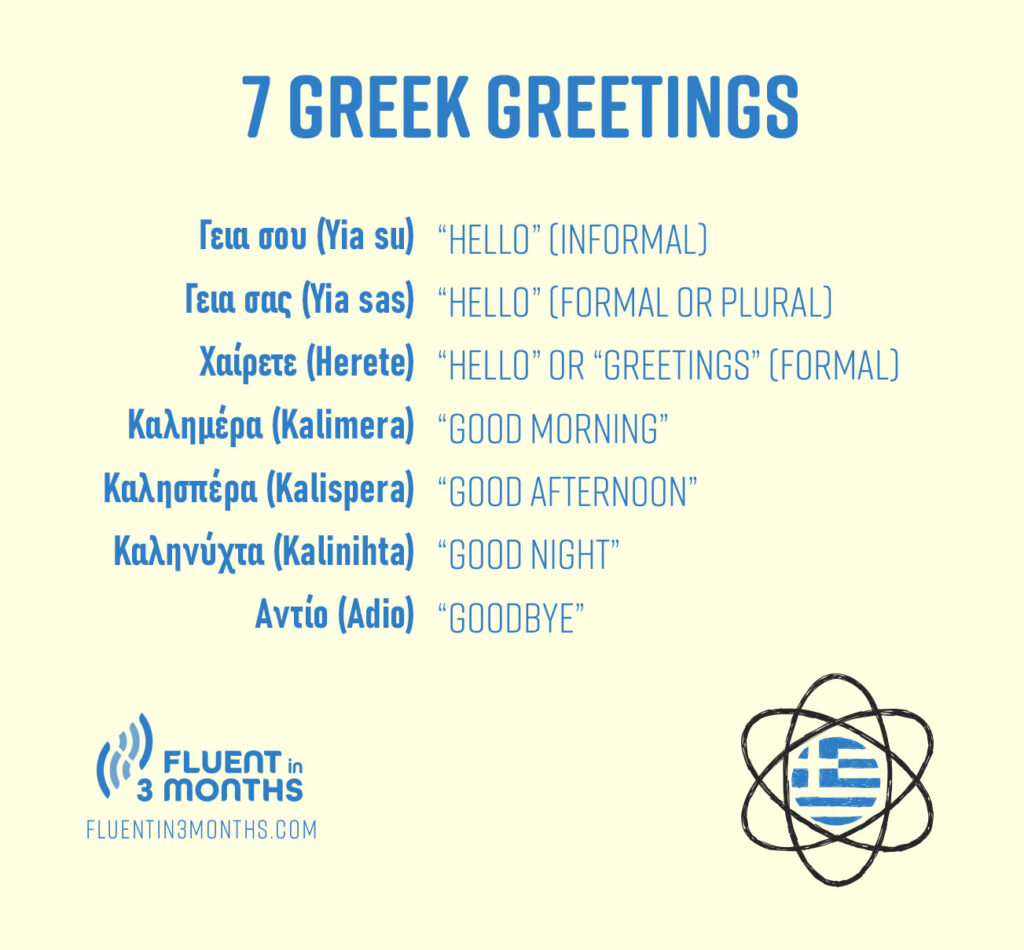
First things first — let’s start by learning how to say hello in Greek.
- Γεια σου (Yia su): “Hello” (informal)
- Γεια σας (Yia sas): “Hello” (formal or plural)
- Χαίρετε (Herete): “Hello” or “Greetings” (formal)
- Καλημέρα (Kalimera): “Good morning”
- Καλησπέρα (Kalispera): “Good evening” (also used from late afternoon)
- Καληνύχτα (Kalinihta): “Good night”
- Αντίο (Adio): “Goodbye”
Polite Words in Greek
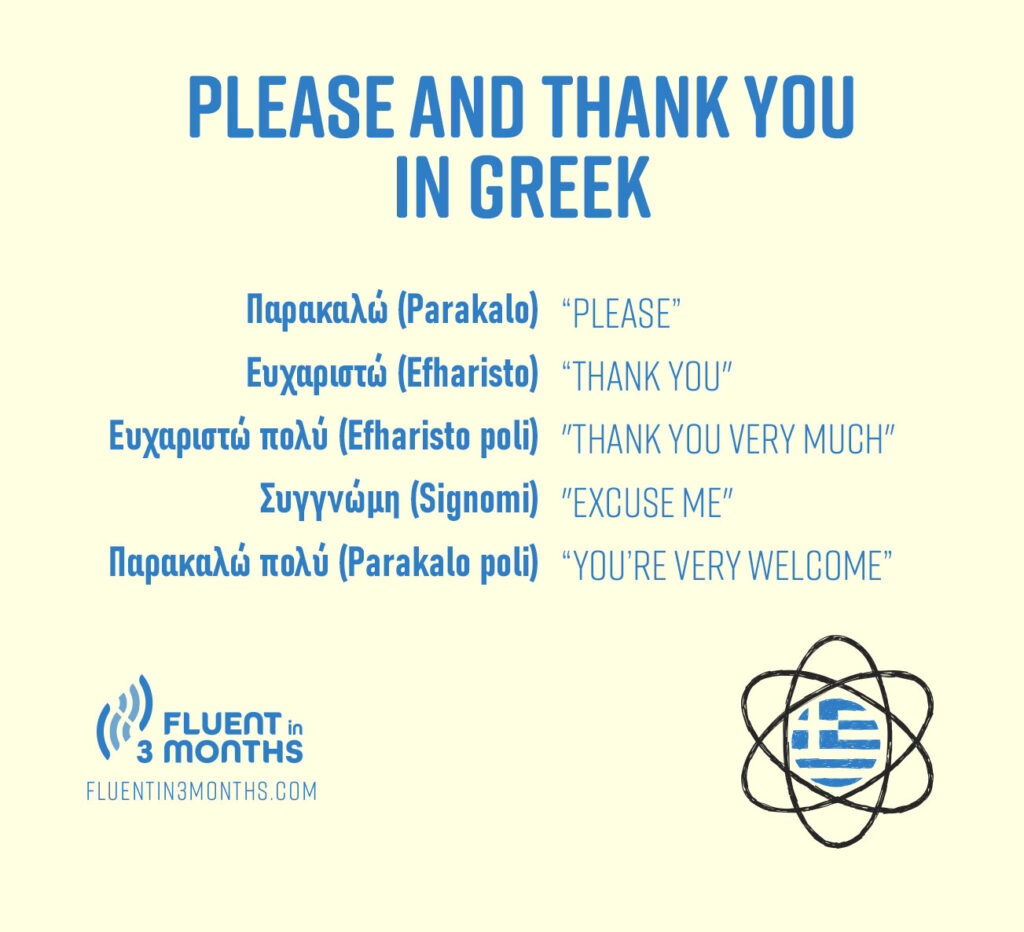
“Thank you” and “please” are among the most important words in any language, and Greek is no exception. You would hear both Ευχαριστώ (efharisto) and Ευχαριστώ πολύ (efharisto poli) a lot.
- Παρακαλώ (Parakalo): “Please”
- Ευχαριστώ (Efharisto): “Thank you”
- Ευχαριστώ πολύ (Efharisto poli): “Thank you very much”
- Συγγνώμη (Signomi): “Excuse me”
- Παρακαλώ πολύ (Parakalo poli): “You’re very welcome”
Yes and No in Greek
Two easy Greek words that can answer many questions: yes and no. Ναι (ne) means “yes,” and Όχι (óchi) means “no.” There’s also a specific gesture that means no in Greece, Cyprus, and many other countries nearby:
@greeksaladguy How to say no in Greek #greek #greekamerican #greecetiktok #greektiktok #greeklessons #greekwords #learngreek ♬ original sound – Emmanuel Manolakas
Do this and people will think you’re more than a beginner!
How Are You in Greek
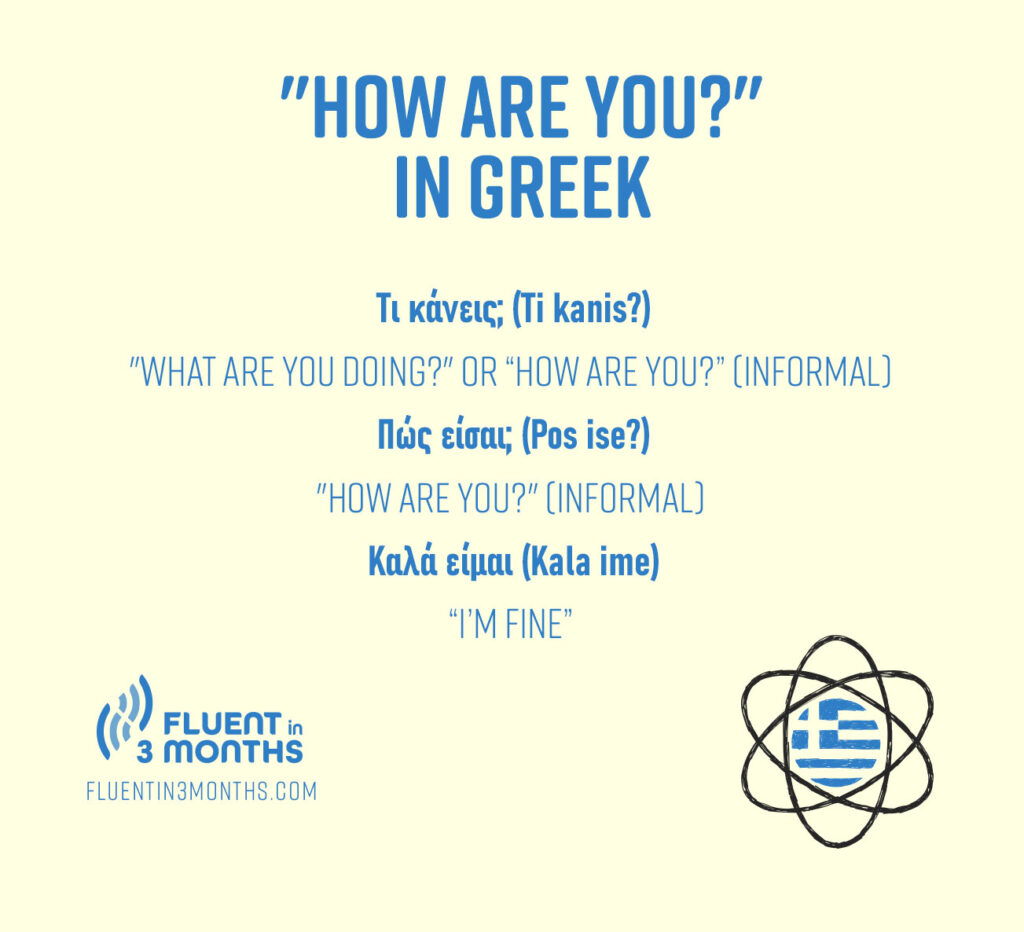
- Τι κάνεις; (Ti kanis?): “What are you doing?” or “How are you?” (informal)
- Πώς είσαι; (Pos ise?): “How are you?” (informal)
- Καλά είμαι (Kala ime): “I’m fine”
Saying Your Name in Greek
- Πώς σε λένε; (Pos se lene?): “What is your name?” (informal)
- Με λένε… (Me lene): “My name is…” (Say me lene followed by your name.)
Useful Greek Words for Tourists and Travellers
It may be super easy to read road signs back at home, but when you’re travelling in Greece or Cyprus, it may seem all Greek to you. Pun intended!
In the 2025 EF English Proficiency Index, Greece scored 592 and ranked 20th globally, so English is common in many tourist areas. Learning some Greek still helps you recognise important words in an airport, hotel or restaurant and speak with people beyond the main tourist spots.
Here are some cool Greek words that will make your trip smoother:
- Ταξίδι (taksidi): “Trip”
- Καλό ταξίδι (kalo taksidi): “Have a nice trip”
- Διαβατήριο (diavatirio): “Passport”
- Κράτηση (kratisi): “Reservation”
- Δωμάτιο (domatio): “Room”
- Αεροδρόμιο (aerodromio): “Airport”
- Μπάνιο (banio): “Bathroom”
- Εστιατόριο (estiatorio): “Restaurant”
- Ξενοδοχείο (ksenodohio): “Hotel”
- Τράπεζα (trapeza): “Bank”
- Φαρμακείο (farmakio): “Pharmacy”
- Σπίτι (spiti): “House”
- Αυτοκίνητο (aftokinito): “Car”
- Λεωφορείο (leoforio): “Bus”
- Τρένο (treno): “Train”
- Ταξί (taksi): “Taxi”
- Μετρό (metro): “Metro”
- Αεροπλάνο (aeroplano): “Plane”
- Εισιτήριο (isitirio): “Ticket”
- Στην ώρα (stin ora): “On time”
- Καθυστερημένο (kathisterimeno): “Delayed”
- Αριστερά (aristera): “Left”
- Δεξιά (deksia): “Right”
- Ευθεία (efthia): “Straight”
- Πίσω (piso): “Back”
- Πάνω (pano): “Up”
- Κάτω (kato): “Down”
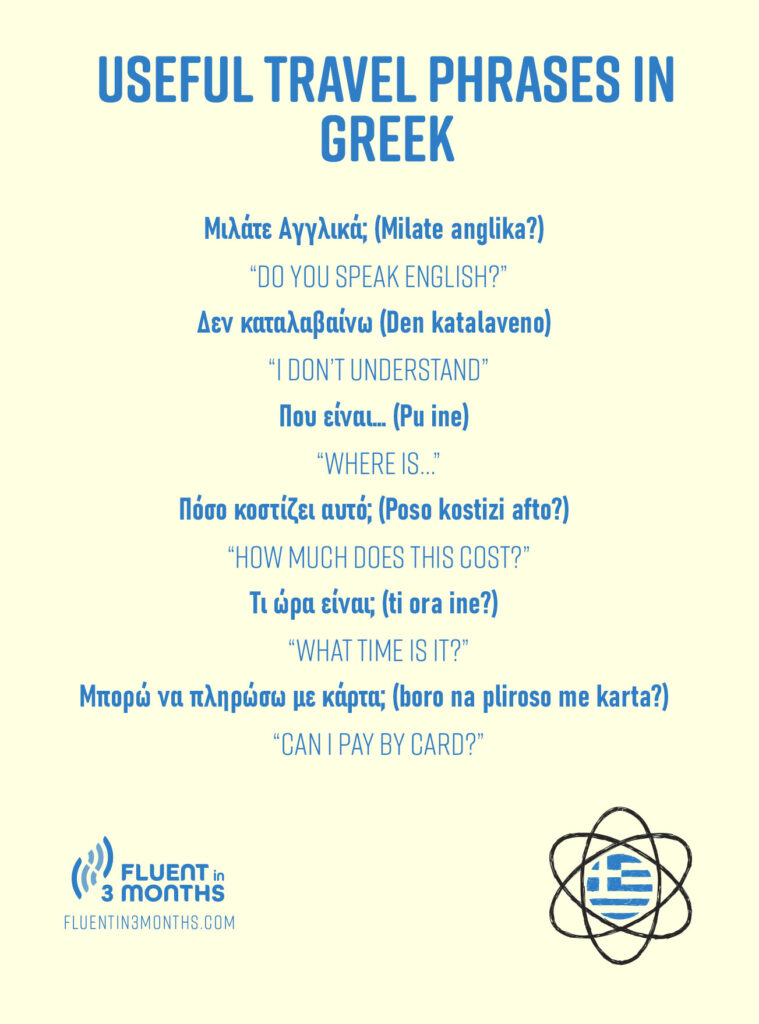
- Μιλάτε Αγγλικά; (Milate anglika?): “Do you speak English?”
- Δεν καταλαβαίνω (Den katalaveno): “I don’t understand”
- Πού είναι… (Pú íne): “Where is…” (For example, Πού είναι το μπάνιο; means “Where is the bathroom?”)
- Πόσο κοστίζει αυτό; (Poso kostizi afto?): “How much does this cost?”
- Τι ώρα είναι; (ti ora ine?): “What time is it?”
- Μπορώ να πληρώσω με κάρτα; (boro na pliroso me karta?): “Can I pay by card?”
Greek Words for Food and Drinks
Whether you’re ordering some mezze in a Greek tavern or talking about your favourite food in your language class, you’ll need some food vocabulary and common phrases.
Basic Greek Words for Food and Drinks
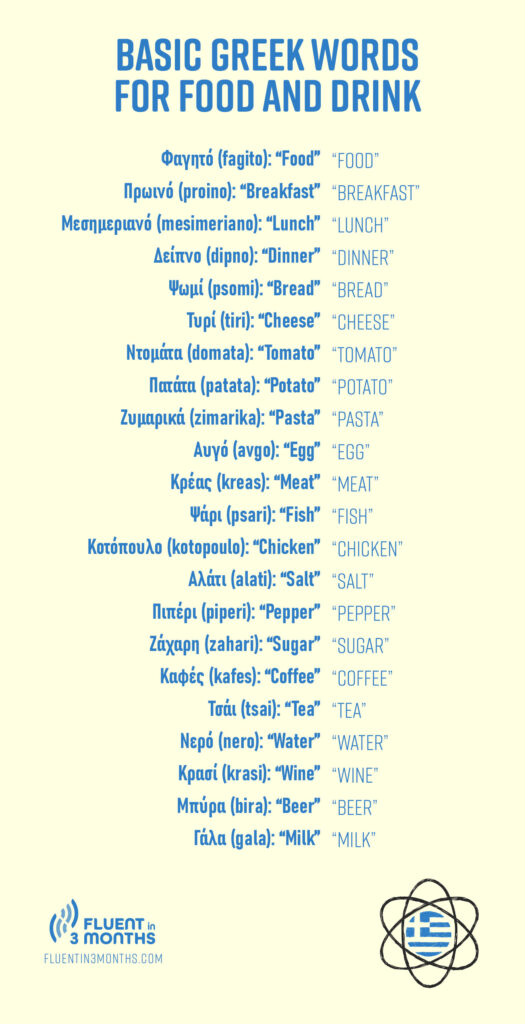
- Φαγητό (fagito): “Food”
- Πρωινό (proino): “Breakfast”
- Μεσημεριανό (mesimeriano): “Lunch”
- Δείπνο (dipno): “Dinner”
- Ψωμί (psomi): “Bread”
- Τυρί (tiri): “Cheese”
- Ντομάτα (domata): “Tomato”
- Πατάτα (patata): “Potato”
- Ζυμαρικά (zimarika): “Pasta”
- Αυγό (avgo): “Egg”
- Κρέας (kreas): “Meat”
- Ψάρι (psari): “Fish”
- Κοτόπουλο (kotopoulo): “Chicken”
- Αλάτι (alati): “Salt”
- Πιπέρι (piperi): “Pepper”
- Ζάχαρη (zahari): “Sugar”
- Καφές (kafes): “Coffee”
- Τσάι (tsai): “Tea”
- Νερό (nero): “Water”
- Κρασί (krasi): “Wine”
- Μπύρα (bira): “Beer”
- Γάλα (gala): “Milk”
- Χυμός (himos): “Juice”
Ordering Food or Drinks in Greek
You can order food with the words we’ve already covered. For example, if you want to get a cup of coffee, you say Έναν καφέ, παρακαλώ (enan kafe, parakalo), “one coffee, please.”
Depending on the grammatical gender of the noun, you might also hear people saying μία (mia.) To order beer, for example, it’s Μία μπύρα, παρακαλώ (mia bira parakalo), “one beer, please.”
In the next sections, we will cover Greek verbs, some of which will also help you order food and drinks. For example, the word Θέλω (thelo), meaning “I want” will come in handy. To make it politer, you can say Θα ήθελα (tha ithela), “I would like.”
Here are some examples:
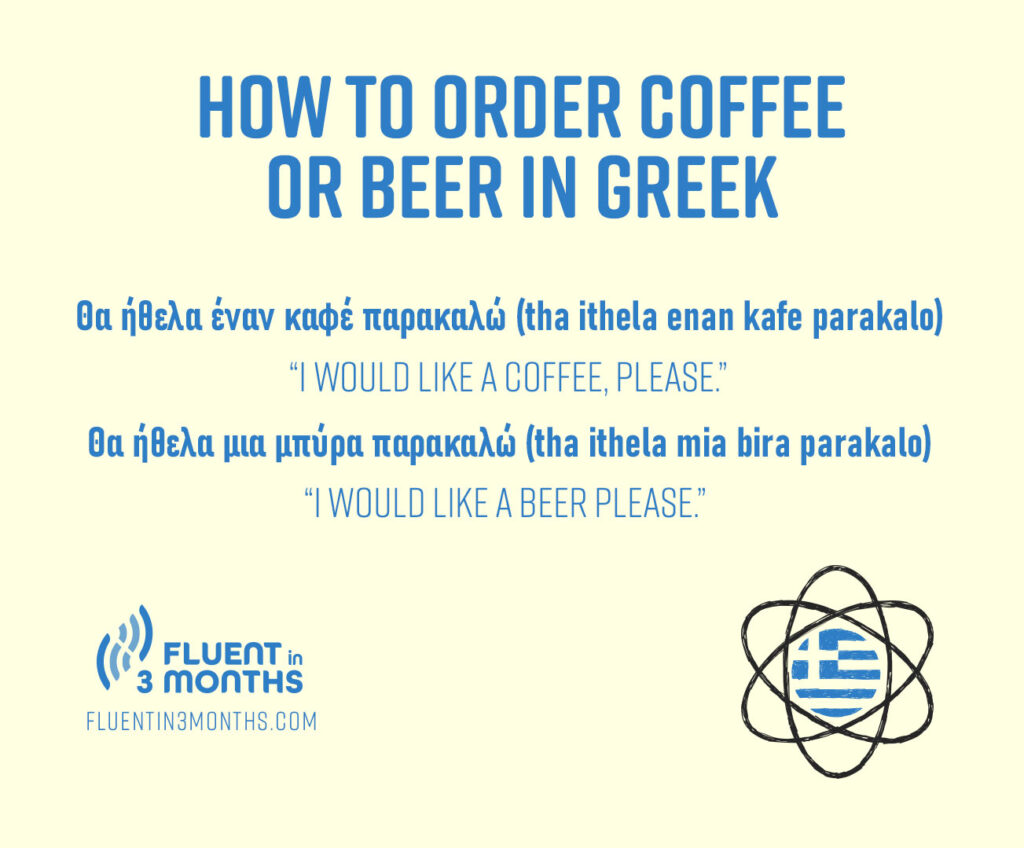
- Θα ήθελα έναν καφέ παρακαλώ (tha ithela enan kafe parakalo): “I would like a coffee, please.”
- Θα ήθελα μια μπύρα παρακαλώ (tha ithela mia bira parakalo): “I would like a beer please.”
Greek Pronouns
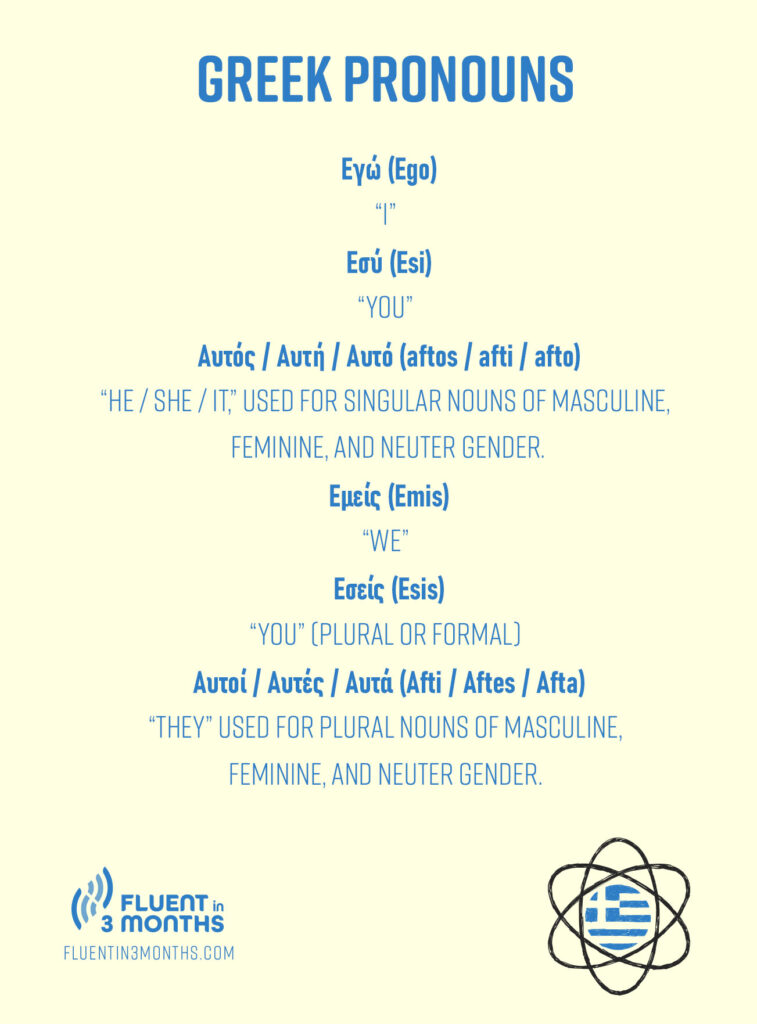
- Εγώ (Ego): “I”
- Εσύ (Esi): “You”
- Αυτός / Αυτή / Αυτό (aftos / afti / afto): “He / She / It,” used for singular nouns of masculine, feminine, and neuter gender.
- Εμείς (Emis): “We”
- Εσείς (Esis): “You” (plural or formal)
- Αυτοί / Αυτές / Αυτά (Afti / Aftes / Afta): “They” used for plural nouns of masculine, feminine, and neuter gender.
Most Common Greek Verbs
- Είμαι (ime): “I am”
- Έχω (eho): “I have”
- Κάνω (kano): “I do, I make”
- Πάω (pao): “I go”
- Έρχομαι (erhomai): “I come”
- Τρώω (troo): “I eat”
- Πίνω (pino): “I drink”
- Θέλω (thelo): “I want”
- Αγαπώ (agapo): “I love”
- Καταλαβαίνω (katalaveno): “I understand”
- Ξέρω (ksero): “I know”
- Νομίζω (nomizo): “I think”
- Βλέπω (vlepo): “I see”
- Μιλάω (milao): “I speak”
- Διαβάζω (diavazo): “I read”
- Δουλεύω (dulevo): “I work”
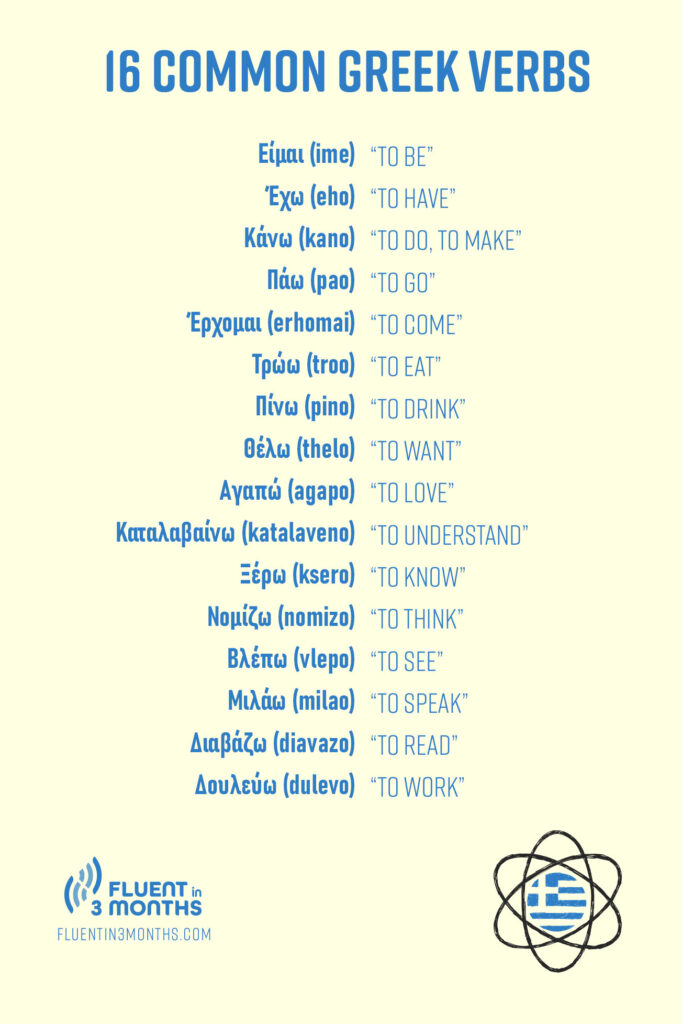
Modern Greek doesn’t use an infinitive. The forms above are first-person singular present forms, so Δουλεύω means “I work”. Here they are in complete sentences:
- Πάω στο αεροδρόμιο (pao sto aerodromio): “I’m going to the airport.”
- Τρώω ζυμαρικά (troo zimarika): “I eat pasta.”
- Πίνω τσάι (pino tsai): “I drink tea.”
- Έρχομαι σπίτι (erhome spiti): “I come home.”
Some Common Nouns in Greek
In this part, we’ll cover some nouns in Greek. Notice the articles before them: Greek nouns are masculine, feminine or neuter. Ο / ο (o) is the article for masculine nouns, Η / η (i) is for feminine nouns, and Το / το (to) is for neuter nouns.
- Το βιβλίο (to vivlio): “The book”
- Η πόρτα (i porta): “The door”
- Το τραπέζι (to trapezi): “The table”
- Η καρέκλα (i karekla): “The chair”
- Το αυτοκίνητο (to aftokinito): “The car”
- Η λάμπα (i lampa): “The lamp”
- Ο άντρας (o andras): “The man”
- Η γυναίκα (i gineka): “The woman”
- Ο ήλιος (o ilios): “The sun”
- Το φεγγάρι (to fengari): “The moon”
Most Common Greek Adjectives
- Καλός (kalos): “Good”
- Κακός (kakos): “Bad”
- Μεγάλος (megalos): “Big”
- Μικρός (mikros): “Small”
- Ζεστός (zestos): “Hot”
- Κρύος (kryos): “Cold”
- Όμορφος (omorfos): “Beautiful”
- Άσχημος (ashimos): “Ugly”
- Ψηλός / Ψηλή / Ψηλό (psilos / psili / psilo): “Tall” (masculine / feminine / neuter)
- Κοντός (kontos): “Short”
- Εύκολος (efkolos): “Easy”
- Δύσκολος (diskolos): “Difficult”
- Ακριβός (akrivos): “Expensive”
- Φτηνός (ftinos): “Cheap”
- Νέος (neos): “New”
- Παλιός (palios): “Old”
- Ευτυχισμένος (eftihismenos): “Happy”
- Λυπημένος (lipimenos): “Sad”
- Γρήγορος (grigoros): “Fast”
- Αργός (argos): “Slow”
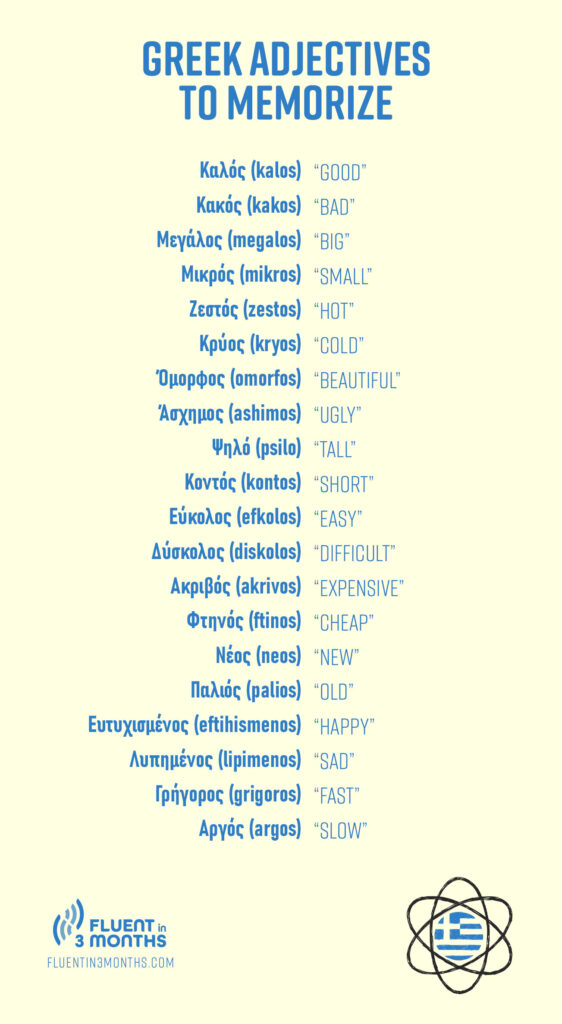
Let’s make some sentences using these adjectives, and probably the most common verb in Greek — είναι (ine) “is.” We’ll also make sure to change the adjectives’ ends depending on the noun’s gender.
- Το βιβλίο είναι ακριβό. (to vivlio ine akrivo): “The book is expensive.” (Το βιβλίο is neuter, so the adjective is in the neuter form.)
- Η Άννα είναι ψηλή (I Anna ine psili): “Anna is tall.” (Άννα is feminine, so the adjective is in the feminine form.)
- Ο καφές είναι ζεστός (O kafes ine zestos): “The coffee is hot.” (Ο καφές is masculine, so the adjective is in the masculine form.)
Basic Greek Prepositions and Conjunctions
- Και (ke): “And”
- Ή (i): “Or”
- Από (apo): “From”
- Σε (se): “To”
- Για (yia): “For”
- Με (me): “With”
- Χωρίς (horis): “Without”
- Πάνω σε (pano se): “On”
- Κάτω από (kato apo): “Under”
- Πριν (prin): “Before”
- Μετά (meta): “After/later”
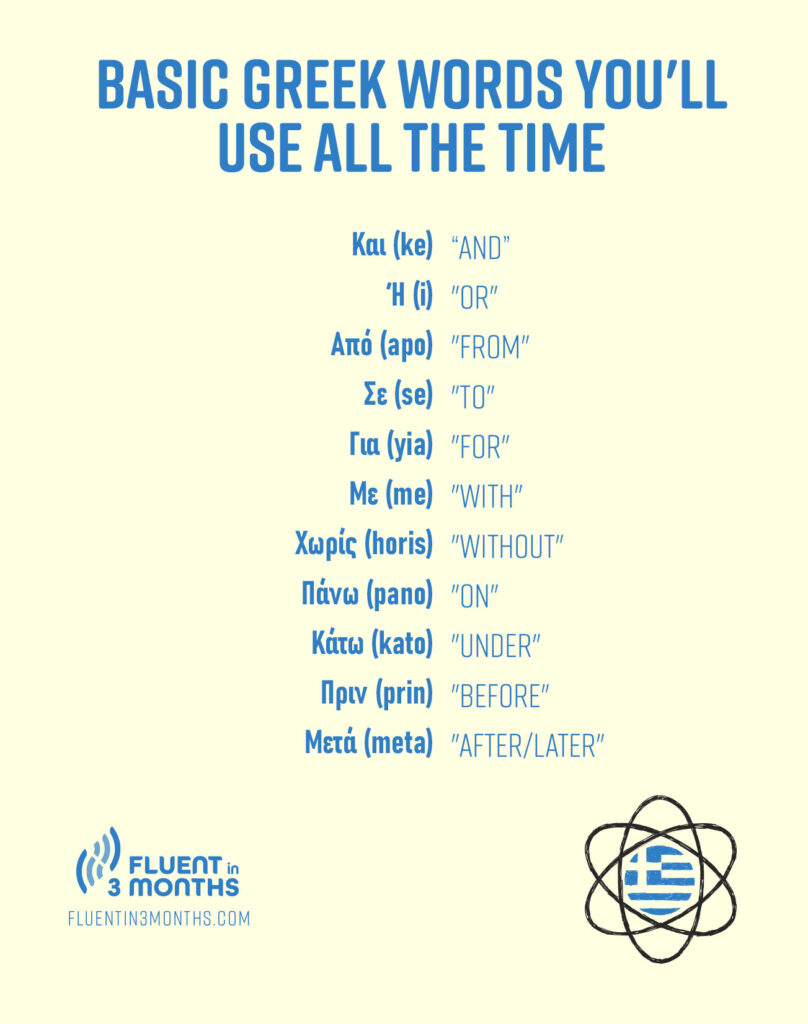
Now, let’s order coffee again!
- Έναν καφέ με ζάχαρη, παρακαλώ. (enan kafe me zahari, parakalo): “One coffee with sugar, please.”
- Έναν καφέ με γάλα, παρακαλώ. (enan kafe me gala, parakalo): “One coffee with milk, please.”
- Έναν καφέ χωρίς γάλα και ζάχαρη, παρακαλώ. (enan kafe horis gala ke zahari, parakalo): “One coffee without milk and sugar, please.”
Greek Numbers 1-10
Numbers in Greek will help you understand the prices of things, the time, someone’s phone number, and many more. Learning the numbers from 1 to 10 is a good start.
- 1. Ένα (ena): “One”
- 2. Δύο (dio): “Two”
- 3. Τρία (tria): “Three”
- 4. Τέσσερα (tessera): “Four”
- 5. Πέντε (pende): “Five”
- 6. Έξι (eksi): “Six”
- 7. Επτά (epta): “Seven”
- 8. Οκτώ (okto): “Eight”
- 9. Εννέα (ennea): “Nine”
- 10. Δέκα (deka): “Ten”
Now, Today, Tomorrow, and Yesterday in Greek
- Τώρα (tora): “Now”
- Σήμερα (simera): “Today”
- Αύριο (avrio): “Tomorrow”
- Χθες (hthes): “Yesterday”
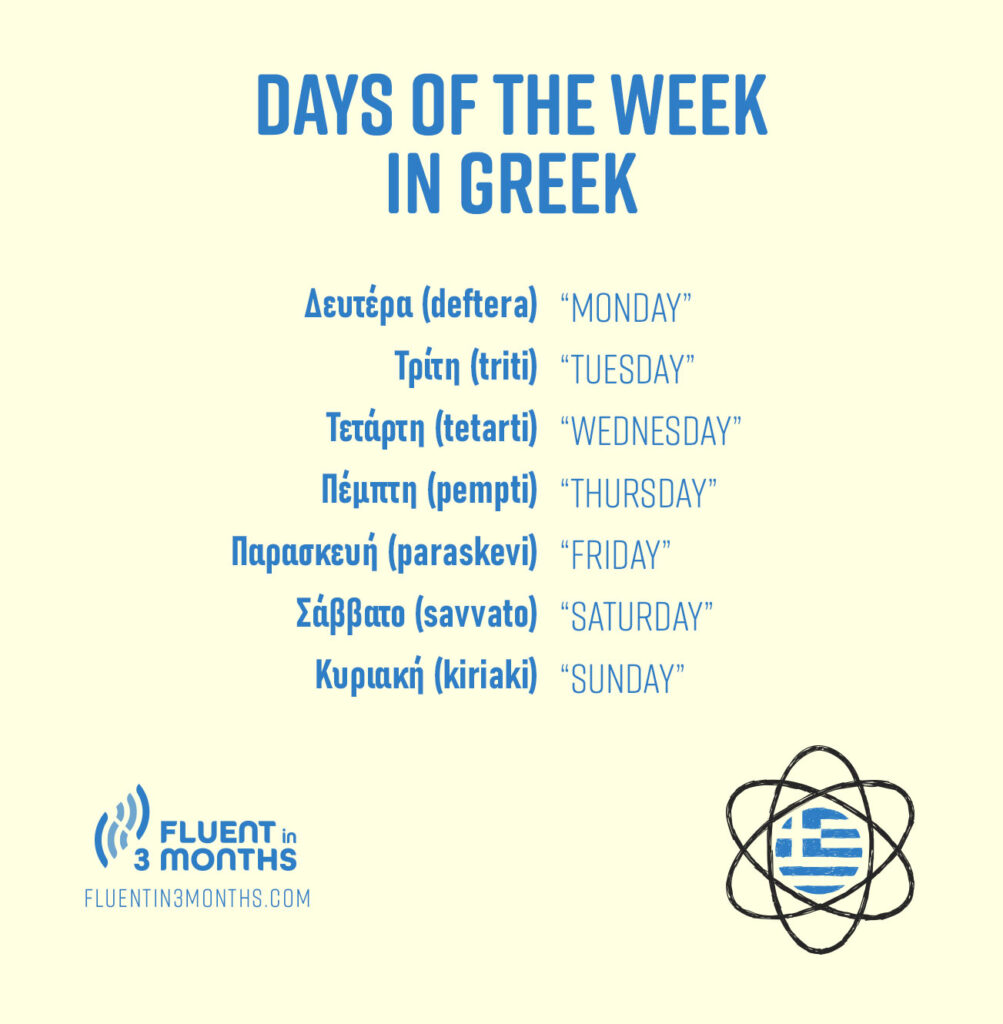
Days of the Week in Greek
- Δευτέρα (deftera): “Monday”
- Τρίτη (triti): “Tuesday”
- Τετάρτη (tetarti): “Wednesday”
- Πέμπτη (pempti): “Thursday”
- Παρασκευή (paraskevi): “Friday”
- Σάββατο (savvato): “Saturday”
- Κυριακή (kiriaki): “Sunday”
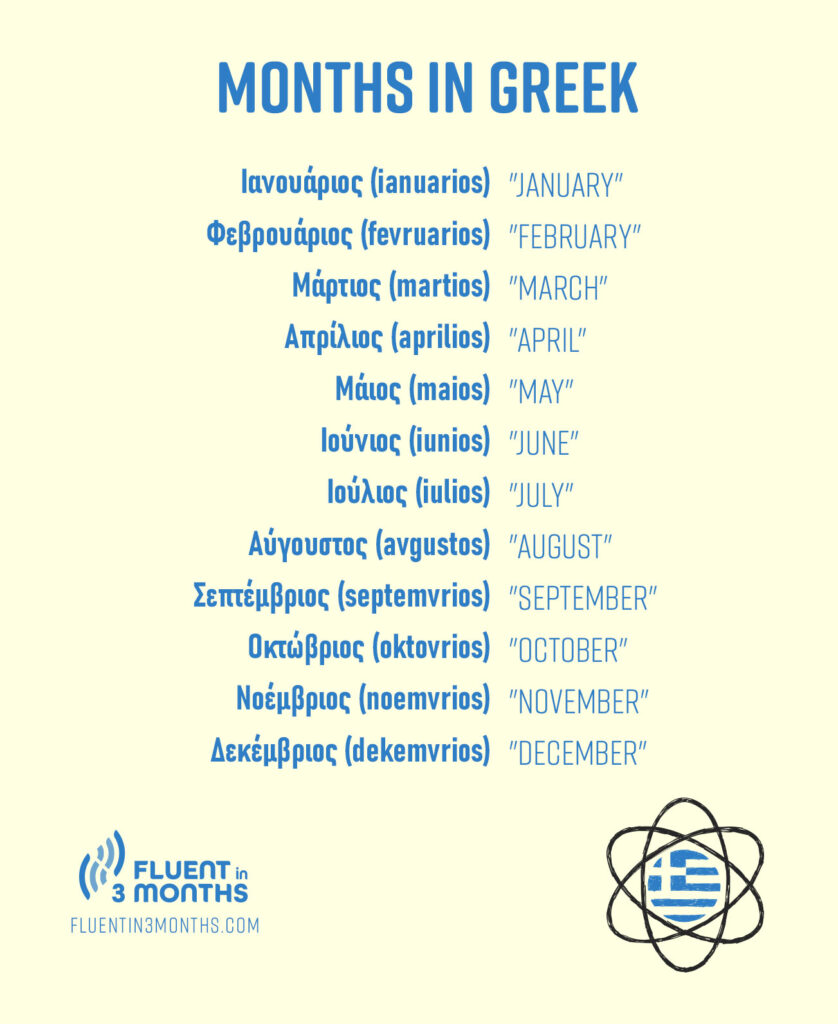
Months in Greek
- Ιανουάριος (ianuarios): “January”
- Φεβρουάριος (fevruarios): “February”
- Μάρτιος (martios): “March”
- Απρίλιος (aprilios): “April”
- Μάιος (maios): “May”
- Ιούνιος (iunios): “June”
- Ιούλιος (iulios): “July”
- Αύγουστος (avgustos): “August”
- Σεπτέμβριος (septemvrios): “September”
- Οκτώβριος (oktovrios): “October”
- Νοέμβριος (noemvrios): “November”
- Δεκέμβριος (dekemvrios): “December”
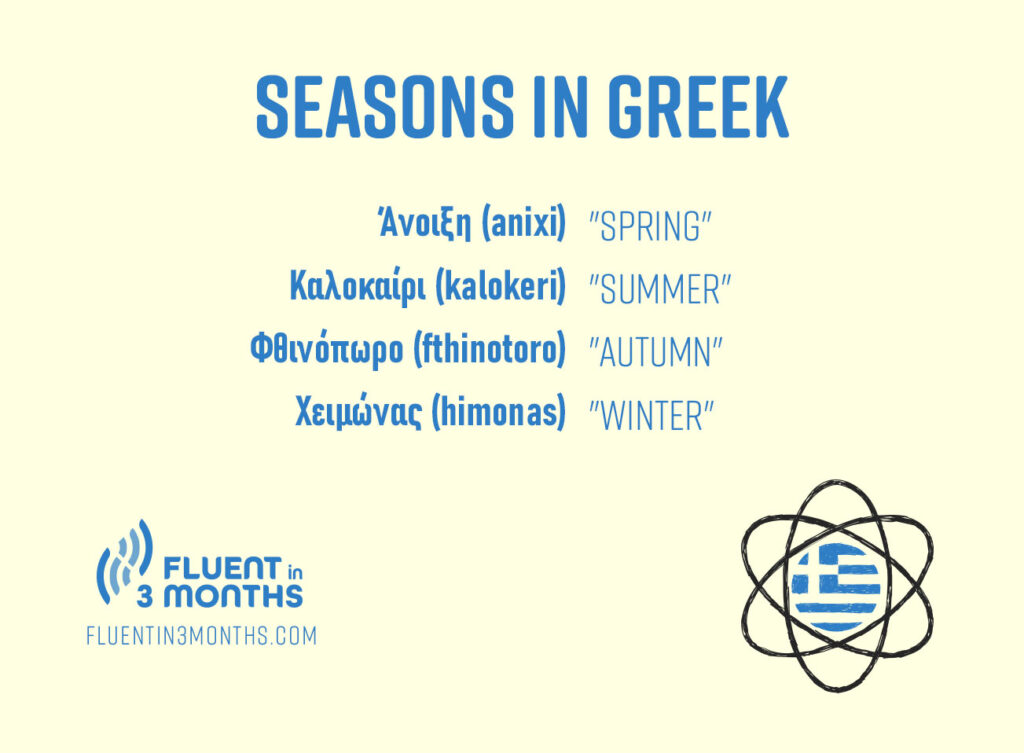
Seasons in Greek
- Άνοιξη (anixi): “Spring”
- Καλοκαίρι (kalokeri): “Summer”
- Φθινόπωρο (fthinoporo): “Autumn”
- Χειμώνας (himonas): “Winter”
Take Your Time While Learning Greek
Bookmark this list and come back to it as you need it. Take your time, and practise your Greek pronunciation with audio and video. For a structured course, try GreekPod101, or join the Fluent in 3 Months Bootcamp for live coaching and accountability.

Social