



How I Learned Italian While Working 60 Hours a Week

Full disclosure: This post contains affiliate links. ?
You do not need my circumstances to learn a language. You may have a full-time job, a family, a long commute or little chance to travel. Those constraints are real, and they change what a sensible goal looks like.
They do not necessarily rule out progress. Before language learning became my main work, I studied while teaching English and maths, translating, working as an engineer and taking other jobs. The most extreme example was Italian.
This is the story of how I fitted Italian around two demanding jobs in Italy. It is not a timetable I recommend copying. The useful lesson is how I found repeatable moments for study and conversation inside the life I had.
Before we get started, if you’re looking for an online Italian course, here’s the course I recommend: Italian Uncovered – Learn Italian Through the Power of Story, a course with a fascinating new method by my friend Olly. You can try it for free for 7 days!
Some of Us Have to Work for a Living
When I first wrote this, I sometimes answered busy readers too harshly. “Make time” is not helpful on its own. People’s work, health and caring responsibilities differ, and an hour is not equally available to everybody.
A better question is: what is the smallest useful language activity you can repeat? That might be ten minutes of review on a commute, one weekly conversation or a short listening session while doing something routine. A modest schedule you can sustain is more useful than an ambitious plan you abandon.
My own Italian story is an unusually intense case, not a minimum standard.

Taking on My Second Foreign Language: Italian
In 2004, after learning Spanish in Valencia, I decided to tackle Italian. I travelled to Rome and stayed with my friend Daniele while I looked for work. We spoke Spanish together, while his mother became one of the first people to hear my improvised mix of Spanish and Italian.
Spanish gave me a head start, but it also created interference. I called my mixture “Espaliano”: Spanish words pushed towards Italian pronunciation, plus every real Italian word I knew. It was messy, but it let me attempt conversations while I built a better foundation.
My goal was to improve my Italian without letting my Spanish disappear through neglect.
My 63-Hour-a-Week Job at a Youth Hostel
I found work as a receptionist at an international youth hostel. My English and Spanish helped me get the job even though my Italian was still very limited.
The conditions were extreme. I worked 24-hour shifts on alternating days, sleeping on site while remaining on call. That averaged about 63 working hours a week. Accommodation was included, but the pay was only €10 a day.
I accepted those conditions for three months because I wanted the experience of living in Rome and had some savings. Looking back, the arrangement was exploitative and off the books. I am preserving that fact as part of the story, not presenting it as career or travel advice.
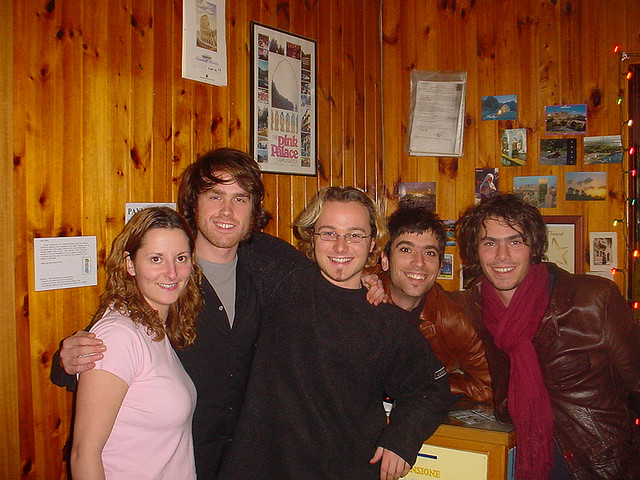
Working With the Strange Timetable
On my days away from the hostel, I went to the Biblioteca Nazionale and worked through Italian-learning books. I also visited Daniele’s family, watched Italian television with them and spoke with people around the city.
The important part was not squeezing productivity from every waking minute. I still slept and took breaks. What helped was giving different moments a clear job: focused study at the library, listening with television and conversation in ordinary social situations.
That distinction matters if you work full time. Some activities need concentration, while others fit into a commute or a lunch break. Match the task to the energy and attention you actually have.
Learning While at Work
The hostel had occasional quiet periods, so I used some of them to review vocabulary. Most of the shift was too busy for study, and I did not pretend otherwise. An available hour was useful even when it was the only formal study I managed that day.
I also found small chances to speak Italian while doing the job. They were brief and imperfect, but repeated retrieval made the language easier to access. Today, someone who cannot practise at work can create the same kind of repetition through voice notes, a tutor or a regular language exchange outside working hours.
The original version described deceptive phone conversations and secretly promoting pub crawls as clever practice. Those details belong to what happened, but they are not sound learning advice. You can create real conversations without misleading customers or crossing a workplace boundary.
Making Sure Not to Forget My Spanish
The hostel brought visitors from Spain and Latin America, so I kept using Spanish as I learned Italian. I also joined walking tours and showed visitors around Rome in different languages.

Using both languages regularly helped me separate them. I still mixed them up at times, especially because they are related, but switching between them became easier with practice.
By the end of three months, my Italian had improved to a level I was proud of. That is my recollection of the result, not a controlled comparison or a promise that someone else will reach the same point on the same schedule.
Job 2: A Full-Time Job Plus a Long Commute
A few years later, I returned to Italy and lived in Perugia while working in Foligno. The job took 40 hours a week, and the round trip by train and bicycle added roughly three hours on working days.
I was preparing for the CELI C2 exam because I planned to become a conference interpreter. That career plan changed, so I did not sit the exam. I therefore cannot cite a C2 result from this period.
Italian was the common language in the home I shared with ten other people, and I used it at work. I studied on the train when I had enough energy, but the daily contact mattered more than constructing a heroic routine.

How to Learn a Language Around a Full-Time Job
- Choose a goal that fits this season of your life. Progress may mean one conversation a week, not fluency by a fixed date.
- Protect one repeatable slot. Ten reliable minutes beat an imaginary free afternoon.
- Use low-energy and high-energy time differently. Listen or review when tired; save speaking and difficult study for a better window.
- Make conversation regular. A teacher or exchange partner can turn vague intention into an appointment.
- Reduce the plan before abandoning it. A difficult week can become a maintenance week instead of a complete stop.
Being busy is not a character flaw, and my 63-hour hostel week is not a challenge for you to beat. The point is narrower: language learning can survive a demanding job when the goal is realistic and the practice is small enough to repeat.

Social