



How to Train Your Ear for a Language: 5 Practical Steps

Full disclosure: This post contains affiliate links. ?
I’m Idahosa Ness, a musician and language teacher, so I pay close attention to the sound of a language.
Many learners tell me that written words feel easier to understand than speech at natural speed:
“I understand much more when I can see the words. When I hear them, I lose the thread.”
That does not make someone a fixed “visual learner”. The popular idea that each person learns best through one matching sensory style is not a useful rule for designing study.
Listening is still a skill of its own. If conversation is your goal, you need practice turning a changing stream of sound into meaning.
“So should I stop reading altogether?”
No. Writing can clarify a phrase, reveal a pattern and support memory. The problem comes when you only recognise a word on the page and never train yourself to hear or say it.
For spoken communication, connect meaning, sound and movement instead of treating spelling as the whole language.
School and self-study often make text easier to control: you can pause it, reread it and look things up. Speech keeps moving, so it can feel less comfortable.
That difference is not a diagnosis or an addiction. It is a practice gap you can work on.
If you read more easily than you listen, use that strength as a bridge: pair a transcript with audio, then gradually remove the transcript.
Here is a five-point sound-training plan.
A note from the Fluent in 3 Months team before we get started: You can chat away with a native speaker for at least 15 minutes with the “Fluent in 3 Months” method. All it takes is 90 days. Tap this link to find out more.
When Spelling Starts to Control Your Speech
Notice how new words usually reach you. Do you first meet them in writing, through audio, in conversation or through a mixture?
A text-heavy routine can create three habits worth checking.
Foundation: You learn how the writing system represents sounds and words. That is valuable, but spelling-to-sound relationships may be complex, variable or unfamiliar. The original 2013 version of this article illustrated that process with a “sound-script converter”. Treat that as a metaphor, not a scientific model of how a brain reads or remembers speech.
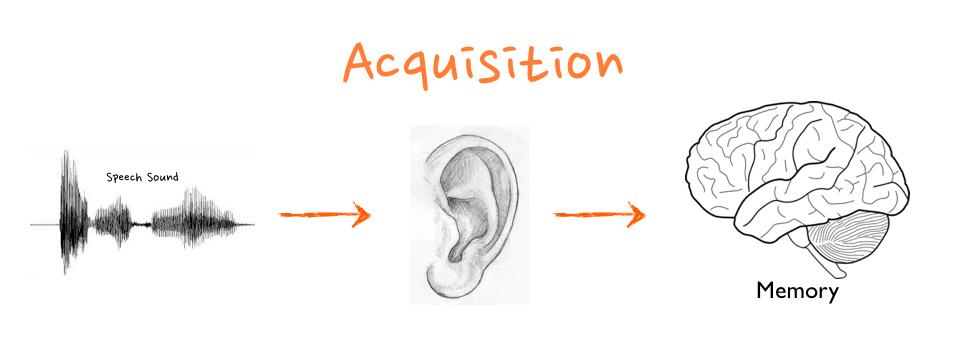
Acquisition: You may begin trusting a word only after you see it written. Then a familiar word can sound completely new when someone says it quickly. This does not mean that sound must always come first. It means you should check whether the written form is helping you hear the word or replacing listening practice.
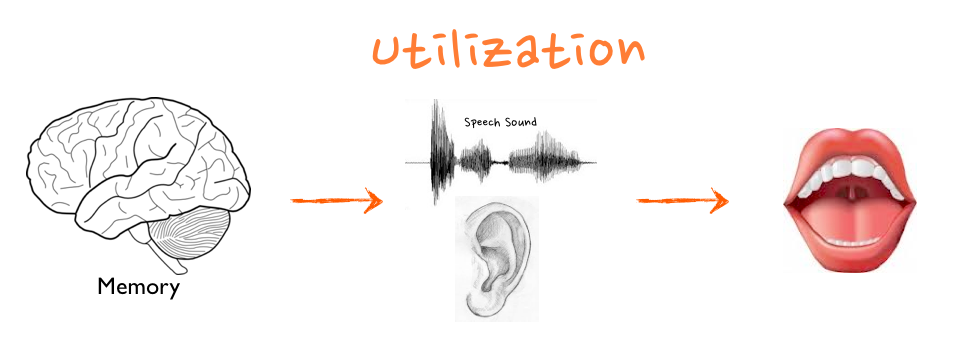
Use: When you speak, you may picture spelling or mentally recite a rule before the word comes out. That extra step can slow retrieval, especially under pressure.
A balanced routine reduces those problems in three ways:
- Check sound as well as spelling: Do not assume letters represent sounds the same way they do in a language you already know. Listen to several clear examples and compare them.
- Practise connected speech: Words can sound different inside a sentence because people link, reduce or emphasise parts of the stream. Work with whole phrases, not isolated dictionary entries alone.
- Move from analysis to use: A rule can help you notice a pattern, but eventually you need repeated retrieval in meaningful speech. Short, familiar phrases give you room to focus on delivery.
These habits affect people differently. Some learners connect print and sound easily; others need more deliberate listening and pronunciation practice.
In my work as a language teacher and accent coach, I saw learners benefit when they stopped treating the written form as their only reference.
That led me to emphasise sound, movement and meaning together.
What a Sound-Focused Routine Sounds Like
Oral communication is more complicated than passing a thought intact from one brain to another. Speakers choose words and movements; listeners use the signal, context and shared knowledge to build an interpretation.
- A speaker decides what they want to communicate.
- They use language and mouth movements to produce a speech signal.
- The signal carries rhythm, pitch and other acoustic information.
- A listener hears the signal in a particular context.
- The listener combines sound, language knowledge and context to interpret it.
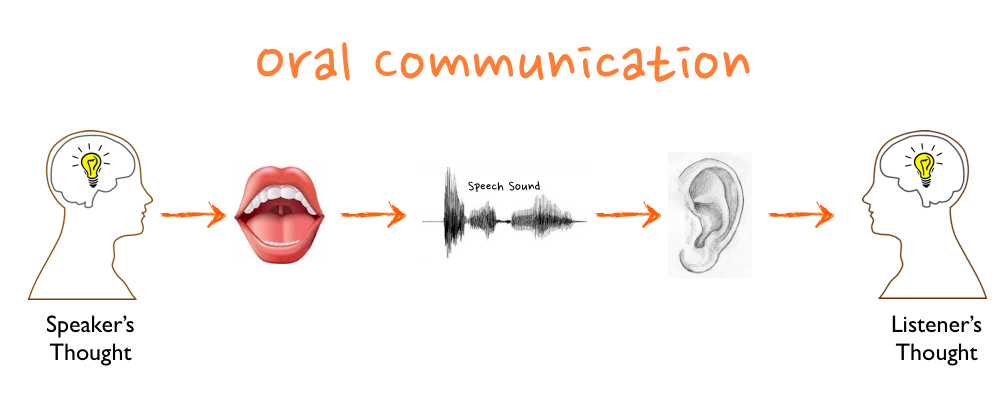
Shared language conventions make that exchange possible, but communication also involves prediction, repair and feedback.
A sound-focused routine strengthens three links: hearing a contrast, understanding what it changes and learning the mouth movement that produces it.
Foundation: Train yourself to notice unfamiliar sound patterns and practise the movements involved. You do not need to perfect every sound before you begin speaking.
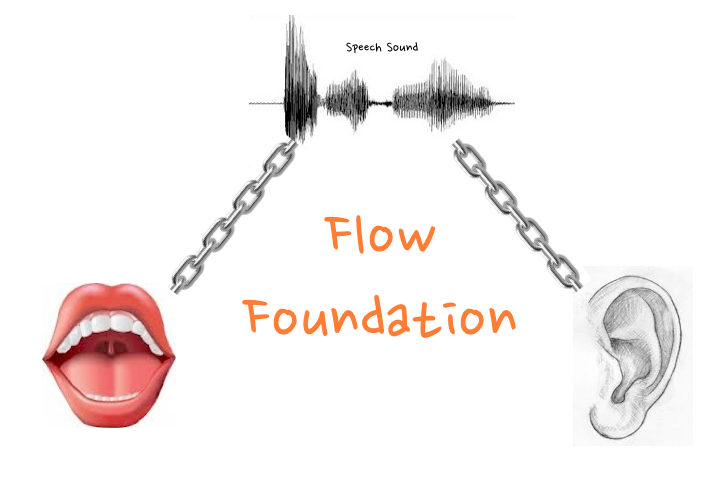
Acquisition: Meet new words and phrases in audio as well as print. Listen for them in more than one voice and sentence.
Use: Retrieve the phrase for a real purpose, record it and compare what you produced with a reliable model.
This is a focus, not a complete theory of language learning. Reading, writing, grammar study and conversation can all support the same goal.
How easily you hear or produce a sound depends on the language, the context and your experience with it.
Adults have not lost the ability to listen. They may simply have years of automatic sound categories from languages they already speak.
Courses and apps vary: some lean heavily on text, while others include useful audio, recording and feedback. Judge a resource by the practice it gives you, not by whether it is printed or digital.
You can also build sound practice from material you already use.
The Mimic Method courses I originally created around this approach have since been discontinued. The five principles below stand on their own and do not require that product.
Here is how to turn them into a repeatable routine.
Point 1: Know Your Mouth
Spelling can make speech sounds feel like letters, but a letter is not a mouth movement or an acoustic signal.
Start with a sound you find difficult. Watch and feel what your lips, tongue, jaw and voice are doing when you attempt it.
The same sound can be represented by different letters across writing systems, and one letter can represent different sounds.
That is why copying spelling alone may send you towards a movement from another language.
People share the same broad vocal anatomy, but speech habits, bodies and abilities vary. Use physical descriptions as guides, not as a demand that every learner sound identical.
The International Phonetic Alphabet can give you a consistent label for a sound when ordinary spelling is ambiguous.
You do not have to learn the entire IPA chart. Begin with the few symbols and movement descriptions that solve a problem you can actually hear.
A teacher, speech professional or reliable pronunciation guide can help when you cannot tell what is changing.
Phonetic vocabulary may look technical, but its job is practical: it lets you describe where the airflow is restricted, whether the vocal folds vibrate and how the tongue or lips are positioned.
A small amount of that knowledge can make feedback more precise.
It is one useful tool, not a required first step for every learner.
Your goal is intelligible communication and better listening, not anatomical perfection.
Point 2: Notice Transfer from Languages You Know
Languages you already speak influence which contrasts you notice and which movements feel automatic. This is called transfer, not a genetic predisposition or a personal failing.
A contrast that is important in one language may not separate words in another. Learners can initially group two unfamiliar sounds into one familiar category.
Transfer is not identical for every speaker. Region, multilingual experience, exposure and individual variation all matter.
If you know your recurring listening or pronunciation pattern, you can give it focused practice.
Do not assume there are only a handful of predictable errors for an entire language pair.
Choose one contrast at a time, practise it in meaningful words and phrases, and check whether the change improves understanding.
Point 3: Get Specific Feedback
It is difficult to judge every part of your own speech while you are speaking.
A short recording lets you listen again without the pressure of producing the next sentence.
Record one or two sentences, compare them with a reliable model and ask a teacher or proficient speaker which difference most affects understanding.
Timed comments in an audio tool can help a reviewer point to the exact moment where a sound, stress pattern or rhythm changes. The specific platform matters less than precise, respectful feedback.
Keep a short list of recurring patterns. Work on one, record again and compare the new attempt with the earlier one.
No responsible method can promise to remove 95% of an accent in a month. Aim for a change you and your conversation partners can notice in a particular task.
Point 4: Use Sound with Other People
If conversation is your goal, include real interaction. A textbook or recording can prepare you, but another person gives you unpredictable meaning, timing and repair.
Fi3M’s Speak from Day One philosophy is useful here as an invitation to communicate early, not proof that one personality or method causes multilingual success.
I prefer to frame the goal as learning to communicate with people, not collecting perfect sounds. Listening and pronunciation matter because they help that exchange work.
Point 5: Make Sound Practice Enjoyable
You do not need to call reading or listening an addiction. You do need a routine you are willing to repeat.
As a musician, I enjoy the rhythm, pitch and movement of speech. Other learners may prefer dialogue, comedy, songs, drama or the satisfaction of making a difficult phrase clearer.
When I taught the original Flow courses, some students wanted to explore the sound of another language even when practical fluency was not their immediate goal.
“The goal is not to sound identical to someone else. It is to become easier to understand and better able to hear the contrasts that matter.”
That kind of sound exploration can resemble learning an instrument: the practice itself can be rewarding even before it serves a larger performance.
Pronunciation takes attention and repetition. Enjoyment helps you return, but rest and variety matter too.
Choose material you like and a session short enough to repeat tomorrow.
A 20-Minute Sound Practice
The Flow 101 course promoted in the original article is no longer available. You can apply the useful parts of the routine without signing up for a course.
Choose one short clip with a transcript and spend about 20 minutes on four tasks:
- Listen once for the main idea without reading.
- Read the transcript and mark one phrase that sounded different from what you expected.
- Listen again, then record yourself using that phrase in a new sentence.
- Compare the recordings or ask for feedback on one specific feature.
Repeat the same clip later in the week. If the phrase becomes easier to hear and use, choose a new one.
Reading and sound are not rivals. Use each one to strengthen the other, then test the connection in conversation.

Social