



Thai Practice: 10 Simple Games and Exercises

Full disclosure: This post contains affiliate links. ?
A short Thai practice session can train more than recognition. You can hear a word, retrieve it, say it and use it for a purpose.
These ten games turn short study sessions into active practice. Some use free online tools; the rest need little more than a phone, a map or a few cards. Pick one that matches the skill you want to train, then make it slightly harder as you improve.
A note from the Fluent in 3 Months team before we get started: You can chat away with a native speaker for at least 15 minutes with the “Fluent in 3 Months” method. All it takes is 90 days. Tap this link to find out more.
Table of contents
1. Listen and Learn
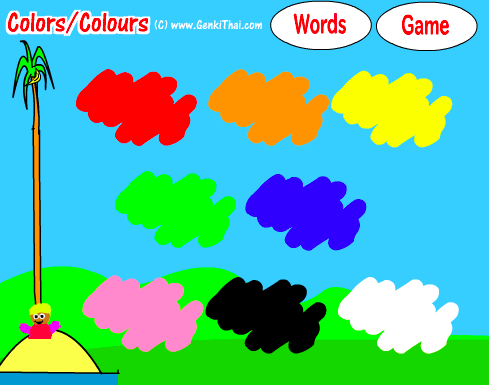
Start with a small vocabulary set such as colours, drinks or body parts. Genki Thai has picture-based listening activities for these topics and several others.
- Listen once without looking at an answer.
- Point to or write what you think you heard.
- Check, replay and repeat the Thai aloud.
- Finish by naming the pictures without the audio.
Working carefully with ten items can show you more than clicking through a large set on autopilot. Keep a note of the two or three words you miss and begin with those next time.
2. Learn Thai Numbers, Fast!
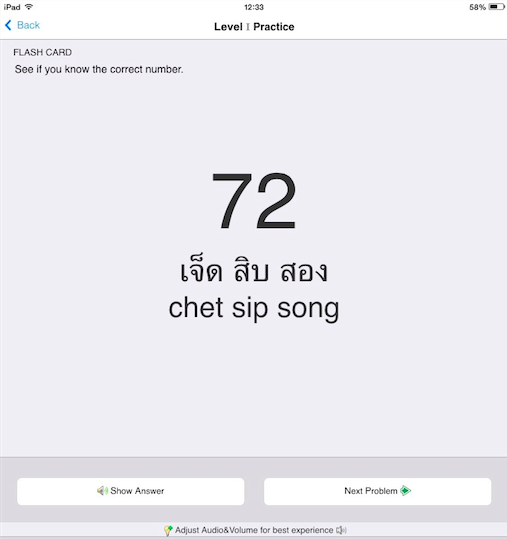
You can make a fast number drill without a dedicated app. Ask a partner to read random prices, dates or room numbers in Thai while you type the digits. When you practise alone, record a list, leave it for a few hours, then play it back and write what you hear.
Reverse the task for recall practice: generate random numbers on your phone and say each one in Thai. Begin with a range you can handle, then add more digits. This is especially useful before shopping or negotiating a price.
3. Speed Listening

Choose a short clip with Thai audio and a reliable transcript. The free PickupThai samples are one source; a clip from your own course also works.
- Listen once at normal speed and write down what you understand.
- Listen again in short sections while checking the transcript.
- Replay one sentence and speak along with it, copying the timing and tone.
- Return to normal speed and listen without the transcript.
Use a clip of 30–60 seconds. A short passage is easier to revisit closely than a long recording that turns into background noise.
4. Thai Directions Game

Mark a start and destination on a paper map or a map on your phone. Describe the route aloud in Thai. At first, use the directions you already know. On the next round, add a landmark, a distance or a warning such as “If you pass the supermarket, you’ve gone too far.”
For a two-person version, one person gives directions while the other traces the route without seeing the destination. If they end up in the wrong place, work out which instruction was unclear and try again.
5. Thai Typing Tutor

If the Thai keyboard still feels unfamiliar, begin with the Thai-language.com typing tutor. It asks you to match falling Thai characters to their keys and gives you a hint after repeated mistakes.
Once individual keys become easier, move to the Thai Notes typing trainer for guided practice. Accuracy comes first. Speed up only when you can type a short line without hunting for every character.
6. Thai Vowel Hand Signs

Thai vowel symbols can appear in different positions around a consonant. Stuart Jay Raj’s vowel hand-sign lesson turns those written positions into physical cues.
Watch a small part, pause and copy both the sound and gesture. Then cover the video and reproduce the sequence from memory. Treat the signs as a prompt, not a substitute for listening to clear Thai audio and learning how the vowels appear in real words.
7. Photo Mnemonics

Choose a photo about something you would genuinely discuss with a friend. Describe it aloud in Thai. A beginner can name people, objects and colours; a more experienced learner can explain what happened before the photo and what might happen next.
Look up only the words that help you tell this particular story. Revisit the same photo later and try again without notes. Because the vocabulary is attached to a scene and a story you chose, it is easier to retrieve in conversation. You can apply the same principle to other visual mnemonics.
8. Tell the Time in Thai
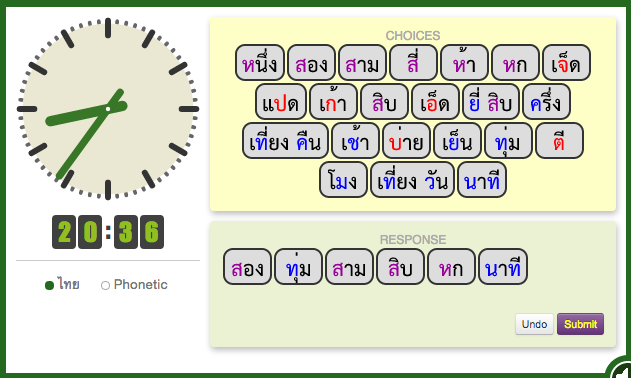
Set ten random times on an analogue clock app and say each one in Thai. Check your answers against a trusted lesson or with a teacher. Then make the task practical: say when you wake up, start work, eat and meet friends.
On another day, reverse the exercise. Record the times in Thai first, then listen and draw the clock hands. That change tests comprehension instead of rehearsed recall.
9. Thai Script Word Hunt
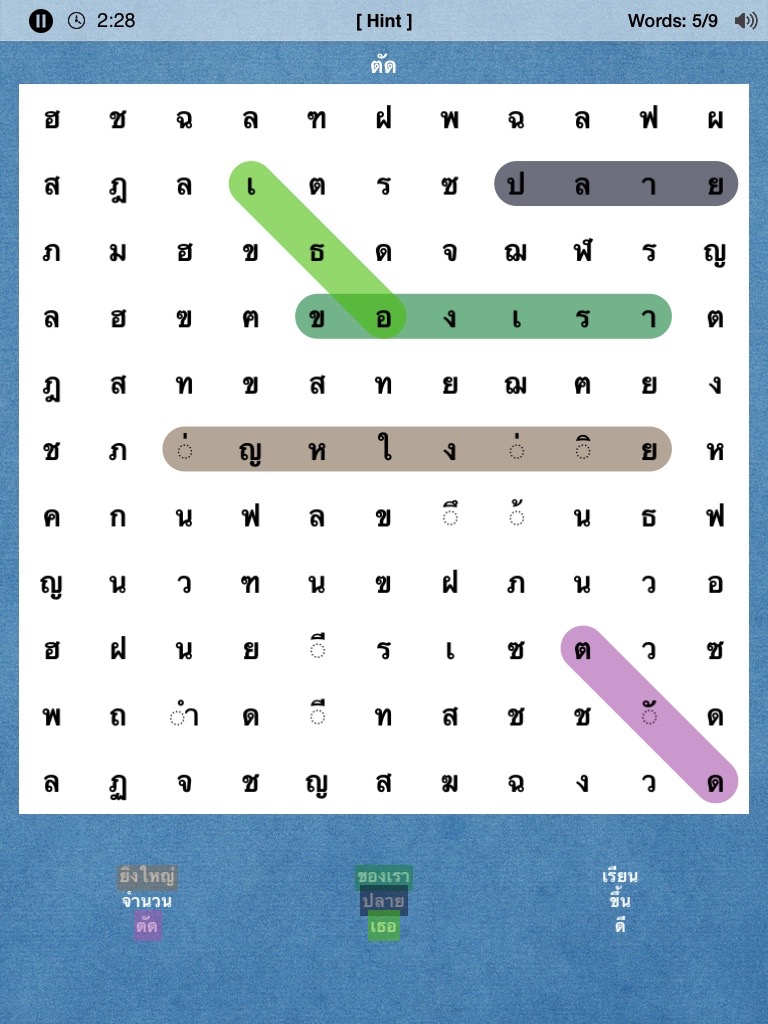
Pick five Thai words you have already studied and search for them in a short text, menu or transcript. Each time you find one, read the whole phrase around it and say the word aloud.
This trains you to recognise familiar letter patterns in context. Don't stop at spotting the shape: check the meaning and audio too. For a game with a timer, write the five target words at the top of the page and see how many you can find in two minutes.
10. Thai Classifier Flashcards
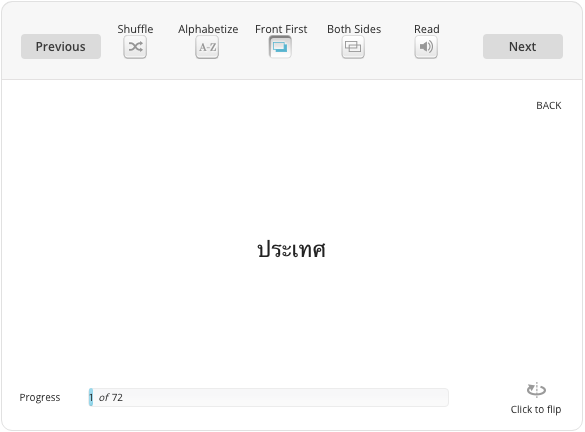
Thai classifiers are easier to practise as part of a useful phrase than as an isolated list. Build each card from an example checked in your course, dictionary or lesson:
- Front: a picture or noun plus a quantity.
- Back: the complete Thai phrase, its meaning and audio if available.
Say the full phrase before turning the card over. Sort missed cards by classifier and compare the examples, but avoid guessing that one classifier applies to every similar-looking noun. Add cards from sentences you encounter, not from a huge list you have no reason to use.
Choose one game now and practise for ten focused minutes. Tomorrow, repeat it with the items you missed before adding anything new.

Social