



How to Learn Swahili: An In-Depth Guide (With Resources!)

Full disclosure: This post contains affiliate links. ?
I’d like to show you how to learn Swahili.
Are you familiar with some Swahili words or phrases like Jambo and Hakuna Matata? Here are some ways to take the conversation further!

During a year and a half living in Kenya, I studied the Swahili language (known as “Kiswahili” to its speakers) and found it to be an excellent language for me to learn as an English speaker.
And I think you might want to consider giving this language a shot yourself. Here’s why you might like to learn Swahili:
A note from the Fluent in 3 Months team before we get started: You can chat away with a native speaker for at least 15 minutes with the “Fluent in 3 Months” method. All it takes is 90 days. Tap this link to find out more.
Table of contents
- 7 Good Reasons to Learn Swahili – East Africa’s Lingua Franca
- Reason 1: A Diverse History
- Reason 2: It’s One of Africa’s Most Widely Spoken Languages
- Reason 3: You’ll Expand Your Ideas of How Language Works
- Reason 4: It’s a Shared African Language, Without Being Colonial
- Reason 5: You’ll Get Unique Experiences and Extra Insights into Kenyan Culture
- Reason 6: Kenyans are Very Encouraging When You’re Learning Swahili
- Reason 7: Swahili is Easy!
- “But Why Learn Swahili? Don’t they speak English in Kenya?”
- The Difficulty of Learning Swahili: Why Swahili is an Easy Language to Learn
- Swahili Has No Masculine/Feminine Gender or Articles
- Swahili Verb Conjugations Are Really Simple
- There are Plenty of Swahili Words You Already Know
- Swahili Pronunciation is Easy
- Asking Questions in Swahili? That’s Easy Too!
- Learn Swahili Through Immersion in Kenya: My 3 Top Tips
- Learn Swahili at Home With These Swahili Courses and Resources
- 2 Paid Resources for Learning Swahili
- Getting Started with Learning the Swahili Language
- Swahili Pronunciation Guide
- Swahili Greetings
- Basic Swahili Vocabulary
7 Good Reasons to Learn Swahili – East Africa’s Lingua Franca
Reason 1: A Diverse History
Swahili is a Bantu (African origin) language with a large Arabic influence. It also includes some loan words from languages such as English, German, and Portuguese.
Swahili developed on the East African coast. Over the centuries, trade and cultural exchange with Arabic-speaking communities and, later, Europeans influenced its vocabulary.
Reason 2: It’s One of Africa’s Most Widely Spoken Languages
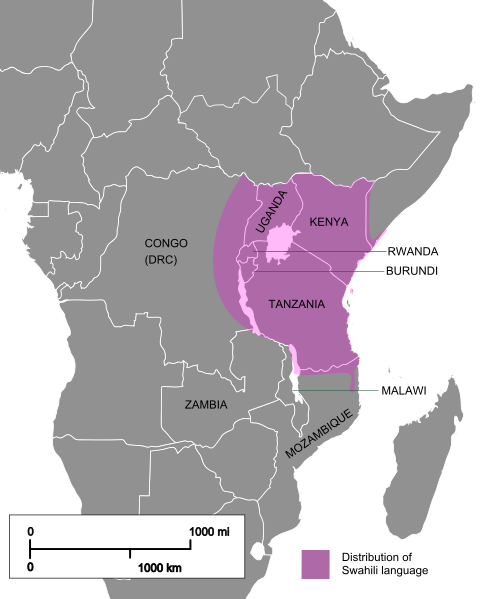
Swahili is spoken across East and Central Africa, both as a first language and as a shared language. UNESCO estimates that it has more than 200 million speakers.
Swahili is used in Kenya, Tanzania, Uganda and the Democratic Republic of Congo, though its legal status and reach vary. In Kenya, it’s the national language and shares official status with English; in Congo, it’s one of four national languages. Across much of East Africa, it serves as a lingua franca.
In other words, it’s the common language that two people will use to communicate if they don’t share the same native language.
Reason 3: You’ll Expand Your Ideas of How Language Works
If you’re used to languages such as English, Spanish or French, these features of Swahili might surprise you.
In Swahili, many plurals are formed by changing the beginning of a word, rather than the ending. For example, a singular teacher is mwalimu and multiple teachers are walimu. One shoe is kiatu, but many shoes are viatu. Some nouns have the same singular and plural form, so noun-class agreement and context also matter.
Another different concept is that of telling time.
Swahili time counts the daytime hours from around 6:00 a.m., near sunrise. So 7:00 a.m. is the first completed hour, “hour one” or saa moja (moja means “one”). 8:00 a.m. is “hour two” or saa mbili, and so on.
This reflects a different way of looking at time than in the Western world, where we mark midnight as the beginning of the new day, or Judaic culture, where the day begins at sunset.
Many other differences exist that will help to expand your perspective of how language functions, and how this can be reflected in the culture.
Reason 4: It’s a Shared African Language, Without Being Colonial
Where is Swahili spoken? Across East Africa. And that’s something else about Swahili that I find interesting.
Countries such as Nigeria and Ghana have different patterns of multilingualism, with African languages, English and pidgins all playing a part. The language people choose depends on who they’re speaking with; English or pidgin isn’t their only possible shared language.
Meanwhile, Swahili gives people across much of East Africa a shared African language, so they don’t always have to rely on a colonial language to communicate. It’s related to other Bantu languages, but not to every local language spoken in the region.
Reason 5: You’ll Get Unique Experiences and Extra Insights into Kenyan Culture
As Fluent in 3 Months founder Benny Lewis has mentioned many times, speaking the local language gives you special access to certain aspects of the culture.
Kenya is certainly not the only country where you can get a “local price” on items at markets rather than paying the foreigner’s price, or “Mzungu tax.”
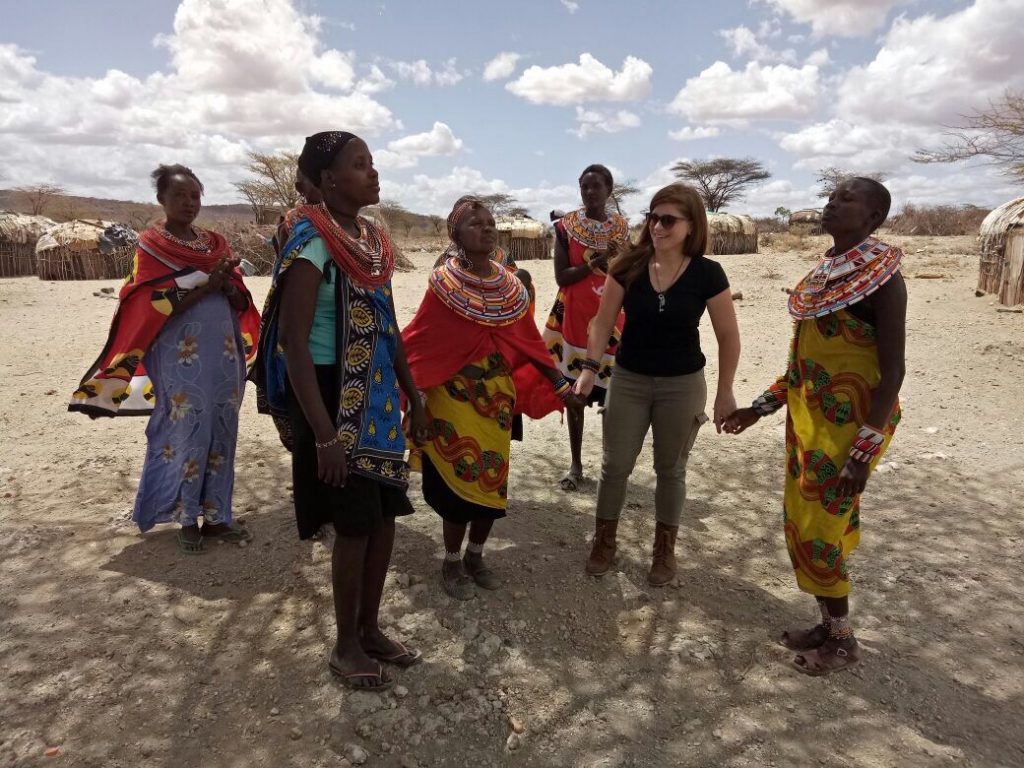
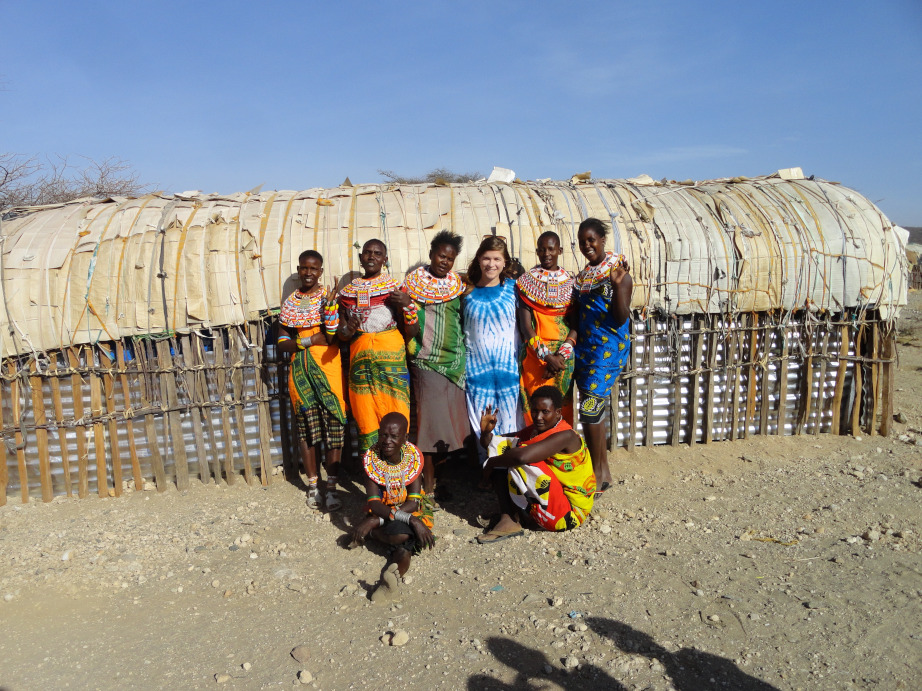
One highlight of my time in Kenya was when I was able to spend one week in a rural women’s village in the county of Samburu. I was able to live with the women and their children and become fully immersed in their lifestyle, a truly special experience.
Because the village was rather isolated from any big cities or cosmopolitan centres, English was very rarely spoken. Most of the villagers spoke Kisamburu, their mother tongue, but quite a few knew Swahili as well.
Because of my proficiency in basic Swahili, I was able to communicate with them, and we formed quite strong bonds. The language barrier is so real when it comes to forging friendships or even just being understood.
I was able to have such a great experience in this village because of my ability to communicate with the women in our shared second language, Swahili.
Reason 6: Kenyans are Very Encouraging When You’re Learning Swahili
A popular reason language learners give for not speaking their target language enough is that they feel self-conscious when they try, or they are worried about embarrassing themselves in front of native speakers.
That wasn’t my experience when I tried speaking Swahili in Kenya.
When I was practising my Swahili during my travels in Kenya, I was often met by pleasantly surprised looks from the locals. They would say things like “si kawaida!” (it’s not usual) when they heard me speaking Swahili.
The people I met were very welcoming and seemed pleased to hear me trying to speak Swahili!
I even got some compliments on my accent and grammar, even though my Swahili is far from perfect.
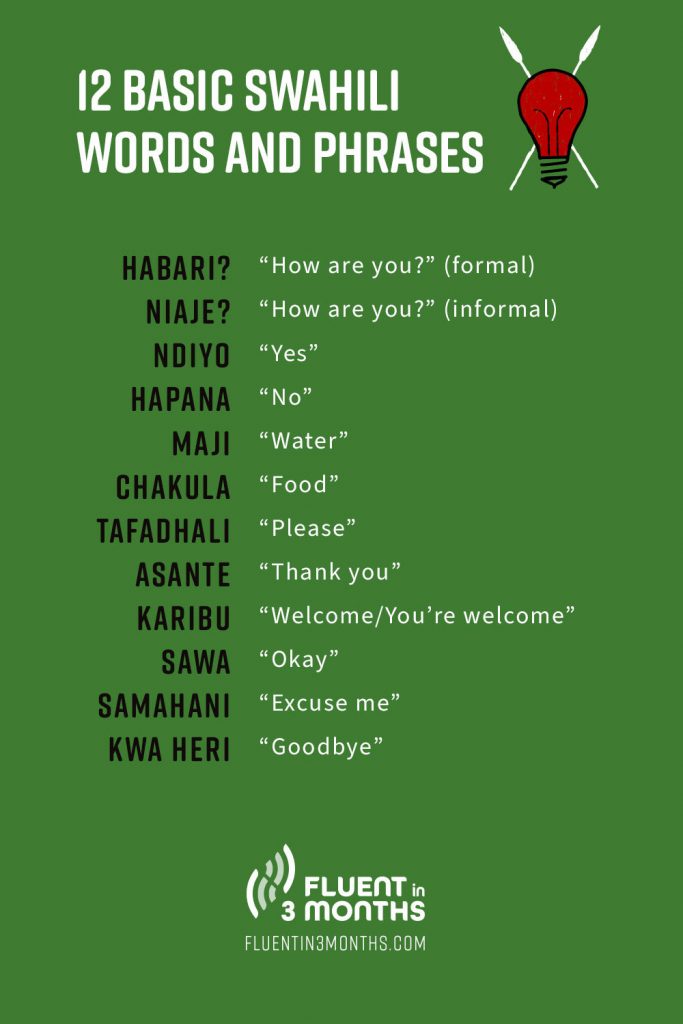
Here are a few basic words and phrases you can learn to start interacting in Swahili as soon as possible. I’ll list more at the end of the article.
Reason 7: Swahili is Easy!
By studying Swahili, I’ve learned for myself that it can be a relatively easy language to learn.
In a moment, I’ll show you the hacks I’ve discovered that make Swahili an easier language than you’d think.
First, an objection I’ve sometimes heard to learning Swahili:
“But Why Learn Swahili? Don’t they speak English in Kenya?”
Yes, English and Swahili are both official languages of Kenya (Swahili is also the national language). Many English-speaking tourists or expats living in Kenya get by relying only on English.
However, this doesn’t mean it is spoken by 100% of Kenyans – far from it.
Many Kenyans speak three or more languages, including Swahili, English and another language used at home. English proficiency varies, so don’t assume everyone you meet will be equally comfortable speaking it.
In Kenya, you’ll come into contact with many highly-educated Kenyans whose English is excellent, especially in the tourism industry. But there are also many Kenyans, especially in rural areas, who speak very little English.
Some Kenyans feel more comfortable speaking Swahili than English, while others prefer English or another language. Ask the person you’re talking to rather than guessing.
The Difficulty of Learning Swahili: Why Swahili is an Easy Language to Learn
Is Swahili hard to learn? It’s easier than you might think.
You’ll see Swahili grouped differently in language-difficulty rankings, depending on the system. Those categories describe a particular learner and course, not a fixed difficulty everyone experiences.
However, I find it quite an approachable language as an English speaker, especially with some familiarity with Spanish or Italian pronunciation.
Here are a few reasons why you’ll find Swahili not only interesting and practical to learn, but also a fun and easy language to pick up:
Swahili Has No Masculine/Feminine Gender or Articles
For many English speakers, grammatical gender can be one of the most frustrating parts of learning a language. Swahili does not use masculine and feminine grammatical gender or articles, but its noun-class system is important because it affects agreement on verbs, adjectives and other words.
Author and humorist David Sedaris expressed his frustrations with trying to remember what gender each noun has while learning French in his essay Me Talk Pretty One Day:
“I spent months searching for some secret code before I realized that common sense has nothing to do with it. Hysteria, psychosis, torture, depression: I was told that if something is unpleasant it’s probably feminine. This encouraged me, but the theory was blown by such masculine nouns as murder, toothache, and rollerblade. I have no problem learning the words themselves, it’s the sexes that trip me up and refuse to stick.”
In Swahili, you won’t need to worry about whether nouns are masculine or feminine, and you won’t have to worry about articles at all! Swahili has neither definite (the) nor indefinite (a, an) articles.
For example, to say “I need a chair,” you’d say Ninahitaji kiti.
The first part of the sentence, Ninahitaji means “I need,” and the second part, kiti, means “chair.” This sentence can either mean “I need a chair” or “I need the chair.” The exact meaning is easily implied by the context of your sentence.
You also won’t need to worry about gendered pronouns. The pronoun for “he” and “she” is one and the same. So the sentence Yeye ni mwalimu is used to say both “He is a teacher” and “She is a teacher.”
The same is true for Anacheza: “He is playing” or “She is playing.” Again, the meaning is worked out from the context.
Having the same pronoun for “he” and “she” means you don’t have to specify someone’s gender in these examples.
Another easy aspect of Swahili is that it has no formal “you” pronoun, as languages like Spanish and French do.
As an English speaker, the idea of a formal “you” was something I frequently found puzzling. While working for an Ecuadorian-based travel company, I’d often wonder if I should address my coworkers as tú or usted.
And then, did I get the verb conjugations correct to go along with either the formal or informal pronouns?
I’m sure this comes quite naturally to Spanish speakers, but for someone who isn’t used to it, this formal/informal pronoun business often gave me a headache. I generally didn’t want to offend anyone, so I usually went with the formal “you” by default.
Swahili Verb Conjugations Are Really Simple
Swahili verbs follow useful patterns: learning an infinitive and its stem gives you a starting point for building several forms. You’ll also learn subject markers, tense and aspect markers, noun-class agreement and negative forms.
For example, let’s take the infinitive verb kutembea, which means “to walk.” Many infinitives begin with ku-; remove it here and you get the stem tembea, “walk.” There are exceptions to this simple pattern, including short verbs that keep ku- in some conjugated forms.
Some examples:
- Ninatembea – “I am walking”
- Nilitembea – “I walked”
- Nimetembea – “I have walked” (a completed action, not necessarily a recent one)
- Nitatembea – “I will walk”
Here, the verb stem and the subject marker (ni-, “I”) stay the same, and we change the tense or aspect marker: -na-, -li-, -me- and -ta-.
There are Plenty of Swahili Words You Already Know
As Benny has mentioned, when starting a language, you’re rarely starting completely from scratch.
Even if you think you’re totally clueless when it comes to an African language, I can bet you’re familiar with more words in Swahili than you think.
The first example that comes to mind is safari, a word of Arabic origin that is the Swahili word for “journey.” Chances are, you’re also used to hearing this word in English in the context of a trip, usually to see animals, often in Sub-Saharan Africa. Any user of Apple products is also no doubt familiar with the Safari web browser.
In Kenya, you might hear the phrase Safari njema which means “Have a good trip!” This can also help you remember the Swahili word safiri, the verb for “travel.”
Jenga is another word known by many people in the US as a block-building game, but its name comes from the Swahili verb “build.” For example, Anajenga means “he is building” or “she is building”.
Additionally, if you’re at all familiar with the Disney movie The Lion King, you know some other Swahili words as well:
- simba – “lion”
- rafiki – “friend”
- Asante sana – “Thank you very much.” This can be heard in the song that Rafiki the baboon sings. The whole song goes “Asante sana, squash banana, wewe nugu, mimi hapana” which is a bit of a nonsense song that translates to “Thank you very much, squash banana, you are a baboon and I’m not.”
- Hakuna matata – “no problem/no worries.” Before The Lion King, hakuna matata was used in a well-known Kenyan song “Jambo Bwana” by Them Mushrooms. You’ll find that nowadays, the phrase hakuna matata is especially familiar in tourist settings. More commonly, you might hear haina shida which means essentially the same thing: “No problem!”
- Jambo – used as a greeting, especially in tourist settings. Jambo literally translates to “matter/issue/thing.” If a Kenyan greets you with Jambo, most likely it means they are trying to be friendly but assume you don’t know any Swahili. If you want to continue the conversation in Swahili, you can respond Sijambo, and then maybe follow with another Swahili greeting like Habari yako?
Swahili also uses cognates and loan words from other languages:
- Portuguese connections – familia (“family”), meza (“table”), bendera (“flag”)
- German – shule (“school”)
- Words that may look familiar to English speakers – muziki (“music”), Afrika (“Africa”), basi (“bus”), boti (“boat”), benki (“bank”), hoteli (“hotel”), kompyuta (“computer”), teksi (“taxi”), blanketi (“blanket”), posta (“post office”), shati (“shirt”), suti (“suit”), soksi (“socks”), tai (“tie”), picha (“picture”), chai (“tea” or “chai”) (These don’t all come directly from English.)
Try sounding them out phonetically, then use the pronunciation guide at the end of this article for help.
Swahili Pronunciation is Easy
There are only five basic vowel sounds in Kiswahili, and they are similar to the Spanish and Italian vowels.
Most of the consonants in Swahili can be found in English, too. Plus, written Swahili is phonetic, meaning you can pronounce nearly any written word you see, once you learn a few pronunciation rules.
See the Swahili Pronunciation Guide I’ve provided at the end of this article for all the details on Swahili pronunciation.
Asking Questions in Swahili? That’s Easy Too!
For many yes/no questions in Swahili, you don’t need to change the word order or add a phrase like est-ce que in French. Questions asking “who” or “where” still need words such as nani and wapi.
You can often use a rising intonation to signal a yes/no question. Consider the English phrase “He is visiting soon” and how you can turn it into a question just by changing your intonation.
Note: In formal Swahili, you can preface a question with the word Je (For example: Je, unajua Kiingereza? – “Do you know English?”), but in casual conversation, it is not necessary. You will be understood if you simply pay attention to your inflection.
Learn Swahili Through Immersion in Kenya: My 3 Top Tips
I’ve learned Swahili by living in Kenya, so I’d like to share some insider tips on learning Swahili, in case you’d like to do something similar.
(In the next section, I’ll share some of my favourite Swahili courses and resources that you can use if you’re planning to learn Swahili at home.)
1. Listen to How Native Swahili Speakers Speak English
Listening to Kenyan English can make you curious about how Swahili works. Some expressions have close Swahili parallels, but don’t assume that every local English phrase is a word-for-word translation.
One example that comes to mind is hearing someone say in English “You’re being called.” That passive form, rather than “Someone is calling you,” has a close Swahili equivalent.
The Swahili phrase Unaitwa means “you’re being called” and is also a passive construction.
Another example is how Kenyans will ask “Are you taking coffee?” or “Are you taking tea?” rather than what we might say in the US, “Are you having/drinking coffee?”
Be careful with a literal translation here. The verb “take” is chukua, so Unachukua kahawa? would literally ask about taking coffee. To ask “Are you drinking coffee?”, use Unakunywa kahawa?, from kunywa, “to drink”.
2. Be Aware of the Different Regions in Kenya
For those who are visiting Kenya hoping to practise Swahili, you will get a different experience depending on which part of Kenya you visit.
The Kenyan coast has long-established Swahili-speaking communities and several local varieties. You’ll also encounter standard Swahili (Kiswahili sanifu), which is used in education and broadcasting; it isn’t exclusive to the coast.
As an English speaker, I’ve found the Swahili spoken here to be very easy for me to understand, and likewise, the Kenyans at the coast seem to have an easier time understanding me.
Meanwhile, Kenya’s capital, Nairobi, is known for Sheng, an urban language variety that draws on Swahili, English and other languages used in the city.
Sheng can be hard to follow if (like me!) you’ve studied Swahili from more academic sources or mostly practised with coastal Kenyans. It was different from the Swahili I’d become used to.
If you’re interested in everyday Nairobi speech, you might want to learn a few Sheng phrases as well.
3. Visit Remote Areas in Kenya Where Few People Speak English
Kenya is a hugely diverse country, and if you’re visiting, you owe it to yourself to see the rural countryside and learn more about the people and traditions outside of the urban centres.
Since these rural areas are usually far removed from hubs of business, commerce, and globalisation, it means that English is likely to be spoken much less frequently in these areas. People may tend to speak mainly in their mother tongue and use Swahili as a second language.
In a situation like this, you may hear local languages that are new to you.
Kenya has many ethnic groups and languages, but the two don’t map neatly onto one another. Languages and related varieties you may hear include Kikuyu, Kalenjin, Kisamburu (Samburu) and Kimaasai (Maasai), among many others.
As you hear these local languages and as you are forced to speak in Swahili to be understood, you will start to appreciate any progress (however small) you have made in learning Swahili compared to another language that is totally foreign to you.
In other words, when it’s a choice between Swahili and the local language, Swahili will feel more comfortable to use!
Learn Swahili at Home With These Swahili Courses and Resources
So, now you’re motivated to start learning Swahili on your own, where do you begin?
5 Free or Free-to-Try Resources for Learning Swahili
1. SwahiliPod101
For a structured introduction, see our SwahiliPod101 review before deciding whether it suits you.
The Innovative Language podcasts are a favourite resource of the Fluent in 3 Months team.
SwahiliPod101 would be my first recommendation for learning Swahili.
Look for their beginner lessons first – they help you with basic pronunciation and greetings. This is a great way to get a first taste of the language, spoken by native speakers.
SwahiliPod101 includes a free account with selected lessons and a seven-day Premium trial. The full lesson library requires a paid subscription after the trial; use that first week to see whether its short audio and video lessons suit you.
I wish I’d used this more when I was still on my free trial!
2. LanguageTransfer Complete Swahili
Language Transfer’s Complete Swahili is freely available on its website and app, with audio you can download for offline listening.
Teacher Mihalis Eleftheriou provides a scaffolded, deconstructed look at the language with actual students for you to learn alongside. A great, easy-to-grasp approach that progresses logically.
The only reason this isn’t listed as number 1 is because Eleftheriou isn’t a native speaker himself.
3. Duolingo Swahili
When I first started learning Swahili, the Duolingo Swahili module did not exist.
It’s a great tool, but a few things should be noted.
My experience with the course was focused on Tanzanian Swahili. Much of what you learn transfers to Kenya, but vocabulary and everyday usage can vary by region.
Standard Swahili and casual speech are used in both countries. You’ll hear regional differences, but it isn’t a simple split between “formal Tanzania” and “casual Kenya”.
When I used the Swahili Duolingo course, I noticed mistakes in some advanced lessons. That’s a historical observation, not a check of every lesson available now, so use it alongside other resources and ask a tutor about anything that seems odd.
I highly recommend getting started with the SwahiliPod101 podcast first.
4. BBC YouTube Channel
The BBC News Swahili YouTube channel includes the programme Dira ya Dunia. This is more advanced listening, with formal news vocabulary rather than casual conversation.
5. Swahili Fairy Tales
An easier YouTube channel for beginners is Swahili Fairy Tales, geared towards children, with English subtitles.
2 Paid Resources for Learning Swahili
1. Preply
Preply (our review is here) of course, remains a fantastic resource.
I worked with a Swahili tutor named Jackie, from Kenya. Comparing tutors on Preply can help you find lessons that fit your budget and the kind of practice you want.
At the time of my original article, I paid $5 USD for a 30-minute casual conversation practice lesson, an incredible bargain! That was my tutor’s rate then, so check current prices before booking.
2. Teach Yourself: Complete Swahili by Joan Russell
Teach Yourself: Complete Swahili by Joan Russell is a textbook with accompanying audio. It was a huge help to me as I was starting to learn the language.
Note that this also mainly deals with Tanzanian Swahili, but is easily applied to the Swahili spoken in Kenya.
Getting Started with Learning the Swahili Language
Here are a few basics and “survival phrases” to get you started with learning Swahili:
Swahili Pronunciation Guide
There are five basic vowels in Swahili:
- a – “ah” as in “father”
- e – a steady “eh” sound, roughly like “get”; avoid gliding into “ay” as in English “hey”
- i – “ee” as in “see”
- o – a steady “oh” sound; unlike the vowel in many English pronunciations of “gopher”, don’t glide into a second vowel
- u – “oo” as in “tooth”
The “y” sound behaves similarly to how it does in English, and blends with other letters, rather than standing on its own as a separate syllable.
There are no diphthongs/blended vowels, so when you see two vowels next to each other, pronounce them both in succession. Examples:
- Kiingereza – kee-eeng-er-EZ-ah (“English language”)
- Nimesahau – nee-meh-sah-HA-oo (“I have forgotten”)
In addition to the vowel sounds, here are some tips with the consonant sounds in Swahili:
- m/n – A nasal can sometimes form a syllable of its own, as the m does in mzungu. In other Swahili words, it blends with the next consonant, as the n normally does in ndogo. Listen to the whole word rather than adding a separate hum to every nasal.
Examples:
- Mzungu – m-ZOONG-oo (“white person”)
- ndogo – NDOH-go (“small”, with nd joined)
- dh – “th” as in “this”.
- ng’ – This is perhaps the one sound that can be really foreign to English speakers. Think of the “ng” in “song” and try to imitate that when you see ng’.
Stress usually falls on the penultimate (second-last) syllable. There are exceptions, so use native audio alongside these English-based approximations.
Examples:
- kitabu – kee-TAH-boo (“book”)
- twiga – TWEE-gah (“giraffe”)
Swahili Greetings
Formal Greetings in Swahili
- Habari? – “How are you?” (literally “news”)
- Nzuri – “good/well” (in response to Habari?)
- Sana – “a lot/very/very much”
- Hujambo/Hamjambo? – “How are you?” (singular/plural)
- Sijambo/Hatujambo – “I’m fine/we’re fine”
Informal Greetings in Swahili
- Sasa? – “What’s up?” (literally “now”)
- Niaje? – “How are you?”
- Mambo? – “What’s up?” (literally “things”)
- Vipi? – “How’s it going?”
- Poa – “good/cool” (response to Vipi?)
Basic Swahili Vocabulary
- Ndiyo – “Yes”
- Hapana – “No”
- Asante – “Thank you”
- Karibu – “Welcome/You’re welcome” (also: “close” / “near”)
- Mzungu – “White person” (If you’re white, expect to hear this a lot!)
- Twende – “Let’s go”
- Maji – “Water”
- Chakula – “Food”
- Tafadhali – “Please”
- Sawa – “Okay”
- Samahani – “Excuse me”
- Pole – “Sorry” (to express sympathy)
- Rafiki – “Friend”
- Nataka – “I want…”
- Nataka hii – “I want this one”
- Nipe… – “Give me…”
- Ngapi? – “How many?” For a price, use Pesa ngapi?, “How much money?”
- Ghali sana! – “Too expensive!”
- Bei nzuri – “Good price”
- Kidogo – “A little”
- Unajua Kiingereza? – “Do you know English?”
- Sijui – “I don’t know”
- Sielewi – “I don’t understand”
- Sema polepole, tafadhali – “Please speak slowly”
- Naitwa… – “My name is…”
- Wapi – “Where?”
- Choo kiko wapi? – “Where is the toilet?”
- Unatoka wapi? – “Where do you come from?”
- Natoka Marekani – “I come from the USA”
- Kwa heri – “Goodbye”
Original article by Maria Price, updated by the Fluent in 3 Months team.
For a few phrases to use straight away, try our guide to saying hello in Swahili.


Social