



Learning Spanish in Buenos Aires: What Immersion Changed for Me

Full disclosure: This post contains affiliate links. ?
I spent a year living and working in Buenos Aires after studying Spanish for three years at university. That year changed my Spanish because it gave me reasons to listen, respond and notice regional usage every day.
This is my account of that experience, not proof that everyone must move abroad or that immersion produces the same result for every learner. Travel, work and study abroad depend on money, health, visas and personal responsibilities. You can create regular contact with speakers without relocating. For me, though, life in Buenos Aires made the language immediate in a way that classroom study had not.
If you want a clear structure for putting your Spanish into practice, take a look at the Fluent in 3 Months Bootcamp. It’s a 90-day programme with weekly coaching calls, a private community and a focus on speaking from day one.

The Argentine Spanish Grammar That First Surprised Me
I arrived with intermediate Spanish shaped largely by university study, conversations with friends and time in Spain. I could communicate, but I was not yet used to the Spanish of Buenos Aires.
One of the first differences I noticed was voseo: using vos as a familiar singular “you”, together with its verb forms. Voseo exists in several parts of the Spanish-speaking Americas, not only Argentina. In the Río de la Plata region, including Buenos Aires, it is widely accepted in speech and writing.
These present-tense comparisons show the pattern:
- tú tomas (“you take”) becomes vos tomás
- tú tienes (“you have”) becomes vos tenés
- tú vives (“you live”) becomes vos vivís
The final syllable is stressed in these voseo forms, so the written accent matters. The forms also avoid some stem changes found in the corresponding tú forms, as tenés shows beside tienes. Do not turn that observation into a rule for every verb and tense. Learn common forms in context, including vos sos (“you are”).
How I Met Voseo in Everyday Conversation
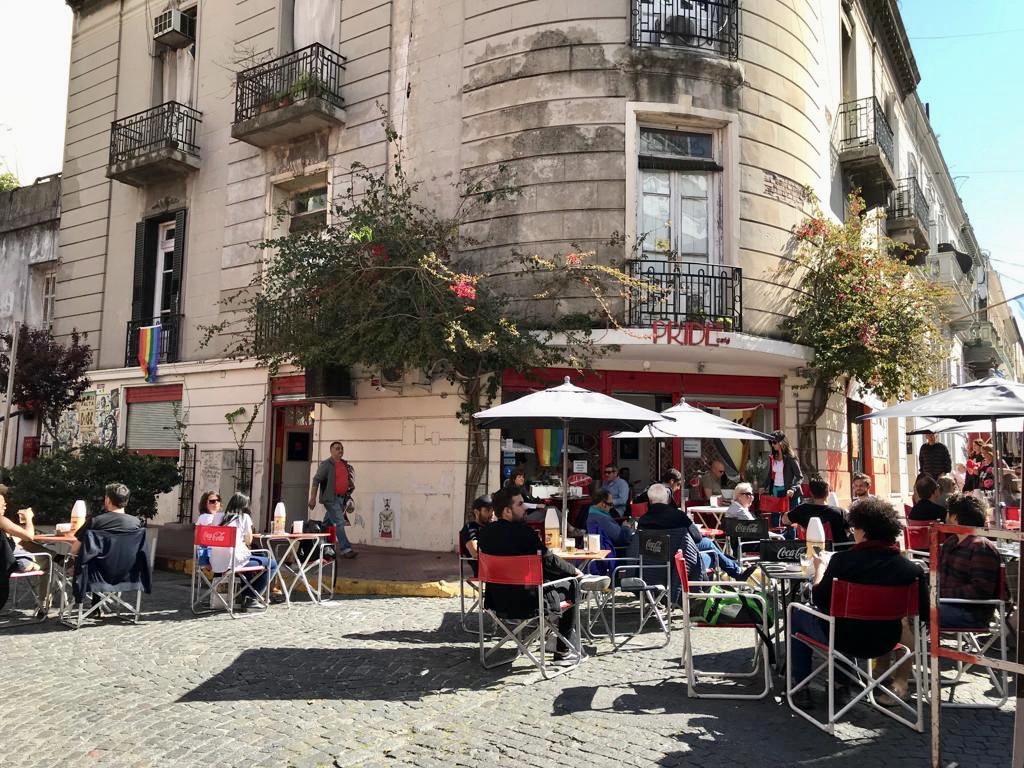
At my hostel, the receptionist asked me ¿Sos inglés? (“Are you English?”) and ¿Qué edad tenés? (“How old are you?”). I had learnt ¿Eres inglés? and ¿Cuántos años tienes?, so I paused while I worked out what I had heard.
Soon afterwards, a colleague asked ¿Vos vivís acá en Buenos Aires? (“Do you live here in Buenos Aires?”). I had been expecting something like ¿Vives aquí en Buenos Aires?. The meaning was close, but the pronoun, verb form and preference for acá were new to me. Repeated encounters made them familiar.
Vocabulary could create comic moments too. When a colleague asked how I had travelled to work, I replied Cogí el autobús, using wording I knew from Spain. In Argentina, coger can have a vulgar sexual meaning. Context made my intended meaning clear, but the moment taught me to use locally familiar alternatives such as tomé el colectivo.
This did not make one variety correct and another wrong. It showed me that a familiar word can change meaning or register across regions, and that asking what people usually say is more useful than treating “Latin American Spanish” as a single variety.
Vocabulary I Learnt in Buenos Aires
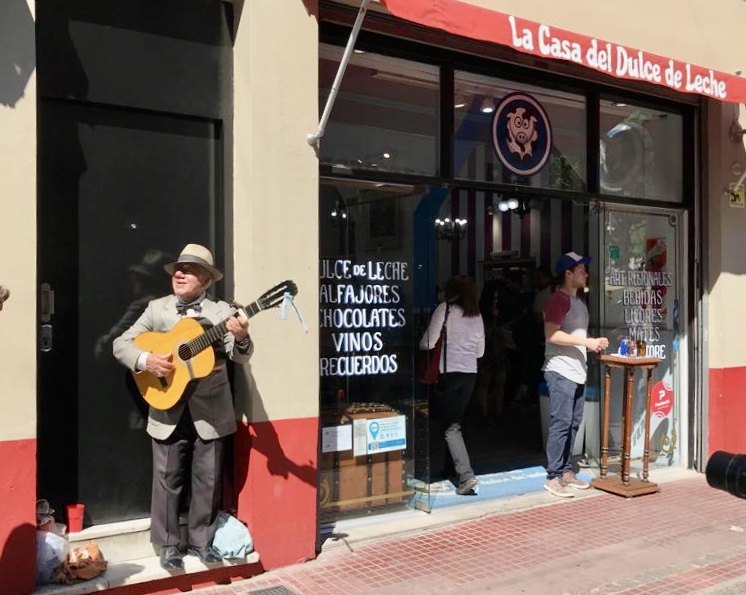
Every Spanish-speaking region has its own preferences and colloquialisms. I began keeping track of the words I heard in shops, at work and with friends. The labels below show common contrasts from my experience. They are tendencies, not borders: speakers may know or use more than one term, and usage varies within both Spain and Argentina.
| English | Common in Spain | Common in Buenos Aires |
|---|---|---|
| strawberry | fresa | frutilla |
| juice | zumo | jugo |
| banana | plátano | banana |
| avocado | aguacate | palta |
At a phone shop, I also learnt that celular was the everyday term I needed instead of the móvil I knew from Spain. Here are more words I encountered:
| English | Common in Spain | Common in Buenos Aires |
|---|---|---|
| car | coche | auto |
| pen | bolígrafo | birome |
| to drive | conducir | manejar |
| bus | autobús | colectivo |
| T-shirt | camiseta | remera |
I did not need to erase the Spanish I already knew. I needed to add regional alternatives and pay attention to which one people around me chose.

What the Buenos Aires Accent Taught Me About Language Contact
The intonation I heard in Buenos Aires sounded different from the varieties I had encountered in Spain. Researchers have found Italian influence in the prosody of Buenos Aires Spanish, linked to intense migration and language contact around the turn of the twentieth century.
This local variety is commonly discussed as part of Rioplatense Spanish, associated with the Río de la Plata region of Argentina and Uruguay. That does not mean all Argentinians speak alike, or that Rioplatense Spanish is simply Spanish mixed with Italian. Argentina contains substantial regional variation, and language contact is more complex than a single ancestry statistic.
I did not fully adopt the accent during my year, but learning why it sounded distinctive made me listen more carefully. Film, radio and conversations with friends continued to help me recognise its rhythm after I left.

Is a Spanish School in Buenos Aires Necessary?
A language school can provide a schedule, explanations, feedback and a ready-made group of learners. Those things can be particularly valuable when you are a beginner or when daily life already feels overwhelming.
Several friends I made in Buenos Aires chose daily classes in San Telmo. I chose a different route because I arrived with intermediate Spanish and had a work placement. Neither choice is automatically more immersive. A school can become a bridge into local life, while a workplace can still leave you using another language or doing tasks with little conversation.
Choose according to your level, budget, learning needs and legal situation. You can also combine classes with exchanges, clubs, volunteering or everyday errands.

Other Ways to Build Spanish into a Stay Abroad
My junior role at an international car-rental company gave me repeated practice with colleagues and helped me become more comfortable using Spanish at work. That was valuable for me, but it was not a shortcut or a universal alternative to school.
Working in another country requires the appropriate visa or permission, and an unpaid placement can carry its own financial and ethical trade-offs. Check the official rules for your citizenship and destination before making work part of a language plan. If a placement is legal and suitable, ask what language the team actually uses and what support will be available.
If work or travel is not possible, recreate the useful ingredient: regular, meaningful contact. Online lessons, language exchanges, community groups and projects can all give you a reason to understand and respond.
How I Used Free Time to Develop My Spanish
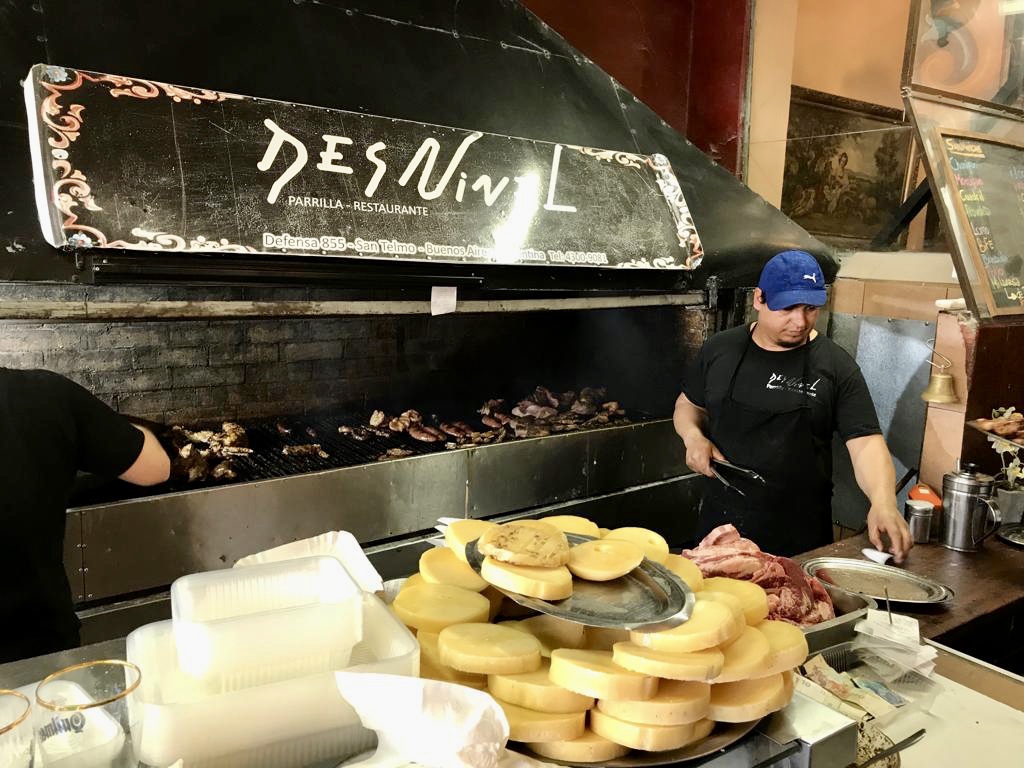
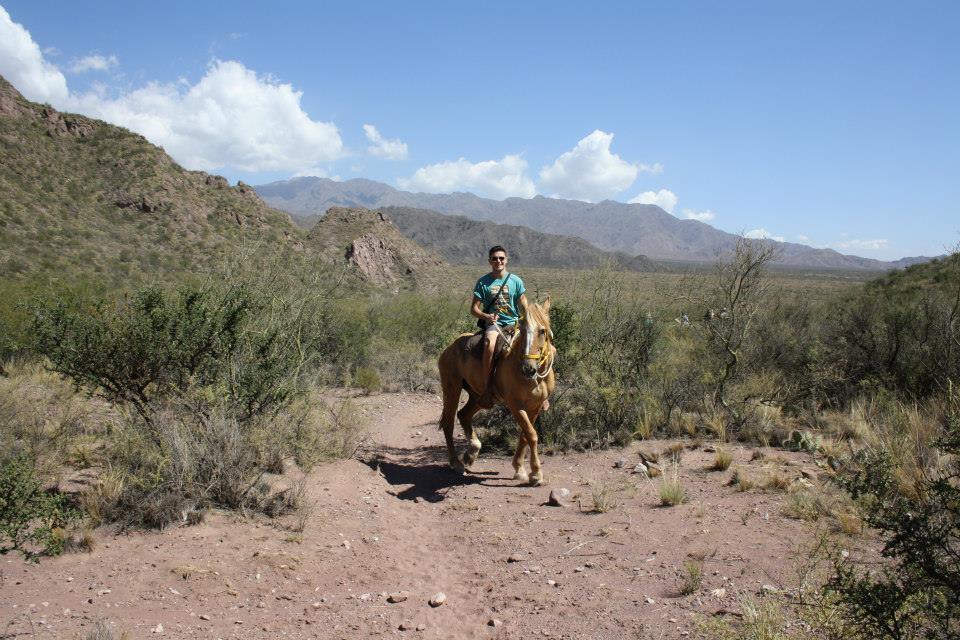
Some of my most useful listening practice happened outside work. I ate at parrillas, joined a local football team and travelled beyond Buenos Aires. These activities exposed me to vocabulary, accents and colloquialisms that were relevant to the people and places around me.
The activity itself was not magic. Progress came because I paid attention, asked questions and kept taking part. A class and a social setting can complement each other: one helps you notice a pattern, and the other gives you a reason to use it.
How My Spanish Changed During the Year
By the time I returned home, I could see a large change in my own Spanish. Conversations felt easier, I could use Spanish professionally, I often watched films without Spanish subtitles, and I rarely needed to stop for vocabulary in a news article. Those are specific things I could do, which tell you more than simply declaring that I had reached “total fluency”.
I attribute much of that progress to the amount and variety of contact I had in Buenos Aires: colleagues, friends, football, travel and ordinary errands. It was one learner's result after arriving with an intermediate level, not a promise that six months in Argentina makes any learner fluent or that understanding one regional variety makes every other variety easy.
The year also gave me friendships and experience using Spanish at work. I am grateful for that. The lesson I would carry into another language is not “move abroad”. It is “build a life in which the language helps you do things that matter to you”.


Social