


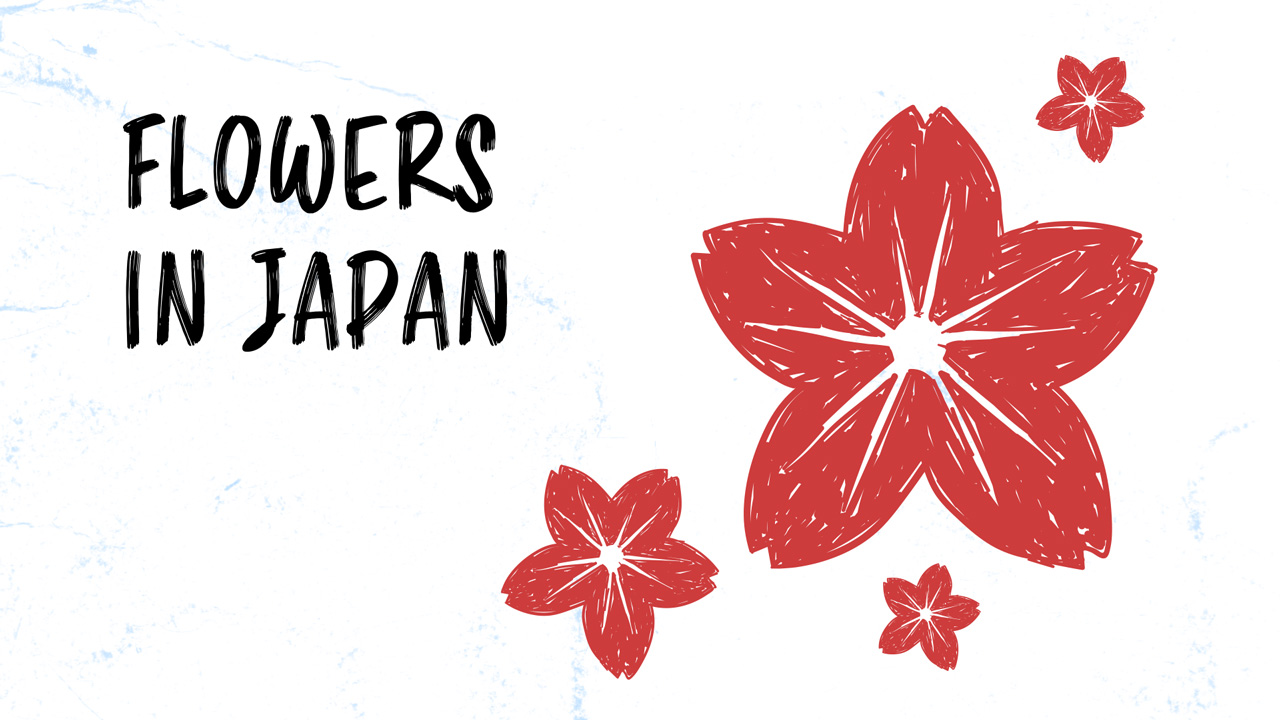
Flower in Japanese: 21 Names, Readings and Seasonal Context

Full disclosure: This post contains affiliate links. ?
The usual Japanese word for “flower” is 花 (hana). Flower names are useful vocabulary, but they also give you a way into seasonal references, gardens and everyday conversation in Japan.
This guide keeps the Japanese writing and common readings together. Flower meanings, seasons and spellings can vary by context, so treat the notes as a starting point rather than a fixed code.
Editor's note: Before we get started, if you’re looking for an online Japanese course, here’s the course we recommend: Japanese Uncovered – Learn Japanese Through the Power of Story, a course with a fascinating new method by Olly Richards. You can try it for free for 7 days!
Writing Flower in Japanese
For an actual plant or blossom, the usual spelling is 花, read hana. Dictionaries also list 華 with the reading hana, but it more often carries the idea of brilliance or splendour and appears in established expressions and names. It is not the default spelling for a flower in a beginner sentence.
Many flower names have kanji spellings, while imported names are usually written in katakana. You will also see difficult plant kanji replaced by hiragana or katakana in everyday material, so learn to recognise more than one spelling where the list notes it.
Common Flowers in Japan and Their Associations
Hanakotoba (花言葉, “flower language”) is a familiar cultural idea, but associations differ by source, colour, occasion and period. Blooming seasons also shift by region and weather. Use the readings below as vocabulary, and check a local forecast before planning a visit.
1. 桜 (sakura), cherry blossom
Sakura is strongly associated with spring and hanami, blossom viewing. The flowering period is brief and timing varies considerably across Japan.
2. 梅 (ume), Japanese apricot blossom
Ume is often called “plum blossom” in English, but Prunus mume is closer to the apricot. It usually flowers before cherry blossom season. The same word can refer to the tree, its blossom or its fruit, depending on context.
3. 桃 (momo), peach blossom
Momo means peach. Peach blossoms and the fruit both appear in seasonal imagery and celebrations.
4. 菊 (kiku), chrysanthemum
Kiku is associated with autumn and is used in imperial symbolism, but the flower’s social meanings depend on setting and colour.
5. 向日葵 (himawari), sunflower
Himawari is the usual word for sunflower. 向日葵 is the conventional kanji spelling, while ひまわり and ヒマワリ are also common. The reading is not easy to predict from the individual kanji, so learn the whole word together.
6. 藤 (fuji), wisteria
Fuji means wisteria here, not Mount Fuji. Wisteria is often seen in late-spring garden displays.
7. 椿 (tsubaki), camellia
Tsubaki is the Japanese camellia. It is a familiar winter-to-spring flower, though timing depends on the variety and place.
8. 朝顔 (asagao), morning glory
Asagao literally means “morning face” and is the usual Japanese word for morning glory. It is a common summer seasonal reference.
9. カーネーション (kānēshon), carnation
カーネーション is a katakana loanword for carnation. Long-vowel marks are part of the spelling: kānēshon, not “kaaneeshon”.
10. 紫陽花 (ajisai), hydrangea
Ajisai is hydrangea, a well-known early-summer flower. Its colour can change with soil conditions, so avoid treating one colour as its defining feature.
11. 金木犀 (kinmokusei), orange osmanthus
Kinmokusei is orange osmanthus, Osmanthus fragrans var. aurantiacus. Its strong, sweet scent is a familiar sign of autumn in many parts of Japan.
12. 薔薇 (bara), rose
薔薇 is read bara, but the kanji are difficult and roses are often written as バラ in everyday material.
13. 桜草 (sakurasō), Japanese primrose
Sakurasō means Japanese primrose. The final ō represents a long vowel in romanisation.
14. チューリップ (chūrippu), tulip
チューリップ is the Japanese loanword for tulip. Katakana shows the long vowel after chū.
15. 菫 (sumire), violet
Sumire means violet. You may also encounter it as a personal name, so context matters.
16. ラベンダー (rabendā), lavender
ラベンダー is lavender. The final ー marks a long vowel, reflected as rabendā in Hepburn romanisation.
17. 菖蒲 (ayame), iris
The spelling 菖蒲 is unusually ambiguous. It can be read ayame for the iris Iris sanguinea, while shōbu usually names sweet flag, and hanashōbu is Japanese iris. In modern plant labels, アヤメ is often the clearest way to show that the intended reading is ayame.
18. 彼岸花 (higanbana), red spider lily
Higanbana is red spider lily. Its name links it to the equinoctial higan period, and it has a range of literary and regional associations.
19. 百合 (yuri), lily
Yuri means lily. It is also used as a personal name and, in other contexts, a genre term, so the intended meaning comes from context.
20. 蓮 (hasu), lotus
蓮 is read hasu when it means lotus, a water plant that flowers in summer. The on-reading ren appears in compounds such as 蓮根 (renkon), “lotus root”.
21. 芝桜 (shibazakura), moss phlox
Shibazakura is moss phlox. The name literally suggests lawn cherry blossom, referring to the flower’s low, carpet-like displays rather than a cherry tree.
Useful Japanese Flower Words and Phrases
- 花が咲く (hana ga saku), “a flower blooms” or “flowers bloom”
- 花束 (hanataba), “bouquet”
- 花屋 (hanaya), “flower shop” or “florist”
- この花は何ですか (kono hana wa nan desu ka), “What is this flower?”
- 好きな花は何ですか (suki na hana wa nan desu ka), “What is your favourite flower?”
Once a few of these feel familiar, combine them with the Japanese words and phrases you already use rather than memorising a separate flower list.
Use Flower Words in Context
Try using these words with a season, place or photo: 桜がきれいです (sakura ga kirei desu, “the cherry blossoms are beautiful”) is a simple polite example. To build conversation rather than a disconnected list, practise a few phrases aloud and notice the flowers in Japanese media and local forecasts.
Want a structured way to turn Japanese vocabulary into conversation? Fluent in 3 Months Bootcamp helps you practise speaking from the start.

Social