


“Food” in Japanese: Vocabulary, Dishes and Dining Etiquette

Full disclosure: This post contains affiliate links. ?
The everyday Japanese word for “food” is 食べ物 (tabemono). This guide gives you useful food vocabulary, names of well-known dishes and practical restaurant language for a trip to Japan.
Japanese cooking includes many regional and personal variations, so treat the descriptions below as a starting point rather than a rulebook. If you have an allergy or dietary restriction, ask about stocks, sauces and shared cooking surfaces as well as the main ingredients.
We’ll begin with words you can recognise on menus, then look at dishes, vegetarian and vegan choices, street food, sushi and dining etiquette.
Editor's note: Before we get started, if you’re looking for an online Japanese course, here’s the course we recommend: Japanese Uncovered – Learn Japanese Through the Power of Story, a course with a fascinating new method by Olly Richards. You can try it for free for 7 days!
Table of contents
Japanese Food Vocabulary
Let’s start by learning with this Japanese food list of vocab. These Japanese food items will help you start building up your vocabulary to talk about Japanese food, find ingredients you need, and order at a restaurant.
Fruit and Veggies
- Apple: りんご (ringo)
- Banana: バナナ (banana)
- Strawberry: いちご / 苺 (ichigo); the kana spelling is common
- Ume (Japanese apricot): 梅 (ume)
- Peach: もも (momo)
- Cherry: さくらんぼ (sakuranbo)
- Pear: 梨 / なし (nashi)
- Watermelon: スイカ (suika)
- Grapes: ぶどう / 葡萄 (budou)
- Fruit: 果物 (kudamono)
- Vegetables: 野菜 (yasai)
- Carrot: にんじん (ninjin)
- Potato: じゃがいも (jagaimo)
- Beans: 豆 (mame)
- Corn: とうもろこし (toumorokoshi)
- Cucumber: きゅうり (kyuuri)
- Garlic: にんにく (ninniku)
- Onion: 玉ねぎ (tamanegi)
- Pumpkin or squash: かぼちゃ (kabocha)
- Turnip: かぶ / 蕪 (kabu)
- Green pepper: ピーマン (piiman)
- Mushrooms: きのこ (kinoko)
Nuts, Grains, and Dairy Items
- Uncooked rice: 米 (kome)
- Cooked rice or a meal: ご飯 (gohan)
- Cooked rice or a meal, in casual or rougher speech: 飯 (meshi)
- Bread: パン (pan)
- Wheat or barley, depending on context: 麦 (mugi)
- Grains: 穀物 (kokumotsu)
- Walnuts: くるみ (kurumi)
- Almonds: アーモンド (aamondo)
- Nuts: ナッツ (nattsu); 木の実 (kinomi) can mean tree nuts or fruits
- Sesame seeds: ごま / 胡麻 (goma)
- Dairy products: 乳製品 (nyuuseihin)
- Milk: 牛乳 (gyuunyuu) or ミルク (miruku)
- Butter: バター (bataa)
- Yogurt: ヨーグルト (yooguruto)
Meat and Protein
- Meat: 肉 (niku)
- Beef: 牛肉 (gyuuniku)
- Chicken meat: 鶏肉 (toriniku); 鶏 (tori) means chicken
- Pork: 豚肉 (butaniku); 豚 (buta) means pig
- Fish: 魚 (sakana)
- Shrimp: えび / 海老 (ebi)
- Tuna: まぐろ / 鮪 (maguro)
- Eel: うなぎ / 鰻 (unagi)
- Egg: 卵 (tamago)
- Tofu: 豆腐 (toufu)
Condiments and Ingredients
- Food: 食べ物 (tabemono)
- Ingredients: 食材 (shokuzai)
- Soy sauce: 醤油 (shouyu)
- Dashi stock: だし / 出汁 (dashi)
- Rice vinegar: 米酢 (komezu)
- Mirin, a sweet rice-based seasoning: みりん (mirin)
- Salt: 塩 (shio)
- Pepper: こしょう / 胡椒 (koshou)
- Sugar: 砂糖 (satou)
Dashi can be made from kombu kelp, bonito flakes, dried fish, mushrooms or combinations of ingredients. Ask what a stock contains if you avoid fish or other animal products.
Drinks
- Drinks: 飲み物 (nomimono)
- Coffee: コーヒー (koohii)
- Tea: お茶 (ocha)
- Black tea: 紅茶 (koucha)
- Green tea: 緑茶 (ryokucha)
- Cola: コーラ (koora)
- Water: 水 (mizu)
- Beer: ビール (biiru)
- Wine: ワイン (wain)
- Japanese sake: 日本酒 (nihonshu); お酒 (osake) can mean sake or alcoholic drinks more generally
Japanese-Specific Foods
- Yuzu citrus: 柚子 (yuzu)
- Yubari melon, a protected regional product from Yubari in Hokkaido: 夕張メロン (Yuubari meron)
- Japanese sweet potato: さつまいも (satsumaimo)
- Quail eggs: うずらの卵 (uzura no tamago)
- Seasoned pollock roe: 明太子 (mentaiko)
- Rice cakes: 餅 (mochi)
- Sweet red bean paste: あんこ (anko)
Well-Known Japanese Dishes
和食 (washoku) often refers to traditional Japanese cuisine, while Japanese cooking more broadly also includes dishes shaped by international influences. These examples will help you recognise several common menu names.
Curry Rice: カレーライス
カレーライス (karee raisu) is a popular home-style dish: rice served with a thick Japanese curry sauce, often containing meat and vegetables. Recipes and spice levels vary.
Okonomiyaki: お好み焼き
お好み焼き (okonomiyaki) is a savoury dish whose name roughly suggests cooking what you like. Cabbage is common, while seafood, meat, spring onions, cheese and other additions depend on the style and restaurant.
Some restaurants cook it for you; others provide a hotplate at the table. Osaka- and Hiroshima-style versions are assembled differently.
Donburi: 丼
丼 (donburi) can refer to a bowl or to a rice-bowl dish. 牛丼 (gyuudon) has beef over rice, 親子丼 (oyakodon) combines chicken and egg, and カツ丼 (katsudon) usually features a pork cutlet and egg. Sauces and stocks vary, so check the ingredients if you have dietary restrictions.
Shabu Shabu: しゃぶしゃぶ
しゃぶしゃぶ (shabu shabu) is named for the swishing motion used to cook thin slices of meat in simmering broth. Diners also cook vegetables, tofu and other ingredients at the table, then dip the cooked food in sauces such as ponzu or sesame sauce. The name is an example of Japanese sound-symbolic language.
Ramen
Ramen varies by region and shop. Broths may be seasoned with salt, miso or soy sauce, while tonkotsu uses pork bones. Toppings can include sliced meat, nori, egg, spring onions and vegetables.
The white-and-pink spiral sometimes served with ramen is 鳴門巻き (narutomaki), a type of kamaboko made from fish paste. Its swirl is associated with the Naruto whirlpools, and the 🍥 emoji depicts it.
Natto: 納豆
納豆 (nattou) is fermented soybean with a distinctive aroma and a sticky, stringy texture. It is often served with rice and seasonings. Some people enjoy it immediately; others take time to get used to it.
Tamagoyaki: 卵焼き
卵焼き (tamagoyaki) is a rolled omelette made by cooking thin layers of seasoned egg. Some versions are sweet; others include dashi or soy sauce. It is commonly sliced and served at breakfast, in a bento or as sushi.
Vegan and Vegetarian Japanese Food Options
Vegetarian and vegan food is available in Japan, but a dish that looks plant-based may contain fish stock, meat stock, egg, dairy or animal-derived sauce. The Japan National Tourism Organization recommends stating exactly what you do not eat and checking dashi and other base ingredients.
Possible options include vegetable tempura, vegetable gyoza, tofu dishes, plain rice, some onigiri, vegetable sushi, soba, udon, ramen, okonomiyaki and pumpkin croquettes. None is automatically vegetarian or vegan: batter, fillings, broth, dipping sauce and shared fryers vary by restaurant.
団子 (dango) are rice-flour dumplings, not rice balls. They can be boiled, steamed or grilled and served with different toppings. Check the sauce and preparation if you need a vegan option.
These phrases can start the conversation:
- 肉が食べられません。 Niku ga taberaremasen. “I can’t eat meat.”
- 動物性食品は食べません。 Doubutsusei shokuhin wa tabemasen. “I don’t eat animal-derived foods.”
- ベジタリアンです。 Bejitarian desu. “I’m vegetarian.”
- ビーガンです。 Biigan desu. “I’m vegan.”
- ___なしでお願いします。 ___ nashi de onegai shimasu. “Without ___, please.”
- だしに魚が入っていますか。 Dashi ni sakana ga haitte imasu ka. “Does the stock contain fish?”
For an allergy, do not rely on a general vegetarian or vegan phrase. Carry a written card naming the allergen, contact the restaurant in advance and ask about cross-contact.
Japanese Street Food to Look For
Street stalls are called 屋台 (yatai). Availability, price and quality vary by place and event, but these names are useful when reading signs and menus:
- Takoyaki: balls of batter containing pieces of タコ (tako, “octopus”)
- Yakitori: grilled chicken skewers with different cuts and seasonings
- Yakiimo: roasted sweet potato
- Karee pan: a fried bun filled with Japanese curry
- Dorayaki: two small pancake-like cakes around sweet red bean paste
- Taiyaki: a fish-shaped cake with fillings such as red bean paste or custard
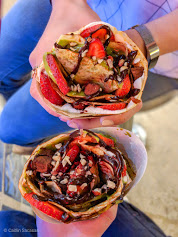
- Japanese crepes: クレープ (kureepu), often folded around sweet or savoury fillings

Sushi: Japanese Food Etiquette
Sushi comes in several forms. 巻き寿司 (makizushi) is rolled sushi; 握り寿司 (nigirizushi) places a topping over vinegared rice; and 裏巻き (uramaki) has rice on the outside of the seaweed. 刺身 (sashimi) is sliced raw seafood or meat served without sushi rice, so it is not itself sushi.
板前 (itamae) is a term for a skilled Japanese cook and can refer to a sushi chef. Customs vary from a casual conveyor-belt restaurant to a chef-led counter, so follow the restaurant’s cues. Useful general guidance includes:
- Nigiri and rolls may be eaten with chopsticks or clean hands. Use chopsticks for sashimi.
- Use serving utensils for communal dishes when provided. Do not pass food directly from one pair of chopsticks to another.
- Avoid sticking chopsticks upright in rice, pointing with them or moving dishes with them.
- Use only a little soy sauce. With nigiri, dipping the topping rather than soaking the rice helps keep the piece together.
- Pickled ginger is usually eaten between pieces as a palate cleanser.
- Wasabi and serving style vary. At a chef-led counter, ask or follow the chef’s lead instead of treating preferences as universal rules.
Japanese Restaurant Etiquette
Two chopstick practices are especially important to avoid: leaving chopsticks upright in rice and passing food directly from chopsticks to chopsticks. Both resemble Japanese funeral rites. Put food on a plate so the other person can pick it up, and use a chopstick rest when one is provided.
Slurping noodles is acceptable, but it is not required. When food tastes good, you can say 美味しいです (oishii desu, “It’s delicious”). うまい (umai) is a more casual option.
Tipping is generally not customary in Japan. Check the bill for any stated service charge and follow the venue’s policy rather than leaving cash on the table.
いただきます (itadakimasu) is said before eating and expresses gratitude for receiving the meal. After eating, ごちそうさまでした (gochisousama deshita) thanks the people and effort behind it. These phrases do not map word-for-word to “bon appétit,” but they serve familiar before- and after-meal roles.
Keep Learning Japanese for Restaurants
Start with a few words you are likely to use: the name of a dish, one ingredient question and a polite phrase for ordering. Practise saying them aloud before you need them.
Next, learn these essential Japanese travel phrases. If you plan to study in Japan, this guide to Japanese classroom vocabulary is another useful step.
For structured listening and vocabulary lessons, JapanesePod101 offers free material alongside paid plans. To organise and review the words you choose from this guide, try Vocab Vault.

Social