


The Moment Speaking German Finally Clicked [Mission Complete!]

Full disclosure: This post contains affiliate links. ?
I never thought I’d make it.
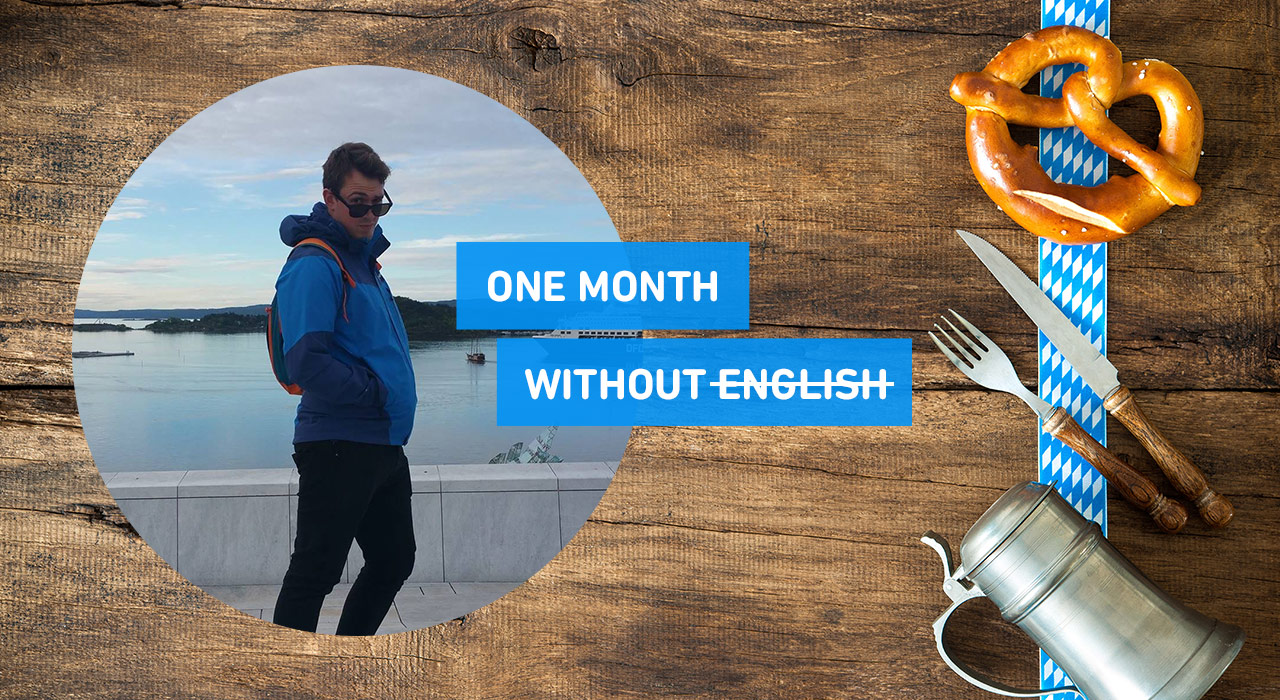
Yet here I am, one month later, at the end of my One Month Without English language mission. It’s a day that felt so far away but at the same time came around so quickly.
You may be wondering:
Did I really make it an entire month without speaking English?
Here’s how it went.
A note from the Fluent in 3 Months team before we get started: You can chat away with a native speaker for at least 15 minutes with the “Fluent in 3 Months” method. All it takes is 90 days. Tap this link to find out more.
Mission Complete: One Month Without English
Okay, I’m going to be brutally honest with you here: I managed the entire month except for one day.
I had some British friends turn up for a party in Düsseldorf and they called me to ask if I wanted to go with them. I said yes and took the day off from speaking German, because why would I want to miss that?
However, I consider this a success because I spoke no English on 30 out of 31 days. In the final week, I found myself at the Cologne Carnival speaking only German without needing to switch to English:
But how much has my level of German improved?
After an informal assessment at a language school, one teacher estimated my speaking at B2/C1 level. She told me, “I teach a B2.2 class right now and you’re much more fluent than they are”. This was less than six months after I started learning German with Benny Lewis’s Language Hacking German.
That for me is mission complete!
If you want to see my skills in action, check out this video of me and my girlfriend playing a game in German right here:
The Moment It Finally Clicked
One Monday evening about 22 days in, my girlfriend and I were getting ready to go and meet a friend for dinner. We hadn’t seen each other in a year and I’d never spoken German with him. But I’d made him aware that I was only allowed to speak German for the duration of the meal.
About an hour before we met an incredible nervousness came over me. I don’t know why but it was the worst yet. I couldn’t keep still and I felt like I wanted to be sick. I imagine it’s how people feel before they walk out and give a talk to 10,000 people.
He walked over to the table and I stood up. I asked him how he was in German and did my best to just say the first words that came to my head. We spoke for a little while and I was amazed: I could understand every word that he said.
For the next four hours the three of us sat and chatted and drank wine and ate and put the world to rights. We spoke about politics and restaurants and films and anything that came to mind. I never once got asked to re-explain myself. I never had to ask someone to slow down or repeat themselves.
The next morning I woke up and it felt like every song I listened to was clearer, every conversation was slower and every word that little bit clearer.
Malcolm Gladwell writes about a tipping point, when accumulated small actions begin to create visible change. That conversation felt like a tipping point for me.
Would I Recommend a Month Without English?
I’d recommend that language learners try a defined period in which they use their target language much more than their first language.
Choose a specific period with regular conversations and plenty of exposure to the language. Keep any exceptions you need for work, health, safety or important relationships. The experiment does not need to last a month.
I’m fortunate that my life as a freelancer allows me to be flexible, not see clients in person and completely avoid English on a day-to-day basis. I know that this isn’t an option that’s available to everyone.
If you can, try a few days and extend the experiment if it remains useful. I found the first five to six days the most frustrating. Afterwards, I found a groove and began using German more naturally, even with imperfect grammar.
If you want to try your own target-language immersion period, here’s what helped me.
Step 1: Tell the People You Speak With Regularly
Tell the people you speak with regularly what you’re trying and when it ends. Explain your exceptions and how they can reach you for anything important.
Once friends and family understand the experiment, they can support you without mistaking a delayed reply for avoidance.
Step 2: Reduce First-Language Distractions
This was a big one for me. Temporarily removing social apps helped me avoid slipping into English entertainment without thinking.
You can change an app’s interface language, but you can’t control the language other people post in.
Step 3: Create Regular Chances to Speak
Travel gave me frequent chances to use German, but you can also create an immersion period at home.
Schedule calls, local meet-ups or shared activities in your target language. A useful challenge should fit around your real responsibilities and social life.
Step 4: Learn to ‘Talk Around’ Words and Topics
One of the best compliments I received was that I could describe what I meant without using the exact word I wanted. This is a valuable communication skill.
For example, try to explain these three things without using their names:
- Star Wars Episode IV: A New Hope
- Coffee
- Tom Hanks
This technique is really helpful for describing words and themes in your target languages. When you can talk around a subject, you can lead people in the direction you want to go, even if you’ve forgotten (or not yet learned) a word.
Step 5: Stop Worrying About Grammar
Imperfect grammar is a normal part of speaking a language you’re learning.
During a target-language immersion period, give yourself permission to speak before every sentence is perfect.
If someone corrects your grammar, use it as an opportunity to learn. Notice recurring errors while keeping the conversation moving.

Social