



Best free online dictionaries for translators and linguists

Full disclosure: This post contains affiliate links. ?
Online dictionaries are often the quickest place to start a terminology search, especially when you travel or work with fast-changing technical subjects.
Printed dictionaries still have their uses, but a specialised volume can be awkward for those of us who travel and may not cover new terminology.
An online search lets me compare entries, examples and subject fields quickly. The important part is to verify that the sense and context match the document, rather than accepting the first equivalent I see.
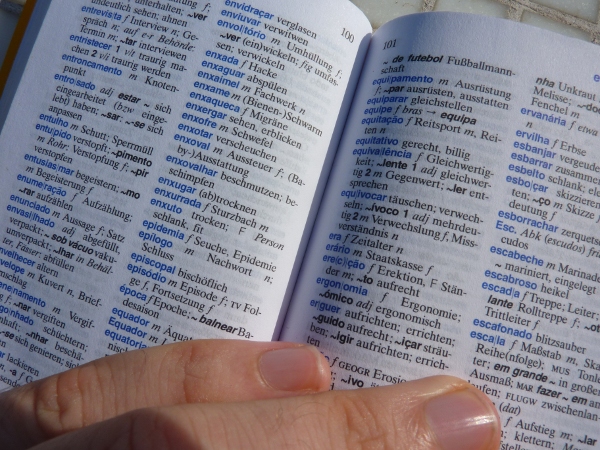
As a technical translator for technology documents, I often worked with concepts that were too new or specialised for a general printed dictionary.
Here are several free online resources I have used. Most are terminology databases rather than beginner dictionaries. Legal, economic, medical, literary, political, technological, financial, scientific and industrial terms often need a subject-specific source and a qualified reviewer.
If it's a basic word, don't forget my advice about using Google Image to see what it means without even needing a translation (presuming it's not an abstract quality)! I've also discussed the use of online forums and special Google searches to clear any language doubts you may be having. However, if you need a good translation of a word in the right context and you don't know it already, these are an excellent place to start!
A note from the Fluent in 3 Months team before we get started: You can chat away with a native speaker for at least 15 minutes with the “Fluent in 3 Months” method. All it takes is 90 days. Tap this link to find out more.
Multilingual dictionaries
These sites differ in who creates and reviews their entries. Some are community-edited, some collect translator discussions, and others publish terminology used by public institutions. Check the source, subject field, date, region and example context before committing to a translation. For high-stakes legal or medical work, a dictionary lookup is not a substitute for a qualified translator or subject specialist.
Wikipedia
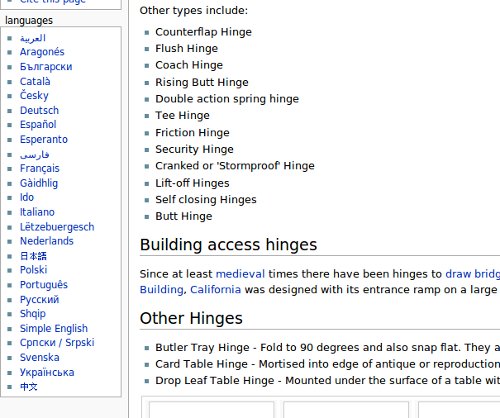
Wikipedia and Wiktionary can help you identify a concept and follow an interlanguage link. Confirm that you have the right sense first: the English word “nail” can mean what is at the end of your fingers or a metal fastener. Treat an article title as a research lead, not automatic proof that a term fits your sentence.
Use the edition that best matches your source language and subject, and compare the cited sources where terminology matters. Wikimedia maintains a current list of Wikipedia editions.
Wordreference
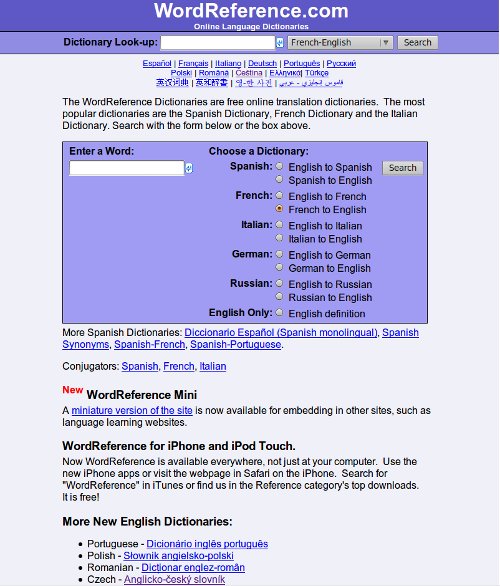
Wordreference is my favourite dictionary for looking up simple words, concepts, expressions, and some grammatical doubts. I especially like its automatic suggestion as you type and its ability to conjugate (regular and irregular) verbs in a search (e.g. searching for quepa in Spanish will direct you to the verb caber, “to fit”, as well as tell you what conjugation quepa is of this verb and give a link to its full conjugation table). If the base dictionary doesn't have the term you are looking for, unless it's really obscure, it's likely that someone else will have asked about it in the forums and there will be a link to that discussion for you to read. You can of course ask the question yourself if you sign up for a free account.
One advantage of this over some other simple dictionaries is that it usually has several entries on a single word if it can be translated in other ways, and would usually give at least a one word synonym as well as possibly an example sentence to suggest context. It can help for some technical terminology, but I usually avoid this dictionary if the word is technical. This dictionary is very good for Spanish, French and Italian (to/from English) since these options have been on the site for several years. It is less extensive, but is constantly improving for German, Russian, Portuguese, Polish, Romanian, Czech, Greek, Turkish, Chinese, Japanese, Korean, and Arabic.
Proz
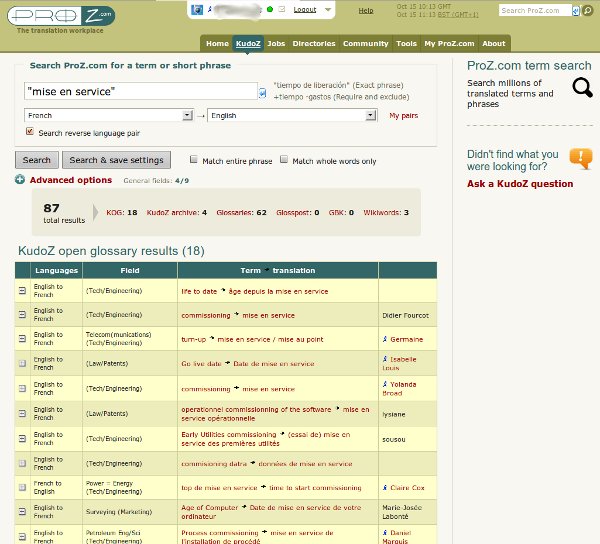
The ProZ.com term search includes KudoZ questions and answers from its translator community. The discussions, subject categories and context can expose useful possibilities, but answers vary in quality and are not an authoritative dictionary by default. Read the reasoning and verify the proposed term elsewhere.
KudoZ is most useful as a record of terminology discussions, particularly when you can compare several answers and the context supplied by the asker. Search for the full phrase and relevant subject field, then verify the result in a primary or institutional source where possible.
IATE
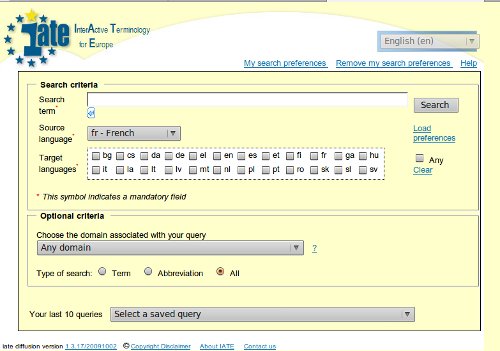
Interactive Terminology for Europe is the EU institutions’ terminology database. It covers all official EU languages and many subject fields, with metadata such as source and reliability available for entries. It is particularly useful for EU and technical contexts; it is not a general guide to everyday phrasing.
MyMemory
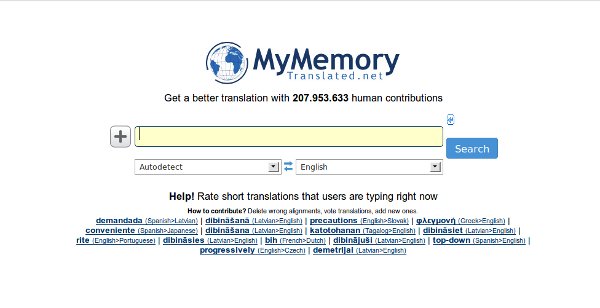
MyMemory from Translated lets you search bilingual examples drawn from translation memories and other contributions. A matching segment can show how a phrase has appeared in context, but provenance and quality vary. Check the source and do not assume that a past translation is correct for a new document.
Bilingual dictionaries
It is harder to be general here because each language pair has its own strong resources. For Quebec French terminology, the Office québécois de la langue française publishes the Grand dictionnaire terminologique. This is a terminology resource, especially useful when region and subject field matter.
For German you can use LEO. For Irish, téarma.ie provides the national terminology database, while Teanglann brings together major Irish dictionaries and pronunciation recordings. The best choice depends on the language pair, region and type of text.
If you found this post useful, share it with another language learner or translator.

Social