



HindiPod101 Review for Learning Hindi

Full disclosure: This post contains affiliate links. ?
What is HindiPod101?
HindiPod101 is an online course library with guided pathways, lesson notes and review tools. Audio and video lessons taught by native speakers are its main feature.
- what it’s for:
- Beginner Hindi, Devanagari, pronunciation, listening, vocabulary and contextual grammar
- languages:
- Hindi
- level:
- Absolute Beginner to Advanced
+ PROS
- Dedicated Devanagari and pronunciation material
- Native dialogues with transcripts and line-by-line audio
- A recommended beginner pathway through the large library
- Vocabulary, grammar and cultural notes inside each lesson
- Useful Premium review and pronunciation tools
- Free sampling and a listed money-back guarantee
- CONS
- English can dominate the early lesson audio
- The library requires self-direction
- Grammar needs organised review outside individual dialogues
- Advanced learners may need harder native material
- The mobile app does not include every website tool
Quick Fire Review
A strong Hindi base for learners who want Devanagari, native audio and practical dialogues in one place. Follow the recommended path and add live conversation. 4.2/5.
Hindi can look like two different projects at once. The first is learning to hold a useful conversation. The second is learning Devanagari, sorting dental sounds from retroflex ones, hearing aspiration clearly, and making gender agreement behave. HindiPod101 promises to bring those projects together through short audio and video lessons, a guided pathway, and a large bank of study material.
HindiPod101 is an appealing starting point, although its large library needs a clear route. Without one, a beginner can collect phrases while postponing the script and sound system.
In practice, it can be a very good base for beginner and intermediate study. Its dedicated writing and pronunciation material targets the right early problems, while the dialogue lessons make Hindi feel usable from the start. You still need to follow a pathway, speak with real people, and eventually add more demanding native material.
What Makes Hindi Different
Hindi is not difficult for only one reason. Several new systems arrive together, and a course has to help you connect them.
Devanagari changes how you read. Hindi is usually written in a script where consonants carry an inherent vowel and other vowels appear as marks around them. Consonant combinations can also form joined shapes. Romanisation is useful for the first few days, but it soon becomes unreliable. The same Hindi word may appear with several English spellings, none of which shows the sound as clearly as Devanagari.
Small sound differences change words. English speakers need to hear the difference between dental and retroflex consonants, then distinguish aspirated from unaspirated sounds. A Hindi t made with the tongue near the teeth is not the same as one made with the tongue curled farther back. Adding a puff of air can create another contrast. Reading transliteration alone will not train your ear for that grid.
Gender reaches into the sentence. Hindi has masculine and feminine grammatical gender. Adjectives and some verb forms agree with the relevant noun, so learning a noun without its gender can cause mistakes later. Agreement also behaves differently in some past constructions, which means a neat beginner rule eventually needs expanding.
Postpositions bring oblique forms with them. English puts words such as “in” and “with” before a noun. Hindi usually puts its equivalent after the noun. Nouns and pronouns can change to an oblique form before these postpositions, so this is not just English word order flipped around.
The default sentence pattern feels reversed. Hindi commonly places the verb at the end. You can learn survival phrases quickly, but building your own longer sentences asks you to hold information in a new order.
The US State Department’s current framework defines Category III as most languages outside the Romance and Germanic groups, apart from those separately listed in Category IV. Hindi is not individually named in the table, so placing it in Category III is an inference from that catch-all definition. The normal Category III course is 44 weeks to professional working proficiency. This is still a useful warning against expecting a phrase app to do the whole job.
Getting Started with HindiPod101
HindiPod101 is part of the Innovative Language family. You can create a free account without entering card details, choose a level, and start with the recommended pathway. The library runs from absolute beginner material through advanced study, with separate collections for skills such as pronunciation, reading and vocabulary.
The recommended route matters. If you treat the library like a box of interesting podcasts, you can jump from greetings to Bollywood vocabulary to an isolated grammar lesson and feel busy without building much. Pick the level pathway as your spine. Add a specialist series only when it solves a problem in that main route.
The beginner material starts with useful exchanges, and the library includes dedicated script and reading practice. That mix works well for Hindi because you can begin speaking while giving Devanagari a permanent place in the plan.

How It Teaches Devanagari and Pronunciation
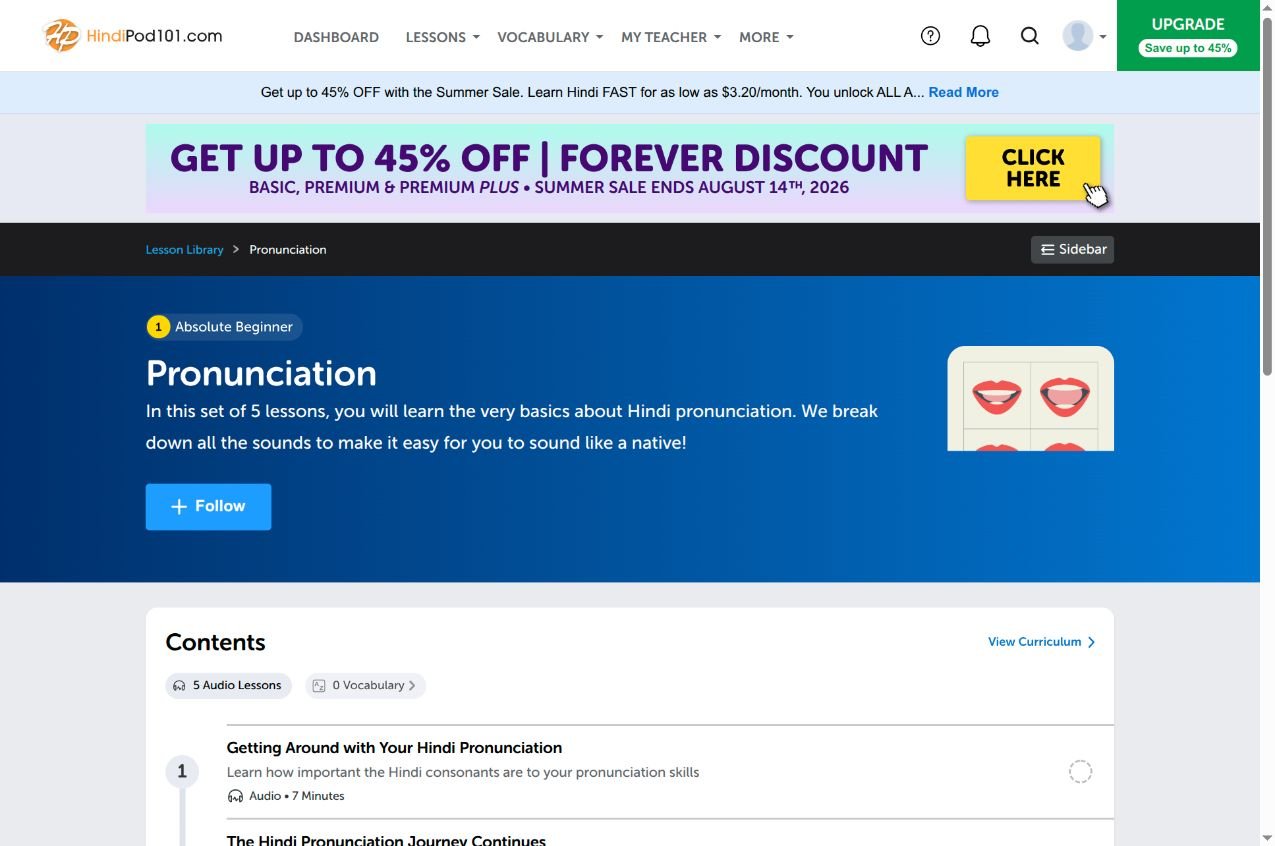
HindiPod101 does not tuck the script into a single introduction and move on. Its library includes a dedicated alphabet path, while the pronunciation series connects consonants, vowels and vowel marks. That makes it possible to study the symbol and sound together.
This is the sensible way to learn Devanagari. A letter chart can teach recognition, but it cannot by itself teach you to hear the contrast between a dental and retroflex stop or between an aspirated and unaspirated consonant. HindiPod101’s native recordings give you repeatable examples, and the paid line-by-line tool lets you isolate one part of a dialogue instead of dragging the whole recording back.
Romanisation remains available in the dialogue display, which helps when you are brand new. Use it as scaffolding, then start hiding or ignoring it. Our guide to learning Hindi explains why Devanagari removes ambiguity that English spellings often create. The sooner you connect a sound directly to the Hindi script, the less relearning you face later.
The pronunciation route also covers dialects and sounds found in loanwords. It gives a beginner a useful map, though it cannot judge whether your tongue is in the right place. Recording yourself, comparing the result, and getting occasional feedback from a teacher will close that gap faster.
Inside a HindiPod101 Lesson
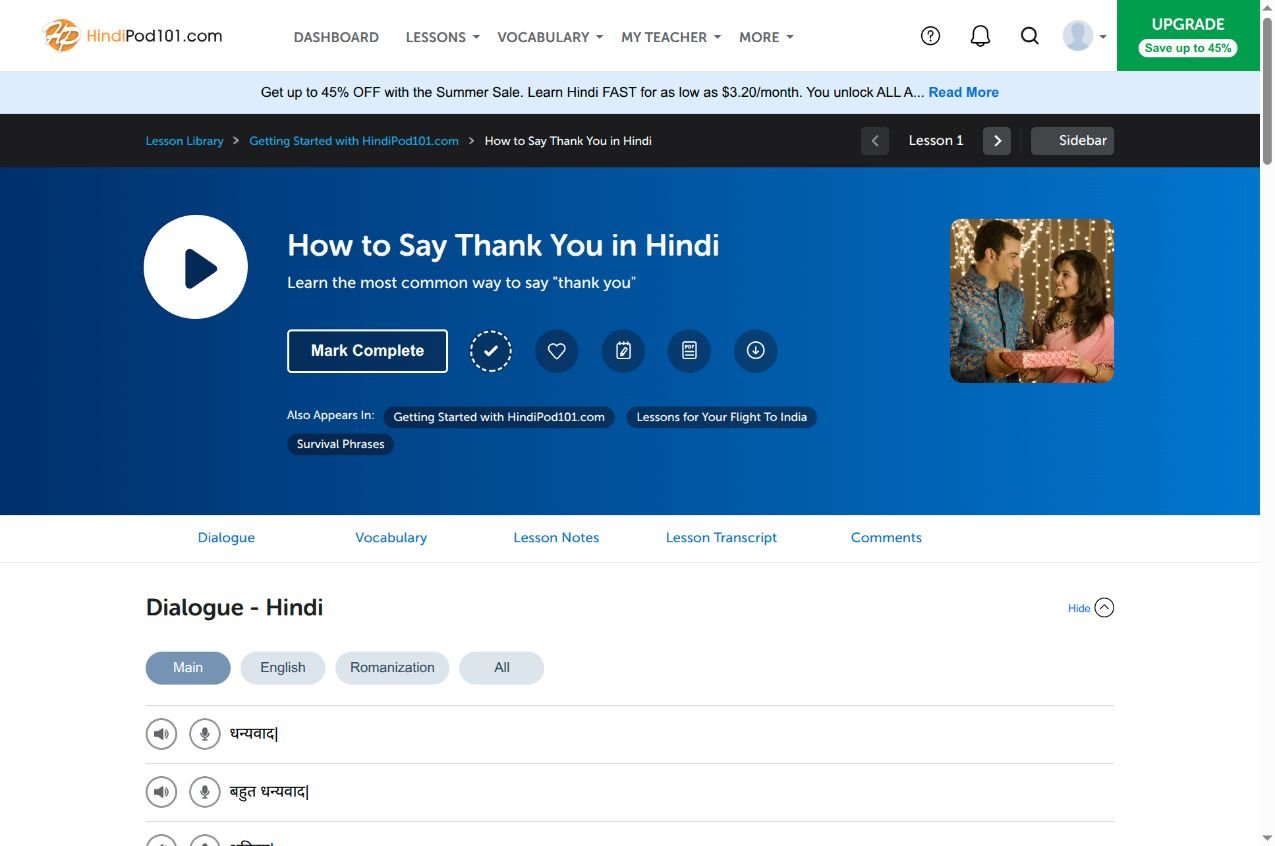
A typical lesson begins with a short Hindi dialogue, followed by a slower breakdown and explanations in English. The lesson page then brings together the transcript, vocabulary, sample sentences, grammar and cultural notes. New grammar arrives attached to something people might say, which is one of the platform’s best habits.
That context works especially well for postpositions and agreement. You see a form inside a complete sentence, hear it at natural speed, and can return to the written explanation after the pattern has a meaning. Cultural notes also help with levels of politeness and the choice between forms of “you”, which a direct English translation can flatten.
The drawback is that the explanations can occupy more of the audio than the Hindi. Beginners may appreciate that reassurance, but listening time is precious. Once you understand the point, replay the dialogue and individual Hindi lines instead of repeating the whole English discussion.
Grammar coverage is substantial enough to support the pathway, but a dialogue-led course will not always present the entire system when you first want it. Gender agreement, oblique forms and perfective constructions deserve organised review. Keep a one-page grammar notebook or use a compact reference alongside the course. Write down patterns and your own example sentence, not every rule mentioned by the hosts.
The Study Tools
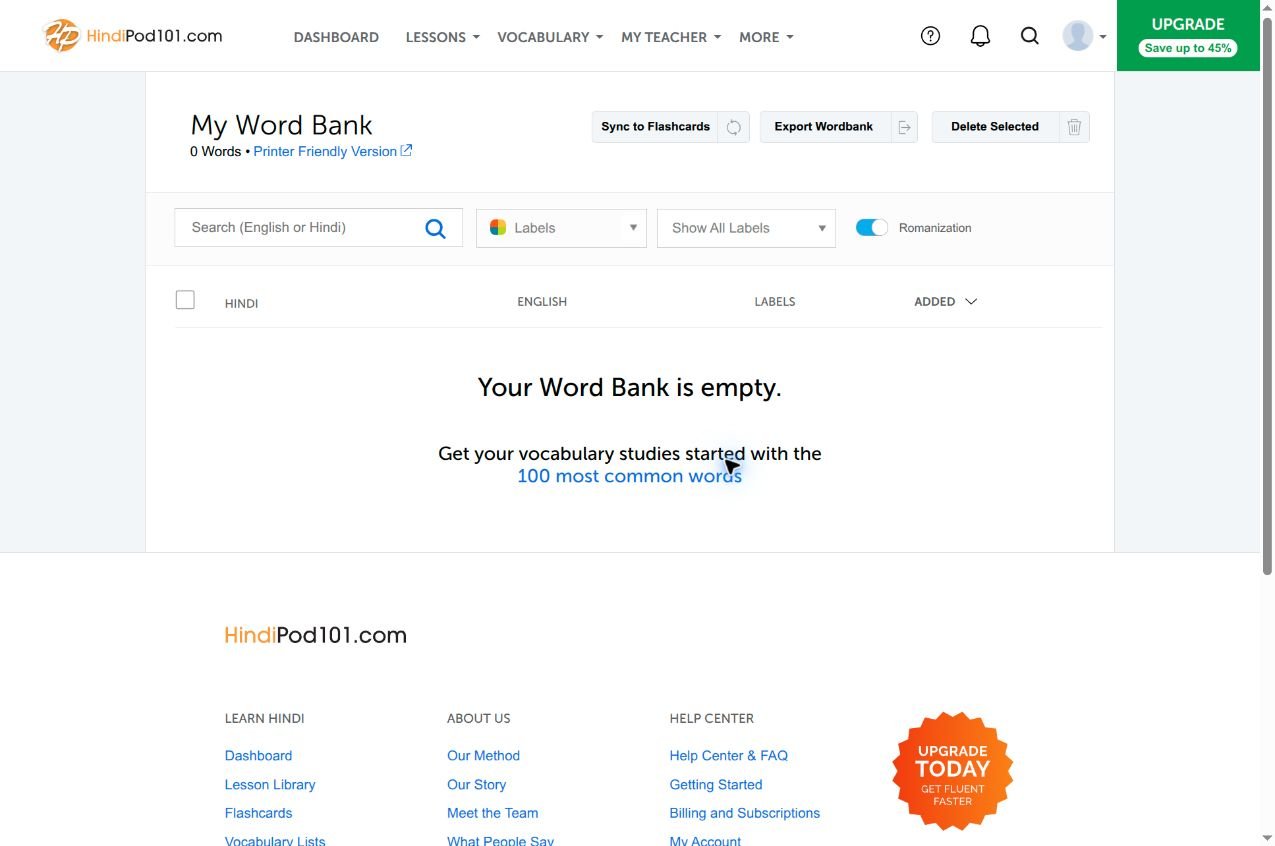
The best Premium tools reduce the friction between noticing a word and reviewing it. You can save vocabulary to a word bank, use flashcards, replay audio line by line and take assessments. The current Premium comparison also lists a searchable grammar reference for Hindi.
For this language, a useful workflow looks like this:
- Listen to the dialogue once without reading.
- Read it in Devanagari and replay difficult lines.
- Save only the words you expect to use.
- Record two or three lines and compare them with the native audio.
- Write one new sentence that changes the noun, gender or postposition.
That final step prevents the tools from becoming a recognition game. Flashcards can tell you that you remember a word, but they cannot prove that you can make it agree inside a sentence.
Premium PLUS adds a teacher, personal study guidance and feedback on written and spoken work. It is useful if you want accountability inside one platform. If live conversation is the priority, compare the cost and flexibility with a separate teacher. Our italki review explains how that option works.
Using the Mobile App
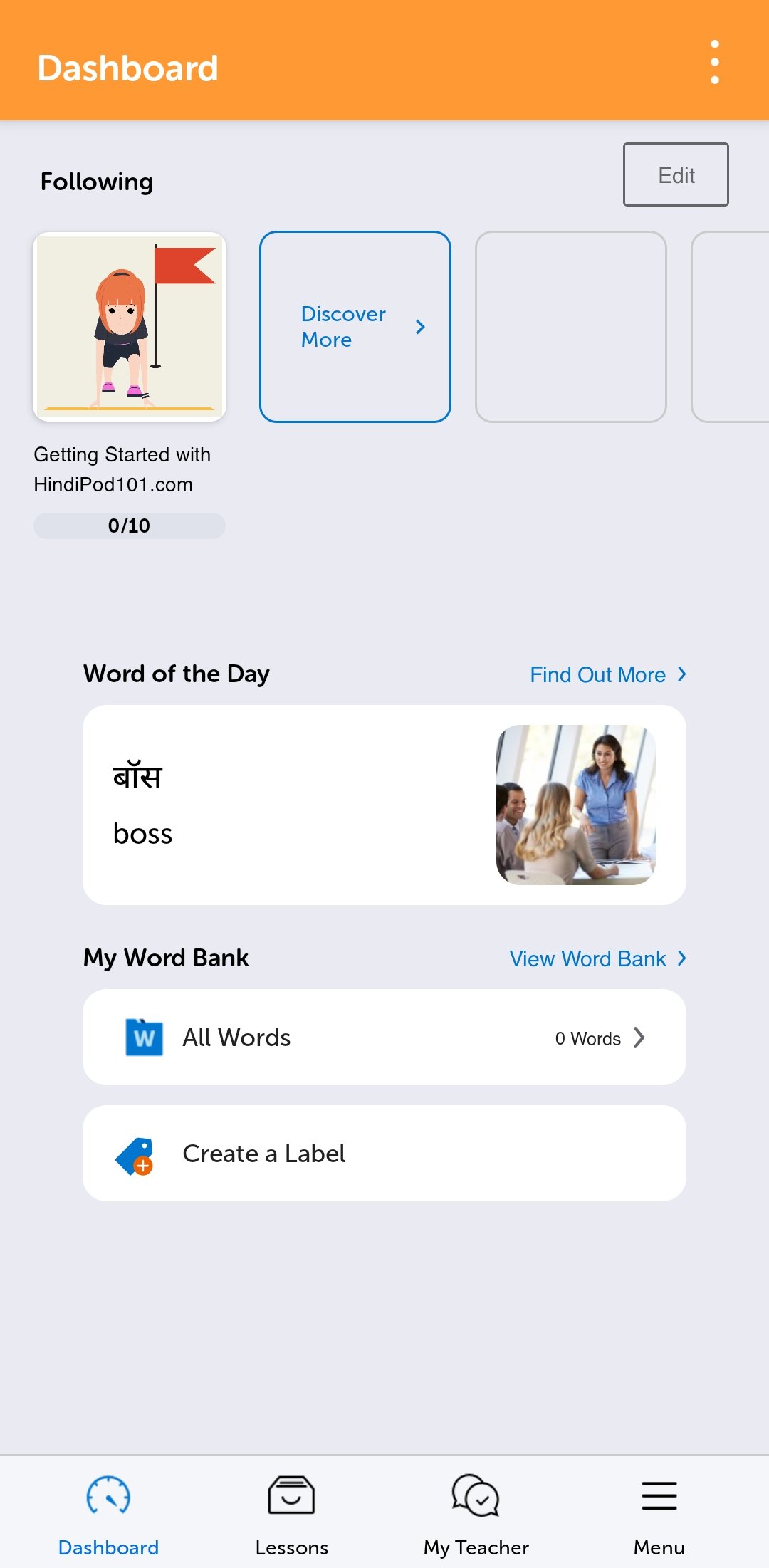
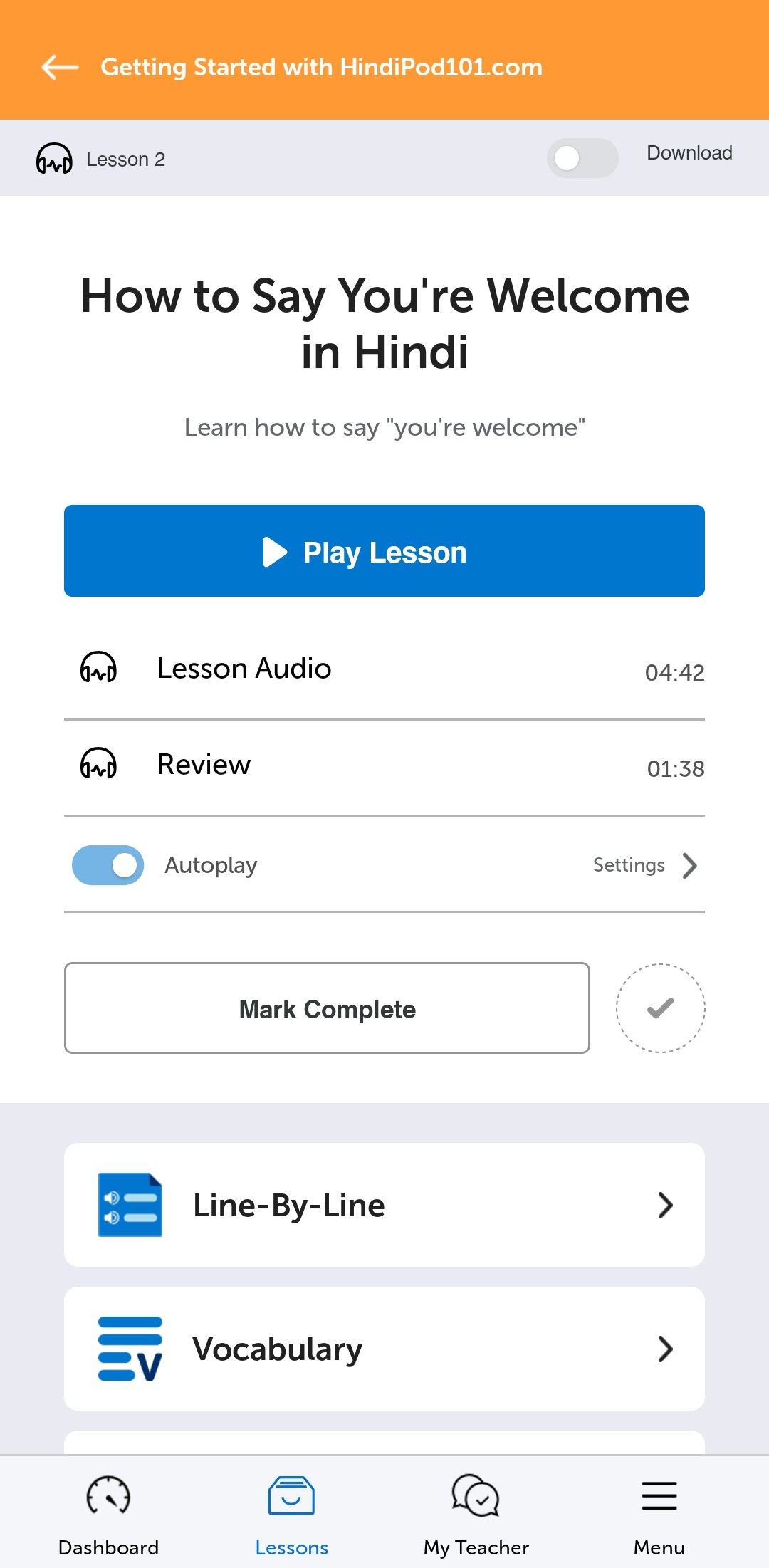
HindiPod101 uses the shared Innovative Language Learning app. Your account and progress sync between the website and phone, and downloaded lessons support offline study. The app contains lesson audio and video, transcripts and notes, with access controlled by your subscription tier.
It is at its best for listening on a walk or revisiting vocabulary in a spare ten minutes. Devanagari deserves a larger screen and deliberate writing practice, so I would not make the phone the centre of the whole course. Use the app for repetition and the browser for close reading, typed notes and comparing forms.
The shared app also means it can feel like a catalogue for many languages before it feels like a Hindi course. Once Hindi and your current pathway are selected, that becomes less distracting.
What Learners Say
Independent reviews and learner discussions agree on the broad shape of the product. Beginners praise the practical phrases, native audio, slowed playback and visible script. Speaking-focused learners often find it a friendly first resource because they can start with short dialogues before the grammar becomes heavy.
The recurring criticism is that there is too much English, especially in early lessons. Reviewers also find the advanced end less demanding than the beginner library, and some users dislike the amount of promotional email after signing up. These are reports from individual learners, not a formal audit, but the same points appear often enough to take seriously.
The most believable positive accounts use HindiPod101 as part of a mix. They combine its listening and structured notes with reading, a tutor, films or other native material. That is also how I would use it. The course can organise your input and give you something to practise. It cannot supply the unpredictable back-and-forth of a conversation.
HindiPod101 and Pimsleur
Pimsleur is the clearest alternative if you want an audio-first course. Its Hindi programme centres on a fixed daily speaking routine. You answer aloud and retrieve phrases under pressure, so it creates a stronger hands-free habit.
HindiPod101 is more flexible and more useful for Devanagari, written notes, searchable vocabulary and targeted grammar review. Its longer plans also have a lower monthly equivalent. The trade-off is discipline: Pimsleur tells you exactly what to do next, while HindiPod101 lets you wander.
Choose Pimsleur if your main constraint is starting to speak during a commute. Choose HindiPod101 if you want one library for listening, script, notes and review tools. You could also use Pimsleur briefly for speaking momentum, then keep HindiPod101 as the broader study base.
Pricing and Plans
HindiPod101 currently uses four levels:
| Plan | Approximate monthly equivalent | Best for |
|---|---|---|
| Free | Free | Testing the teaching style and sampling pathways |
| Basic | About $4 | Full lesson access and lesson notes |
| Premium | About $6–10 | Line-by-line audio, flashcards, word bank, assessments, pronunciation practice and grammar tools |
| Premium PLUS | About $13–23 | Teacher guidance, personal programming and hand-graded work |
The lowest monthly figures normally require a long subscription paid in one instalment. Shorter terms cost more per month. A 60-day money-back guarantee is listed, but confirm the terms shown at purchase.
The discount is applied at checkout through our HindiPod101 link. The amount varies, so check the current price before paying. Premium is the best fit for most serious beginners because line-by-line audio and review tools directly support script and pronunciation work. Basic is enough if you already use an external flashcard system. PLUS makes sense only when you will submit work and use the teacher access.
Pros and Cons
Pros
- Dedicated Devanagari and pronunciation material addresses Hindi’s first major barrier.
- Native dialogues, transcripts and line-by-line audio connect the script to real speech.
- The recommended beginner pathway gives the large library a usable spine.
- Vocabulary, grammar and cultural notes sit beside each lesson.
- Premium review tools suit short, repeatable study sessions.
- The free account and money-back period make the teaching style easy to test.
Cons
- English explanations can crowd out Hindi listening time.
- The library becomes confusing when you ignore the recommended path.
- Dialogue-led grammar needs organised review for agreement and oblique forms.
- Speaking comparison is not the same as live corrective feedback.
- Advanced learners may need more demanding native material.
- Promotional messages and upgrades can feel persistent.
Who HindiPod101 Suits
HindiPod101 suits beginners who want audio, Devanagari and explanations in the same place. It also works for returning learners who understand some Hindi at home but need a more systematic route through reading and grammar. Commuters can use the short lessons, provided they return to the script later.
It is less suitable for advanced learners seeking immersion-level discussion, people who want every step prescribed, or anyone expecting an app to produce spontaneous speaking by itself. If you dislike English-led podcast lessons, sample the free material before subscribing.
The Verdict
HindiPod101 treats Hindi as a language to read and hear, not a list of Romanised travel phrases. The script and pronunciation material addresses Devanagari, aspiration and retroflex contrasts, while the dialogue lessons give postpositions and agreement a practical setting. That combination helps at the stage when a beginner is trying to make the writing, sound and grammar agree with one another.
The course is not fully self-driving. Its library needs a chosen path, the English commentary needs selective skipping, and speaking needs another human. Follow the main pathway, use the specialist lessons to solve specific problems, and add conversation early.
My rating is 4.2 out of 5.
You can try HindiPod101 here. The discount is applied at checkout through our link; the amount varies, so check the current price. Start with the free account, test the pronunciation and beginner lessons, and see whether the teaching style makes Hindi feel clearer.

Social