



HungarianPod101 Review for a Manageable Route into Hungarian

Full disclosure: This post contains affiliate links. ?
What is HungarianPod101?
HungarianPod101 is an online course library with guided pathways, lesson notes and review tools. Audio and video lessons taught by native speakers are its main feature.
- what it’s for:
- Beginner Hungarian, vowel harmony, case endings, pronunciation, listening and vocabulary
- languages:
- Hungarian
- level:
- Absolute Beginner to Advanced
+ PROS
- The beginner path explicitly teaches cases and vowel harmony
- Native dialogues connect unfamiliar endings to useful situations
- Pronunciation work covers vowels, consonant length, stress and intonation
- Transcripts and notes make the audio easy to inspect
- Premium tools support targeted replay and review
- Free sampling and a listed money-back guarantee
- CONS
- English can dominate early lesson time
- The library requires a chosen route
- The scripted host format divides learners
- Advanced study needs harder native material
- The mobile app does not include every website tool
Quick Fire Review
A strong beginner base that introduces Hungarian’s endings and vowel harmony in context. Follow the core path and pair it with conversation and organised grammar notes. 4.3/5.
Hungarian’s reputation often arrives before the first conversation. It belongs to the Uralic family, outside the Indo-European family of most neighbouring languages. It builds meaning by attaching endings, uses vowel harmony to choose among those endings, and has enough case forms to make any neat headline number depend on which grammar you consult.
Hungarian also has no grammatical gender, and its spelling becomes dependable once you learn the letter combinations and vowel lengths. Many of those intimidating case forms are consistent suffixes doing one clear job.
HungarianPod101 offers a route through this system with short native-speaker lessons, a recommended pathway and review tools. Its value depends on teaching the endings in a useful sequence instead of leaving the central grammar outside the dialogue lessons.
The official beginner route introduces cases and vowel harmony inside its core sequence, so the course does not avoid what makes Hungarian Hungarian. It is a strong study base for beginners and lower-intermediate learners, although you will need a clear path, live speaking and harder native material as you advance.
What Makes Hungarian Different
Words can carry a chain of endings. Hungarian is agglutinative, which means that a stem can take several suffixes, each adding information. What English expresses with separate words such as “in”, “from” or “with” often appears at the end of the Hungarian noun. Long words become less alarming once you learn to split them into parts, but that skill takes deliberate practice.
Vowel harmony changes the suffix. A suffix often has two or more forms. The vowels in the stem help decide which version sounds right, as in the location endings -ban and -ben. The system is learnable, but a learner must notice vowel groups while also remembering the meaning of the ending.
Hungarian has many case endings. You will see claims that Hungarian has 18 cases, 21 cases, or another total. The disagreement comes from how linguists distinguish cases from other productive suffixes. The practical truth does not change: learners need a sizeable set of endings for location, direction, possession and grammatical relationships. A course should teach them as meaningful contrasts, not one giant table.
Vocabulary gives English speakers fewer free gifts. Hungarian’s Uralic family history means basic words often look unfamiliar next to English, German or French. Loanwords help, but you cannot rely on recognising half a sentence from shared roots.
Pronunciation is regular after a new decoding stage. Hungarian uses the Latin script, though combinations such as sz, s, cs and gy do not follow English expectations. Vowel length and doubled consonants matter. Once those correspondences are established, the spelling is far more trustworthy than English.
No grammatical gender removes one burden. Nouns are not divided into masculine and feminine classes, and Hungarian pronouns do not force the same gender distinction as English. You still have to learn the cases and verb forms, though this is one complication you can forget about.
The US State Department’s current framework defines Category III as most languages outside the Romance and Germanic groups, apart from those separately listed in Category IV. Hungarian is not individually named, so its Category III placement is inferred from that catch-all definition. The normal Category III course is 44 weeks to professional working proficiency. This describes an intensive programme, not the time every learner needs for a basic chat.
Getting Started with HungarianPod101
You can open a free HungarianPod101 account without entering card details, choose your current level and begin with the recommended pathway. The course library extends from absolute beginner material into advanced study, with separate collections for pronunciation, vocabulary, grammar and culture.
Start with the main beginner route if you are new. It gives the library an order and moves from basic exchanges towards the machinery of Hungarian, including case endings, vowel harmony and suffix choice. This matters because an enormous resource library can otherwise turn into an avoidance strategy. It is easy to sample greetings and culture lessons while postponing the grammar that lets you build your own sentence.
A sensible weekly plan is to complete the next core lesson, review its vocabulary, write a few variations of its model sentence, then add one specialist lesson only if it addresses a current weakness. Keep the main pathway as the route and the rest of the library as a reference shelf.

How It Handles Endings and Pronunciation
HungarianPod101 earns credit for placing vowel harmony and cases in the beginner sequence. Official material teaches front and back vowels through -ban and -ben, tying the sound choice to a concrete meaning. This keeps vowel harmony connected to speech.
The broader grammar material also addresses word order and the case system. Inside a dialogue, you can see the ending attached to a word, hear it at natural speed, and compare related forms. Repeated examples help a suffix become a unit you recognise instead of several extra letters at the end of an already unfamiliar word.
The limitation is coverage by encounter. A dialogue can demonstrate one location suffix clearly without showing how it contrasts with movement into or out of the same place. Build small three-way tables in your notes when a family appears. Use one noun across the related forms and say each sentence aloud. That gives the scattered lesson examples a system.
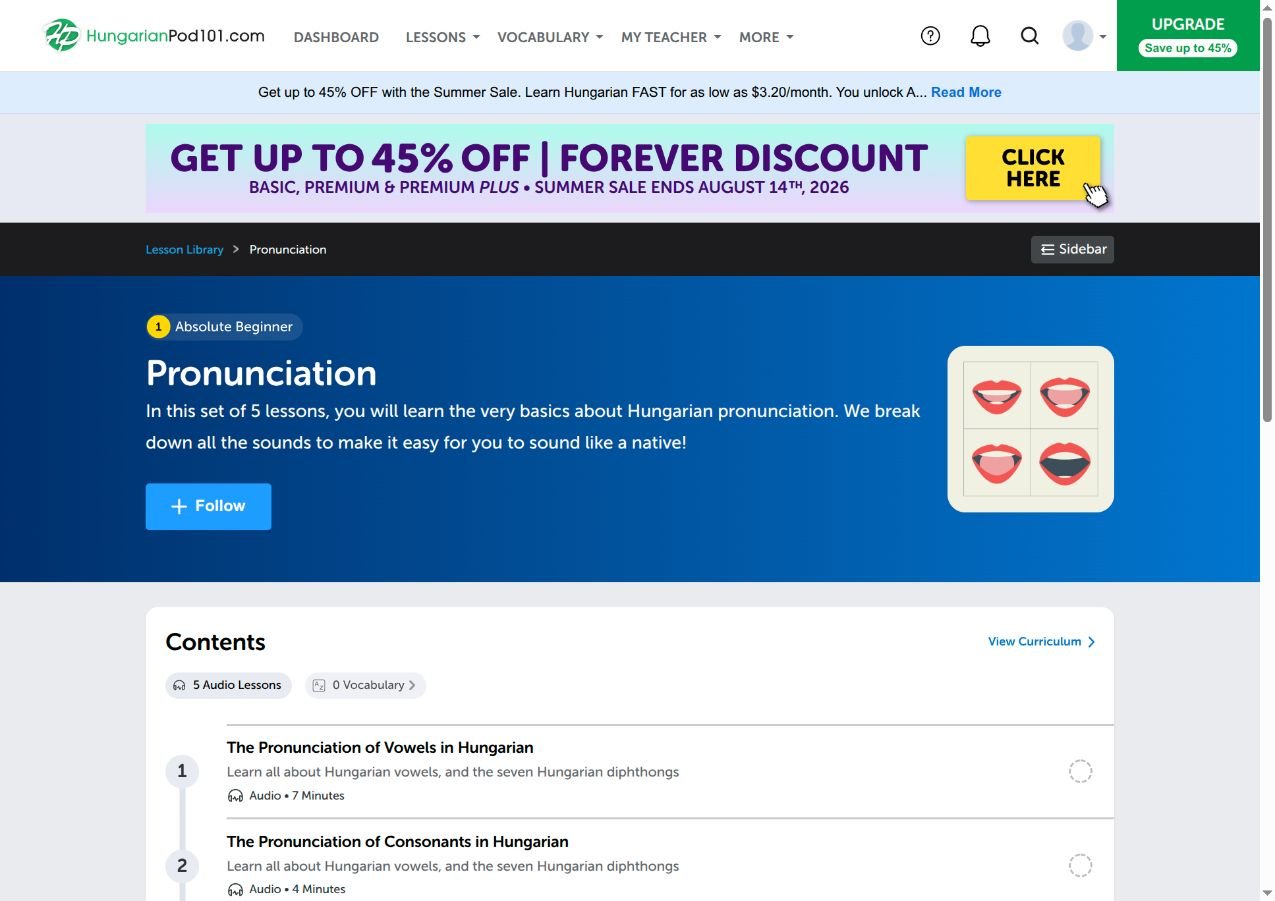
The dedicated pronunciation material covers vowels, consonants, doubled consonants, stress and intonation. It is compact, but it gives you the groundwork for accurate reading. Our Fi3M guide on why Hungarian is easier than it looks also explains the spelling combinations and shows how suffixes can be simpler than agreement across several separate words.
Inside a HungarianPod101 Lesson
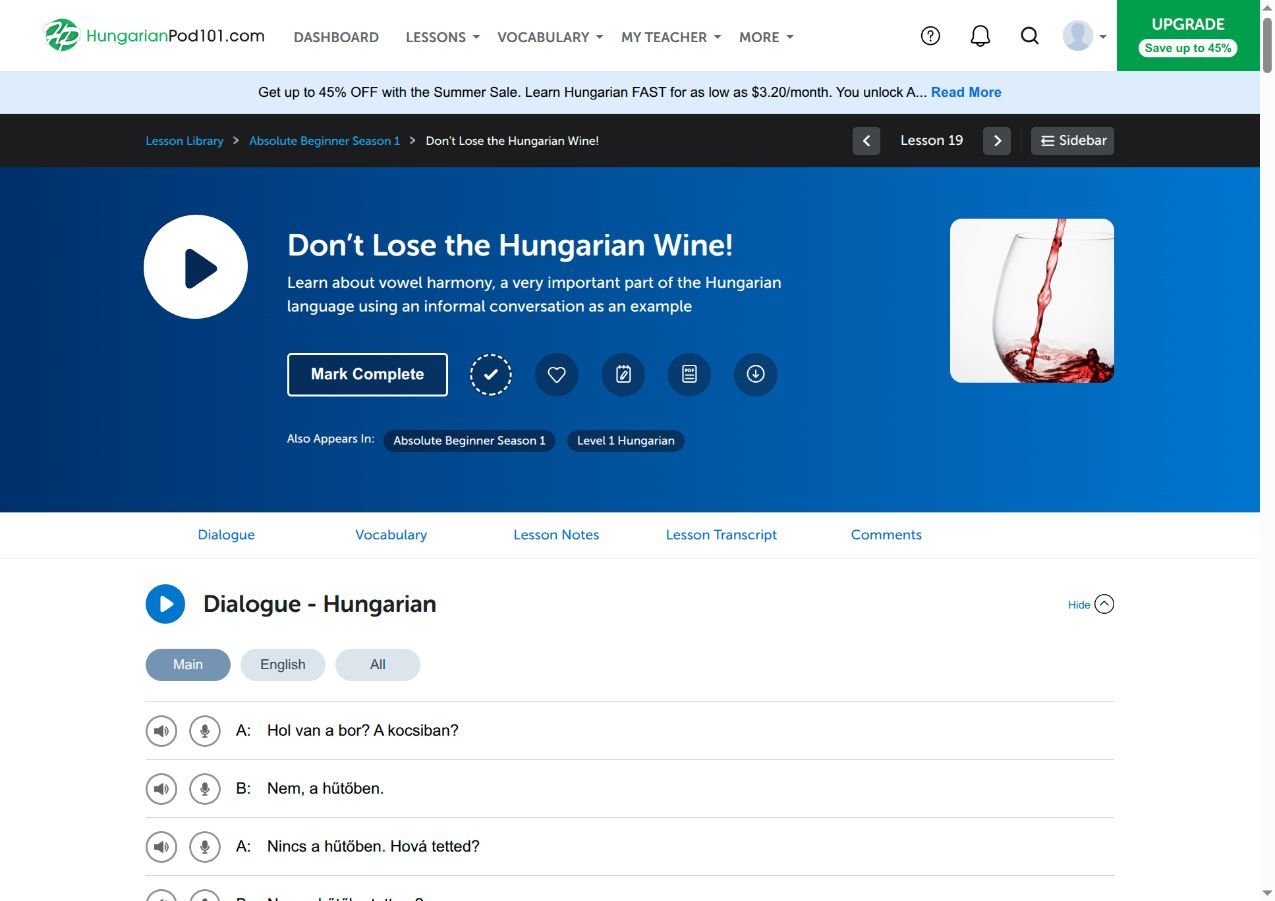
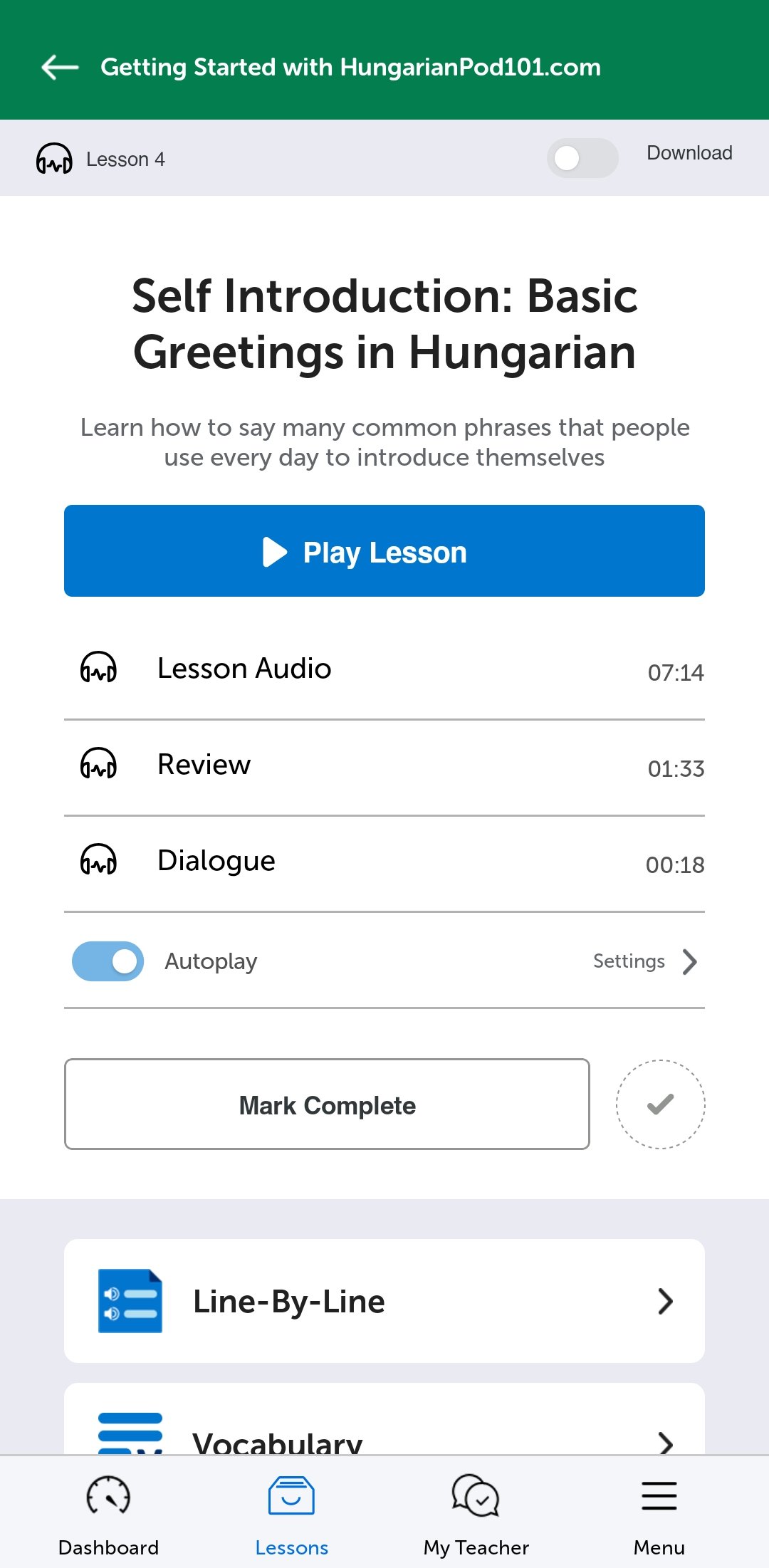
Lessons revolve around a short Hungarian dialogue. You hear the exchange, get a slower breakdown, then work through vocabulary, sample sentences, grammar and cultural context. Transcripts and downloadable notes keep the audio from disappearing as soon as it ends.
This format makes unfamiliar vocabulary easier to retain because each word has a situation around it. It also exposes you to natural sentence emphasis and word order. Hungarian can move elements according to focus, so a bare English-to-Hungarian sentence formula will not take you far. Hearing complete exchanges builds an instinct that rule lists cannot provide on their own.
The English discussion is both a help and a cost. Clear explanations make a difficult point approachable, especially at the start. They also reduce the amount of Hungarian in each minute of audio. After the first listen, skip to the dialogue and target lines. You are paying for native input, so make sure it gets most of the replay time.
The hosted presentation also divides opinion. Some learners enjoy the conversational tone; others hear a scripted exchange around a small amount of Hungarian. Sample several free lessons before buying a long plan. The format stays fairly consistent, and your reaction to it matters more than a feature list.
The Study Tools
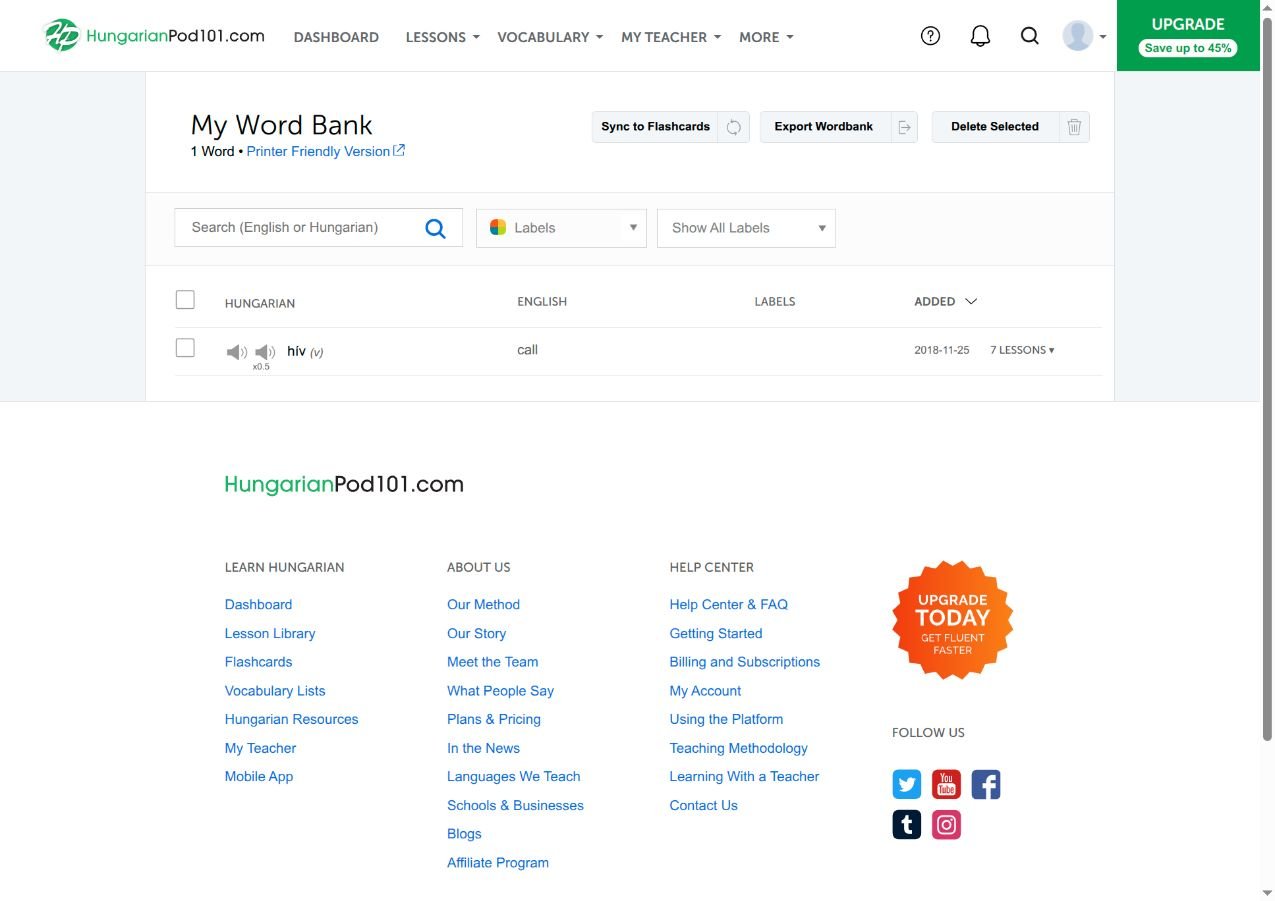
Premium adds line-by-line playback, vocabulary lists, flashcards, a personal word bank, assessments and pronunciation practice. These tools are most valuable when they help you manipulate forms, not merely recognise them.
When saving a Hungarian noun, include a short phrase with the case ending you met. When saving a verb, include the subject and object pattern from the lesson. A card showing only the dictionary form hides the exact information that makes Hungarian challenging.
Line-by-line audio helps with vowel length and doubled consonants because you can isolate a phrase without replaying the entire episode. Recording yourself and comparing it with the native line catches timing and stress differences. It does not diagnose your mouth position or explain why a suffix choice is wrong.
Premium PLUS adds teacher guidance, a personalised programme and hand-graded work. That can turn passive review into corrected production. Before choosing it, decide whether you want feedback contained inside the course or flexible live conversation. If conversation is the goal, compare it with an independent teacher using our italki review.
The Mobile App
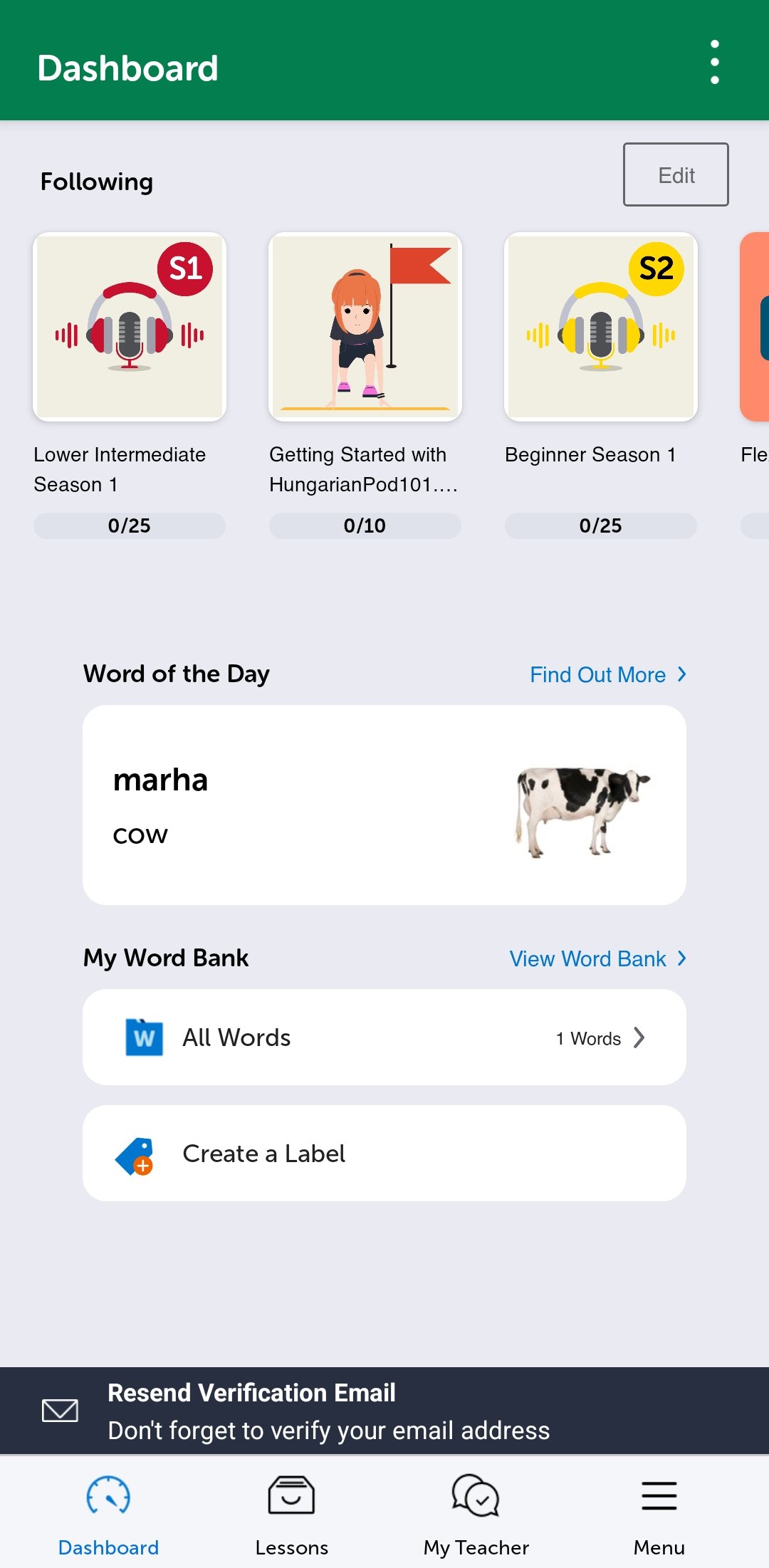
HungarianPod101 runs inside the shared Innovative Language Learning app. Progress syncs with the website, and you can download lessons for offline listening. Audio, video, transcripts and notes are available according to your subscription.
The app is useful for keeping a daily listening habit. Play the dialogue on a walk, then repeat it aloud where possible. Detailed suffix work is easier in a browser or notebook, where related forms can sit beside one another. Switching between the two is not a flaw in the course. It is a practical division between exposure and analysis.
Because the app covers many languages, the opening screens can feel like a product catalogue. Select Hungarian and your current pathway, then stick to the course view instead of browsing every collection.
What Learners Say
Learner sentiment around HungarianPod101 is mixed, which makes the conditions behind each opinion important. Positive reviewers value the vocabulary tools, downloadable study plans, native audio and lower-level breadth. One learner who combined Premium with tutoring, FSI material, YouTube and Anki reported progress in speaking. That is strong evidence for the product as one component in a wider routine, though it cannot prove which component caused the improvement.
Critical learners say the scripted host format does not prepare them enough for daily life in Hungary. A Hungarian teacher in a resource discussion dismissed the platform and recommended other materials. Another learner suggested trying the free version but found the presentation limiting. These are individual judgements, and they show why the free sample is useful.
Independent reviews converge on a middle position. HungarianPod101 is strongest for beginners and lower-intermediate learners, with the advanced end offering less depth. That fits the actual shape of the product and the language. The course is good at introducing forms with audio and context; advanced proficiency requires longer native conversations, reading and writing that a short-lesson library cannot simulate.
Fi3M’s free Hungarian resource guide is a useful place to find those companions.
HungarianPod101 and Pimsleur
Pimsleur Hungarian offers a tightly sequenced audio course built around spoken recall. It asks you to retrieve answers aloud and works well when your study time is a commute or walk. You do not need to choose among a large set of pathways.
HungarianPod101 gives you more explicit grammar, written transcripts, searchable vocabulary and a broader reference library. That makes it better for seeing why -ban changes to -ben and for returning to a specific problem. Its long plans also have a lower monthly equivalent.
Pimsleur is the better choice for a forced hands-free speaking habit. HungarianPod101 is the better base for learners who want to inspect endings, read notes and move among listening, vocabulary and grammar. Neither supplies enough unpredictable conversation alone.
Pricing and Plans
HungarianPod101 currently has four tiers:
| Plan | Approximate monthly equivalent | Best for |
|---|---|---|
| Free | Free | Sampling lessons and testing the hosts |
| Basic | About $4 | Full lesson access and notes |
| Premium | About $6–10 | Line-by-line audio, vocabulary review, assessments and pronunciation practice |
| Premium PLUS | About $13–23 | Teacher guidance, a personal programme and hand-graded work |
The lowest monthly equivalents normally require a long term paid in one instalment. A 60-day money-back guarantee is currently listed. Check the billing period and guarantee shown at purchase.
The discount is applied at checkout through our HungarianPod101 link. The amount varies, so check the current price. Premium is the best balance for most learners because line-by-line audio and review tools support the sound-and-suffix work. Basic is good value if you already have flashcards and a pronunciation routine. PLUS is worthwhile only if you will use its teacher feedback.
Pros and Cons
Pros
- The beginner pathway explicitly teaches cases and vowel harmony.
- Native dialogues make unfamiliar vocabulary and endings easier to remember.
- Pronunciation lessons cover vowels, doubled consonants, stress and intonation.
- Transcripts and notes connect the audio to written Hungarian.
- Premium tools support targeted replay and vocabulary review.
- Free sampling and the listed guarantee reduce the risk of testing it.
Cons
- English explanations can take too much of the audio time.
- The large library needs a chosen pathway to stay coherent.
- The scripted host format will not suit every learner.
- Individual lessons need a companion system for comparing suffix families.
- Advanced learners will need longer, harder native material.
- Teacher correction is restricted to the highest tier.
Who HungarianPod101 Suits
HungarianPod101 is a good fit for new and returning learners who want clear audio, written notes and a path into the suffix system. It suits people who like short sessions and want to revisit a particular grammar or pronunciation problem. It can also work well beside a class or tutor as a source of repeatable listening.
It is less suitable for advanced learners seeking sustained native discussion, anyone who wants one fixed action every day, or people who dislike English-led podcast lessons. Pimsleur offers a more rigid audio routine, while a textbook-led course may provide more systematic grammar tables.
The Verdict
HungarianPod101 deals directly with vowel harmony and case endings in its core beginner material. It puts those features into contextual lessons, then gives you transcripts and replay tools to take the sentence apart.
The course cannot make a large suffix system disappear, and it should not try. Its job is to turn that system into a sequence of usable examples. Follow the recommended pathway, group related endings in your own notes, replay the Hungarian more than the English, and begin speaking before you feel ready.
My rating is 4.3 out of 5.
You can try HungarianPod101 here. The discount is applied at checkout through our link; the amount varies, so check the current price. The free account is enough to decide whether the lesson format keeps you engaged.

Social