



Visual Memory Techniques for Learning Vocabulary

Full disclosure: This post contains affiliate links. ?
Here’s something that used to frustrate me: when I travelled through a country where I didn’t speak the local language, I missed chances to connect with people. Activities, food and books taught me plenty, but even a short conversation could add a more personal view of the place.
Gesture, facial expression and tone all matter, but there is no reliable rule saying that words make up only a fixed percentage of communication. You can often point at a menu and complete a simple order. For stories, jokes and a real exchange of ideas, however, knowing some of the language opens more doors.
Learning a language well takes time and practice. As a digital nomad, I couldn’t aim for advanced proficiency in every language I encountered. I needed a smaller, practical target that left time to enjoy the country I was in.
What helped me was realizing that I didn’t need to wait for fluency. A modest working vocabulary, a few useful sentence patterns and plenty of listening practice could already make travel more rewarding.
This article explains one tool I used for that narrower goal: visual memory techniques for learning vocabulary.
A note from the Fluent in 3 Months team before we get started: You can chat away with a native speaker for at least 15 minutes with the “Fluent in 3 Months” method. All it takes is 90 days. Tap this link to find out more.
How Fast Can I Learn a Language?
There is no word count that makes someone “85% fluent.” Frequency lists can help you prioritize common words, but conversation also depends on pronunciation, listening, grammar, interaction and knowing how words behave in context. A focused month can still build a useful base if you set a realistic goal.
I want to be clear about the limit: recognizing a word is not the same as understanding speech or using that word naturally. Connor Grooms described his own intensive Spanish project in Colombia as reaching “conversational fluency” in 30 days. Treat that as one learner’s self-defined experiment, not a universal timetable. Here is his talk about it:
Connor also documented his entire experience learning Spanish in a month.
Learning high-frequency and personally useful vocabulary first can help you notice more of a conversation, although context will not always fill every gap.
Vocabulary is one demanding part of language learning. Mnemonics, retrieval practice and spaced review can make some words easier to recall, but they complement real listening, reading and conversation rather than replacing them.
How to Build a Recall Cue
A word in a bare list gives you little context. Linking it to a sound, image, example sentence or personal association can create another route back to its meaning.
No memory aid makes information unforgettable. The practical aim is simpler: give a new word an association that is meaningful enough to help you retrieve it, then practise retrieving it over time.
Visual memory techniques are one option. The keyword method, for example, links a foreign word to a familiar sound and an image. Research suggests that it can help vocabulary recall, especially when paired with retrieval practice, but results vary by learner and word.
Here’s how that works.
Use Word Stress Without Losing the Whole Word
A sound cue does not need to reproduce every syllable, but you still need to learn the whole word. Stress is only one part of pronunciation; vowels, consonants, rhythm and, in some languages, tone also matter. Use a mnemonic as a recall prompt, then check the word against reliable audio and practise saying it in full.
In Spanish, the stressed syllable is the one given the most prominence. Here is a short list of common words. Spanish spelling often predicts stress, but listening to a proficient speaker is a better guide than an English-style respelling.
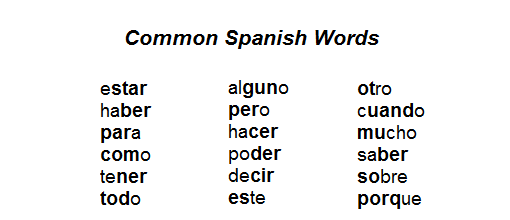
Choose a sound in the word that reminds you of something familiar. This is a mnemonic cue, not a pronunciation guide: approximate English matches can distort Spanish sounds. Once you have a cue, turn it into an image that also suggests the meaning. Test whether it actually helps you recall the complete word, and replace it if it does not.
Turn a Sound Cue into a Memorable Image
The next step is to make the cue easy to retrieve. A personal, distinctive association may help more than a generic one.
Think about a detailed memory: a celebration, a journey or a meal you enjoyed. You may remember not only how it looked, but also a sound, smell, movement or feeling. You can borrow that richness when inventing a mnemonic, without using distressing imagery.
Those extra associations can provide more retrieval cues. They do not have to be visual: a sound, phrase, movement or spatial layout may work better for you.
The idea is to give a new word a temporary bridge to something you already know. Creating useful associations takes practice, and some learners, including people with aphantasia or limited vision, may prefer verbal, tactile, auditory or spatial cues. Use whichever route helps you recall the word accurately.
Here’s how to create images to associate with new words:
1. Add a useful detail. A sound, smell, texture or feeling can strengthen an association. You do not need to force every sense into every mnemonic.
2. Try action. Movement can make a scene more distinctive. Compare a static object with one doing something unexpected and keep the version you recall more easily.

3. Make the association distinctive. An unusual image may stand out, such as a dog with wings, but a personally meaningful scene can work just as well.
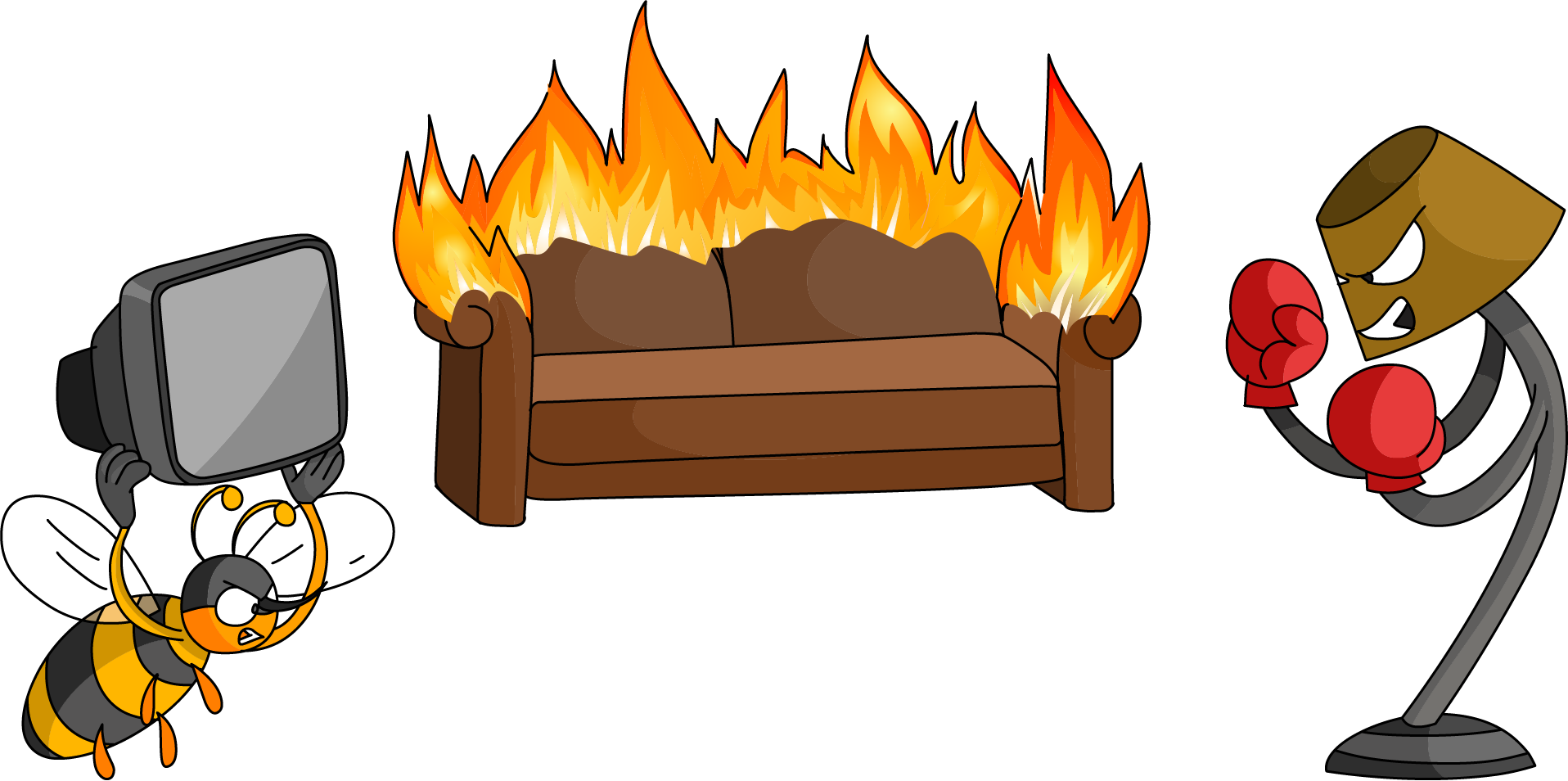
4. Add colour if it helps. A surprising colour may make an image easier to distinguish. If colour is not useful or accessible to you, emphasize shape, location, sound or another feature instead.
5. Use a comfortable emotional cue. Amusement, surprise or affection may make a scene more personal. Strong fear is not required; avoid any image you find upsetting.
How These Absurd Images Work in Practice
Let’s use Spanish cuando (“when”) as an example. Its stress falls on the first syllable: CUAN-do. An English “wand” can be a rough memory cue, but it is not an exact pronunciation match. To connect that cue with time, picture a magician waving a wand and making the hands of a clock spin. In a direct question, Spanish adds an accent: ¿Cuándo vamos al banco? means “When are we going to the bank?”

When I wave my wand, time itself changes!
I picked a word that can work as an adverb or conjunction because abstract words do not have an obvious picture. A concrete noun may be easier. Spanish perro means “dog” and is stressed PE-rro. “Pear” can be a loose English cue, so you might picture a pear-shaped dog. But remember to learn the Spanish sounds too, including the trilled rr.

Get Your Images Organized With a Memory Palace
Meeting hundreds of words once is unlikely to make them available on demand. You need repeated opportunities to retrieve them.
One way to organize recall cues is a memory palace, also known as the method of loci. Research finds that it can improve recall in some tasks, although study quality and results vary.
A memory palace is a familiar real or imagined location. You assign a distinct item to each spot, then mentally revisit the route when you want to retrieve the items. For vocabulary, you can place the mnemonic images you created earlier at those spots.
Suppose you want to organize cuando. You could place the earlier image somewhere familiar that already contains a clock. If a clock hangs above your television, picture the magician waving a wand at it. On a later mental visit, that scene may prompt “when” and then cuando.
There is, however, a problem with the traditional use of memory palaces in language learning.
A memory palace takes time to build, and reusing locations can cause interference. For some learners, flashcards or ordinary contextual practice will be more efficient. For others, the extra structure is worth the setup.
I found the method useful, but the concern about time is fair.
My response was to group locations by category. In a simple route, unrelated words such as cuando and perro might sit beside each other. That is not inherently wrong, but I preferred a layout that also reminded me what kind of word I was looking for.
This is a personal variation, not a proven upgrade to the traditional method. Try it only if categories help you retrieve words.
For example, you can organize your new vocabulary by:
- Verb conjugations
- Gender
- Words that have more than one meaning
- Words that can function in different parts of speech
I called my version a “memory world.” You do not need one; it is simply another organizational option.
Not a Memory Place, But a Memory World
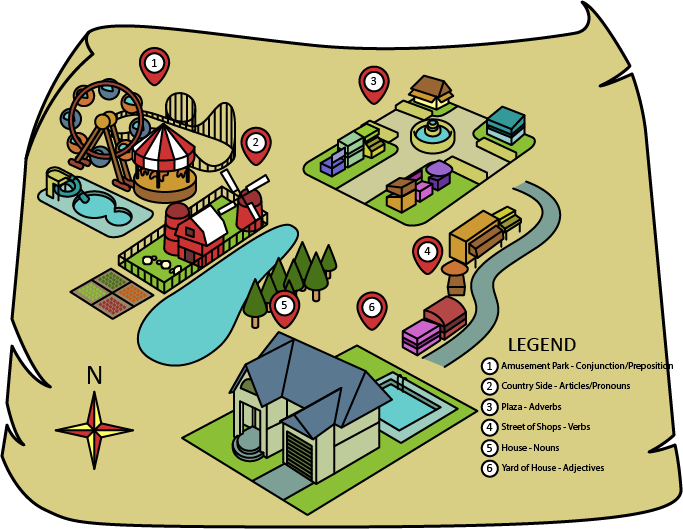
This image shows my basic memory-world layout. Each area corresponds to a part of speech, creating one more cue for retrieval. The categories are aids, not complete grammatical descriptions, and a word may belong to more than one.
For a simple demonstration, classify cuando here as an adverb (3, the plaza) and perro as a noun (5, the house). Place each image in its assigned area. When you try to retrieve the word later, visit that area mentally and look for the scene. If the extra categorization slows you down, skip it.
Verb forms add another layer. Tense, mood, person and number may all affect a form, depending on the language. I used a standard building layout for each verb, assigning grammatical categories to consistent locations. This may give you useful retrieval cues, but it does not replace learning when and how speakers use each form.
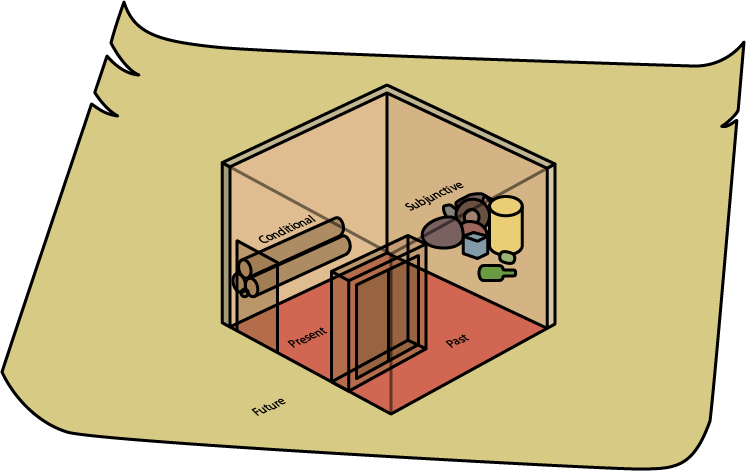
In the illustration, each area of the building represents a grammatical category. To retrieve a future form, for example, visit the building for that verb and look in the area marked “future.” The labels simplify Spanish grammar: the subjunctive is a mood, not a tense. Even so, they show how a consistent spatial cue can work.
Start with a handful of words and test yourself after a delay. Keep the structure only if it improves accurate recall.
How to Choose Useful Words in Your Target Language
You might be wondering which words to learn first. A frequency list is a useful starting point, but there is no universal set of 2,000 words that equals fluency.
Build a compact list from several sources:
- A reputable frequency dictionary or corpus for common words
- Words and phrases from conversations and content relevant to your goals
- Corrections from a teacher, tutor or trusted reference
Do not treat rank as the whole lesson. Learn a word with audio, a useful meaning, an example and any important information about register or grammar. Memrise retired its “Mems” feature in 2022 and moved its old community courses away from the main app in 2024, so the original course links and instructions in this article are no longer reliable.
When I tried an old Spanish deck, five words took me about three minutes before adding images. That was one personal session, not a dependable learning rate. Creating associations takes practice, and some words need more attention than others.
Choose a daily amount you can review consistently. Ten well-practised items that you meet in speech and text may be more useful than dozens you rush through. Include delayed retrieval, and reduce the load if yesterday’s words are not sticking.
Learning vocabulary takes time, and learning a new memory system adds effort at first. Try these visual memory techniques on a small set, combine them with retrieval practice and real language use, and keep them only if they help you recall words accurately.

Social