


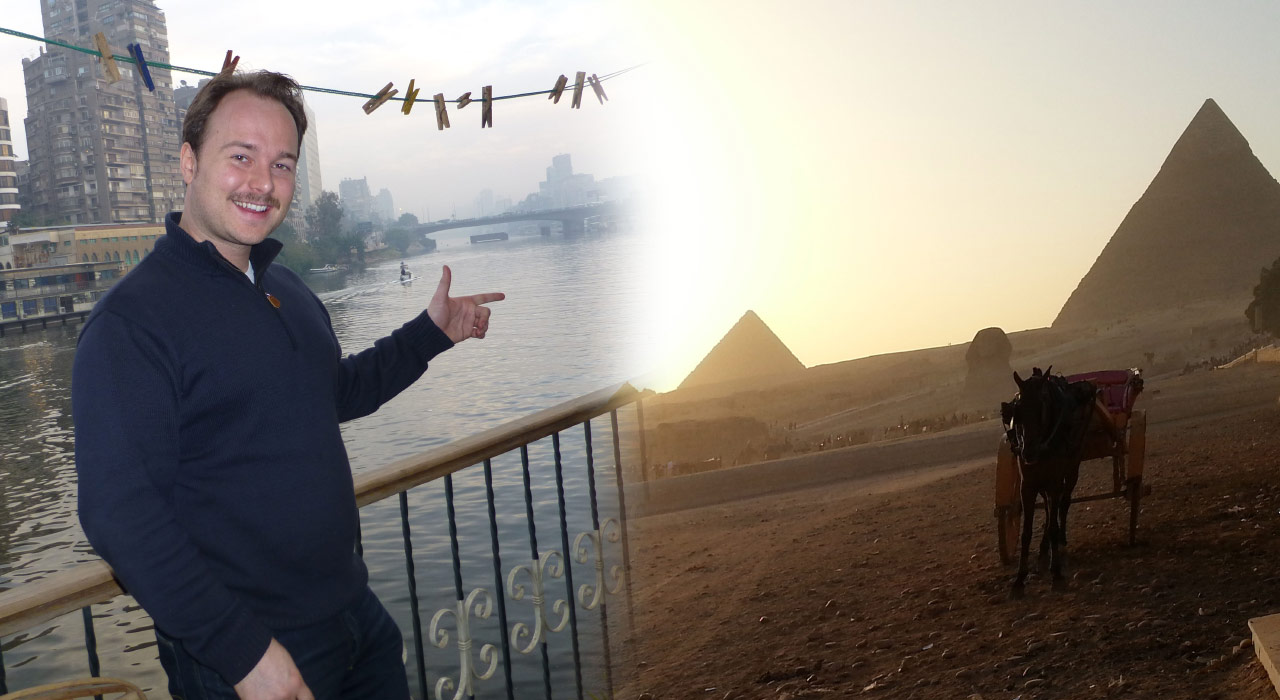
Walking from the Nile to the pyramids, and the people I met on the way

Full disclosure: This post contains affiliate links. ?
This is a travel diary from my 2013 Egyptian Arabic mission. It records one afternoon in Cairo as I experienced it then, not a walking route or current safety guide. Roads, access and local conditions change, so use current official guidance and choose safe crossings and transport.
After more than a week in Cairo, I still had not seen the Great Pyramids of Giza. I was about to begin travelling along the Nile, so I decided it was time.
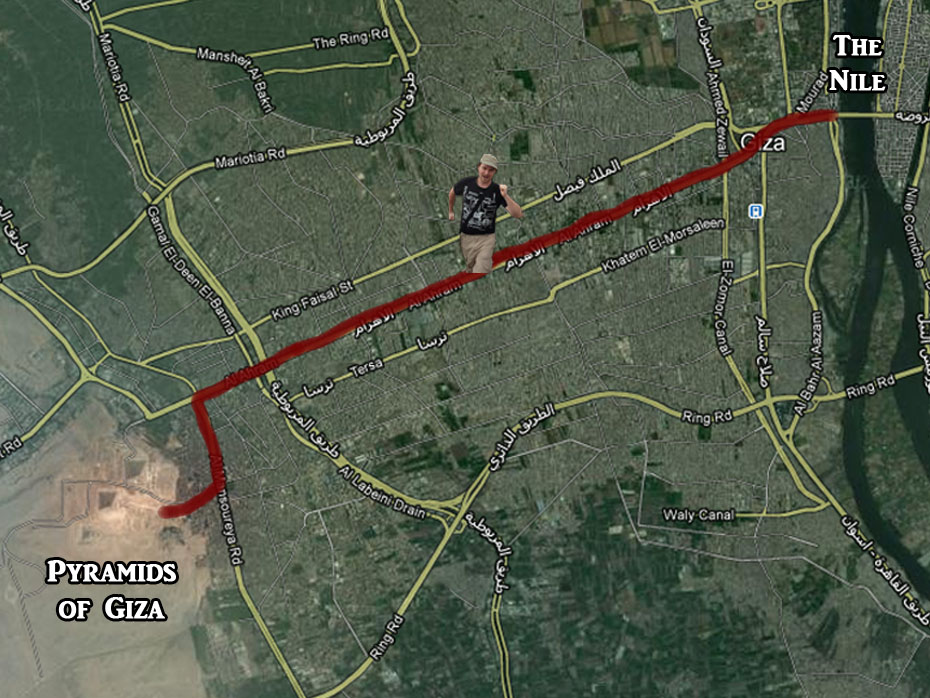
Instead of taking a taxi straight to the entrance, I made an afternoon of it and walked roughly 9 km from the Nile towards the Giza pyramid complex. I wanted to see the modern city between those two landmarks and find out whom I might meet along the way.
I reached the gate but did not enter that day. The walk, the conversations and my first view of the pyramid between ordinary buildings became the story.
A note from the Fluent in 3 Months team before we get started: You can chat away with a native speaker for at least 15 minutes with the “Fluent in 3 Months” method. All it takes is 90 days. Tap this link to find out more.
Crossing Cairo in 2013
I started near the Nile by Giza train station, surrounded by large roads, overpasses and fast traffic. At the time, I compared crossing those roads to the video game Frogger.
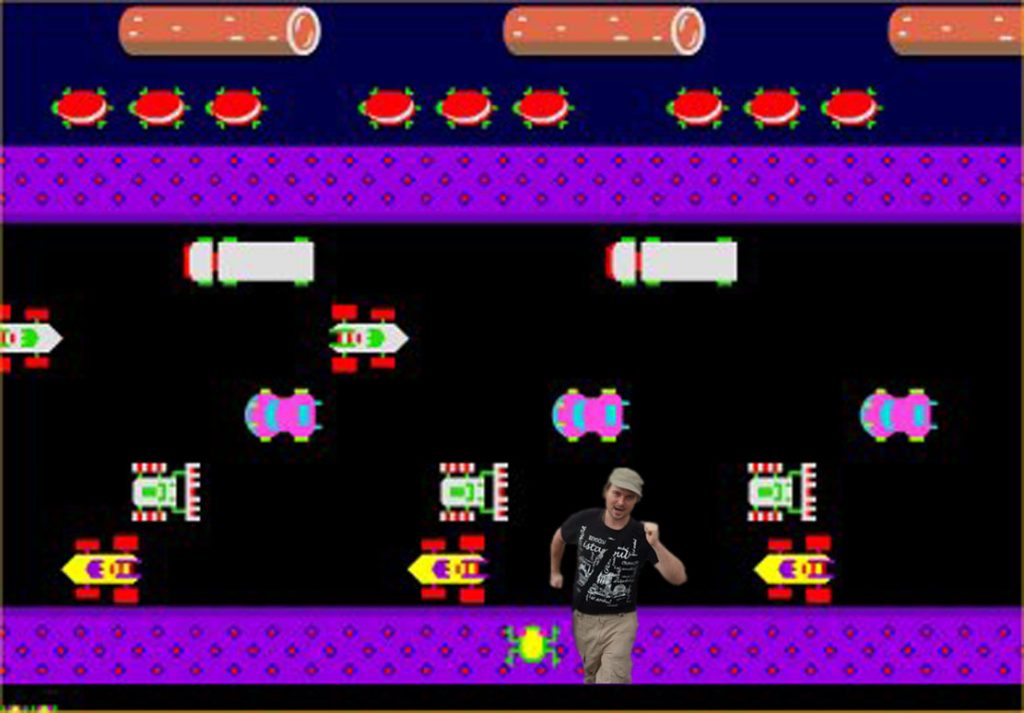
That comparison captured how overwhelmed I felt, but treating traffic as a game was reckless. I would not advise copying my route or stepping between moving cars. Find a safe crossing, follow current local advice or use suitable transport.
Eventually I reached الأهرام, Al-Ahram, meaning “the pyramids”. The avenue continued for a long way, but buildings blocked the view and the pyramids did not gradually appear as I had imagined.
Trying to Stand Out Less
I had set myself a language challenge: reach the gate without anyone starting a conversation with me in English. I had read stories about persistent sales pitches around the pyramids, and I hoped that speaking Arabic and drawing less attention to myself would lead to different interactions.
I left my bright clothes, camera and accessories at home. I wore plain clothes and paid attention to the pace and body language around me. Some people who spoke to me began in Arabic, which gave me the practice I wanted.
That result did not prove I had learned a formula for looking Egyptian. Cairo residents do not share one appearance or manner, and a visitor is not responsible when someone targets or pressures them. At most, I had reduced a few obvious signals that I was sightseeing.
Clothing choices should also follow comfort, respect and safety rather than an attempt to deceive people. On this walk I wore heavy clothes on a sunny day and regretted it by the time I neared the pyramids.
People I Met Along the Way
Halfway along Al-Ahram, a father walking with his daughter asked me for the time in Arabic. My hesitation or accent gave me away, and he asked where I was from. We walked together for about five minutes. He told me about his electronics shop and invited me to join him for tea if I was nearby again.
Later, two teenagers asked me for directions in Arabic. I could not help them, but I was delighted that these ordinary exchanges were happening in the language I had come to practise.
Nearly two hours after setting off, I turned onto another road and saw a pyramid for the first time. It appeared suddenly between two buildings.
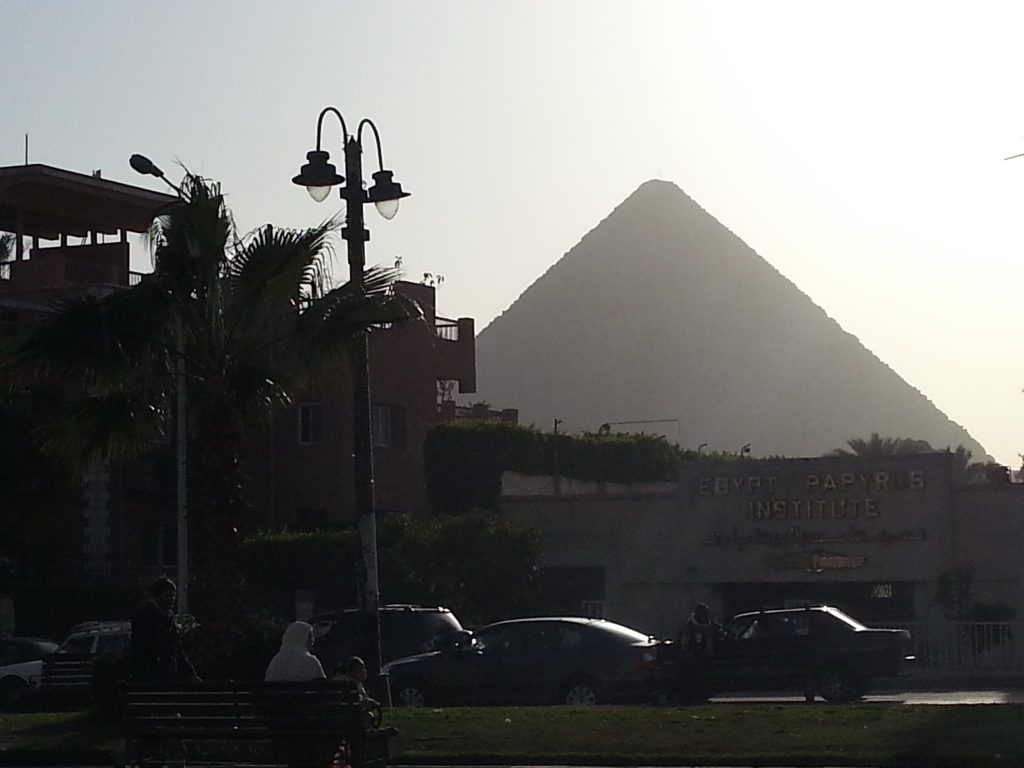
I sat on a nearby bench to rest and take in the view. Two people approached. They welcomed me, asked about my background and eventually invited me to a shop for tea and papyrus replicas.
I was happy to chat but did not want to visit the shop. I repeated that I had only stopped for 20 minutes and would then continue to the gate. One man showed me photos of his daughter and talked about his family. The conversation was pleasant even though the sales invitation kept returning.
I also invented a story that I had lived in Cairo for months and visited the pyramids many times. It seemed clever to me then, but it is not advice I would give now. A clear “no, thank you”, a firm boundary and leaving the situation are better than building an elaborate false history.
Sales Pressure and Respect Go Both Ways
In the original version of this diary, I put too much responsibility on tourists for attracting persistent sellers. That was unfair. Visitors can dress conspicuously or behave rudely, but neither makes unwanted pressure their fault.
It is still worth treating everyone as a person. Someone selling to visitors may be trying to support a family, while a visitor may be tired, uncertain or protecting a limited budget. You can decline firmly without insulting anyone, and you can leave when a conversation no longer feels comfortable.
The man on the bench eventually stopped pitching tea and told me that tourism had fallen since Egypt's 2011 revolution. I listened, told him I hoped more visitors would return when conditions allowed, and we parted with a handshake.
Walking Up to the Gate
I still had about 20 minutes to walk. The final road looked much like the Cairo streets I had already crossed, until camels, taxis and tourist shops began to appear near the complex.
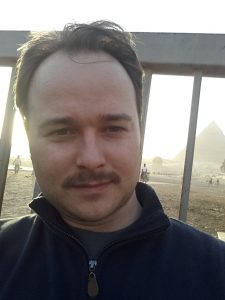
At the gate, taking photos made it obvious that I was a visitor. Several people approached in English with offers. I declined and spent a few minutes watching the late-afternoon light on the pyramids.
I did not enter because this particular journey had only been about reaching the gate. I took a taxi home, spoke to the driver in Arabic and watched the pyramids remain in view for the first part of the ride.
My favourite parts of Cairo were often ordinary walks and conversations rather than famous sites. This one showed me both the value and the limits of trying to blend in. Speaking Arabic opened conversations, but one afternoon could not make me an expert on Cairo or on the people who live there.

Social