


Food in German: Vocabulary, Restaurant Phrases and Regional Dishes

Full disclosure: This post contains affiliate links. ?
Food is a practical way into German: it gives you something to read on menus, ask for in cafés and discuss with people you meet. Germany has strong regional food traditions, though, so there is no single menu that represents the whole country.
Before we get started, if you’re looking for an online German course, here’s the course I recommend: German Uncovered – Learn German Through the Power of Story, a course with a fascinating new method by my friend Olly. You can try it for free for 7 days!
German Food Culture: What You Need To Know
Bavarian, Swabian, Rhineland and northern traditions can look quite different. Bread, potatoes, seasonal vegetables, cakes and regional meat dishes all matter, but vegetarian, vegan and international options are now common in many cities. Meal times and the day’s main meal also vary by household and schedule.
Useful Vocabulary for Food in German
Learn a small set you can use straight away, then add words from menus you actually see. German nouns are shown with their article because the article is part of the word you need to learn.
Ordering Food in German
- bestellen – to order
- die Speisekarte – menu
- die Rechnung – bill
- die Beilage – side dish
- dazu – with it
- zum Hieressen – for here
- zum Mitnehmen – to take away
German Vocabulary for Breakfast (Frühstück)
- das Brötchen – bread roll
- das Ei – egg
- das Rührei – scrambled egg
- das Spiegelei – fried egg
- der Käse – cheese
- der Joghurt – yoghurt
- die Marmelade – jam
- der Kaffee – coffee
German Vocabulary for Lunch (Mittagessen)
- die Kartoffel – potato
- die Bratkartoffeln – fried potatoes
- das Gemüse – vegetables
- der Spargel – asparagus
- das Fleisch – meat
- der Fisch – fish
- das Schnitzel – breaded cutlet
- die Spätzle – southern German egg noodles
- der Knödel – dumpling
German Vocabulary for Evening Meals (Abendessen oder Abendbrot)
- das Brot – bread
- das Vollkornbrot – wholegrain bread
- der Lachs – salmon
- die Gurke – cucumber
- der Senf – mustard
- das/der Ketchup – ketchup
- das Wasser – water
German Desserts
- der Kuchen – cake
- der Keks – biscuit
- das Eis – ice cream
- die Sahne – cream
- die Süßigkeiten – sweets
- die Praline – filled chocolate
Fruits in German
- das Obst – fruit
- der Apfel – apple
- die Birne – pear
- die Erdbeere – strawberry
- die Kirsche – cherry
- die Traube – grape
- die Pflaume – plum
How To Order Food In German: Helpful Phrases
Use a simple order first, then add details. Einmal Wiener Schnitzel, bitte means “One Wiener schnitzel, please.” For a more polite request, use Ich hätte gern(e) …: Ich hätte gerne die Käsespätzle, bitte.
To ask whether something is included, say Sind die Pommes dabei? (“Are the fries included?”). If you need a vegetarian option, ask Haben Sie etwas Vegetarisches?
German Restaurant Phrases
- Guten Appetit! – enjoy your meal
- Lecker! – tasty!
- Es ist scharf. – it is spicy
- Es ist ein bisschen fade. – it is a little bland
- Schmeckt’s? – does it taste good?
- Noch ein Wasser, bitte. – another water, please
- Die Rechnung, bitte. – the bill, please
- Wir möchten zahlen. – we would like to pay
Guten Appetit is a common courtesy before eating, but there is no need to treat it as a rigid rule. Watch the people at the table and follow their lead.
Manners And Eating Habits In Germany
Restaurant customs vary by venue and region. A reservation is useful at busy times; at an informal place you may seat yourself, while elsewhere staff will guide you. Ask before joining an occupied table, say bitte and danke, and do not assume that a local family’s habits are rules for everyone.
Service, payment and tipping practices also vary. Check whether the bill is paid at the table or at a counter, and say the total you want to pay when tipping rather than leaving cash silently if that is the local practice.
5 Traditional German Foods Worth Looking For
These dishes are regional, so use the list as a starting point rather than a national checklist.
1. Flammkuchen
Flammkuchen is a very thin flatbread associated with Alsace and south-west Germany, commonly topped with crème fraîche, onions and bacon. Vegetarian toppings are easy to find too.
2. Schnitzel
Schnitzel is a breaded cutlet served across Germany. Wiener Schnitzel is an Austrian dish traditionally made with veal; other versions use pork or another meat.
3. Käsespätzle
Käsespätzle combines Spätzle with cheese and often fried onions. It is particularly associated with Swabia and the Alpine south, and it is a useful vegetarian menu option when made without meat additions.
4. Weißwurst-Frühstück
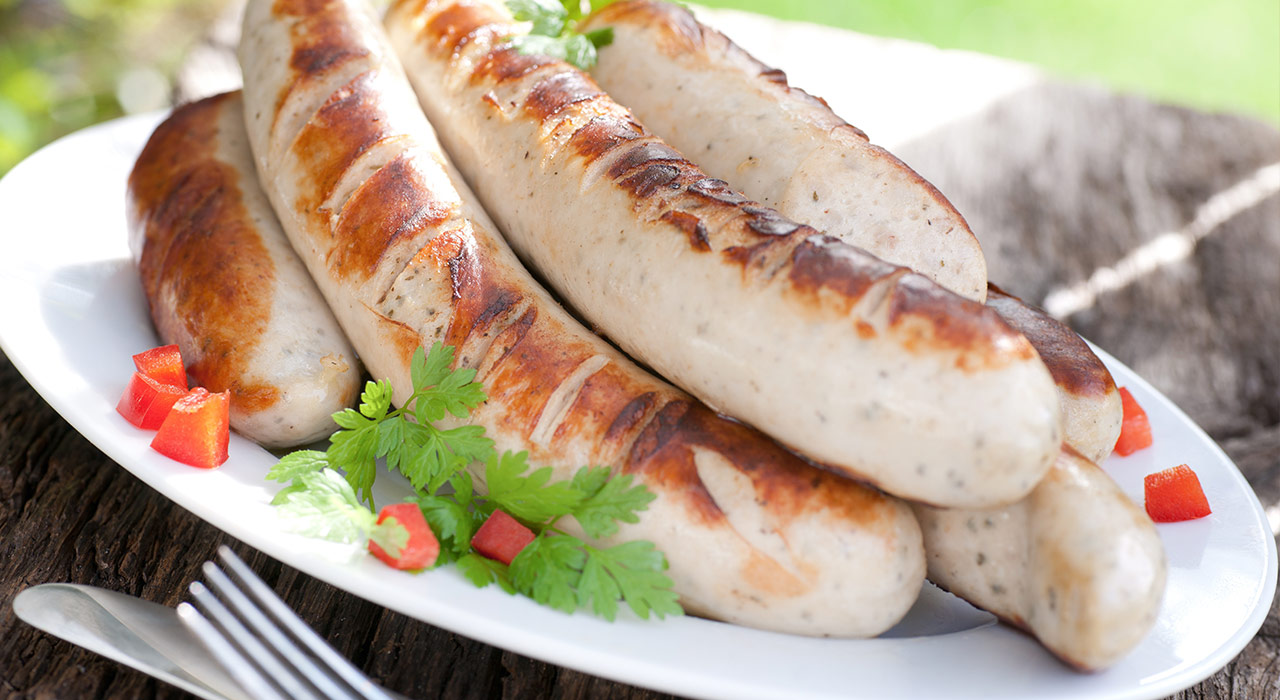
In Bavaria, Weißwurst is commonly eaten in the morning with sweet mustard and a pretzel. Beer may accompany it in some traditional settings, but it is not a requirement.
5. Maultaschen
Maultaschen are filled pasta pockets from Swabia. They may be served in broth, pan-fried, or with a filling that includes meat, spinach or vegetables.
Seasonal German Foods
Spargelzeit, the white-asparagus season, generally runs from spring until 24 June, depending on the harvest. Goose, Christmas biscuits and warm wine are common seasonal associations in winter, while the exact dishes vary from one household and region to another.
German Food Facts
German bread culture has a huge range of regional loaves and rolls. The German Bread Institute maintains a public register of bread specialities, but a single exact count changes with how varieties are defined.
John F. Kennedy’s 1963 line Ich bin ein Berliner was grammatically correct. Although Berliner names a doughnut in many parts of Germany, the famous “I am a jelly doughnut” story is a myth.
Put Food Vocabulary to Work
Choose one meal, learn the words you need for it and use one polite request out loud. A menu, a café order or a recipe gives each word a setting, which makes it easier to remember than a long isolated list.
For more practical German, start with our German phrases guide. If you are comparing structured courses, read our GermanPod101 review and choose what suits your goal.

Social