


Days of the Week in Spanish: Names, Dates and Grammar

Full disclosure: This post contains affiliate links. ?
Learning the days of the week in Spanish helps with timetables, appointments and everyday plans. Start with the seven names, then put them into a few useful date questions. That makes them easier to recognise on a calendar and easier to use in conversation.
Spanish day names are normally written in lower case. They are also masculine, so el lunes means “Monday” and los lunes can mean “Mondays” or “on Mondays”.
If you want a clear structure for putting your Spanish into practice, take a look at the Fluent in 3 Months Bootcamp. It’s a 90-day programme with weekly coaching calls, a private community and a focus on speaking from day one.
Spanish Days of the Week
| Days in Spanish | |
|---|---|
| Monday | lunes |
| Tuesday | martes |
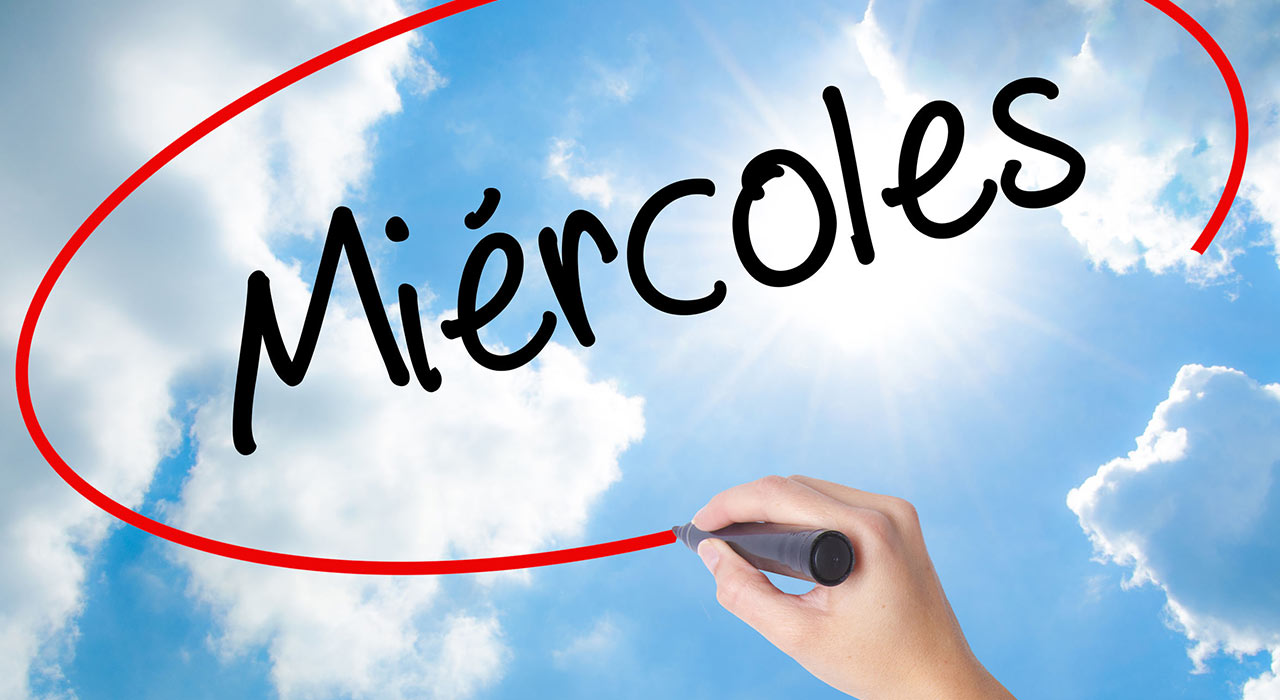
| Wednesday | miércoles |
| Thursday | jueves |
| Friday | viernes |
| Saturday | sábado |
| Sunday | domingo |
Many calendars in Spanish-speaking settings place Monday first, as ISO 8601 does, but calendar layouts and work-week conventions vary by country, software and audience. Learn the names rather than relying on a particular first column.
Monday – lunes
Lunes comes from Latin luna, “moon”. The connection is useful if you know the English word “lunar”.
Tuesday – martes
Martes is linked to Mars. English “Tuesday” instead refers to Týr, a Germanic god often associated with war, so the two languages reach a similar idea by different routes.
Wednesday – miércoles
Miércoles is linked to Mercury. The accent is part of the spelling: miércoles, not miercoles.
Thursday – jueves
Jueves is linked to Jupiter. English “Thursday” refers to Thor, another figure associated with thunder.
Friday – viernes
Viernes is linked to Venus. The five weekday names from lunes to viernes all end in -s, which matters when you make them plural.
Saturday – sábado
Sábado ultimately comes from the word “Sabbath”, rather than the name of a Roman god.
Sunday – domingo
Domingo comes from the late Latin expression dies dominicus, “the Lord’s day”.
How to Say “Today” in Spanish
“Today” is hoy. These questions and answers are a useful starting set:
- What day is today? – ¿Qué día es hoy?
- What is today’s date? – ¿Cuál es la fecha de hoy?
- Today is Sunday. – Hoy es domingo.
- Today is 1 January. – Hoy es el primero de enero.
In dates, Spanish normally puts the day before the month: el cinco de mayo (5 May). Primero is common for the first of the month; after that, cardinal numbers are usual.
For a quick refresher on ordinal numbers, watch our Spanish ordinal-numbers video.
How to Say “Tomorrow” in Spanish
“Tomorrow” is mañana. The same word can also mean “morning”, so context matters. “The day after tomorrow” is pasado mañana; “in five days” is en cinco días.
How to Say “Yesterday” in Spanish
“Yesterday” is ayer, and “the day before yesterday” is anteayer. For “five days ago”, say hace cinco días. The verb depends on what happened: Ayer fue mi cumpleaños means “Yesterday was my birthday.”
“Week” in Spanish and Other Related Phrases
- day – el día
- date – la fecha
- week – la semana
- month – el mes
- year – el año
- weekend – el fin de semana
- next week – la próxima semana
- last week – la semana pasada
- every day – todos los días
- every Saturday – cada sábado
- on Saturday – el sábado
- on Saturday morning – el sábado por la mañana
- tomorrow afternoon – mañana por la tarde
- tomorrow evening/night – mañana por la noche
Spanish Grammar Using the Days of the Week
The days are masculine: el lunes, el martes and so on. Monday to Friday already end in -s, so their plural form looks the same: el lunes (on Monday) and los lunes (on Mondays). Saturday and Sunday add -s: los sábados and los domingos.
Use cada lunes or todos los lunes for “every Monday”. For a particular Saturday, a common form is el sábado. Other prepositional choices can occur in regional or fixed expressions. For a range, use de lunes a viernes, “from Monday to Friday”.
Abbreviations for Days of the Week in Spanish
Abbreviations vary by country, app and space available. You may see Lu, Ma, Mi, Ju, Vi, Sá, Do or Lun, Mar, Mié, Jue, Vie, Sáb, Dom. Some Spanish calendars use X for Wednesday to distinguish it from martes, but it is not the only convention.
Tips for Remembering All the Days in Spanish
Try one small routine: say the date aloud when you open your calendar, add hoy es… to a note, or plan one real appointment in Spanish. The mythology links can help with lunes through viernes; repeated use matters more than memorising an origin story.
For more vocabulary you can use in everyday conversations, start with these common Spanish phrases. If you would like a structured course comparison, read our SpanishPod101 review and choose the resource that fits your goal.

Social