


16 Ways to Say Thank You in French

Full disclosure: This post contains affiliate links. ?
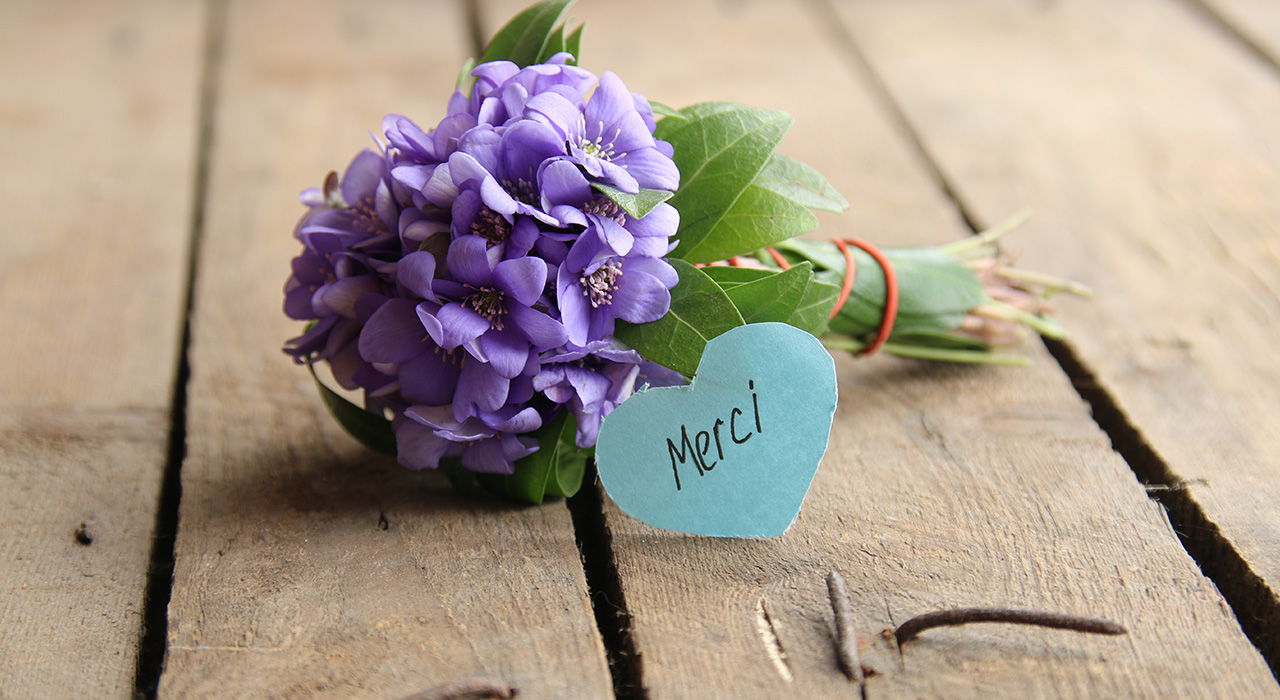
Merci is one of the most useful French words to learn first. It works in many situations, and a few variations will help you match the person and context.
Politeness is not one national personality. It changes with setting, relationship and region. The phrases below give you options rather than rules about how every French speaker behaves.
Start with merci, then notice what people around you use in shops, workplaces, homes and messages.
Editor's note: Before we get started, if you’re looking for an online French course, here’s the course we recommend: French Uncovered – Learn French Through the Power of Story, a course with a fascinating new method by Olly Richards. You can try it for free for 7 days!
“Thank you” in French – A Quick and Easy Guide
What is “thank you” in French?
Here’s a quick and easy table for how to say “thank you” in French. For the ins and out on how do you say “thank you” in French, keep reading.
| Formal “Thank you” | Je vous remercie |
| Informal “Thank you” | Je te remercie |
| “Thanks” | Merci |
| “Thank you very much” | Merci beaucoup |
| “Thank you so much” | Un immense merci |
| “No, thank you” | Non, merci |
| “Thank you my friend” | Merci, mon ami/amie |
| “Thank u” via cell phone | Mci |
| “Thank you” in French slang | Cimer |
| “Thank God” | Dieu merci |
| “Many thanks” | Mille mercis |
| “Thank you beautiful” | Merci, ma belle |
| “Thank you for everything” | Merci pour tout |
| “Thank you for the meal” | Merci pour le repas |
| “Thank you for the succulent meal” | Merci pour le repas succulent |
| “Thank you for your business” | Nous vous remercions de votre confiance |
| Formal letter sign-off | Je vous prie de recevoir l'expression de mes salutations distinguées |
| Formal “You're welcome” | Je vous en prie |
| Informal “You're welcome” | Je t'en prie |
| “It's nothing at all” | C'est rien du tout |
| “With pleasure” | Avec plaisir |
| “No problem” | Pas de problème |
| “It's nothing” | De rien |
What’s the best way to say “thanks” in French? Well, that depends.
Let’s take a closer look and find out what will best suit you. In any situation.
In this article, I’ll explain the different ways to say “thank you” in French. So that you can make new French friends. And keep the ones you already have!
Later, we’ll look at formality and a few ways to answer when someone thanks you.
And be sure to watch our video with French teacher, Léa, founder of The Staircase Method to be sure you pronounce these different ways of saying “thank you” in French correctly:
1. “Thanks” in French – Merci
Merci is the first version of “thank you” in French that I recommend learning. Why? Because it’s easy and it’s versatile. You can use it in most situations. You can say merci to thank a shopkeeper. You can use it to show gratitude for the favor your friend did for you.
Merci is acceptable in formal situations, including at work. For a more formal or emphatic thank-you, you can say je vous remercie.
2. “Thank you” in French to a stranger: Je vous remercie
In French, tu is the familiar singular form of “you”. Vous is the plural form and is also used to address one person formally or politely. To be safe with a single new conversation partner, stick with vous until they suggest otherwise.
Using tu with someone you do not know well may sound too familiar in some settings. Norms vary, so listen to how the other person addresses you and ask if you are unsure.
You even use the vous form when speaking to a salesperson. When in doubt, pull vous out.
3. “Thank you” in French to a friend: Je te remercie
Je te remercie is one way of saying “thank you” to someone you know well. Maybe it’s your language exchange partner. Maybe it’s a friend from school. If they use the informal tu with you, it’s safe to use it with them, too.
Te is the unstressed object-pronoun form corresponding to tu. In je te remercie, it is the direct object and means “you”.
When I was only a few days into French, I practised tu first with my tutor. That was a controlled starting point, not a reason to use tu with everyone.
But of course, I asked her permission.
4. “Thank you very much” in French – Merci beaucoup
Merci beaucoup is another nice phrase that you can use in most situations. You’ll likely hear it a lot, too.
Some learners say something that sounds like merci beau cul which means “Thanks, nice butt.” In most situations, you’ll want to avoid that.
5. “Thank you so much” in French – Un immense merci
Un immense merci is emphatic, so it suits a heartfelt or written thank-you better than every routine exchange. That is a matter of register, not a rule that Americans exaggerate and French people do not.
For a broadly useful stronger thanks, merci beaucoup is the safer phrase to learn first.
6. “No, thank you” in French – Non, merci
Another short and sweet phrase to get your point across. Don’t want an extra helping of escargot at Auntie Lisette’s house? Non merci will come in handy for this occasion.
7. “Thank you, my friend” in French – Merci, mon ami/e
Ami and amie mean “friend”, but the closeness implied depends on the relationship and context. Do not treat one word as proof of a lifelong commitment.
Here’s a reminder about the French words for friend:
- Ami – Male version of “friend”
- Amie – Female version of “friend”
8. “Thank u” in French via cell phone – Mci
Ah, texting. What would a post on a modern language learning blog be without a sample of how to text a quick “thx” in French?
Mci will do the trick. You’ll look like an sms native!
9. “Thank you” in French slang – Cimer
Verlan is a form of French slang that often reverses or rearranges syllables. Usage varies by word, speaker and setting, so learn examples in context.

To use this phrase when thanking someone, switch the two syllables of merci around and there you have it. Cimer is verlan for “thanks”.
10. “Thank God” in French – Dieu merci
You’re stuck in the rain after a night on the town. It’s two in the morning. All the gift shops are closed except one. And yes, they sell umbrellas.
Now would be a great time to thank your lucky stars by saying, Dieu merci! That’s “Thank God!” in French.
11. “Many thanks” in French – Mille mercis
This phrase literally means “a thousand thank yous”. It’s used from time to time in the Instagram language learning community. A good Samaritan will correct someone’s French and the poster will add a mille mercis to the comment thread.
12. “Thank you, beautiful” in French – Merci, ma belle/ma grande
Be careful with this one. You don’t want to overstep your boundaries. This phrase can be used for little ones you know or someone very close to you.
Don’t use this phrase with people you don’t know, it’s inappropriate.
13. “Thank you for everything” in French – Merci pour tout
Your tutor helped you figure out how to tackle the subjunctive. Merci pour tout would be appropriate for this type of appreciation. If you don’t agree, you haven’t studied the subjunctive yet.
14. “Thank you for the meal” in French – Merci pour le repas
Bellies warm with an exquisite French meal. How ever will you thank the chef when he comes to your table? A simple merci pour le repas will suffice.
But what about a meal that makes the room glow? Merci pour le repas succulent. “Thanks for the succulent meal.” Yup, that should do the trick.
15. “Thank you for your business” in French – Nous vous remercions de votre confiance
Nous vous remercions de votre confiance means “Thank you for your business” or, more literally, “We thank you for your trust.”
You just signed a multimillion dollar deal with your new French client. You want to show them that you’re grateful for their business. This is the perfect phrase. Notice we use the vous form of “you”.
Don’t want to miss out on all the profit by slipping into informal speech.
16. A formal French letter sign-off – Je vous prie de recevoir l'expression de mes salutations distinguées
This phrase translates to, “I beg you to receive the expression of my best regards.” It’s a decorative way of signing off in a formal letter. Ah, the French and their curlicue ways of signing off in letters!
Bonus Round 1: Match the Level of Formality
There is no single French rule about smiling. A better way to sound considerate is to match the setting: greet people, use vous when formality is appropriate, make a clear request and say merci.
Bonus Round 2: “You’re welcome” in French to a stranger – Je vous en prie
Someone thanks you in French. What do you do? You do the hokey-pokey and you turn yourself around. That’s what it’s all about! Just kidding. Actually, you say Je vous en prie.
With this bonus round phrase, you can respond to your French coworker when she thanks you for help on the last minute deadline. Remember, vous is formal.
Bonus Round 3: “You’re welcome” in French to a friend – Je t'en prie
What about when your friend thanks you for offering him a ticket to the Cannes festival? Well, je t’en prie is the perfect response.
The te (“you”) is shortened in this phrase to t’. Get used to it. The French language has a serious apostrophe addiction.
Other informal ways to say, you’re welcome in French:
- Ce n'est rien du tout. – “It is nothing at all.”
- Avec plaisir ! – “With pleasure!”
- Pas de problème. – “No problem.”
- De rien. – “It’s nothing.”
How to Say “Thank You” in Canadian French
Merci, merci beaucoup and the other core thanks in this guide are understood in Quebec. Usage and preferred replies can differ by region and setting, so do not assume every France-based register note transfers unchanged. In Quebec, you may also hear bienvenue for “you’re welcome”.
Take Your Pick!
What’s your favorite phrase from this post? Let us know in the comments. And if you have a fun story about your French learning journey, please share it. I love hearing from other learners.
Bonne chance, mes amis ! “Good luck, my friends!”

Social