


Beach in Spanish: Essential Vocabulary and Phrases

Full disclosure: This post contains affiliate links. ?
The basic word for “beach” in Spanish is la playa. A few well-chosen questions and safety phrases will take you further than a long list of objects, so this guide groups the vocabulary around things you may actually need to say.
Beach words vary across the Spanish-speaking world. Before packing a phrase list for Ibiza, Cancún or Cartagena, choose the region you are visiting and check which local term people use. The regional labels below are starting points, not rules for every speaker.
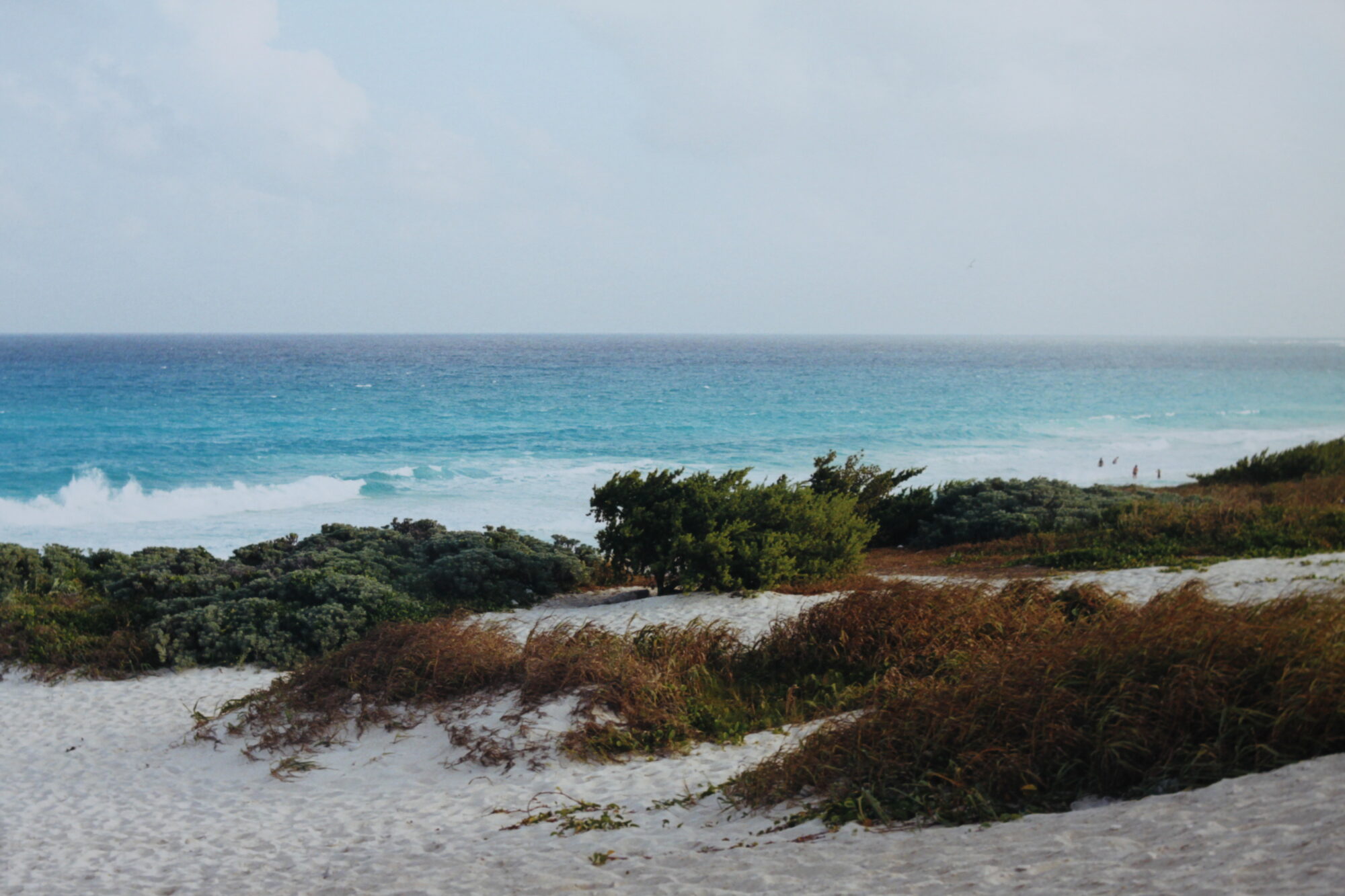
If you are learning from home, use these words to describe a photo or tell a short beach story to your language exchange partner.
If you want a clear structure for putting your Spanish into practice, take a look at the Fluent in 3 Months Bootcamp. It’s a 90-day programme with weekly coaching calls, a private community and a focus on speaking from day one.
Table of contents
What to Pack for the Beach in Spanish
Say Me pongo el bañador for “I put on my swimsuit” in Spain. Depending on the country, you may hear el traje de baño or el vestido de baño instead. The ASALE dictionary records vestido de baño in Nicaragua, Costa Rica, Panama, Colombia and Ecuador.
| English | Spanish | Regional note |
|---|---|---|
| Towel | la toalla | Broadly understood. |
| Swimsuit | el bañador / el traje de baño / el vestido de baño | Choose the term used at your destination. |
| Sunscreen | el protector solar / el bloqueador solar | Usage varies by region and speaker. |
| Sunglasses | las gafas de sol / los lentes de sol | Both are common; distribution varies. |
| Beach umbrella | la sombrilla | El paraguas normally protects you from rain. |
| Beach bag | la bolsa de playa | Broadly transparent. |
| Beach chair | la silla de playa | Broadly transparent. |
| Cooler | la nevera portátil / la hielera | Hielera is used in Mexico and parts of Central America and the Caribbean. |
| Flip-flops | las chanclas / las chancletas / las ojotas | Ojotas is recorded in Argentina and Uruguay. |
| Water bottle | la botella de agua | Broadly understood. |
| Hat | el sombrero / la gorra | The item determines the word. |
| Beach ball | la pelota de playa | Broadly transparent. |
| Bucket and spade | el cubo y la pala | Balde is common for “bucket” in parts of the Americas. |
| Surfboard | la tabla de surf | Broadly understood. |
ASALE records hielera for a portable cooler in several American countries and ojota for a rubber beach or pool sandal in Argentina and Uruguay. These dictionary regions are useful clues, but a hotel, host or local shop can tell you what sounds natural in one town.
As you pack, name each item and put it into a full line: Llevo una toalla y protector solar, “I’m taking a towel and sunscreen.” This connects vocabulary to a speaking task instead of leaving it as an isolated list.
What You Will Find at the Beach
Once you arrive, try describing what you can see, hear and feel. Estoy en la playa means “I’m at the beach”. Hay mucha gente means “There are lots of people”, while La playa está tranquila means “The beach is quiet”.
Sand, Sun and the Shore
“Sun” is el sol, and “sand” is la arena. Say El sol brilla for “The sun is shining”, Hace calor for “It’s hot”, and La arena está caliente for “The sand is hot”. Children can construir un castillo de arena, “build a sandcastle”.
- Shore: la orilla
- Seashell: la concha marina or la concha
- Seagull: la gaviota
- Pelican: el pelícano
- Tourist: el turista / la turista
- Surfer: el surfista / la surfista
- Lifeguard: el socorrista / la socorrista in Spain; el/la salvavidas in much of the Americas
- Bay: la bahía
- Island: la isla
- Port: el puerto
- Sea view: la vista al mar
- Coast: la costa
- Sunset: la puesta de sol
- Sunrise: la salida del sol
- Breeze: la brisa
ASALE records salvavidas for a person who watches over swimmers in many American countries. In Spain, socorrista is the usual beach term. Ask which form your destination uses rather than treating one as universal.
Turn the list into questions: ¿Había muchos turistas?, “Were there many tourists?”; ¿Viste la puesta de sol?, “Did you see the sunset?”; or ¿La playa estaba tranquila?, “Was the beach quiet?”
The Sea, Tides and Marine Life
“Ocean” is el océano, while “sea” is el mar. El mar está en calma means “The sea is calm”. Tide is la marea: marea alta is high tide and marea baja is low tide. Calm water and low tide are separate conditions.
- Wave: la ola
- Swell or rough wave action: el oleaje
- Current: la corriente
- Starfish: la estrella de mar
- Fish: el pez
- Jellyfish: la medusa
- Ray: la raya
- Shark: el tiburón
- Dolphin: el delfín
- Crab: el cangrejo
- Dolphin watching: el avistamiento de delfines
If someone warns you about corrientes, oleaje or medusas, follow the posted instructions and ask the lifeguard for clarification. Vocabulary can help you understand a warning; it does not replace local safety advice.
Summer and Beach Photos
“Summer” is el verano, and a summer holiday is unas vacaciones de verano. A selfie is commonly un selfi; Fundéu recommends the Spanish spelling selfi. Autofoto is also understandable.
- Beach selfie: un selfi en la playa
- Photos: las fotos
- Sunny: soleado / soleada
- Hot weather: hace calor
- Tan: el bronceado
- Tan lines: las marcas del bronceado
- Sunburn: la quemadura solar
- Summer atmosphere: el ambiente veraniego
The other seasons are la primavera, “spring”; el otoño, “autumn”; and el invierno, “winter”.
Beach Activities in Spanish
Tomar el sol means “to sunbathe”. Here tomar is part of a fixed expression; translating it word by word will not explain how Spanish speakers use the phrase.
- To play beach volleyball: jugar al voleibol de playa
- To surf: hacer surf / surfear
- To scuba dive: bucear
- To snorkel: hacer esnórquel / bucear con tubo
- To water-ski: hacer esquí acuático
- To fish: pescar
- To swim: nadar
- To splash or play in the water: chapotear / jugar en el agua
- To sunbathe: tomar el sol
- To walk the dog: pasear al perro
FundéuRAE recommends esnórquel as the adapted spelling. The activity may also be described as buceo con tubo.
For a dog-friendly beach, Spain often uses playa canina. A more broadly transparent description is una playa que admite perros. Ask ¿Se admiten perros en esta playa?, “Are dogs allowed on this beach?”
Useful Questions and Safety Phrases
Vamos a la playa means “Let’s go to the beach”, and Me encanta la playa is a broadly neutral way to say “I love the beach”. These questions are more useful once you can recognise the likely regional word for “lifeguard”.
| English | Spanish |
|---|---|
| Can I swim here? | ¿Puedo bañarme aquí? |
| Is it safe to swim here? | ¿Es seguro bañarse aquí? |
| Is there a lifeguard? | ¿Hay socorrista? / ¿Hay salvavidas? |
| Is there a beach access schedule? | ¿Hay horario de acceso a la playa? |
| What time does the beach close? | ¿A qué hora cierra la playa? |
| Are dogs allowed? | ¿Se admiten perros? |
| Where is the first-aid post? | ¿Dónde está el puesto de socorro? |
| Help! | ¡Ayuda! |
| Call emergency services. | Llame a emergencias. |
You may also see bandera verde, bandera amarilla and bandera roja. Meanings and operating rules can vary, so read the beach notice and follow the lifeguard’s instructions. Spain’s Civil Protection guidance for bathing areas tells visitors to pay attention to these flags because they indicate the state of the water.
A few sea and sun idioms are useful for recognition, although they do not describe a literal day at the beach:
- Nadar contra corriente: to go against the prevailing view or tendency.
- Arrimarse al sol que más calienta: to side with the powerful or advantageous option.
- Nadar entre dos aguas: to avoid committing clearly between two positions.
- De sol a sol: from sunrise to sunset; all day.
- Nadar y guardar la ropa: to avoid committing while protecting your own interests.
Practise Before You Go
Choose the dialect for your destination, then practise one short exchange rather than memorising every item. For example, ask ¿Es seguro bañarse aquí? and answer Sí, pero hay oleaje. Record both lines, listen back and ask a trusted speaker whether your regional choices sound natural.
- Pack and name. Say a full line for five things you are taking.
- Describe one picture. Include the weather, the water and two people or objects.
- Build one practical dialogue. Ask about swimming, access, a lifeguard or dogs.
- Check the region. Verify one variable word with a local source or speaker.
- Practise aloud. Repeat the complete lines until you can retrieve them without reading.
The @languagehacking post below follows a recent arrival in Playa del Carmen and gives the travel-immersion setting for this vocabulary.
If you are travelling to the Caribbean, continue with these Caribbean Spanish words and phrases. For Spain, review the essential Spanish travel phrases you will need away from the beach. Families can also turn the picture-description exercise into an “I spy” game with our guide to Spanish for kids.

Social