


10 Japanese Movies for Language Learners

Full disclosure: This post contains affiliate links. ?
Japanese movies can sharpen your listening and introduce voices, settings and social situations that a textbook cannot fit on one page.
They are not recordings of neutral everyday speech, though. Film dialogue may be historical, stylised, mumbled or written for a particular character. Use a movie as practice material, then check unfamiliar expressions before borrowing them.
I’ve chosen ten films across drama, animation, action and horror. The list includes contemporary conversation, formal language, family talk and deliberately old-fashioned speech, so you can pick a film that suits your level and interests.
Before you begin, learn enough Japanese to form basic sentences and review some essential Japanese phrases. That gives you something useful to listen for.
Editor's note: Before we get started, if you’re looking for an online Japanese course, here’s the course we recommend: Japanese Uncovered – Learn Japanese Through the Power of Story, a course with a fascinating new method by Olly Richards. You can try it for free for 7 days!
How to Learn Japanese with Movies
Watching a whole film once is entertainment. To turn it into active listening practice, study one short scene at a time.
This Fi3M video shows how to learn Japanese while watching shows:
- Get the context. Watch the film for the story first, using subtitles in a language you understand if you need them.
- Choose 30–60 seconds. A short exchange with a clear situation is better than trying to mine every line in a two-hour film.
- Replay it with Japanese captions. Check whether the captions match the spoken line, because subtitles sometimes shorten or rephrase dialogue.
- Keep two or three useful lines. Look up the words, speaker relationship and level of formality. Ignore specialised or character-specific language you will not use.
- Listen, repeat and recall. Shadow the actor, switch the video off, then say the idea in your own Japanese. Revisit the scene a few days later.
Our broader guide to learning languages with movies and TV has more ways to combine viewing with speaking and vocabulary review.
 Departures
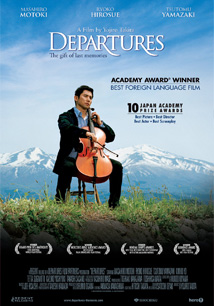 Departures
Japanese title: おくりびと (Okuribito)
Year: 2008
Director: Yōjirō Takita
Genre: Drama
Departures is my all-time favourite Japanese film. Daigo is a cellist whose orchestra dissolves, leaving him to look for work. An advert for “departures” leads him to a job as a nōkanshi, a professional who prepares the dead and places them in a coffin during a ceremony before the family.
The film follows Daigo's work, the grief of the families he meets and the stigma attached to his occupation. It won the 2009 Academy Award for Foreign Language Film.
Japanese practice: Listen for the shift between relaxed family conversation, workplace language and the respectful speech used with bereaved clients. The subject matter includes death, bodies and funeral rites.
Your Name
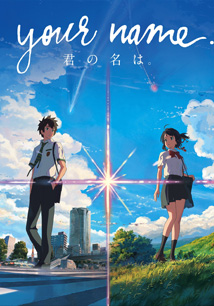 Your Name
Japanese title: 君の名は。 (Kimi no Na wa.)
Year: 2016
Director: Makoto Shinkai
Genre: Animation, drama
Mitsuha lives in a rural mountain town, while Taki lives in Tokyo. They begin waking up in each other's bodies and leave notes to manage the confusion. The story later brings in a comet, disrupted memories and a shifting timeline.
Japanese practice: The school, family and part-time-work scenes contain contemporary casual speech. The body swaps also make pronouns, sentence endings and gendered characterisation part of the plot, so pay attention to who is speaking rather than copying a line in isolation.
Spirited Away
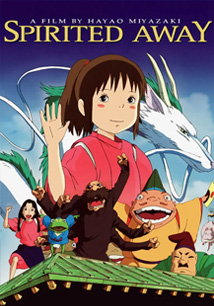 Spirited Away
Japanese title: 千と千尋の神隠し (Sen to Chihiro no Kamikakushi)
Year: 2001
Director: Hayao Miyazaki
Genre: Animation, fantasy
Ten-year-old Chihiro enters a supernatural world where her parents are transformed into pigs. To survive and help them, she takes a new name and works in a bathhouse run by the witch Yubaba.
The film draws on Japanese folklore without turning every creature into a simple equivalent of an English “ghost” or “demon”. It won the 2003 Academy Award for Animated Feature.
Japanese practice: Work and bathhouse scenes give you repeated names, commands and service interactions. The fantasy vocabulary is useful for understanding the film, but it is less likely to belong in your next everyday conversation.
Battle Royale
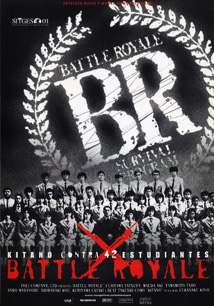 Battle Royale
Japanese title: バトル・ロワイアル (Batoru Rowaiaru)
Year: 2000
Director: Kinji Fukasaku
Genre: Action, dystopian thriller
In this fictional dystopia, a class of secondary-school students is taken to an island and forced to fight until one survives. Alliances, old grievances and panic drive the story.
Japanese practice: You will hear emotionally intense casual speech between teenagers, as well as formal announcements and commands. Shouting and overlapping dialogue make it a demanding listening choice. The film contains sustained graphic violence and distress involving young characters.
Song to the Sun
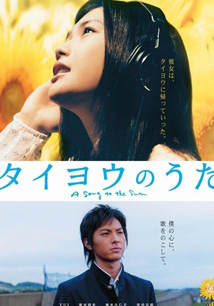 Song to the Sun
Japanese title: タイヨウのうた (Taiyō no Uta)
Year: 2006
Director: Norihiro Koizumi
Genre: Drama, romance
YUI plays Kaoru, a teenage musician with xeroderma pigmentosum (XP), an inherited condition that causes extreme sensitivity to ultraviolet radiation and a much higher risk of UV-related cancers. Kaoru performs outdoors at night and begins a relationship with Kōji, a surfer she has watched from her window.
Japanese practice: The measured pace and recurring relationship scenes give you more time to hear individual lines than the action films on this list. The story still uses medical vocabulary and emotionally heightened dialogue, so do not treat every line as routine conversation.
Ring
 Ring
RingJapanese title: リング (Ringu)
Year: 1998
Director: Hideo Nakata
Genre: Horror
Journalist Reiko Asakawa investigates a videotape said to kill its viewers seven days after they watch it. After viewing the tape herself, she and her former husband Ryūji try to trace its origin before the deadline.
Japanese practice: The investigation gives you repeated questions, dates and family exchanges. Quiet delivery can be harder to catch than it seems, so headphones and a short-scene approach help. Expect disturbing imagery, death and sustained tension.
Sweet Bean
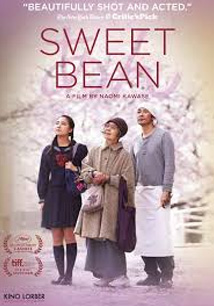 Sweet Bean
Japanese title: あん (An)
Year: 2015
Director: Naomi Kawase
Genre: Drama
Sentarō runs a small dorayaki shop and reluctantly hires Tokue, an older woman who makes exceptional sweet red-bean paste. Their friendship changes the shop, but Tokue's history of compulsory isolation after Hansen disease becomes a source of prejudice.
The film treats that discrimination seriously. Hansen disease, also known as leprosy, is curable, but people affected by it still face stigma.
Japanese practice: Food preparation, customer service and gentle everyday exchanges make useful study scenes. Listen for how Sentarō's speech changes across customers, Tokue and the schoolgirl Wakana.
13 Assassins
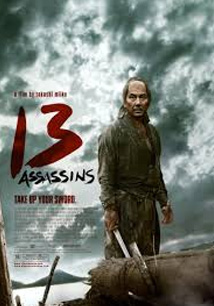 13 Assassins
Japanese title: 十三人の刺客 (Jūsannin no Shikaku)
Year: 2010
Director: Takashi Miike
Genre: Historical action
This remake of the 1963 film is set near the end of the Tokugawa shogunate. A group of samurai plans to kill Lord Matsudaira Naritsugu before his political power grows, leading to an extended battle in a fortified village.
Japanese practice: The hierarchical and period-specific speech makes this the least suitable film here for copying modern conversation. It is better for noticing titles, commands and status relationships. Expect torture, suicide and prolonged graphic combat.
Dark Water
 Dark Water
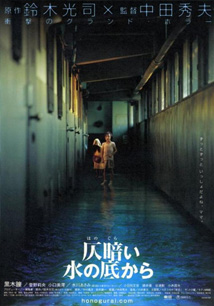
Japanese title: 仄暗い水の底から (Honogurai Mizu no Soko kara)
Year: 2002
Director: Hideo Nakata
Genre: Horror
Yoshimi moves into a run-down flat with her daughter Ikuko while going through a custody dispute. A persistent leak and signs of a missing girl turn their new home into a source of dread.
Japanese practice: Parent-child talk and conversations with teachers, lawyers and building staff provide several registers. Much of the tension comes from silence and restrained delivery, so choose a scene with a clear interaction. The story includes child neglect, death and frightening imagery.
Shoplifters
 Shoplifters
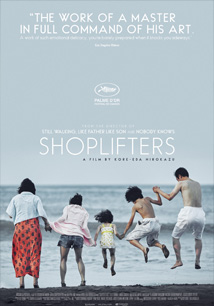
Japanese title: 万引き家族 (Manbiki Kazoku)
Year: 2018
Director: Hirokazu Kore-eda
Genre: Drama
A family living in poverty takes in a young girl after finding her outside in the cold. Their income comes from low-paid work, a pension and shoplifting, and later events expose secrets about the relationships holding the household together.
The film examines chosen family, neglect, poverty and the institutions that decide which relationships are legitimate. It won the 2018 Palme d'Or.
Japanese practice: The contemporary domestic dialogue gives you family speech, nicknames and casual omissions. Some lines are quiet or overlap, which makes a Japanese-caption replay especially useful. The story includes child abuse, crime and sexualised workplace scenes.
Choose One Japanese Movie and Study One Scene
Choose the film you most want to finish, watch it for the story, then return to one scene with a clear relationship and purpose. A minute of dialogue you can understand, repeat and adapt is more useful than a notebook full of lines you never revisit.
Keep building your foundation with core Japanese words. For structured audio lessons outside films, read our JapanesePod101 review, then see JapanesePod101 if it suits your study routine.

Social