



Core Japanese Words to Start Speaking Japanese

Full disclosure: This post contains affiliate links. ?
A practical set of core Japanese words gives you building blocks for simple ideas, even when you’re a beginner.
This list includes pronouns, nouns, verbs, adjectives, adverbs and connectors that you can start using straight away.
This isn’t a complete beginner dictionary. It’s a starter list that you can use alongside the word-frequency method.
Editor's note: Before we get started, if you’re looking for an online Japanese course, here’s the course we recommend: Japanese Uncovered – Learn Japanese Through the Power of Story, a course with a fascinating new method by Olly Richards. You can try it for free for 7 days!
Table of contents
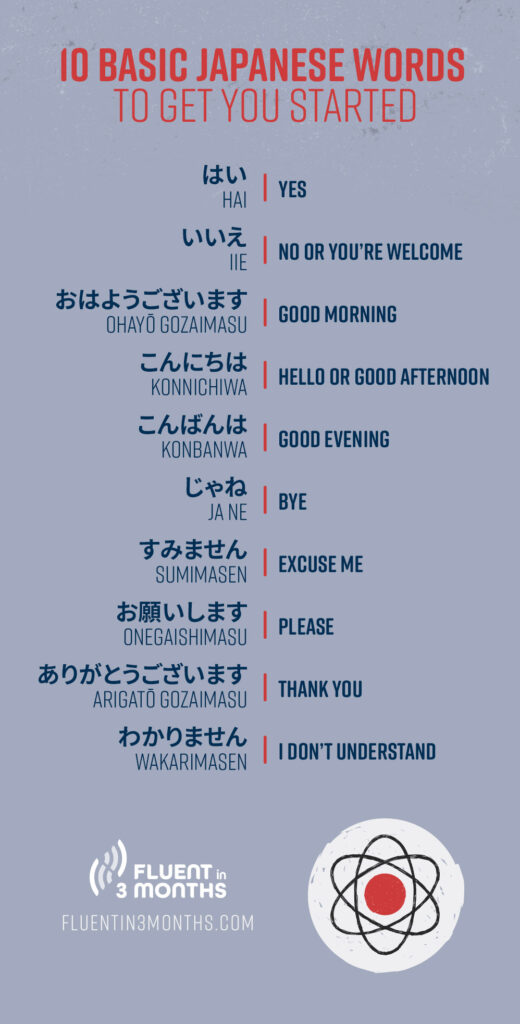
10 Basic Japanese Words to Get You Started
If you’re only going to learn 10 core Japanese words from this article, walk away with these:
- はい (hai) – “yes”
- いいえ (iie) – “no” or “you’re welcome”
- おはようございます (ohayō gozaimasu) – “good morning”
- こんにちは (konnichiwa) – “hello” or “good afternoon”
- こんばんは (konbanwa) – “good evening”
- じゃね (ja ne) – “bye”
- すみません (sumimasen) – “excuse me”
- お願いします (o-negai shimasu) – “please”
- ありがとうございます (arigatō gozaimasu) – “thank you”
- わかりません (wakarimasen) – “I don’t understand”
| Japanese | Romaji | English | Audio |
|---|---|---|---|
| はい | hai | “yes” | |
| いいえ | iie | “no” or “you’re welcome” | |
| おはようございます | ohayō gozaimasu | “good morning” | |
| こんにちは | konnichiwa | “hello” or “good afternoon” | |
| こんばんは | konbanwa | “good evening” | |
| じゃね | ja ne | “bye” | |
| すみません | sumimasen | “excuse me” | |
| お願いします | onegaishimasu | “please” | |
| ありがとうございます | arigatō gozaimasu | “thank you” | |
| わかりません | wakarimasen | “I don’t understand” |
These are mostly greetings and set phrases. You won’t need to know anything about Japanese grammar to use these. So next, we’ll talk about vocabulary!
You can pair the core words you learn next with essential Japanese words and phrases for beginners. Combining the vocabulary and phrases in these two articles will help make sure you know the words and phrases you’ll hear all the time! Plus they’ll help you make basic sentences.
You’ll be way ahead of the game, so keep on reading for more vocabulary!
The 8 Core Japanese Pronouns
Japanese pronouns are important to know, although even though they are core words, you will most often hear and use the top three on this list. In Japanese, pronouns are usually understood from context and not said unless they’re necessary for clarification.
You’ll also notice I didn’t include “you” (あなた, “anata”) in this list. That’s because it’s usually avoided unless in a context where the person has no name (like in a song or a textbook example).
Japanese often leaves pronouns out when the meaning is clear. A person’s name or title is also common in context, but a name followed by -san isn’t a universal replacement for every English “you”.
- これ / この (Kore / Kono) – これ means “this” on its own, while この comes before a noun
- それ / その (Sore / Sono) – “That / It” or “That ___ (thing/person)”
- あれ / あの (Are / Ano) – “That over there” or “That ___ (thing/person) over there”
- 私 / 僕 (Watashi / Boku) – “I” (私 is gender neutral, while 僕 is masculine.)
- 彼 (Kare) – “He”
- 彼女 (Kanojo) – “She”
- 私たち (Watashitachi) – “We”
- 彼ら (Karera) – “They”
| Japanese | Romaji | English | Audio |
|---|---|---|---|
| これ / この | Kore / Kono | This / This ___ (thing/person) | |
| それ / その | Sore / Sono | That / It / That ___ (thing/person) | |
| あれ / あの | Are / Ano | That over there / That ___ (thing/person) over there | |
| 私 / 僕 | Watashi / Boku | I (私 is gender neutral, while 僕 is masculine.) | |
| 彼 | Kare | He | |
| 彼女 | Kanojo | She | |
| 私たち | Watashitachi | We | |
| 彼ら | Karera | They |
The 42 Core Japanese Nouns
Which Japanese nouns are most helpful to learn?
Everyone has different words they say the most based on daily life. You should definitely take time to create your own script and list of words you often say, so you can memorize them.
Based on frequency lists, these are the words you’ll most likely hear or use. Of course, nouns for time, transportation, and general words for location and people top the list for usefulness in getting by.
Pro tip: Most single kanji have multiple readings, especially when combined with other kanji. Their English word meaning stays the same, though. I’ve included the most common way or ways to read them in Romaji (English characters to spell Japanese words). Want to know more about kanji? Then start here.
Don’t worry about that for now, but just know there may be – and usually are – more ways, once you get farther in your studies.
Core Japanese Words for Time
First, we’ll go over some useful Japanese words to talk about time and duration.
- 年 (Toshi or Nen) – “Year”
- 月 (Getsu or Tsuki) – “Month” and “Moon”
- 日 (Nichi or Hi) – “Day” and “Sun”
- 週 (Shuu) – “Week”
- 今日 (Kyou) – “Today”
- 明日 (Ashita) – “Tomorrow”
- 昨日 (Kinou) – “Yesterday”
- 時間 (Jikan) – “Time” (As in, a time frame.)
- 分 (Fun or Pun) – “Minute”
- 時 (Ji or Toki) – “Hour” or “Time”
- 今 (Ima) – “Now”
- 前 (Mae) – “Before”
- 後 (Ato) – “After”
| Japanese | Romaji | English | Audio |
|---|---|---|---|
| 年 | Toshi or Nen | Year | |
| 月 | Getsu or Tsuki | Month / Moon | |
| 日 | Nichi or Hi | Day / Sun | |
| 週 | Shuu | Week | |
| 今日 | Kyou | Today | |
| 明日 | Ashita | Tomorrow | |
| 昨日 | Kinou | Yesterday | |
| 時間 | Jikan | Time (As in, a time frame.) | |
| 分 | Fun or Pun | Minute | |
| 時 | Ji or Toki | Hour / Time | |
| 今 | Ima | Now | |
| 前 | Mae | Before | |
| 後 | Ato | After |
To learn even more, check out our article about days of the week in Japanese!
Language Hacking Podcast:
Core Japanese Words for Places
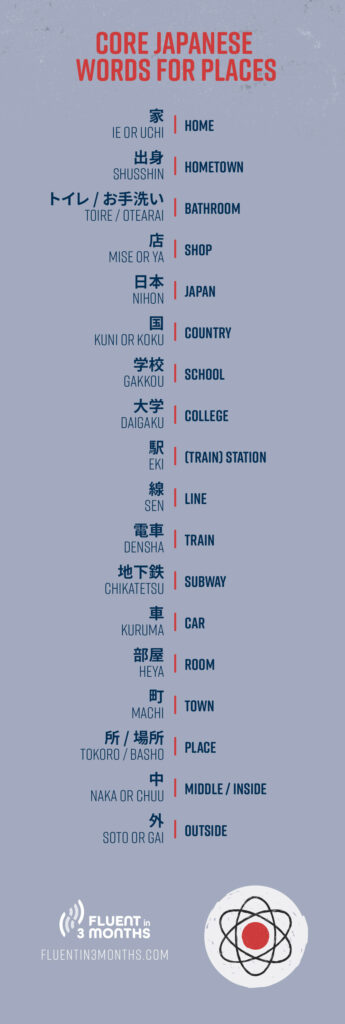
Here are some useful Japanese words to help you get from place to place:
- 家 (Ie or Uchi) – “home”
- 出身 (Shusshin) – “Place of origin”
- トイレ / お手洗い (Toire / Otearai) – “Bathroom”
- 店 (Mise or Ya) – “Shop”
- 日本 (Nihon) – “Japan”
- 国 (Kuni or Koku) – “Country”
- 学校 (Gakkou) – “School”
- 大学 (Daigaku) – “College”
- 駅 (Eki) – “(Train) Station”
- 線 (Sen) – “Line”
- 電車 (Densha) – “Train”
- 地下鉄 (Chikatetsu) – “Subway”
- 車 (Kuruma) – “Car”
- 部屋 (Heya) – “Room”
- 町 (Machi) – “Town”
- 所 / 場所 (Tokoro / Basho) – “Place”
- 中 (Naka or Chuu) – “Middle,” or “Inside”
- 外 (Soto or Gai) – “Outside”
By the way, to help you get inspired to progress in your Japanese studies, check out Benny’s start to his Japanese challenge!
Other Core Japanese Words
Here are some other cool Japanese words that’ll be super useful in a variety of conversations!
- 語 (Go) – “Language” (Combine it with other words like: 言語 (gengo, “language”), 単語 (tango, “words”), 日本語 (Nihongo, “Japanese”), 英語 (Eigo, “English”), スペイン語 (Supeingo, “Spanish”).)
- 水 (Mizu) – “Water”
- 映画 (Eiga) – “Movie”
- テレビ (Terebi) – “TV”
- 家族 (Kazoku) – “Family”
- 人 (Hito or Nin) – “Person”
- 物 (Mono) – “Thing (tangible)”
- こと (Koto) – “Thing (intangible)”
- 名前 (Namae) – “Name”
- 他 (Hoka) – “Other”
- ため (Tame) – “Purpose,” “sake,” or “reason”
| Japanese | Romaji | English | Audio |
|---|---|---|---|
| 語 | Go | Language (Combine it with other words like: 言語 (gengo, “language”), 単語 (tango, “words”), 日本語 (Nihongo, “Japanese”), 英語 (Eigo, “English”), スペイン語 (Supeingo, “Spanish”).) | |
| 水 | Mizu | Water | |
| 映画 | Eiga | Movie | |
| テレビ | Terebi | TV | |
| 家族 | Kazoku | Family | |
| 人 | Hito or Nin | Person | |
| 物 | Mono | Thing (tangible) | |
| こと | Koto | Thing (intangible) | |
| 名前 | Namae | Name | |
| 他 | Hoka | Other | |
| ため | Tame | Purpose / Sake / Reason |
If you’d like to learn more cool Japanese word, check out our article about must-know Japanese slang!
Also, I don’t have time to cover it here, but question nouns like “what” and “where” are also super important in Japanese! I’ve got you covered in another article all about Japanese question words.
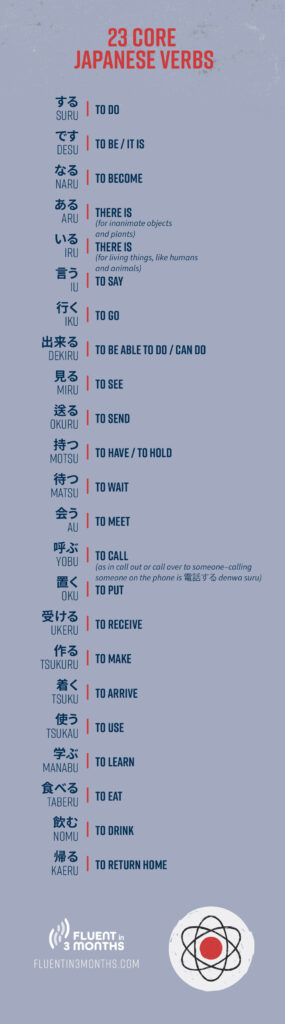
The 23 Core Japanese Verbs
You can get by saying a lot in Japanese with a few verbs, especially the first one on this list: する (suru). This verb means “to do” on its own. But, it also combines with nouns to mean “to do ____”.
For example, you can combine する with nouns like 勉強 (benkyou, “study”) to create 勉強する (benkyou suru, “to study”). It’s a super helpful and versatile verb, even if it’s one of the two irregular verbs for conjugation.
But isn’t that nice? Japanese only has 2 irregular verbs – する and 来る (kuru, “to come”).
- する (Suru) – “To do”
- です (Desu) – “To be” or “it is”
- なる (Naru) – “To become”
- ある (Aru) – “There is” for inanimate objects and plants.
- いる (Iru) – “There is” for living things, like humans and animals.
- 言う (Iu) – “To say”
- 行く (Iku) – “To go”
- 出来る (Dekiru) – “To be able to do” or “can do”
- 見る (Miru) – “To see”
- 送る (Okuru) – “To send”
- 持つ (Motsu) – “To have” or “to hold”
- 待つ (Matsu) – “To wait”
- 会う (Au) – “To meet”
- 呼ぶ (Yobu) – “To call” (as in call out or call over to someone–calling someone on the phone is 電話する denwa suru)
- 置く (Oku) – “To put”
- 受ける (Ukeru) – “To receive”
- 作る (Tsukuru) – “To make”
- 着く (Tsuku) – “To arrive”
- 使う (Tsukau) – “To use”
- 学ぶ (Manabu) – “To learn”
- 食べる (Taberu) – “To eat”
- 飲む (Nomu) – “To drink”
- 帰る (Kaeru) – “To return home”
| Japanese | Romaji | English | Audio |
|---|---|---|---|
| する | Suru | To do | |
| です | Desu | To be / It is | |
| なる | Naru | To become | |
| ある | Aru | There is (for inanimate objects and plants) | |
| いる | Iru | There is (for living things, like humans and animals) | |
| 言う | Iu | To say | |
| 行く | Iku | To go | |
| 出来る | Dekiru | To be able to do / Can do | |
| 見る | Miru | To see | |
| 送る | Okuru | To send | |
| 持つ | Motsu | To have / To hold | |
| 待つ | Matsu | To wait | |
| 会う | Au | To meet | |
| 呼ぶ | Yobu | To call (as in call out or call over to someone–calling someone on the phone is 電話する denwa suru) | |
| 置く | Oku | To put | |
| 受ける | Ukeru | To receive | |
| 作る | Tsukuru | To make | |
| 着く | Tsuku | To arrive | |
| 使う | Tsukau | To use | |
| 学ぶ | Manabu | To learn | |
| 食べる | Taberu | To eat | |
| 飲む | Nomu | To drink | |
| 帰る | Kaeru | To return home |
By the way, if you’d like to learn more about how to use these cool Japanese verbs, check out our article all about Japanese verb conjugation!
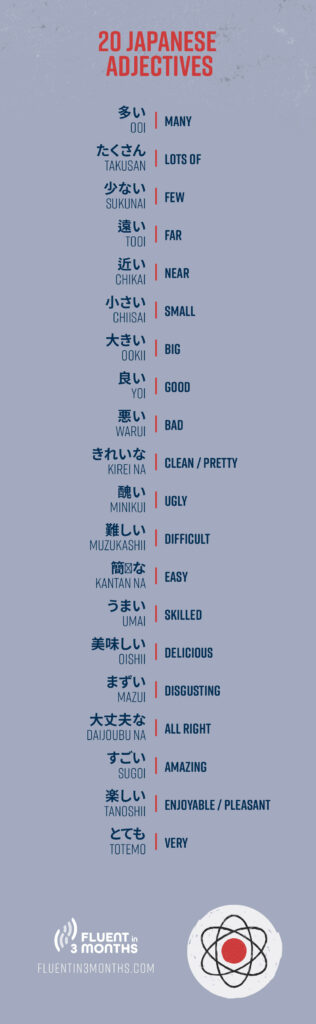
The 20 Core Japanese Adjectives and Adverbs
Add more words in Japanese to help with descriptions! Here are the most common Japanese adjectives and adverbs.
Take note of すごい (sugoi) – “amazing.” It’s so commonly used, it means many things. “Cool,” “wow,” “that’s crazy,” etc. It’s a catch-all exclamation and is often used in reply to stories or when shown something (like yummy food, beautiful scenery, or a cool picture).
- 多い (Ooi) – “Many”
- たくさん (Takusan) – “Lots of”
- 少ない (Sukunai) – “Few”
- 遠い (Tooi) – “Far”
- 近い (Chikai) – “Near”
- 小さい (Chiisai) – “Small”
- 大きい (Ookii) – “Big”
- 良い (Yoi) – “Good”
- 悪い (Warui) – “Bad”
- きれいな (Kirei na) – “Clean” and “Pretty”
- 醜い (Minikui) – “Ugly”
- 難しい (Muzukashii) – “Difficult”
- 簡単な (Kantan na) – “Easy”
- うまい (Umai) – “Skilled”
- 美味しい (Oishii) – “Delicious”
- まずい (Mazui) – “Disgusting”
- 大丈夫 (Daijoubu) – “Okay” or “all right” (大丈夫な comes before a following noun)
- すごい (Sugoi) – “Amazing”
- 楽しい (Tanoshii) – “Enjoyable” or “Pleasant”
- とても (Totemo) – “Very”
| Japanese | Romaji | English | Audio |
|---|---|---|---|
| 多い | Ooi | Many | |
| たくさん | Takusan | Lots of | |
| 少ない | Sukunai | Few | |
| 遠い | Tooi | Far | |
| 近い | Chikai | Near | |
| 小さい | Chiisai | Small | |
| 大きい | Ookii | Big | |
| 良い | Yoi | Good | |
| 悪い | Warui | Bad | |
| きれいな | Kirei na | Clean / Pretty | |
| 醜い | Minikui | Ugly | |
| 難しい | Muzukashii | Difficult | |
| 簡単な | Kantan na | Easy | |
| うまい | Umai | Skilled | |
| 美味しい | Oishii | Delicious | |
| まずい | Mazui | Disgusting | |
| 大丈夫 | Daijoubu | Okay / All right | |
| すごい | Sugoi | Amazing | |
| 楽しい | Tanoshii | Enjoyable / Pleasant | |
| とても | Totemo | Very |
Speaking of adverbs, in Japanese, there are so many onomatopoeia which function as adverbs (and sometimes adjectives or verbs)! You can add more color to your speech by learning about Japanese onomatopoeia.
It’ll also help if you learn your Japanese numbers
It’s easier to learn to use these when you get exposed to Japanese. You can listen about how I used Netflix to pick up most of my colloquial vocabulary in this episode of the Language Hacking Podcast:
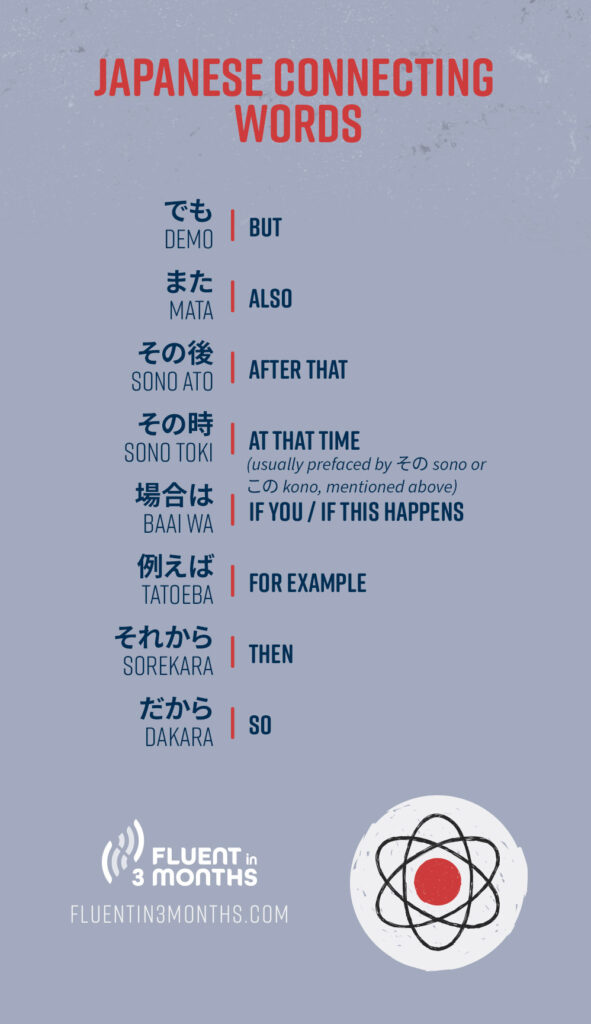
The 8 Core Japanese Conjunctions and Connectors
It’s always helpful to know how to connect your Japanese sentences with conjunctions.
As in English, there are tons of conjunctions and connectors to start a sentence, but these are most common.
その時 (sono toki) means “at that time” or “then”. The best English wording depends on the surrounding story.
- でも (Demo) – “But”
- また (Mata) – “Also”
- その後 (Sono ato) – “After that”
- その時 (Sono toki) – “At that time”
- 場合 (Baai) – “Case” or “situation”; in a phrase such as 〜の場合は, it can introduce a condition
- 例えば (Tatoeba) – “For example”
- それから (Sorekara) – “Then”
- だから (Dakara) – “So”
| Japanese | Romaji | English | Audio |
|---|---|---|---|
| でも | Demo | But | |
| また | Mata | Also | |
| その後 | Sono ato | After that | |
| その時 | Sono toki | At that time | |
| 場合 | Baai | Case / Situation; 〜の場合は can introduce a condition | |
| 例えば | Tatoeba | For example | |
| それから | Sorekara | Then | |
| だから | Dakara | So |
Put These Core Japanese Words to Use
Now that you have a practical set of core Japanese words, start putting them into your own sentences.
You can start applying them with Japanese language exchange partners.
Or, you could try taking the Fluent in 3 Months Bootcamp to level up your Japanese in 90 days.
Other fantastic options to keep leveling up your Japanese include the JapanesePod101.com series and StoryLearning Japanese!
The directions you can take for learning Japanese are endless. But now that you’ve got your core words, you can figure out what’s best for you and start applying it.
One more tip: If you haven’t yet, learn how to read and understand Hiragana and Katakana. It will help you learn how to pronounce Japanese words properly and will make reading easier.
From here, start learning words that are most relevant to your own personal daily speech. If you’re looking for other resources to check out, head over to our Japanese resources page, or give the articles down below a read.
Original article by Caitlin Sacasas, updated by the Fluent in 3 Months team.

Social