


“Merry Christmas” in Italian – How Italians Celebrate a “Buon Natale” [In-depth Guide]

Full disclosure: This post contains affiliate links. ?
Looking for a guide to a Merry Christmas in Italian? Lucky you, you’ve found it!
If you’re in a hurry and need to know how to say “Merry Christmas” in Italian, here it is: Buon Natale!
But if you’ve got some free time and love the end of year holidays… Keep me company! As a certified Christmas fan and Italian, let me tell you about Christmas in the Boot.
We’ll talk about:
- How you say “Merry Christmas” in Italy and other Christmas greetings
- How to say “Happy New Year” in Italian
- How to say “Happy Holidays” in Italian
- Italian Christmas traditions
I am very excited to get started! I do love this time of the year. Along with the greetings, I’ll introduce a few regional traditions and Christmas breads.
Allora, pronti? Via! (“So, ready? Let’s go!”)
Before we get started, if you’re looking for an online Italian course, here’s the course I recommend: Italian Uncovered – Learn Italian Through the Power of Story, a course with a fascinating new method by my friend Olly. You can try it for free for 7 days!
How to Say “Christmas” in Italian – Natale
Natale, the Italian word for Christmas, comes through Latin natalis, “relating to birth”. In this context, it refers to the birth of Jesus Christ.
Il Natale happens in dicembre (“in December”), which is in inverno (“in winter”) in Italy. You’ll often meet words such as amore (“love”), famiglia (“family”), amicizia (“friendship”), felicità (“happiness”), generosità (“generosity”) and buon cibo (“good food”) in conversations about the season.
I will tell you more about these later in the post. For now, let’s learn some Italian holiday greetings.
How Do You Say “Merry Christmas” in Italian? Buon Natale
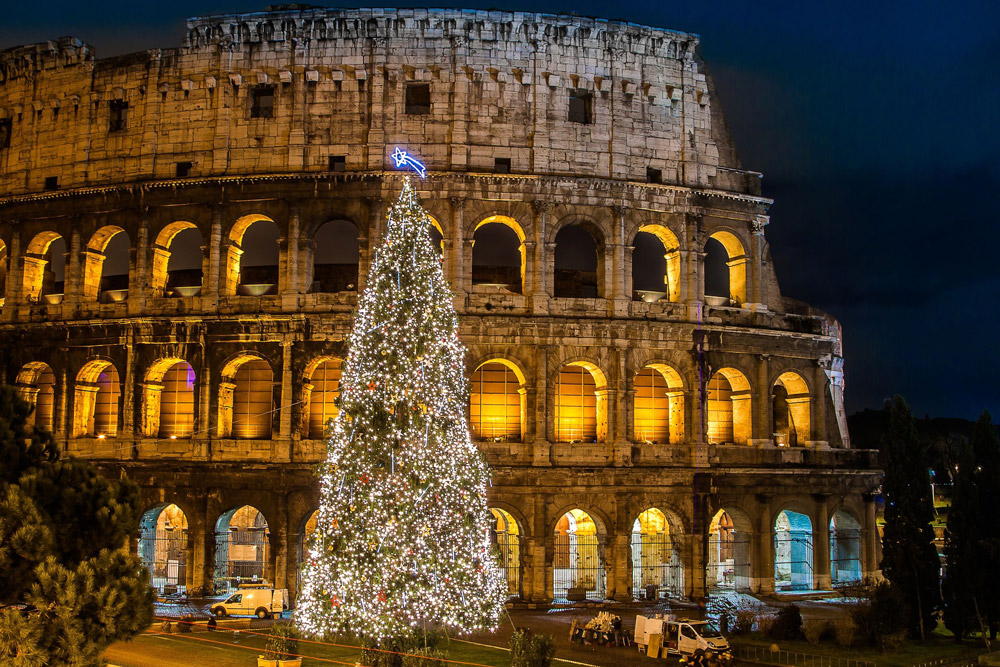
What is “Merry Christmas” in Italian? It’s Buon Natale! Here, buon is the form of buono used before a masculine singular noun such as Natale, so the phrase literally resembles “Good Christmas”.
This is the most common Italian Christmas greeting, but there are a few more ways to wish someone a good end of year holiday.
How to Say Happy New Year in Italian – Felice Anno Nuovo
In Italian, “New Year’s Day” is Capodanno and “New Year’s Eve” is la vigilia di Capodanno. To talk about the new year, Italians say l’anno nuovo or il nuovo anno.
At the turn of the year, you can say Felice anno nuovo! (“Happy New Year!”). You’ll also commonly hear Buon anno! (“Have a good year!”).
There are a few interesting New Year traditions in Italy. In the past, people used to throw old things from the window to get rid of the past and welcome the new year with a new spirit.
Nowadays, Italians like to celebrate January’s arrival with dei botti (“bangs”). They make as much noise as possible with fuochi d’artificio (“fireworks”) and petardi (“firecrackers”). According to tradition, the loud bangs help chase bad spirits away.
How to Translate “Merry Christmas and Happy New Year” in Italian – Buon Natale e Felice Anno Nuovo
If the holidays are coming and you want two birds with one stone, wish your Italian friends un Buon Natale e un Felice Anno Nuovo (“a Merry Christmas and a Happy New Year”).
“Happy Holidays” in Italian – Buone Feste
Buon Natale e Felice Anno Nuovo isn’t the only Italian greeting that covers more than one holiday.
When December comes around, use Buone Feste (“Happy Holidays”) when saying goodbye to people you won’t see before the new year.
You may also see buone feste natalizie, literally “good Christmas holidays”, in more explicit seasonal messages. I will tell you more about the feste natalizie later in the post.
Say “Best Wishes” in Italian – Tanti Auguri
Tanti means “a lot” or “many” and auguri means “wishes” in Italian. Together, they stand for best wishes.
Tanti auguri is a very versatile greeting that can be used in any happy situation that calls for good wishes, like birthdays, Mother’s Day, or Christmas. It is also common to only use auguri.
You can make the greeting more suited to the season. Check out these warm and festive spins to auguri and tanti auguri:
- Auguri di buon Natale – “Best wishes for Christmas”
- Buone feste! – “Happy holidays!”
- Tanti auguri di un felice Natale a tutti – “Best wishes for a happy Christmas to everyone”
- Auguri di un sereno Natale – “Best wishes for a peaceful Christmas”
Not everyone you meet in Italy celebrates Christmas. If you do not know which holiday someone observes, a neutral seasonal wish may fit better than a specifically Christmas greeting.
Auguri and tanti auguri are good greetings if you’re not sure what holidays others celebrate.
This also works if you use the verb augurare (“to wish”).
Examples:
- Ti auguro un buon Natale. (“I wish you a merry Christmas.” Addressing one person informally.)
- Vi auguro un felice anno nuovo. (“I wish you a happy new year.” Addressing more than one person.)
Italian Christmas Traditions – Learn Some Vocabulary to Organize Your Merry Christmas in Italian
Now that you know how to say Merry Christmas in Italian, you’re ready to learn how to organize an Italian Christmas! Or at least learn about a few Italian Christmas traditions.
Yes, I’ll talk about food, so keep scrolling.
Before we start, you should know that Italy as a whole hasn’t been around for a long time.
The Boot has a long history of kingdom division, invasion from outsiders, and multiculturality. Even after 1861, the year of the Italian unification, each Italian region has maintained a somewhat unique culture.
Why this bit of Italian trivia? It’s just a little warning: Christmas traditions vary from region to region in Italy. Details like traditional Christmas dishes or characters in Christmas legends might differ in the North and South of the country.
Many traditions described below have Catholic roots, but participation and importance vary by family, generation, region and belief.
In fact, let’s start with one of those.
I Presepi – “The Nativity Scenes”
Italy has a particularly strong nativity-scene tradition. Saint Francis of Assisi’s living scene at Greccio in 1223 is an important milestone in the history of the custom, though Christian nativity imagery existed earlier.
Un presepe or un presepio (“a nativity scene”) usually features Gesù bambino (“infant Jesus”) in una mangiatoia (“a manger”), Maria e Giuseppe (“Mary and Joseph”), il bue (“the ox”), l’asinello (“the donkey”), i Re Magi (“the Three Wise Men”), i pastori (“the shepherds”), le pecore (“the sheep”), and gli angeli (“the angels”).
Gesù bambino is often placed in his manger on the night between the 24th and 25th of December. The Re Magi are brought closer to the Infant during the Epiphany.
I’ll tell you more about how important this holiday is in Italian culture later in the post.
La Messa della Notte di Natale – “The Midnight Christmas Mass”
La messa della notte di Natale (literally “the Christmas night mass”) used to be very important in Italy.
Some people attend a Christmas Eve or night Mass, while others do not. Practice varies by family, generation and place.
L’Albero di Natale – “The Christmas Tree”
A Christmas tree is an albero di Natale. You might also hear abete di Natale; abete means “fir tree”.
Italians love to decorate their Christmas tree with delle luci (“lights”), delle ghirlande (“garlands”), degli addobbi natalizi (“Christmas decorations”), delle palline di Natale (“Christmas ornaments”) and dei fiocchi (“ribbons”).
On top of the tree goes la stella (“the star”) or il puntale (“the Christmas topper”).
Le Feste Natalizie – “The Christmas Holidays”
In Italy, Christmas isn’t a one-day thing.
As it is originally a religious holiday, Christmas comes after and before other related religious holidays. Not all of them have stuck around, but Italians still celebrate a couple of them.
Some Italian children receive un calendario dell’avvento (“an Advent calendar”) when December begins.
Many families mark la Vigilia di Natale (“Christmas Eve”) with a cenone, a large festive dinner. The timing and menu vary across Italy.
December 26 is Santo Stefano, a public holiday in Italy. Some families gather again and serve food left from earlier celebrations, but this is not a rule for every household.
L’Epifania e la Befana – “The Italian Epiphany Tradition”
L’Epifania (January 6th) marks the end of the Christmas holidays in Italy. It is most famous for its special Italian character.
Before the modern introduction of Santa Claus in the Christmas culture, Italian children didn’t get Christmas gifts from a smiling and round-belly grandpa. Instead, they left their shoes or stockings out on the night of the 5th of January for la Befana.
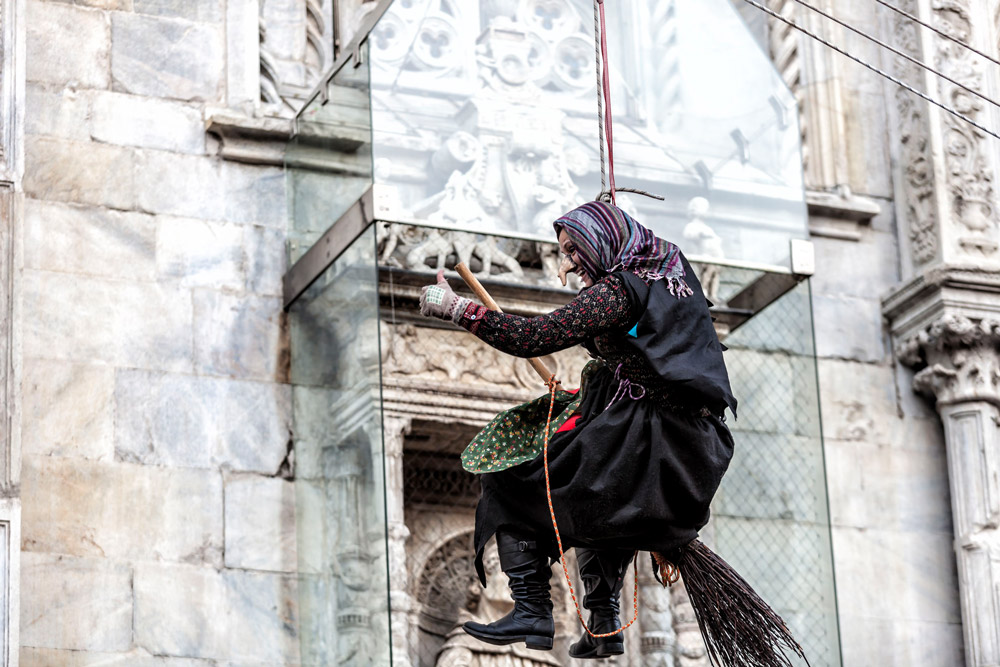
Several stories explain the Befana, and their details vary. In one Christian version, she is an old woman whom the Magi ask for directions.
One cold winter night, three men knocked on her door to ask her for directions. They introduced themselves as i Re Magi (“the Three Wise Men”) and told her about a very important baby they were going to pay their respect to. They invited the Befana to come visit the infant Christ with them. When she refused, they left to continue their journey.
Soon after, the Befana realized that she should have followed the Re Magi. She packed all sorts of toys and sweets for the Child and climbed on her broomstick to go after the men. Unfortunately, she was not able to find them in the dark night and never made it to the Nativity scene.
Upset, she promised herself that every year on that same night, she would distribute presents and sweets to all good children as a tribute to the Infant. The naughty ones would get carbon as a punishment for their behavior.
Older stories can portray the Befana as frightening as well as generous, and some families used her as a warning to children.
Nowadays, she is often portrayed as a kind, soot-covered old woman who brings surprises on a broomstick. Shops sell carbone dolce, black sugar sweets made to resemble coal.
A common saying, L’Epifania tutte le feste porta via, means that Epiphany brings the holidays to an end. The exact day decorations and markets disappear varies.
Panettone, Pandoro, Pandolce… – Italy’s Darling Christmas Breads
Christmas breads and cakes are common on festive tables, with strong regional preferences.
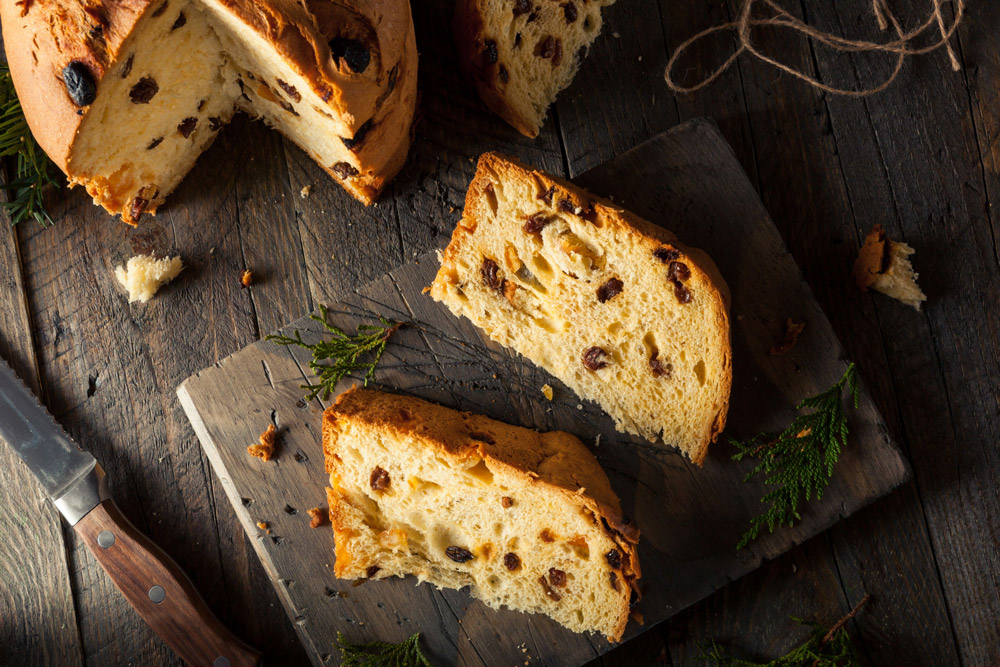
Shaped like a dome, panettone is a traditional Christmas treat associated with Milan. There are several stories about the origin of its name. Pane means “bread” and -one can be an augmentative suffix, which makes the familiar “large bread” interpretation tempting, but that wordplay does not settle the historical etymology. Panettone is tall, fluffy and often filled with candied fruit and raisins; chocolate versions are also common.
Besides Milan, other Italian cities have their own Christmas bread. Verona, for example, is associated with pandoro. Its name evokes pan d’oro, “golden bread”, and the cake is golden inside. It has a tall, eight-pointed star shape and is usually dusted with icing sugar.
Genoa has the pandolce, from pane dolce (“sweet bread”). It is filled with dried fruit and can resemble a large, low cake. One traditional serving ritual gives the youngest person the task of bringing it to the table and the eldest the task of cutting it, though families follow their own customs.
Other Italian Christmas breads include the panforte from Siena, the panpepato from Ferrara, and the pangiallo from Rome.
If you want to bake pandolce, choose a complete recipe from a trusted Italian cookery source. The previous recipe on this page named milk and baking powder in the method without giving quantities, so I have removed it rather than ask you to guess.
Auguri di Buon Natale!
By now, you can choose a greeting and recognise some of the words that appear around an Italian Christmas. Traditions differ, so ask the people you are celebrating with what matters in their family. Auguri di buon Natale!

Social