


10 Russian Movies to Watch While Learning Russian

Full disclosure: This post contains affiliate links. ?
Watching Russian movies will not make you fluent by itself. But it can make regular listening practice much easier to stick with.
Films give you a reason to practise your listening skills, notice vocabulary in context and hear different styles of speech. If you're anything like me, sitting down with a dictionary or textbook can get tiring. A good film makes it easier to spend more time with the language.
I've divided this personal selection into older Soviet movies and modern Russian films. They are not documentaries or a complete picture of the country, but each gives you language, humour or cultural references to explore.
Availability and subtitle tracks vary by country and platform. For the Soviet films, start with Mosfilm's official online cinema. For newer titles, search the exact Russian title and check the audio and subtitle menu before paying. Here are five Soviet films first.
A note from the Fluent in 3 Months team before we get started: You can chat away in Russian for at least 15 minutes with the “Fluent in 3 Months” method. All it takes is 90 days. Tap this link to find out more.
Бриллиантовая рука (The Diamond Arm)
Released: 1968
Directed by: Leonid Gaidai
Suitable for: Fans of old (slightly silly) comedies
The Story
An ordinary Soviet citizen accidentally gets caught up in an illegal jewellery smuggling operation when he goes on a relaxing trip abroad.
Notes for Russian Learners
This is an approachable first foray into Soviet comedy. The dialogue is still useful, although some jokes and cultural references belong firmly to the Soviet period. Expect wordplay and fast comic exchanges rather than assuming every line will be easy.
Mosfilm's official film page lists both Russian and English subtitle options.
Try one scene first, then replay it after checking any words that blocked your understanding.
Bonus Tip: Mosfilm's official catalogue has many more Soviet films, and each film page shows the available subtitle languages.
Иван Васильевич меняет профессию (Ivan Vasilievich: Back to the Future)
Released: 1973
Directed by: Leonid Gaidai
Suitable for: Those who want to know what medieval Russia might have looked like
The Story
Engineer Shurik builds a time machine. Ivan the Terrible is transported to 20th-century Moscow, while Shurik's building superintendent, Ivan Bunsha, and a burglar are sent back to the tsar's court.
Notes for Russian Learners
The film plays with the contrast between Soviet everyday speech and a comic version of 16th-century court language. Shurik is a recurring fictional character in other Gaidai comedies, so those films are a natural next step if you enjoy this one.
Ирония судьбы, или С лёгким паром! (The Irony of Fate, or Enjoy Your Bath!)
Released: 1976
Directed by: Eldar Ryazanov
Suitable for: Fans of romantic comedies built on a strange coincidence
The Story
After a boozy New Year's Eve visit to a bathhouse, Zhenya's friends mistakenly put him on a flight from Moscow to Leningrad. There, an identical street name, apartment number and key lead him into a stranger's flat.
Notes for Russian Learners
This film became a New Year's television tradition, so it is a useful reference point for conversations about the holiday. It is long and dialogue-heavy, though. Break it into sections and focus on one or two scenes rather than treating it as a test.
It was made in 1975 and first broadcast on 1 January 1976, which explains why different references sometimes attach different years to it.
Служебный роман (Office Romance)
Released: 1977
Directed by: Eldar Ryazanov
Suitable for: Fans of old romantic films
The Story
A shy clerk at a statistical bureau is encouraged to court his formidable boss so that he can secure a promotion. What begins as a scheme gradually becomes something more sincere.
Notes for Russian Learners
The office setting gives you repeated workplace vocabulary as well as formal and informal ways of addressing colleagues. Mosfilm's official page lists both episodes, but check its subtitle menu before you begin.
Москва слезам не верит (Moscow Doesn't Believe in Tears)
Released: 1979
Directed by: Vladimir Menshov
Suitable for: Viewers interested in Soviet-era work, friendship and family life
The Story
The film follows three young women who arrive in Moscow in the 1950s, then returns to their friendship, careers and relationships about 20 years later.
Notes for Russian Learners
The film is long, but its two time periods let you compare speech and social expectations across different stages of the characters' lives. It offers one fictional perspective on urban Soviet work and relationships, not a complete picture of Russian culture.
Modern Russian Movies
The next five films were released between 2005 and 2017. They include black comedy, romance, drama and superhero spectacle, so choose one that you would genuinely watch in your strongest language.
Жмурки (Dead Man's Bluff)
Released: 2005
Directed by: Aleksei Balabanov
Suitable for: Fans of violent black comedy
The Story
The film follows two low-level gangsters, Seryoga and Simon, in 1990s Nizhny Novgorod. After botching a job for crime boss Sergei Mikhailovich, they are given another dangerous chance to redeem themselves.
Notes for Russian Learners
Zhmurki exposes you to slang and deliberately rough speech. It is also a violent satire of organised crime in the 1990s, so do not treat its characters as models for polite everyday conversation.
If you enjoy films such as Lock, Stock and Two Smoking Barrels, this may suit you. Balabanov also directed Брат (Brother), although its tone is different.
Ёлки (Six Degrees of Celebration)
Released: 2010
Directed by: an ensemble including Timur Bekmambetov
Suitable for: Fans of interconnected New Year's Eve comedies
The Story
This anthology comedy moves between several Russian cities on New Year's Eve. Its characters appear separate at first, but their stories gradually connect.
Notes for Russian Learners
The changing locations and characters expose you to different voices, although the quick switches can make the story harder to follow. Its premise draws on the six degrees of separation idea. The film also grew into a long-running New Year franchise.
Горько! (Kiss Them All!)
Released: 2013
Directed by: Zhora Kryzhovnikov
Suitable for: Fans of chaotic wedding comedies
The Story
Natasha and Roma want a European-style wedding by the sea. Their families have other plans and push for a large traditional banquet, so the couple try to organise a second celebration in secret.
Notes for Russian Learners
This was one of the first Russian movies I ever saw, and it made me curious about attending a Russian wedding. I went to one in 2017. Some scenes felt familiar, but one wedding cannot stand in for every family or region. Watch for the contrast between the couple's plans and their relatives' expectations.
The dialogue is energetic and often overlaps, which makes this a better choice once you can follow the main plot without translating every line.
Белые ночи почтальона Алексея Тряпицына (The Postman's White Nights)
Released: 2014
Directed by: Andrei Konchalovsky
Suitable for: Viewers interested in life in remote northern villages
The Story
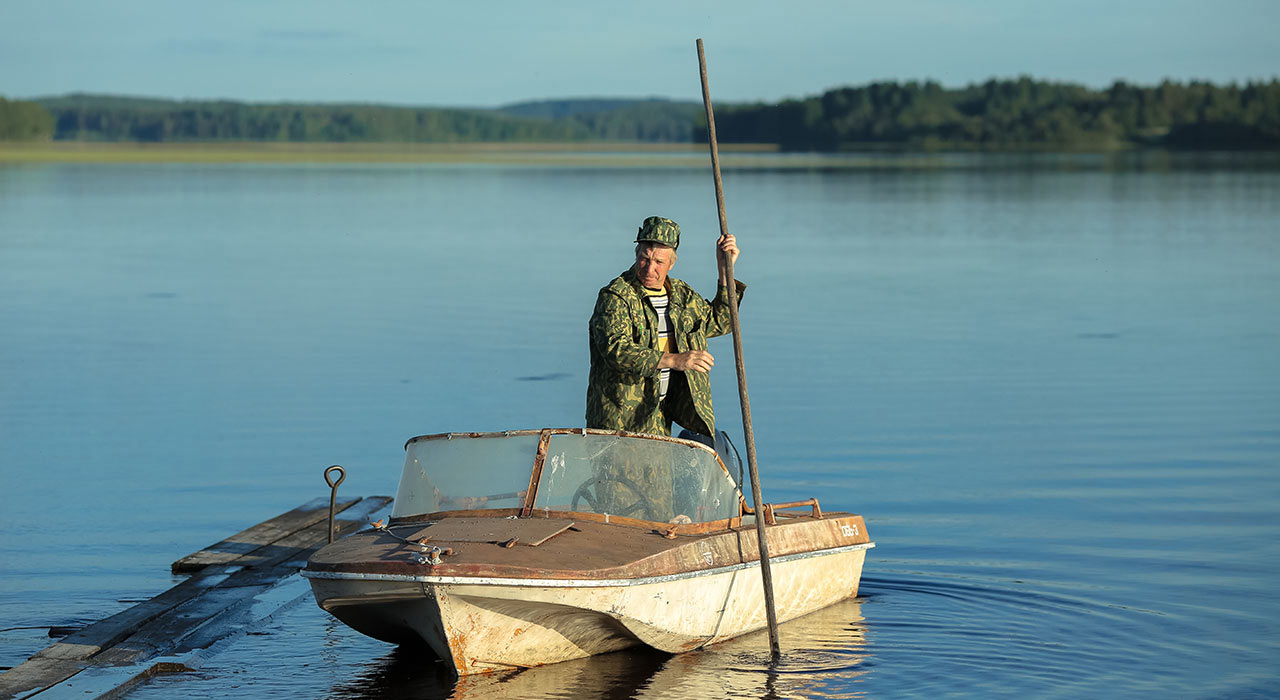
The film follows Aleksei Tryapitsyn, a postman who travels by boat between remote villages around Kenozero in Arkhangelsk Oblast. He carries mail and supplies, linking residents with the wider world.
Notes for Russian Learners
There is less dialogue than in the comedies on this list, but the natural speech and local setting can still be challenging. The film offers a close look at one remote northern community rather than a single “real Russia” beyond the big cities.
Защитники (Guardians)
Released: 2017
Directed by: Sarik Andreasyan
Suitable for: Fans of superhero movies
The Story
A secret Soviet-era project created a team of super-powered agents. Years after the programme ended, a new threat brings the scattered team back together.
Notes for Russian Learners
If you enjoy camp superhero spectacle, the visual action can help you follow the plot when the dialogue gets away from you. It is also a useful change of pace from the relationship-driven films above. And yes, one hero can transform into a large bear.
How to Learn Russian by Watching Movies
You can use a film at any level, but the task should match what you can currently understand. Beginners can follow the story with translated subtitles. More experienced learners can work closely with a short scene and Russian subtitles.
Try these tips for learning a language by watching movies:
- If you're a beginner, use Russian audio with subtitles in a language you understand. Listen for names, repeated words and the rhythm of the speech.
- When you're ready, replay a short scene with Russian subtitles. Pause to look up only the words that stop you following the action.
- Finally, replay that scene without subtitles and notice what becomes clearer. Understanding one scene better is useful progress; watching a whole film without subtitles is not a required proficiency test.
What's Your Favourite Russian Movie?
No list can settle the ten “best” Russian films. These ten are simply varied places to start. If one works for you, look for another film by the same director or with the same actor rather than forcing yourself through a title you do not enjoy.
If you've watched a Russian movie that's not on the list, but just as good, share it in the comments!

Social