



Why Brazil Made Me Love Brazilian Portuguese

Full disclosure: This post contains affiliate links. ?
Brazilian Portuguese was the first language I wanted to speak with very little foreign accent. That was my goal in 2009. What kept me studying, though, was not a grammar chart or a pronunciation trick. It was the people I met and the life I experienced in Brazil.
This is a personal snapshot from three trips, not a description of every Brazilian. Brazil is vast, and the people I met in Porto Alegre, Rio, Natal and elsewhere had different backgrounds and personalities. These are the encounters that made me want to keep returning and keep speaking Portuguese.
A note from the Fluent in 3 Months team before we get started: You can chat away with a native speaker for at least 15 minutes with the “Fluent in 3 Months” method. All it takes is 90 days. Tap this link to find out more.
Brazilian Portuguese
I loved the sound of Brazilian Portuguese, especially in music, and it became my favourite language at the time. Spanish gave me a head start, but it also tempted me to treat Portuguese as familiar Spanish. The pronunciation, everyday vocabulary and rhythm needed their own attention. If Spanish is your starting point too, my guide to learning Brazilian Portuguese after Spanish explains what transfers and what does not.
I originally wanted to blend in by losing as much of my foreign accent as possible. The more useful result of that attention was simpler: I listened closely, noticed regional speech and became more willing to join conversations. My later guide to the Carioca accent and slang treats those Rio features as patterns to recognise, not a costume that every learner should copy.
That distinction matters for motivation. A language can start with sounds and words, but it becomes personal when you know who you want to speak with and what you want to do together. If your motivation feels vague, write down one person, place or recurring situation that would make the language useful to you. My broader guide to finding a concrete reason to learn can help with that.
Brazil
By the time I wrote the original version of this post, I had visited Brazil three times. On one journey I travelled mostly by bus from Porto Alegre in the south to Natal in the north-east, a distance of more than 3,000 km. I encountered different food, music, landscapes, accents and local traditions along the way. No short trip could make me an authority on all of them.
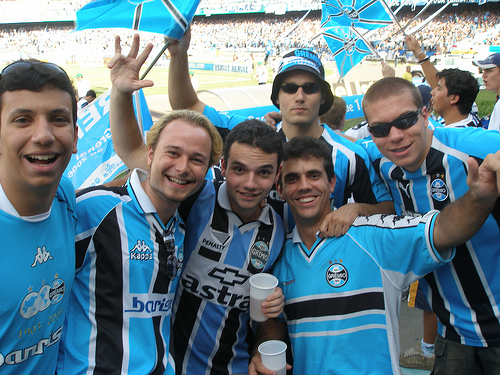
I enjoyed the climate, food, Carnaval, dancing, sport and beaches. But those were not the main reasons I returned. What stayed with me were invitations to dinners and parties, long bus conversations, friends who helped me with Portuguese, and the feeling that I could take part rather than watch from the edge.
Learning the language changed those trips. I could ask questions, hear how people described their own city or state, and notice differences that disappear when “Brazilian culture” is treated as one thing. The point was not to become a copy of somebody else. It was to meet people with enough Portuguese to understand more of what they wanted to share.
The Brazilians I Met
The original post turned my enthusiasm into a list of things “Brazilians are”. That is too broad. A better account is what happened to me in particular places and friendships:
- I was welcomed quickly. People I had recently met invited me to meals, parties and gatherings. Those invitations gave me reasons to use Portuguese outside a lesson.
- Social situations drew me out. I used to travel alone, and joining groups in Brazil helped me become more comfortable starting conversations. That was my experience, not proof that every Brazilian is extroverted.
- People were curious about my story. Questions about Ireland and why I was learning Portuguese gave us somewhere to begin. Curiosity went both ways when I asked about their lives instead of arriving with a fixed idea of Brazil.
- Local identity mattered. Friends spoke with real affection about their city or state. Listening to those distinctions reminded me that Rio, Porto Alegre and Natal could not stand in for one another.
- Warmth had a context. Hugs or cheek kisses were normal in some groups I spent time with, but greetings vary by place, relationship and person. Watching what others do and respecting personal boundaries is safer than applying a national rule.
- Small acts made travel easier. People answered my questions, helped me find my way and corrected my Portuguese. Those ordinary moments mattered more to me than any claim that one country has the “friendliest” people.
One stereotype deserves a direct answer. Friendliness is not a romantic or sexual invitation. A smile, conversation, hug or cheek kiss does not remove the need for interest and consent. Brazilian people are individuals, not characters in a traveller's fantasy.
I still look back on those trips with enormous affection. The lesson I would carry into another language is not that one nationality has a special personality. It is that genuine interest in people can give your study a purpose. Learn enough to ask a real question, listen to the answer, and let the person in front of you complicate your first impression.

Social