
How to become a location-independent freelance translator

beachIn the previous post I explained my background (and need) to become a freelance translator. In this post I will go into more detail about how I get work, what that work involves and why it’s not as easy as you think!!

Finding translation work

So, if you read my previous post you’ll know that I was in a pretty bad situation two and a half years ago; I had no job or money, my long-term career plan was destroyed and I was going to Canada with no working visa in hand. This forced me to consider online-based work. I’m glad that I was presented with this challenge because my temporary solution has turned out to be a job I get great satisfaction out of, and of course have continued with! :)

My initial approach to find work was rather clumsy! I basically wrote out my CV in all the languages I knew, and prepared a cover letter for each one too… and then copied and pasted the cover letter + CV to no less than two thousand emails! I found these emails by doing a search for translation companies directly on the yellow pages in Spain and France etc. Most of them ignored me, a lot of them just gave me a negative response, but one out of the two thousand called me back! After not speaking in French for over two years (and learning two more languages since then, further confusing my French) I suddenly had a spontaneous interview in French on the phone while travelling in a noisy train in Italy. They gave me a trial period, proofread all of my translations for a month and finally took me on! I still work with them. That’s the beauty of being freelance, you work with people, not for them ;)

However, I wouldn’t recommend this approach for those in a similar situation. There are two good translator social networking websites; Proz and translatorscafé, which have forums and many other features. But the most interesting part of these sites can be their job search boards. The translatorscafé one is free – I can’t say much for that since I have never used it. The Proz one has a free version and a paid version; the free version shows you the advertisements after several hours delay, in which time someone else is likely to take the offer. I signed up for a paid account and have found all my other clients (technically outsourcers who look for clients for me) through that site. I find that it works pretty well; especially since you can leave and read references, which is great for confirming that they will actually pay you.

It is important to have a competitive price! If you have no experience at all, then you should actually start working for next to nothing or for free (or as a volunteer) and have your documents proofread so that you can learn how to actually translate before you start trying it professionally. After my training period, I started off with a kind-of low rate because of my lack of experience and then I raised my price last year. Many translators charge per word, which I much prefer to all my previous monthly wage jobs since I get paid for the actual work that I do. The current global economic situation seemed to have caught up with me this summer as I had no work at all for over a month. I’ve reduced my price back to the previous one and have gotten a flood of work because of it. I’ll have to be working 10-12 hours a day for the next few weeks to balance out the debt created by the summer lag and new reduced price, and this will have a serious negative impact on my current 3-month-fluency mission. But more on that in the next post!

The actual price you charge depends on a lot of factors; those who translate novels, for example, may charge much more per word than I do (or would charge per page), but our hourly wage is about the same. I am very familiar with the technical documents I translate and never need to ponder over a more poetic way to say it (as a writer-translator would for example) so I can charge less but still earn the same because I’ll produce more words an hour. Also, the language combination is very important – you may be able to charge more for a language that is more in demand, or need to be more competitive if you have a common language combination.

The importance of a good background and specialisation

I usually like to say how my methods of learning a language are easy for everyone to apply. But becoming a translator definitely isn’t for everyone! Translators do not get the credit they deserve; if you read poorly translated instructions on a cheap gadget from China it certainly doesn’t help! But when you do read a translation (which happens more often than you might think!) and don’t realize it, that’s the sign of a good translator! Always an unsung hero, because it doesn’t seem like it was ever even originally in a foreign language!

Translating a text isn’t a simple task of writing over the words in a text document, which “anyone” with casual understanding of the source language and being a native in the target language can do. You need to understand the source language extremely well and at a professional level.

However, you can’t be a translator just because you speak another language, even if you speak it really well. You need training and experience as a translator and complete familiarity with the subject you are translating.

Any translation work that I accept is always just for my fields of speciality, mostly related to my studies in Electronic Engineering. Thanks to my studies and work experience both in Ireland and abroad, when I translate a document I write as an engineer / computer scientist naturally would, and do so only in English. No matter how many crazy 3-month language-learning missions I have, or even if I manage to speak like a native some day, I will still likely be lacking in some (especially written) subtleties in the language and without much more experience as an engineer in foreign languages, it would be very unprofessional of me (or anyone in my situation) to accept work translating to a non-native language. Those horrible translations I mentioned above are usually done by those who think that they master the language and rarely do. This is a very crucial thing to realize; you should only ever translate to your mother tongue!

And specialisation should not be taken lightly either! When I was training to be a translator, it was extremely frustrating that I would get documents from a wide range of topics, none of which I was familiar with. I tried to translate wine cultivation techniques, legal and medical documents, corporate presentations etc. and it was always a disaster! Luckily all of my work was proofread and completely corrected each time before actually being used. I am not a lawyer or a doctor or a wine-lover so I simply can’t write about these topics in English, let alone understand them in a foreign language! This means that I should never translate them of course. I do not have a degree in translation, but I actually find it easier to get work than some people that I have talked with who do, because I focus on a very narrow selection of documents to translate that I can write very naturally. Being more flexible in your translation topics does not necessarily make you more employable since you may have little or no familiarity or authority in that field. Someone who has studied translation in university needs to somehow also become an expert in any fields they wish to translate. Luckily for me, my specialisation and language learning and training as a translator has been enough to help me to produce good translations.

Doing the work

So when you’ve got the translation, you just open up the Word document and replace the original text, right? Some translators may work like that, but it is horribly inefficient and cumbersome for the kinds of documents I translate! We have Computer Aided Translation (CAT) tools (not to be confused with Machine Translation!!!) that help us translate more efficiently and are especially useful in translations with recurring vocabulary (legal, technical etc.). These tools can produce a file called a Translation Memory (TM), which lets you or other translators work with the same theme later and not lose consistency in terminology, and you can even translate faster as it points out and automatically replaces repetitions.

For those interested in starting off with this, I recommend installing the free Open Source CAT tool OmegaT (along with the free Open Office suite). Unfortunately, many outsourcers much prefer to work with the TMs produced by Trados, which is quite expensive. I made the investment this year and do actually like the interface and I can work with those who require it now. I used to work with Wordfast, which I also quite liked. If you’d like to buy these programs, you should actually do it through the Proz website, since they have huge group-paying reductions for all the major CAT tools, cycling through each one regularly. There is quite a learning curb with these programs, so it’s definitely better to start with the free version and you may never need to change!

So I translate the document by the proposed deadline and send the result (and TM file(s) if requested) and add that quotation to an invoice that I send at the end of the month. They normally pay 30 days later. The annoying thing about this is that you won’t actually have the money for any work you do the first week of the month for about 2 months! This aspect of freelancing takes some getting used to!

Note that a VAT number for your resident country (which can be applied for easily enough) is essential in order to get serious clients and for legal reasons.

Making it location-independent

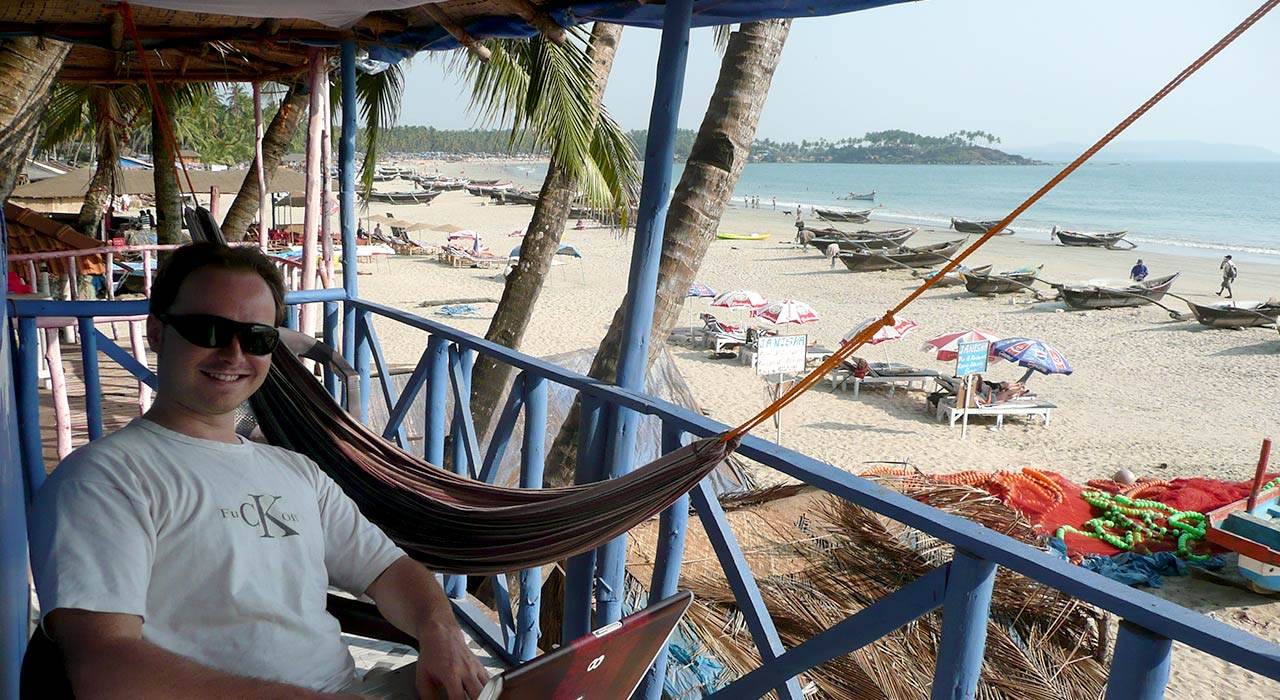
As you will have seen in my previous post about not needing to be rich to travel, I take this work with me no matter where I am. Once you can work from home, why can’t that home be on the other side of the planet? :) Since my clients transfer payments to my bank account, I can take it out of an ATM in any country and use it there :) .

I rent a Skype-In telephone number so that I don’t have to bother my clients with new number changes as I travel. I’ve actually had the same fixed phone number for the last two and a half years that forwards any calls to whatever mobile number (11 different countries/numbers since I started freelancing) that I happen to have at the time. Emails require immediate responses, so when I don’t have work on some particular day I can still leave the house but I have my iPhone push new emails to me and notify me of them. There have been some time-zone issues (California is one of the worst places I’ve lived in for synchronising with European times, with midnight to 8am responsiveness needed…), but I’ve found work-arounds and have comfortably travelled with this job since I started it!

I can’t emphasise enough that this job is definitely not for everyone! I get contacted so many times from people with intermediate (or less) in languages who think that if Google Translate can do it, then surely they can too! No. In fact, my in-house translation work was by far the worst job I’ve ever had (and I’ve had a LOT!!) that made me extremely reluctant to try working in this field again. And if it wasn’t for that training I wouldn’t be able to do it either, since getting trained to learn about the important subtelties involved in translation really is necessary. Nevertheless, I hope this post at least explains a little about how I work for those curious! I’ll come back to particular aspects of how to translate in more detail in later posts, especially when it also applies to language learning. Any other translators out there with a different story and point of view, please do share :)

You can also check out these two blogs from translators who are much more experienced than me: Musings from an overworked translator and There’s something about translation. There is even an online comic strip about translators! If you have any questions, feel free to ask them in the comments! :) If these tips are at all useful to you, then to thank me you can always treat me to an Orange Juice! Every little drop is appreciated :P

Similar Posts:

If you liked this post, treat me to an Orange juice! :) Suggestion: night-club OJ on the rocks €3, mocktail €8. Thanks!!

Please share this post with your friends!
  • Print
  • StumbleUpon
  • Digg
  • FriendFeed
  • del.icio.us
  • Facebook
  • Google Bookmarks
  • RSS
  • Meneame
  • Technorati
  • Reddit
  • Twitter
  • Yahoo! Buzz
  • LinkedIn
  • PDF
Google Buzz

Comments + Pingbacks + Trackbacks

  • Gracias por el post!
    Me ha ayudado mucho. Estoy en el momento de elección de mi vida.
    Gracias!
  • Wish I could learn several language too, how long did it took you to learn every single language?
  • Thank you for your post. It was very comprehensive and informative.

    Legal Translation Solutions
  • Benny,

    I just came across your blog. Excellent topic. Lots of nu nomads (that what we call location-independent working-professionals) are translators. One of the problems is that they have difficulties with the transition. It would be nice to have you comment on our blog (www.nunomad.com/blog) when the occasion arises.

    Just so you know, this week we've published our long-awaited how-to guide on location-independent living. It's titled, "the Nu Nomad" and you can read all about it at http://www.nunomad.com/TNN.
    Good luck with your work!
  • Johano
    Are you familiar with Google translators’ toolkit?
  • @Vessy Thanks so much!! Good luck with your language learning - I hope my tips help :)
    @Taraneh I recommend pro-bono work at first; you can contact websites that have already translated their sites to English for example, but with lots of mistakes and give them some suggestions for free and say that you'd be glad to help them out in future as a freelance. Otherwise contacting lots of companies etc.; unfortunately you have to work for free or for horrible money first (like I did) if you want to enter the industry cold.
    I personally wouldn't recommend getting a certificate as a translator. Specialisation is MUCH more important to outsourcers and companies than translation qualifications. Check out my post today about Portuguese (about to send it); you'll definitely like it :)
  • Taraneh
    Hi there. I am trying to move to Brasil and at the same time look for work- and the translating idea came to mind. Thank you for the details in your blog. What sort of training do you recommend? I know portuguese very well- close to fluent (but don't know business language). I was thinking of getting certified as a translator, but it seems very expensive. Any ideas on what I can do to market myself, I would appreciate!
    THANKS!
    Tara
  • Vessy
    I just wanna tell you how awesome your blog is! I need to become more like you and start learning more languages. :)

    Keep up with the good work!
    Greetings from Slovenia
  • Aimee
    Hi Benny, I just discovered your blog today. You are living my dream of traveling and freelancing - RIGHT ON! My husband and I were in Italy last April and turned out my French came in handy when we were asking a German (who neither spoke Italian nor English) for directions to our apartment. It inspired me to go back to school as my current career is just not challenging enough. I've decided to go back to school to add a major in French to my Bachelors in Business Admin. (I've had a few years in high school and one semester at University level.) I look forward to reading more of your blog - keep it comin!
  • Thanks so much Aimee!! All of this encouragement is what keeps me motivated to keep producing posts ;) You'll be glad to hear that I've already got a vague plan of at least 6 MONTHS of articles (and keep making a note when I think of something new to write about), so I've got plenty more left in me!!
    The best way anyone can thank me for this is to simply share my articles with their friends on facebook or by emails etc. :) Seeing my subscriber numbers go up makes me happy!!
    Good luck with your goal in French! :) I'll be writing a lot more articles relevant to learning Latin languages once I begin my next crazy 3-month mission!
    Don't be a stranger and keep the comments coming on future posts ;)
  • Marjolein
    Hello Benny,

    Thank you for this interesting and comprehensive post on working as a freelance translator.

    I doubt many translators would agree with your pricing strategy, though. They would argue that you're undercutting the market: just take a look at the ProZ-forum on money matters, for instance. Plenty of heated discussions on that particular topic!
    I think everyone should decide for themselves what they think is reasonable pay for the work they do. I can imagine that when you're in a tight spot financially, you would drop your price just to stay afloat. But I think that maybe you're underselling yourself, since obviously you have quite a lot of added value to bring to the job.
    As a medical translator (English & German to Dutch) I am in a stable and reasonably well paid niche, and what crisis was that again? As it is, I am being offered more work than I can actually handle and right now, at the end of August, I have already reached last year's annual income.

    That being the case, I think I can spare you an orange juice or two! (It's only 15 minutes of work for me, so no need to be stingy ;-)) Don't you ever tire of those? I don't drink either, but I am more of a tea person myself. But imagine ordering tea at a party: people would find that even weirder than ordering juice!

    Anyway, back to it. One thing you forgot to mention in your post: the ungodly working hours when a deadline is looming!

    Best regards and good luck! I always enjoy reading your posts!

    Marjolein Verhulsdonck-Roest
    Dronten
    The Netherlands

    By the way, didn't I read somewhere that you're a vegetarian? (Was it your blog or your Couchsurfing profile, I can't remember.) I am a veggie, too, and so are my children (5, 10 & 16). Is it feasible in Prague? In the Netherlands you can get everything you might want in every single supermarket, even in the smaller towns like Dronten. I know that in Germany it's harder to get by: I can't imagine anyone in their right mind actually wanting to eat those rubbery fake sausages they sell over there! Just wondering…
  • Hi Marjolein!!
    Firstly, let me say thanks so much for treating me to the Orange Juice :) Every little bit helps a lot!! I don't ever get tired of Orange Juice, but I do mix it up a bit and get Apple or Multivitamin juice etc. instead :D

    You raised some interesting points, so let me explain:
    I was surprised that the small part of this article where I mentioned reducing my price would get the biggest reaction from other translators, but several people have tweeted me and written me to say that I'm "hurting the industry" or things like that. I really didn't think that me being competitive could offend people, but as you say there is a huge debate about this. I am not an established translator, since I've just been doing this for about 2 and a half years. I find some translators cling on to their prices religiously since they've had them for years. This isn't the case for me, so I am willing to be flexible when I need to.
    I could definitely have dealt with this situation better and maybe talked more directly with my current clients and otherwise get new clients, but frankly I just wanted the quickest solution to make sure that I could earn as much as possible in as short a time as possible, so I told the clients that I like working with that I'd reduce my rate for a few months, and as planned I have 10-12 hours work a day, which gives me more than the 6-8 hours I may work on the previous higher price.
    Networking and taking the risk with new clients that I may have to chase for payments is not something I can afford to do right now. Luckily the huge flood of work means that in a few weeks I will already have earned enough to be able to return to working less than full time and focus on my non-work projects.
    I may have panicked because it might just be a temporary summer lull and the crisis certainly didn't effect me all year up until July, but with a rapidly approaching credit card limit I had to be prudent! Although I consider myself a good translator, I still have a lot to learn about the industry and good client communication and I've definitely learned plenty in the last few weeks! I hope other translators don't get annoyed and think that I'm trying to bring everyone's prices down; I didn't see any other option in my situation that didn't involve going into uncharted territory, which I couldn't risk.

    Anyway, I don't actually have ungodly working hours (these weeks are the only exception) and my deadlines are usually quite flexible ;) I generally charge less than I know I could despite my niche and the demand I get, because I like the greater flexibility I have when I call the shots and tell them that if they want tighter deadlines they can pay me more etc. My whole purpose with freelancing is to enjoy work and to have a good balance with life outside of work, and I feel that I have been managing that quite well so far :) Although I take my work very seriously, I can take regular breaks and several days off, which makes me feel much more casual about the whole thing. If I charged more, then there would be more pressure to produce work quicker for stressed out clients. Life is too short for pressure ;) I will gladly accept less money (as long as it's enough) in exchange for greater quality of life :)

    I am indeed a vegetarian. Prague is a very touristy city so even if vegetarianism isn't in Czech culture, every restaurant I go to here has plenty of great options, and of course I cook at home a lot. International chains like Tesco have plenty of options :) Every country I've ever been in always has plenty of vegetables, but the ready-made meals for when I'm feeling lazy are harder to find in some places. If I can think of a good way to make it language related, I may write a post about how to be a travelling vegetarian ;)

    Thanks again for the OJ treat and interesting comment!
  • Linda
    Hi, I really enjoy your blog. Just wanted to know where you trained for translator, where can people find these courses and what exactly is this course or feild of study called? Keep writing and I really like all the useful tips. Thanks.
  • Hi Linda!
    Welcome to the comments! That's great that you enjoy my blog :)
    Please read the previous post to learn more about my background. I only got that training position because I was also teaching English part time for the same company. My excellent English-teaching CV was the only reason they hired me and the agreement that they would train me part-time as a translator was the only reason I took the job. It is an almost impossible to reproduce situation.
    You could possibly take a translation course at your local college/university or just start translating, but for a very small fee or a normal fee, but give most of it to a professional proofreader. The proofreader could send you the corrections and explain what you are doing wrong.
    As I said in the previous post, my particular path is very hard to copy because it's so strange. There may be other ways of getting trained as a translator that don't involve signing up for a long-term course, but ideally at least a diploma-level course at college should be covered. My position was only several months of work, but it was intensive and very stressful. I learned a lot in that time, but ideally you would have more time to learn the same things under much less pressure.
    You could instead see if there are translators in your area and get a private course from them. Sadly you have to spend money to make money and courses have to be taken!! Sorry I can't give a more precise easy solution; I wanted to emphasise to those curious that it isn't as easy as they think! Where there's a will, there's a way however :)
    Thanks again for your compliments! Looking forward to reading more comments from you!
  • Marta
    Helo, Benny!

    I'm Brazilian and I've finished my English course! It took me 4 years and half, but it was worth it! :)
    Congratulations for your iniciative of being fluent in lots of languages and traveling abroad...

    You're really courageous!
    Hugs*
  • Hi Marta! Congratulations on finishing your English course; you are writing really well!! :) Where do you live in Brazil? I'm moving to Rio in a few weeks for my next 3-month experiment that I'll reveal on this site just before going!
  • Marta
    Hi again Benny!
    Thank's for the comment about my writing ;)
    So, you're coming to Brazil... Good! I hope you have greats experiences here.
    I'm looking forward to seeing your post about your staying here.

    I live in Macaé, a city of Rio de Janeiro!
  • Hi Benny,

    Today I discovered your blog. I love the dynamic style of the posts, the cool pictures and the "orange juice" idea. Keep up the good work and thank you for the link!
    .-= Alejandro´s last blog ..Mox, Lena & Mina: Disadvantages of not being a freelance translator =-.
  • No problem! Thanks for the compliments ;)
blog comments powered by Disqus