
Warning: Very long and detailed review!!
This month the majority of what I learn from German (other than in actual conversations) has and will be on various on-line and computer based input systems. (I usually focus on speaking more and learning from books). I believe I can improve my learning method using certain aspects of one or several of these systems, as many other people have been enjoying these tools to learn languages.
For the first week of the experiment I’ve been using the LingQ website and tools for several hours a day.
Before I start this review of LingQ I should point out two things.
Firstly, you can earn points for spending in LingQ from referrals to this system and I am choosing not to when I link to the page. This system has several paid aspects to it (I link to free alternatives where relevant), and I am not earning anything by referring new paid/unpaid users in all links except the example badge for illustrative purposes. I just want to share my opinion of the system and how it can be useful to people.
Secondly, the founder of this system, Steve Kaufmann, has sent a wave of negativity my way because he is uncomfortable with the advice I give on this blog. This means that I am not quite in the mood to do him any favours to be honest! Despite that I am recommending his site as a useful language learning tool, especially in its free form.
This review is an honest look at the 7 days (about 3 hours a day) that I have spent almost exclusively learning German through this system, and I’ll list all the pros (first part) and cons (second part) as I see them. I will be reviewing other systems in some detail too if I see they are worth discussing, to try to see how they may benefit people not previously familiar with them, and will choose aspects that I like from them to ultimately improve how I learn languages.
I thought I would do this for LiveMocha too for example, but can’t see it as useful except for some beginner-only courses, and will compare it along side other sites later specifically for the purposes of finding natives online to converse with, since I only see that aspect as useful to non-beginners. Since I may not be going into as much detail in other systems as I had hoped because of this beginner-focus, you can read a useful review of these systems on the ielanguages blog.
Overview: LingQ as a web-based learning system
LingQ is a collection of various different interfaces for learning a language, gathered on one site. It provides features for working on the 4 main means of communication in a language: reading, writing, speaking and listening and has an active community and a vast collection of material both for listening to and for reading. The site has both free and paid options. You pay for “points” to spend in the system, but you can also earn these points by contributing and helping other learners. However, some useful and practical aspects of the site remain exclusive to paid members.
In this review I’ll be focusing on the benefits of the free options, but mentioning the possibilities of the paid ones for those curious, while mentioning work-around to keep it free.
The system is currently available for learning English, Russian, Italian, Swedish, Chinese, Portuguese, French, German, Spanish and Japanese. Other languages are occasionally added based on demand, but if you are studying a minority language it’s unlikely you’ll ever see it in the system. I was reviewing it for German of course, but the features work the same in other languages (which, as I say below is not always a good thing) [Edit: I've already been receiving comments saying that they can't use the system properly to learn non-European languages]. You can use it to learn as many of these languages as you like, even as a non-paying user.
The entire interface is very clean and user friendly, and generally pleasant to use.
My favourite feature: Reading interface
I have to admit – reading is not usually my focus. Although I have naturally improved my reading ability in languages through practice and enough to be recognised formally in several cases, my learning method could do with some improvement and LingQ’s reading interface is one way to do this. As I will be sitting an examination in just over 2 months I do need to make sure I am improving my reading ability in the best way possible, and I will likely continue to use LingQ to do this.
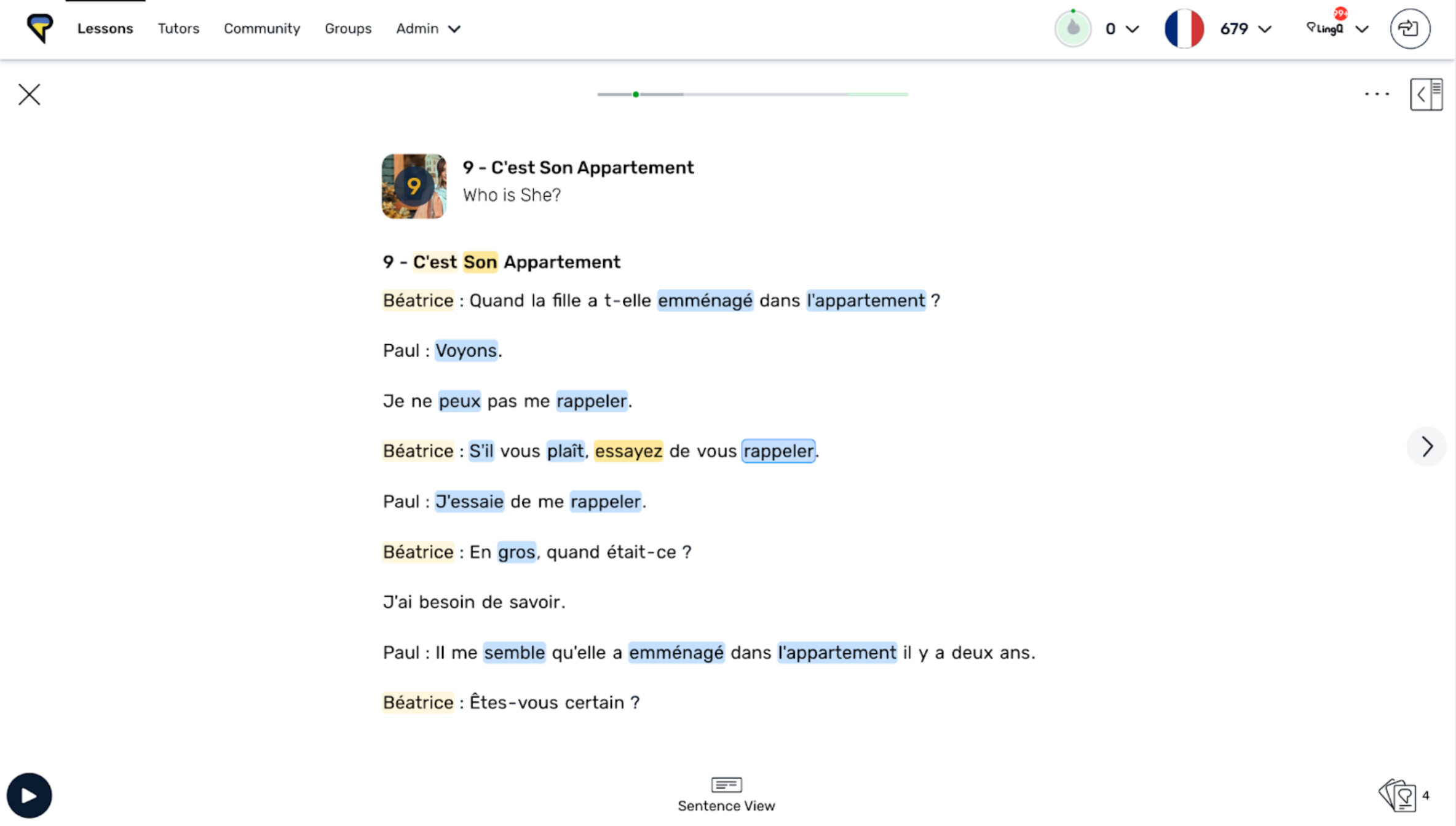
When you open a “lesson” you will be able to read the document through the interface. However, any words that you have never come across before in the system are highlighted in blue. In your first lesson all words are blue, but after several lessons (once you have confirmed that you know these words) you will see less and less and have a real feeling of progress. This is integrated with the “words I know feature”, a measurement system that I actually dislike, as mentioned below. However you will be reminded how much you are progressing and this is excellent encouragement.
The benefits of this clearly appear after using the system for longer. After a week, I’m still seeing some basic words appearing (as shown), but after a few more weeks I am sure more highlighted words will genuinely be ones I need to learn.
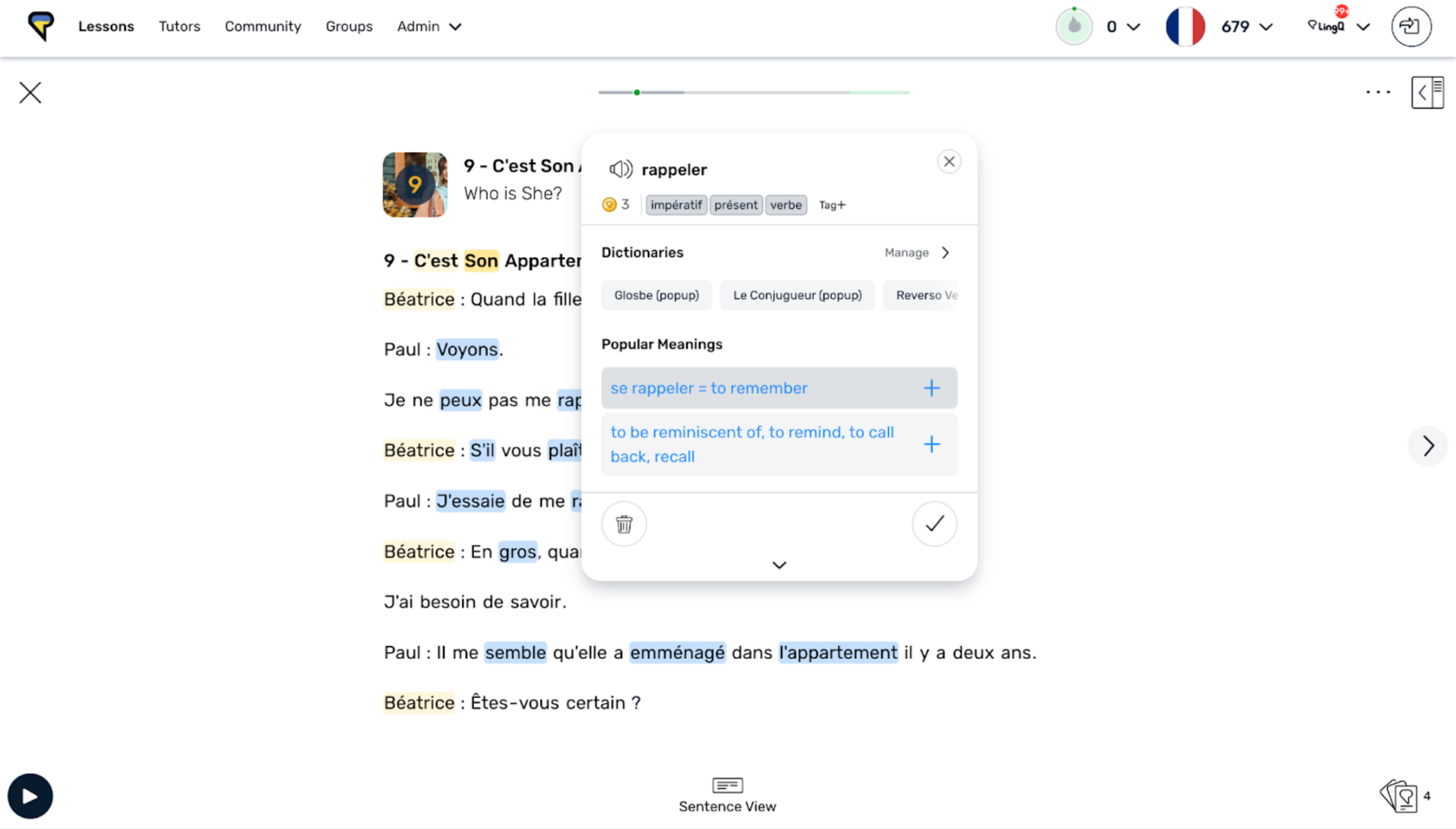
If you don’t know a word then hovering the mouse over the word will translate it for you (you can do this anyway in your browser on any website using plugins, but this is integrated into the system for adding hard words to your study list or known list). Several options may be given and if you click the one relevant to your context then you add what’s called a LingQ, which is basically a word or term that you need to refer to later to study. This allows you to continue reading.
Unfortunately there seems to be no language separation in the system, and non-English (i.e. non-native language) translations came up occasionally in my suggestions. This is due to other users who have set English as their default language (because the system is not practical to use in their language due to lack of translations), and enter translations in their mother tongue, so it’s something that you would just have to learn to ignore.
Using the system you can read documents quite quickly and make a note of tough words way faster than you would do it manually.
Something very important here is that you are learning words in the right context. Many systems I’ve already seen give you lists of words to learn off with no example sentence or even as part of a larger flow such as in a text document or audio. When you see a word as it’s actually used you can appreciate it way more than in other systems.
All of this reading aspect is free, however you have a maximum of 100 LingQs that you can add before you need to have a paid account. You can simply learn all of these when you have lots of them and then delete them, so you can add new ones. This won’t influence the number of words the system is aware of you “knowing“, which will continue to go up, so by deleting LingQs you can keep it free.
It’s actually better to make sure that you can continue to learn hard words, by making a note of them in a separate learning system as I mention very briefly below.
Great library of audio & text to learn from
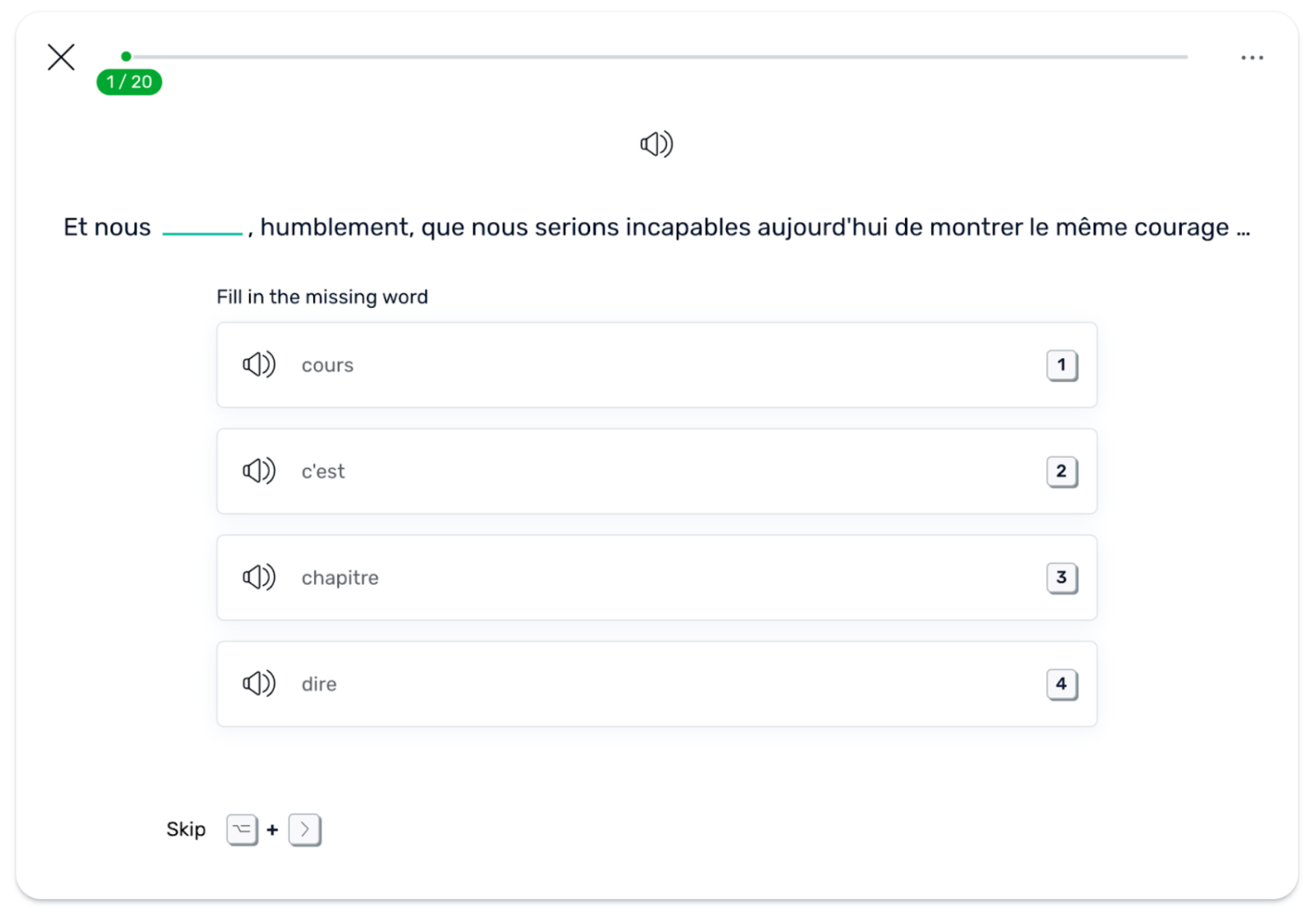
Another excellent, and free, feature of LingQ is it’s library of “lessons”, which are actually short text documents accompanied by an audio file. I had looked for something similar before, and this is the most extensive and easy to navigate free database I’ve come across online for several languages, especially for varied language levels. It’s important to note that LingQ is genuinely useful for improving recognition (less for conversation) at different levels (beginner, intermediate, advanced), which is not the case in other systems.
This means that you have huge amounts of audio you can download to listen to on the go (as podcasts for example), and compare them with the documents. This combination means that LingQ is definitely an excellent system for audio (as well as reading) comprehension. Since they are integrated, you can combine your reading lessons for learning vocabulary and the listening aspect, to make sure you understand them when spoken.
This feature alone makes the site worth checking out for people who need more content in their target language to practise with. You need a free account to be able to access this library.
Community
Most people who use the system tell me that one of their favourite parts of the LingQ system is its community. I’ve started using other popular systems this week and I can already see that LingQ is an improvement on these in certain ways.
You can search for other members based on their language, and there is a forum that you can ask questions in. It isn’t as active as the how to learn any language forum, but there are regular messages and helpful responses. I started a discussion about this review I was going to write and got many helpful replies and a very interesting discussion.
A troll came to insult me too, but this would be very unlikely to happen to other people as I have a reputation there based on Steve’s somewhat misleading blog posts about me, as well as the unconventional ideas I have in language learning that I talk about so confidently.
If you were invested enough in learning through this system, it’s great to know that the community will be there to help, and you can always ask them when you need it. I noticed that some topics have not been active for a month or longer, but most of them have several posts a day and there are categories for you to practise the language you are learning.
The forum needs some technical work too; most URLs are broken up if you include them in a message (unless you use a URL shrinking tool from another site, which is a frustrating extra step), and you cannot edit posts or use formatted text. To me, this gave the forum a very “classic Internet” feel and it needs to be updated.
I can’t say that I was very active in getting involved in the community, so there is likely way more to discover here that I may come back to later. I am personally a very independent learner, but a lot of new learners would benefit greatly from support offered there.
Also, the site itself, while using very clever programming for the interface, needs some server or other technical work because the entire site was unavailable twice for much longer than a few minutes, and I’ve been using it for a very short time. It was suggested that this happens regularly. This was inconvenient for a specific time that I had set aside to study, and the error message is misleading and the links provided for explanations are unhelpful.
Import feature
I enjoyed testing out the paid features, but I will downgrade to be a free member before my first month is over. The free alternatives to LingQ’s paid ones that I list are fine for most learners, especially if you don’t mind deleting things you are sure of. To be fair, if you were to pay for the features I will mention, they aren’t expensive to use if you do it infrequently, and you do get value for what you pay for.
Another feature that I enjoyed is the Import feature. The export feature I mention below is for exporting vocabulary to study, but is a paid extra that you can bypass by copying and pasting as I suggested. Luckily the import feature is actually free, but is for importing your own text. Free accounts have a ‘limit’ of 5 imports, but you can just delete the documents when you are done with them to keep below this limit of 5. (Paid members do not need to do this, but it’s a simple extra step).
Use of this feature depends on how much of the language you come across on the Internet for reading and isn’t practical for reading newspapers/books etc. (without time consuming scanning and conversion). Since I put my e-mails and random websites through it, I quite enjoyed this option. However, since the database of ‘lessons’ is quite big, there is more than enough free content already there to keep you busy for quite a while.
As I said above, this helps for reading documents faster in languages that you are learning and using the interface for this is handy.
Paid vs point earning options
As I said, I am happy to recommend the free version of the site, and some other features are possible for free members, by earning points by contributing to the system.
Certain features work on a points system, but in my opinion they are not very practical if you don’t pay, so I don’t see this as a real solution for most people. For example, if you wish to have a spoken lesson, you need to have earned at least 500 points. To earn these points you actually have to give two spoken lessons (375 points earned each). Since the student chooses the time for the lesson (beneficial to the learner of course), the tutor has to be flexible around this (although they choose the availability window) and give their attention and a report after the lesson for each of the 3 people. Some people may not be interested in giving two lessons to get one in return (although there are excess points that will add up later).

People who are passionate about the community are happy to lend a hand, and I like this enthusiasm and genuine wish to help others. I’m told that this extra work involved is to maintain the quality of the system.
You can also earn points from referrals (as I could have done by using a specific referral link in this post every time I mention LingQ if I wanted), but I also think this is not practical as you only earn 200 points per month for each referral that opens a paid account (you earn nothing from friends that sign up to use the free system). So you need to convince THREE friends to take out their credit card before you can have one brief conversation a month.
This is ridiculous when you think about it and makes what you earn almost completely pointless in my opinion. I can only see it as a practical solution for people like me with popular blogs that could potentially get lots of clicks, and this explains why I have seen a few websites with their vanity badge of how many words they “know” so prominently displayed, with a referral link behind it. How it can help the system itself with more funding is apparent. If you refer people specifically to help maintain the system then it’s a good idea, but it’s a promotion gimmick, and I can’t see how it can help the actual users to earn enough to make it worthwhile.
As well as this points can expire. This means that even if you pay to use the system, your money can still go nowhere if you aren’t quick enough to use those points. This encourages you to use the system often, but is unfair in my opinion. If you earn / pay for points you should be able to use them whenever you want.
Conversation lesson
Rather than earn points, I paid for these lessons to try them out and was very pleased with them. For $10 you get 1000 points (2 lessons) if you already have a paid account (so I had spent a total of $20 on LingQ, with my basic subscription). With a free account you would pay $10 for one lesson, since points that you buy are worth half as much to free members. A chat session usually lasts 15 minutes, however my tutor Vera (and the next day Annett) were kind enough to go over this time with me.
It’s important to note that there are completely free alternatives for finding conversation partners online, such as http://chatonic.com/ , http://www.babelyou.com/ , http://www.sharedtalk.com/ , http://www.italki.com/ , http://www.mylanguageexchange.com/, http://www.lenguajero.com/ for Spanish and http://vraiment.info/parlezfrancais/index.html for French, you even use chatroullete equivalents in other languages! Other sites offer the interface in French, Chinese, German, Italian and Spanish. I don’t think chatroullete is a great alternative, but you can see that there are lots of free alternatives for practising a language in some way.
I originally thought (mostly from all the hype) that LiveMocha could be a good learning alternative, but from what I see in trying to get use out of it, it’s only really practical for finding natives to practise with and not for learning a language beyond the basics.
I will come back to review some of these systems to see which I prefer as a free alternative for finding free conversation partners, but of course because it’s free there are certain things missing that you get for a paid alternative.
After a pleasant conversation with Vera, she sent me a detailed report of the mistakes that I had made that she had been noting while we were chatting. I did appreciate this and if you are already a paying member then $5 extra per conversation is indeed worth it for the chance to converse with a very helpful native and get the report afterwards and could be a great target to aim for at the end of a week of studies.
However, if you wish to have more intensive spoken practise (which you all know I prioritise) then this would not be so practical and free alternatives (or meeting in person) would be preferable. One or two conversations a week will definitely help, but nothing like the kinds of speed of spoken progress that I personally prefer. I know lots of people prefer to take their time in language learning so this would may not be an issue for them.
Writing correction
There is a completely free alternative to this over at Lang 8 that I have already linked to. I have used Lang-8 and am happy with the free corrections, however LingQ’s one would have the same level of detail in the report as the spoken lesson review, and a level of focus/quality that you might not get in free alternatives.
Once again, it depends on what you are looking for. If you just want to write an e-mail to a friend for example, or get a general idea of your weak points in writing, then a free correction from a native is all you really need. However, if you are writing a cover letter, want to keep the text a bit more private, or are preparing for an examination then you might want more detail about what what you need to improve. How many points you need to pay depends on the length of the document.
You can also correct other people’s text to earn these points, like in Lang-8, although it’s not as balanced in points earned vs points spent. As well as this, in LingQ you have to wait until people submit text to you, but in Lang-8 you can do the corrections yourself immediately. However, this will likely not be much of an issue for English speakers in LingQ, as there is high demand for that.
Criticisims – the vanity badge
As well as the point-earning system that I’ve mentioned, there are certain other aspects that I didn’t like. For a balanced review, it’s important to share this and I hope those at LingQ will take this as constructive criticism, since as I say clearly, I am happily promoting this website as a good learning tool.
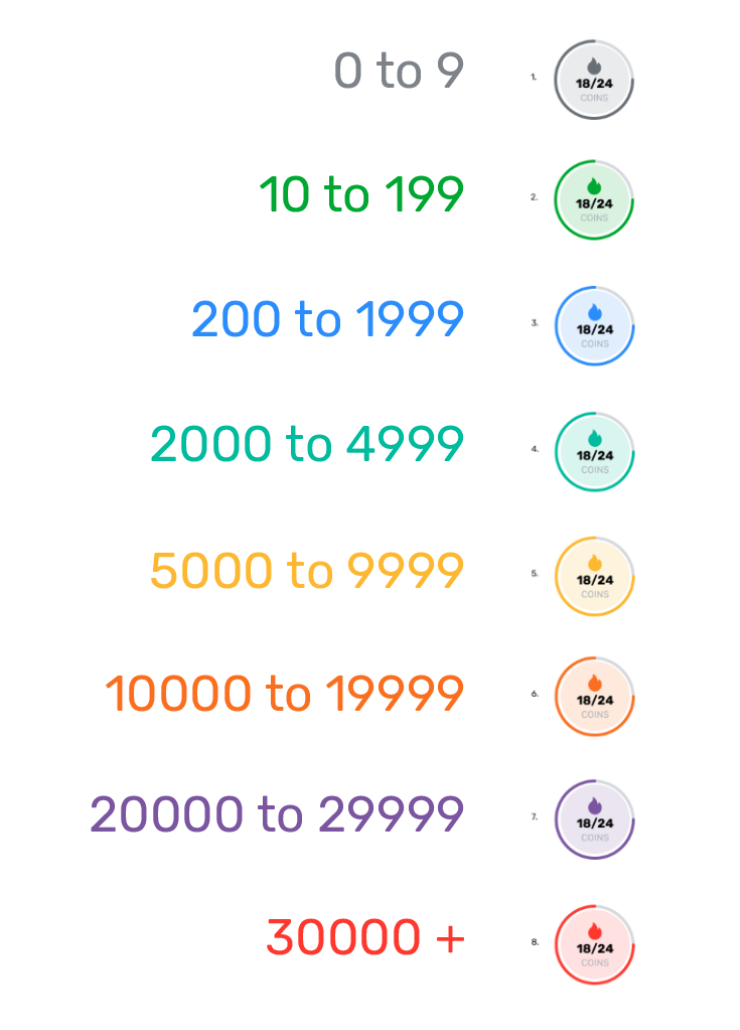
The vanity badge (my title for it, not LingQ’s) that states how many “words you know” is quite misleading in my opinion. You can see it here (this example does have a referral link that I would earn points from, if you are in a spending mood, which I don’t personally need to be honest, but you can click here to access LingQ in the same way without me earning points).
I’m very glad to see that LingQ focuses on all 4 means of communication, but using number of words you “know” as the measuring tool is meaningless in terms of your ability to actually use those words. There are many ways to assess your level in a language and I feel this one simplifies things way too much.
Then there’s the use of the word “know”. The writing and speaking aspects don’t directly influence your word-count (unless added individually), so this is more accurately represented as words you recognise as you see/hear them in the appropriate context. LingQ’s focus on context is a fantastic feature for helping you learn words as they are actually used, but that context does a huge amount of the work to help you recognise the word, that simply won’t be there to help you when you need to say/write it yourself. You will eventually learn to know this word if you are exposed to it many times in context, but this is slower than what I would normally do. Once again, if you prefer to take your time, this isn’t so much of an issue.
However, recognising a word does NOT mean that you know it. Remembering words is not bidirectional – it takes more effort to remember a foreign word than to recognise it. In my opinion, you only truly “know” a word when you can produce it yourself.
Even forgetting all that, the count of the vanity badge is not realistic – different conjugations and plurals and declensions count as different words to LingQ. If you think that knowing cat/cats, house/houses, dog/dogs means you know 6 words instead of 3, then you’ll agree with this measuring system. I don’t.
On the other hand using some form of a counting system to see that you are progressing is very encouraging and I like that aspect of it at least. I’ll continue to use the LingQ system, but I will not be displaying the badge on this site’s sidebar.
The flashcard system
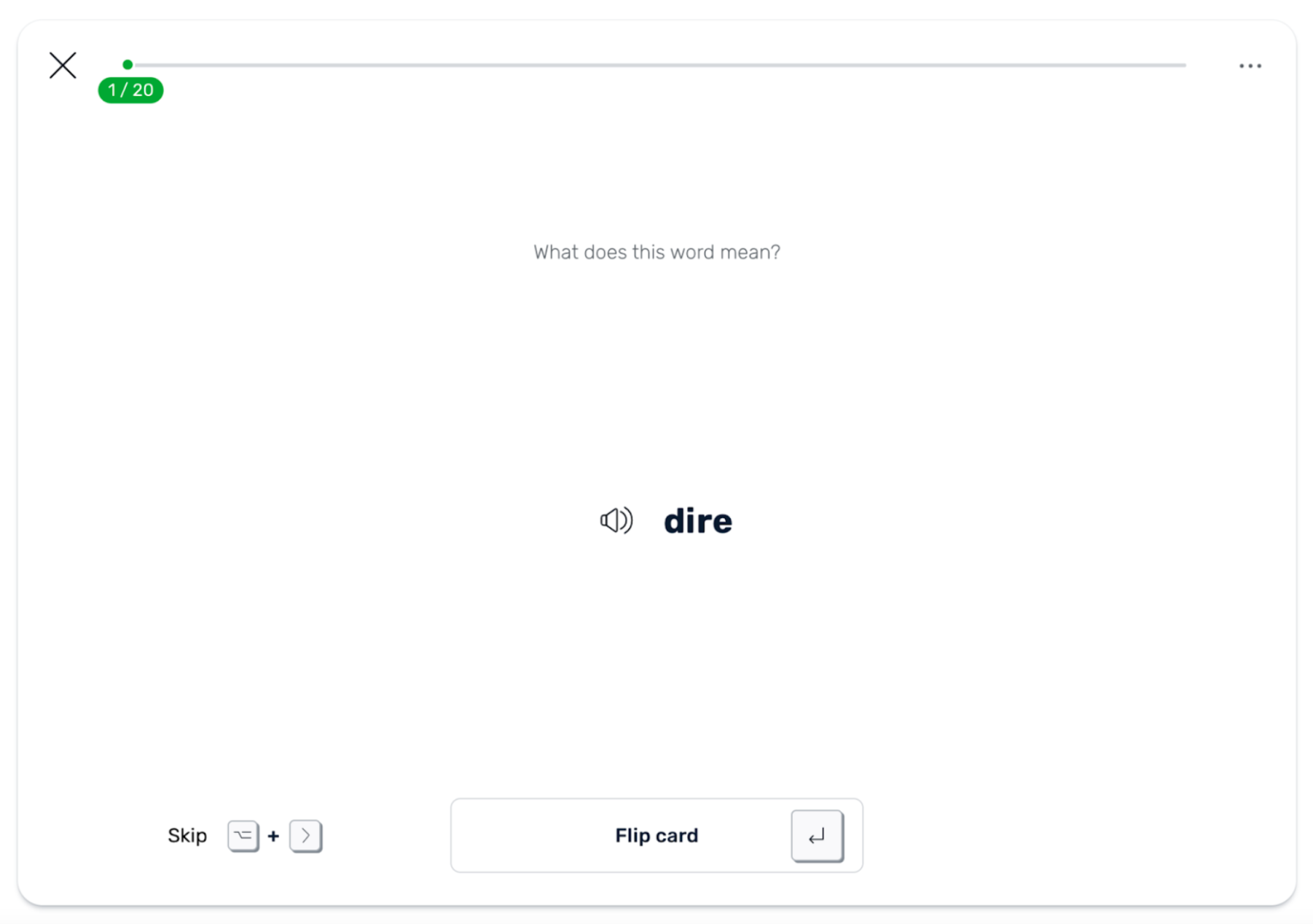
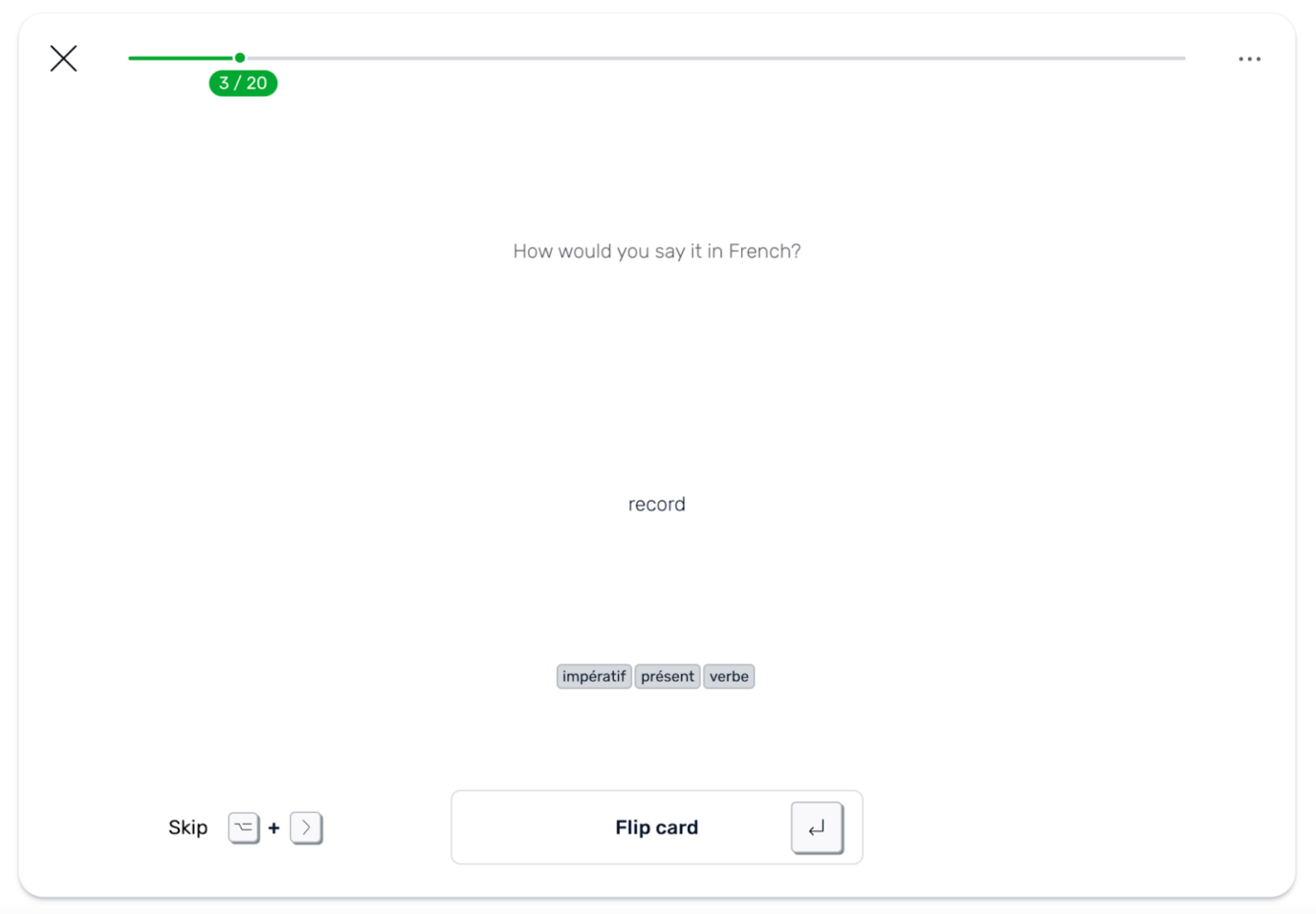
I have mixed feelings about LingQ’s flashcard system. It’s great to review the difficult words that I’ve marked later, but the interface operates in a way I would not expect it to that slows me down. I’ve used both the one on the site and the free iPhone/iPod app. (There are no other options available, so tough luck it would seem if you are among the majority of people in the world who have a non-Apple mobile device…)
It categorises words as 1. New 2. Can’t remember 3. Not sure 4. Known and the status goes up automatically after a certain number of views, but I wanted to change the status to Known/Not sure for several words after the first time. If it was a simple matter of clicking one button to change the status and review the next one, then this wouldn’t be an issue. But you have to change the status separately, and then click to go to the next flashcard and this slowed me down considerably.
There are other aspects of how these words are presented to you that I didn’t like, but that is a matter of taste and is based on how Steve himself likes to study. I decided to start my experiment with SRS early and downloaded Anki and found it way superior to LingQ’s flashcard system, even though the interface is almost as simple. The SRS system is way more suited to how the majority of people think, and you can use it way quicker than LingQ. But this is something I will explain in much more detail later, as I continue to learn through SRS over the coming weeks.
If you have a paid account then you can use the Export feature to send your LingQs to any SRS application for studying. To me, this is by far the most important benefit of having a paid account, however if you don’t mind copying and pasting the hardest words to SRS, not having this isn’t an issue.
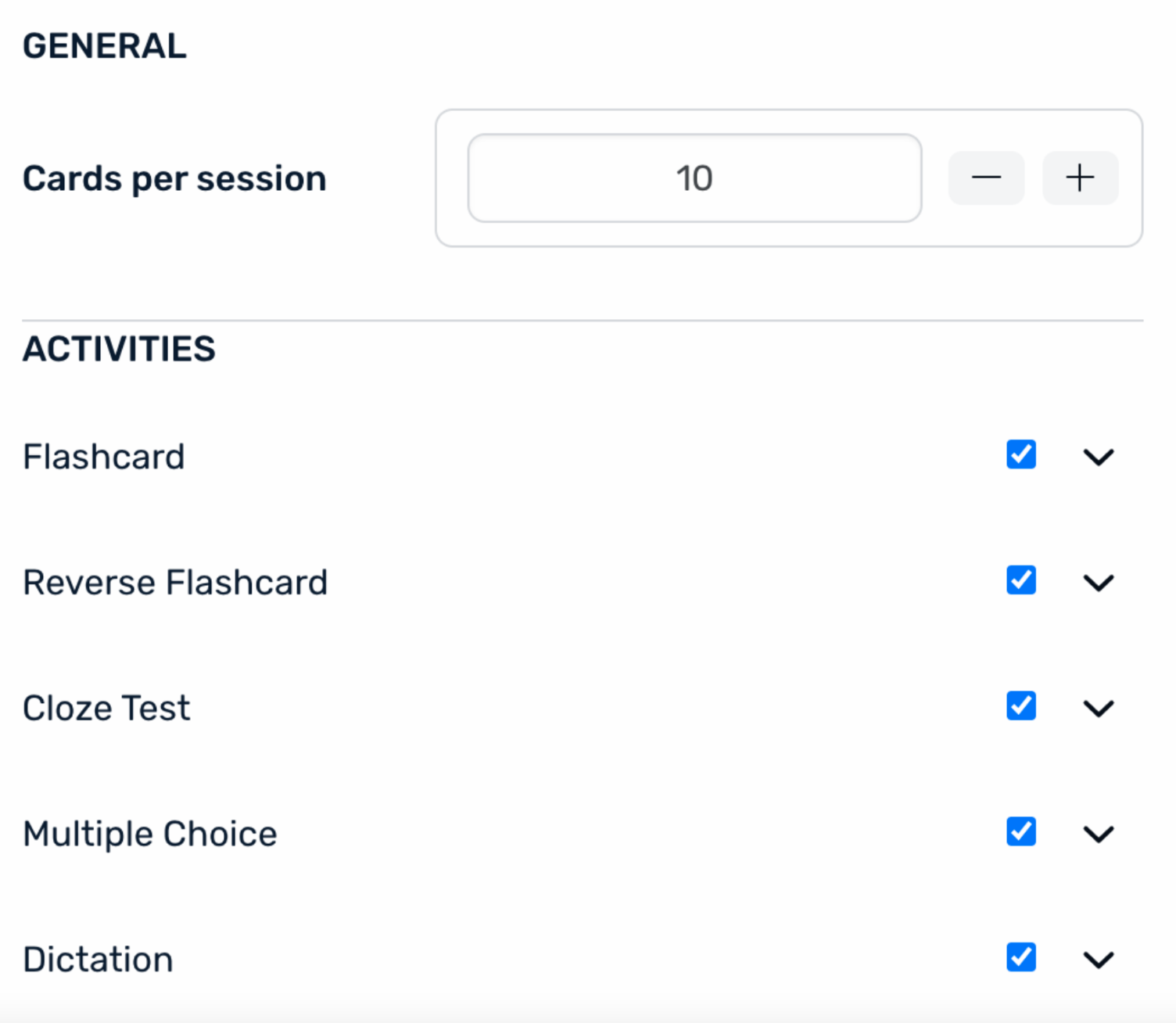
You reverse the order for testing production rather than recognition ability within LingQ’s system without needing to export, (“Reverse” on the website) but the terminology is confusing on the iPhone (you need to change “term” to “hint” in settings – to me this is far from intuitive and I needed help for it to be pointed out). The website system would do well to incorporate keyboard strokes (like in Anki) so you could use it quicker than clicking.
When using the free version of the site, I suggest you have a separate document open at the same time and copy and paste new words you wish to review later into that document, so that it can be opened by an SRS program and so you can keep your LingQ count below the free limit of 100. I’ll describe the details of how to do this while coming across any vocabulary (not just in LingQ) when I discuss SRS later.
Oversimplification of how a language works
One final thing I didn’t like is the oversimplification (not in presentation, but in progress and learning) of a language being nothing more than single words that you can translate into your native tongue, albeit in the right context.
For a language like German, separable verbs means that you simply can’t select a term to create a LingQ, since other words would be between these parts. Literal translations of these will do nothing but confuse the learner, and can’t ever help you truly understand a text. This is yet another reason that the vanity badge count is misleading, but this time in how much you can understand.
English also does this, e.g. “get your point / the idea / humour across”. In this case “get across” is the crucial term, and individual word translations do not help the learner in the slightest, and “get across” cannot be selected as one term to be learned, and adding it separately (only if you already know what it means; if you haven’t seen it before you wouldn’t think to do this) requires you to leave the lesson (or open a new tab). People not generally familiar with learning languages would not know to do this.
Also, the entire Interface is identical for learning all languages. This does not take important differences required when learning particular languages into account.
Like Steve, I’m not a fan of grammar, however there is no mention of it at all in this system. I try to get through understanding grammar quickly when the time is right, not avoid it entirely. You can always ask for help in the forums, but at a certain stage you need to get some detailed advice on how a language works beyond translations. I personally don’t like this idea of learning a language almost entirely via translations, but others would. As I said, the context helps hugely to improve on this.
You will eventually get most of the gist of it when reading and listening to words spoken in a particular way, however without a few basic guidelines you would need a lot of exposure for certain grammatical points to become natural to you without ever studying them. If using LingQ, it absolutely must be combined with other tools to make good overall progress.
Final thoughts
As you can see, this is an extremely in-depth review, so I hope people see that I am taking my input experiment seriously!
There are some other aspects that I found frustrating about LingQ but that are much more down to personal taste. Ultimately, I want to see what aspects of online learning tools can improve my speed and efficiency in learning languages rapidly, and what would work well for others too, and I will likely be recommending LingQ for free reading/listening improvement along with other tools, and precisely how I combine them, in the Language Hacking Guide.
If I feel another system is worth discussing in detail, I will do so. However, as I said above, I found LiveMocha to be a disappointment for non-beginners, and I will likely rate it among tools for searching for people to practice with, rather than an actual learning system.
If you have used LingQ or have any thoughts on what I said here, feel free to leave a comment. But I should point out that I will delete any rude/irrelevant comments. Lots of this post is mostly just opinion, but I’ve presented quite a lot of facts and important analyses. Take it or leave it!
Similar Posts:
- Busuu & LiveMocha: review of pros and cons
- How to download free native-spoken podcasts & MP3s in almost any language
- How to make your computer multilingual
- Google on the go: How Android and Google Goggles will change travel & help you get by in languages [video]
- Spaced repetition: Never forget vocabulary ever again


Subscribe by RSS
You asked for comments on your stated goal of being mistaken for a Berliner. I commented that you will fail. You have not achieved this capability in any other language, few people achieve this after years of study, your chances are zero in my opinion.
You stated that you would study hard to sit the C2 exam and went to great lengths to explain how difficult it was. It never dawned on me that you did not intend to pass it. Why bother saying how difficult it is if your only goal is to take the exam. You could do that without studying.
You state “I didn't say that I'm “disappointed that you have substantial differences”. I'm disappointed that you said that you will “elaborate” on the “substantial” differences.” Your original was there for all to see so there was obviously not attempt to misquote you on my part. But exactly are you trying to say. That you are only disappointed if I state what I think.
There will be more posts at my blog as I have stated, one about your review of LingQ and one about your website. This is not an obsession, but rather an opportunity to explore different approaches to language learning, a subject that interests me.
You stat
Karim, I enjoy discussions and debates.
You claim that LingQ has nothing to do with input, yet LingQ has vast libraries of audio and text content, and a variety of functions that help to acquire vocabulary, words and phrases. This is all for input based learning by the independent learner. The fact that Michael Lewis' work supports the approach we use at LingQ is hardly a knock at LingQ.
In addition there is a community of sympathetic native speakers to practice with. What exactly do you not like at LingQ?
Once again, you haven't read the blog post!! I achieved this for Portuguese and was mistaken for a Carioca on several occasions. I reiterated that in the blog post! Of course you skipped that “minor” detail.
The fact that you think I could do the same “without studying” shows that you don't get it at all, and once again are not reading even my responses directly to you!
I'm not disappointed in you saying what you think. I'm disappointed in this obsession when there is potential for so much agreement.
I really am losing patience at reminding you of things that you haven't read.
I asked several Brazilians to listen to the recording where you introduce Gaelic in Brazilian Portuguese and to tell me if you sounded native. One answered as follows. I am waiting for other responses.
“he is indeed quite understandable, but he definitely has a **very strong** accent. Furthermore, he sounds like he is trying to imitate European Portuguese accent, not the Brazilian one. I don't think this is a problem in itself, unless by the fact that he claims to speak like a Brazilian, but he simply doesn't.
First of all, I don't think there is such a thing like a Brazilian accent. Each one of the 27 states has one or more different accents. He doesn't sound like any one that I'm aware of, and I should mention that I know quite a reasonable number of people from different states and cities in Brazil…
Cheers,
“Without studying” was in the paragraph which referred to sitting the C2 exam. If the goal is just to sit the exam, you can do it without studying.
Read better! “Kaufman's approach is actually a bad copy of the Michael Lewis' “The Lexical Approach”". Not very supportive actually.
You insist on learning separate words instead of lexical items (chunks) because you are not willing to pay linguists to do quality translation and chunking of the texts which is impossible to do with a dictionary and by a person who is not highly proficient in both of the languages.
Your “vast libraries of audio and text content” are just a simple short texts that anyone can get anywhere on the web for FREE.
We disagree. Lewis' work supports our work at LingQ. Bad copy is your interpretation.
Our users can save words and phrases. We have no need of trained linguists.
Our libraries are attractive to our members who consider them one of the most attractive features of LingQ.
Steve, your responses continue to wear down my patience.
I made that video 3 months after leaving Rio. I said that locals confirmed that they believed I was a Carioca IN DECEMBER. I don't claim to be able to maintain this level outside of an immersion environment.
You continue to go on worthless information – I never ever EVER said I had a “Brazilian” accent, that's pure sloppiness!
It is bordering PATHETIC to see you are recruiting people to debunk me. Your behaviour is nothing short of antisocial.
I do not believe that it is possible to sound like a Carioca in December and have a pronounced foreign accent 3 months later, just reading a text. And a Carioca accent is a Brazilian accent.
In any case this was just one opinion, I will be getting more. Perhaps there are Brazilian readers of this blog who can comment.
You have no need of trained linguists? All the quality language learning programs are made that way by linguists. You just keep dreaming.
It's not just bad copy, it's a terrible copy. Anyone can realize that after reading just that one article on lexical approach.
People were marked as trolls on your blog for much less than what's you're doing right now Steve. So right now you are A TROLL.
Karim off
Karim, while I appreciate and thank you for your defence, I have to request that you don't encourage Steve to keep responding as his responses irrelevant to this post are needlessly taking over the comments section. Even though I don't like Steve, I wouldn't categorise him as a troll. I think he is antisocial, hypocritical and many other things, but he hasn't earned the title of troll (yet).
hmm too many comments here, but I can't let that one go
“although grammar is way less of an issue in some non-European languages” what experience do you base that on. Chinese for example appears to have a simpler grammar simply because linguists apply European grammar rules (derived from Latin and possibly Greek I guess). Yes there are things that make it easier but there are also aspects that have no sensible label or peg to hang on in European grammar, so the fudge is usually described in English as something that is understood by context or X word can serve a number of functions in a sentence. Next result is a bunch of grammar like extra junk that you have to learn that has no words to describe it but at that point in time you develop an irrational momentary hatred of anyone who tells you that the grammar is simple. I have to admit that the simple bit seem a breeze but sometimes I would just love to have some nice European grammar to peg bits of a sentence on.
Chris, once again, I have to say that (by your own account) you do not speak any non-English European languages (I'm not talking about casual familiarity), so you simply are not appreciating the quantity of work involved in learning their grammar to speak them correctly.
Chinese will definitely have aspects of difficulty in register, tones, reading the script and I don't even know what else that I will require me to make many difficult mental adjustments, but many learners who have taken on both Chinese and European languages tell me that specifically the grammar aspect to it is simple.
To be frank, I trust them over you because of their experience in both. Note that this is NOT saying that Chinese is easier than Czech/Spanish etc. – of course not, that would be ridiculous. I'm saying that just the grammar is. Based on what I've been told by those with more experience, I'll continue to say such sentences. Sorry if you don't like it!
This is not a discussion nor a debate. You were kicked off of another forum (how-to-learn-any-language.com) for exactly this same behavior. What you do is just plain abusive.
Benny,
I disagree with your idea of known words.
When you read a novel in English, you are bound to come across hundreds (if not thousands) of words that you know and understand but cannot necessarily produce when you write something yourself. In other words, they are not part of your active vocabulary.
If you write an essay, blog post, book or whatever, you will only be able to use the words that come to mind as you are writing it. This may be limited to only a few thousand words. But in reality, you would know (in your native language) a lot more words (I don't know how many exactly, maybe 10,000+). I would still consider that you KNOW these words even though you cannot necessarily produce them all at any given point in time.
I think it's the same with foreign languages. I've been learning French for several years (with LingQ for the last year or so). There are lots of words that I understand when I see them written or hear them spoken, but I cannot necessarily recall them when I speak or write. But the way I see it, this is no different to what happens in our native language. Therefore, I still consider that I know the words.
In my opinion, the best way to describe the situation of someone who has been doing lots of input-based language learning (e.g. with LingQ) but has not spent much or any time speaking, is that they have a very large passive vocabulary, of which a large part can be made active when they are in a situation where they can (or need) to use the language a lot.
Well done with your review and I'm glad to see you found LingQ useful. I look forward to seeing more of you on the forums in the future.
Thanks for your thoughts Aineko! As you may have seen in comments above, I'm constantly suggesting that Steve stop focusing on these 'fundamental differences'. Although his comments here show little sign of doing so, at least his review of this site was more balanced.
I don't see my advice as contrasting with Steve's at all because they are to be applied in different situations. There is no 'better' in that case. As you said, for someone in a country what I have to suggest is simply more practical, but if you have time to prepare in advance, then using efficient study methods like LingQ is crucial.
Thanks Peter, you give a good argument with some valid points. Of course there is an aspect to knowing words in your native language that you'll never produce, but these are for words that you can live comfortably without. Technical and literary words that I would never use myself are 'known' to me, but since I'll never even need to use them, their importance to me on a day to day basis is limited to recognition only.
If one's goals in language learning are recognition, this isn't a problem. But me recognising very important words and believing this means that I'll know it when the time comes to say it, is not a useful frame of mind in my opinion. Since my focus is on speaking, I'm not too interested in a very large passive vocabulary. Steve and others appreciate literature and movies etc. more than me, so it's more logical for them to appreciate 'knowing' these words.
Definitions of what 'to know' means can be nothing more than opinion, so I offered mine, but as you show there are plenty of ways of viewing this.
Thanks again – I'll make an appearing in LingQ's forums in future don't worry!
I agree that the question of goals or priorities is a crucial point of difference. With respect to 'speaking' vs 'recognising' a language, I will make the following points/arguments.
In your case, being immersed in the country and speaking all the time you will have the opportunity to learn a lot of day-to-day vocabulary that someone like myself with French has not (yet) had. I have very little knowledge (passive or active) of French slang or idioms, for example.
What I have been finding, though, is that I can understand radio conversations quite well and I can have conversations with my tutors without too much difficulty. When I finally get the chance to stay (or live) in a French speaking country, I expect the slang and day-to-day language to start sticking pretty quickly.
I understand that a high percentage of a language (I'm guessing around 80%) is made up of a relatively small number of words and phrases (maybe a few thousand). I've found that, through listening and reading a lot, those words have become quite active and I can recall them without much difficulty. (To a lesser extent, I had the same experience with learning Spanish from scratch on LingQ for 6 months.)
Technical and literary terms are not that important to me either. But I find that even from reading literature or listening to technical podcasts, those 80% of words (or whatever percentage it is) that appear all the time are becoming more and more familiar (and active) and I'm slowly building on that foundation with new words and phrases.
With respect to the 'spoken language' however, I'll admit that there are certain things that I'll never learn until I spend some time there (in France, for example).
I actually pointed out my lack of experience in European languages on this blog and you thanked me for it. As for not appreciating the quantity of work required I take my que from Khazamoto's AJAT post on Grammar, Japanese having a lot of European characteristics and Khazamoto being so successful I took from that the positive message that I don't have to worry about about grammar when I come to study a European language (well I could do couldn't I?).
To be frank there are many successful language learners who have not explicitly learned grammar. When I look over both of our comments I have to conclude that as an independant observer I would probably conclude that we are BOTH potentially talking out of our backsides (doh) with no experience to back it up.
Not withstanding that some Asian grammar may seem superficially simple, grammar books seem just as thick but perhaps we should blame that on the linguists.
For those who are interested here is my review of this website.
http://bit.ly/9VIAWC
no thanks
Tell me, I'm kind of curious, how much do you pay those Indians with the names “Anglophobe Jones”, “ed” etc, to comment on your posts? 5$ per post perhaps?
The desire to discredit those with different opinions, rather than discussing issues, reflects a particular poverty of intellect.
Bad boys!
Steve AND Karim – both of you go to the corner and think about what you've said! We'll have no naughty behaviour here
Karim, please stop encouraging Steve!!! That comment is really immature and is going to spark off another pointless argument. I have no doubts that Jones and his other commenters are acting of their own accord. I can tell you from experience that reactions are precisely what Steve is looking for, and you are satisfying him with more reasons to show his face on my site. I have given up contributing to discussions about me on his blog because of this never-ending aspect of his “discussions”. Once again, I appreciate you fighting my side but you are not helping…
Steve, THIS is bordering on the troll behaviour I hadn't yet assigned to you. Contribute to the post or disprove/dismiss his ridiculous claim in order to defend yourself/your commenters if you must. But responding to an insult with another insult is immature and serves no purpose other than to have the last word.
The best, and most mature solution is to accept for yourself that Karim is an idiot or whatever you want to think. You are free to defend yourself if you must, but that comment does not achieve anything and is just polluting my site.
You'll notice I'm getting endless and foundationless abuse on your blog and I'm just letting it be. I have comments here for pleasant discussions, not to give people chances to insult one another.
I will blacklist BOTH of you if this crap continues. I knew something like this would happen by my simply (reluctantly) mentioning Steve in this post, which is why I warned in the post that I will be moderating. I have not yet had to do so, so please don't force me to.
Comments are for the matter at hand, not an opportunity to endlessly rant about people.
Benny, you seem to feel you can call me a hypocrite, anti-social, silly, call people idiots , call Ed a troll , call criticisms of your statements “foundationless abuse”, call people's comments “crap”, or whatever comes to your mind. I do not use these kinds of terms, even when I think them.
You are welcome to defend your positions at my blog however you want. I do not censor. I gather you have a different policy at your blog. No problem.
Steve, rather than being direct like me and others – you seem to think that indirectly insulting people “doesn't count”. You have insulted my character endlessly, and yet for some reason I thought you would show me some courtesy this time. It was naive of me to give you more chances.
You just wrote on your blog “He makes numerous misleading or completely false claims, deliberately distorts what critics have to say, creates strawman arguments in order to then debunk them with hyperbole and gusto, and then offers up gratuitous insults.” and continue by implying that my followers are “sorry for me”. Your endless wave of unprovoked insults towards me has to end.
You are one of the rudest people I have ever come across with such a well established presence online. Since it is no problem, I have accepted your invitation and you are no longer welcome in my comments – I am sick of this “discussion” that serves no purpose other than character attacks.
Maybe you'll write a post entirely about this decision, like you wrote a post entirely about one of my comment responses here. You'll put that up on your “language blog” to winge about it to your minions and they'll all agree in unison that Benny is a fraud.
For those curious, as well as Steve's comments here and many insults on his blog, I was motivated to block him due to his terrible reputation online. He has spammed many other bloggers whose enthusiasm irritated him, such as Tim Ferriss. See Tim's response to Steve here and here. Tim would have been well used to years of ridiculous comments, but Steve was talented enough to get his particular attention.
Steve has also been banned from the Internet's most important language discussion forum. I don't know the story behind that, but I am not in the least bit surprised. I saw on his blog that he wrote a post about comments about him being a “windbag” and once several responses asked him what the hell this had to do with languages, and the wave of opinion was against him, he deleted the post as if it never happened.
The only reason he discusses me is because (by his own accord) this has caused the most traffic and discussion to his blog. He is a leech, and is using me to try to relaunch his own popularity. I played his game long enough. I will always give people a chance before blacklisting them, and Steve went well beyond what I should have endured long before I even wrote this post.
Now if you'll excuse me Steve, I would like to focus on helping people learn languages and writing good content. I'm sure you will continue to use your “languages should be fun” blog as a platform to whine about people you don't like.
I'm very sorry Benny, I got carried away and forgot the first rule: “do not feed the troll”. I started well but then my emotions took over. I will stop this now. Again, sorry. I just couldn't find the strength to ignore his hypocrisy but now it's over.
oof, what a nightmare. I thought about making a language blog site to help others and show how I've reached fluency in a modest few languages, but this is just a hobby. I have immense respect for Steve/his accomplishments/his product, but his pointing out the “inferiority” of others methods is rather annoying. I wish he would just leave you and others alone and focus on constructive work to encourage other young talented (but perhaps not yet quite as experienced) language learners (like I'd like to consider myself and Benny).
Anyways, while I agree with Steve on some points, I want to say that I highly respect you Benny and hope you keep up your lifelong language learning goals!!!
I'd also like to see you pick Czech back up! I find it a fascinating language and think you should go for it.
One last piece of advice: BENNY GET OFF THE INTERNET AND GET PRACTICING YOUR GERMAN. YOU WANT TO AVOID ENGLISH DURING THESE THREE MONTHS!!!! YOU'RE SPENDING WAY TOO MUCH TIME IN PETTY ENGLISH DEBATES. KEEP YOUR EYES ON THE PRIZE!!!!!!!!!!!!!!!!!!!!!!!! I'm rooting for you
“if you have time to prepare in advance and love reading and listening, then using efficient study methods like LingQ is crucial. I personally also believe that you should seek out natives even before travelling to get used to real conversations”
well, reading, listening + writing and speaking with natives – lingq offers all that (in an organized manner, which would be quite important if I had a little time* to learn a language. downside – yes, you have to pay for it.).
I totally agree that people should seek conversations with natives before going abroad, otherwise they might end up very surprised and in a situation “can understand everything, can say nothing”. It is just not that easy to find 'cooperative' natives, especially if you are time constrained.
*speaking of a little time, I'm not even sure what I mean by that since I've set up myself for 2.5 languages (0.5 being being some kind of basic fluency, being able to hold conversation about certain topics) in a year, without setting a foot outside the country and finishing phd in meantime… definition of 'short time' in language learning depend on person's needs and affinities. That is why I do not agree with yours (or Steve's? I'm starting to mix up) argument that your methods are designed for people who have different time frames in mind. Both method can be used to master a language in a very 'short' or very 'long' time – I still do not see the disagreement…
There are thousands of language learning blogs and as I've suggested it is an amazing community that generally helps one another out and exchanges interesting ideas. Steve doesn't have a language learning blog – he freely admits that he invents controversial topics to increase traffic to his site. I find that pathetic – the only purpose of that is to feed his self-image and sense of importance. I'd rather gain traffic by writing interesting content.
Don't think bullies like him are the norm – I hope you do make a blog!! I'm always learning and if you've reached fluency in a few languages, maybe you can help me too
Pass me on the link to your blog when it's ready!
Well said at the end. I thought that this “discussion” would only require a few answers but it's been an immense waste of time for no reason other than to satisfy the ego of some guy in Canada. I've been spending too much time giving him the attention he doesn't deserve. Bullies enjoy both positive and negative attention, so he is the winner in this whole debate from the very fact that it occurred and took up so much time. He has fun stirring the pot for no reason, and I don't. I prefer pleasant discussions and being social, even if I disagree with certain things someone thinks.
Unfortunately I can't see coming back to Czech as likely anytime soon. While I enjoyed my time in Prague, I didn't fall in love with the culture as I did Spanish/Brazilian etc. – this is due to my personality rather than the country itself. I really need an emotional investment in languages to be able to focus on them and I learned that in Prague. However, I may take on languages in the same family.
Thanks for your comment and reminder to stay on the ball!
So what's the deal with the Flashcards?
I want to know because I find Anki's system of giving you four choices to be uselessly overcomplicated. I don't want to have to think about whether I know it really well or just kinda sorta know it, even if it's just for a split second.
I find myself mostly using two of the buttons, and I'd probably be better off if I just considered it as a two button system since I don't want to have to worry about what the system will do depending on which button I hit.
Hi William – Anki's system is “overcomplicated” (although to me it seems extremely simple to be honest) because taking advantage of the different buttons is the whole point – if you don't want the system to adapt then I imagine another flashcard program might be for you, although I'd skip most SRS systems in general if I were you. Throwing out this aspect makes flashcards tedious and boring to me, I'd suggest other learning approaches like image association if it's not for you.
Personally I think this is the amazing thing about it, and one of the main reasons that it deserves a chance – before using it, I had dismissed it as the basic flashcard system you seem to be looking for. I imagine flashcards aren't for everyone, but I look forward to your comment about why it didn't work for you when I write the post specifically about SRS in a couple of weeks.
Thanks!
I use ANKI, but found that it was a pain being tied to the computer. My use of ANKI increased dramatically when I downloaded the version for my mobile phone. This means I can now use ANKI anytime, anywhere. It is like having a personalised, intelligent, phase book with you.
Hey Anthony!! Glad to see you back, we've missed you
I agree – these experiments to me are to improve my learning strategy, but that aspect of being tied to my computer is something I dislike. I have an iPhone, but it's been somewhat difficult finding an app that I like (due to Apple's extremely restrictive programming strategy making it hard to develop a version for their OS – I can't wait to be able to afford to get an Android phone), so I'm going to try the browser based version of Anki while out and about. I hope it's fast enough! This would help a lot, as I'd rather be studying on the U-Bahn to parties to speak with people, rather than cooped in my flat that I spend too much time in already…
Hope all is well!
Hi Benny,
You are right, there are versions of ANKI for the iPhone, but they are a bit of a pain to get working: http://ichi2.net/anki/#iphone
There is also BYKI for the iPhone, which is similar to ANKI, but it does cost money: http://www.byki.com/iphone/iphone.html
If it helps, I made a little video recently comparing (very briefly) BYKI and ANKI (including ANKI on my phone): http://www.youtube.com/watch?v=RbJTrmZf_lE
Cheers
Anthony
Hey djc 463.
).
I totally agree with you: this discussion is ridiculous. I am quite new to the sphere of language learning blogs (most blogs I use to read I have discovered more less recently with the exception of AJATT which I have been following for quite some time) and this atmosphere is really surprising me. I feel like in a football match.
Personally my aims are quite simple: trying to learn languages (and have fun both in learning and using them).
I would generalize it even more: my aim is to have a good time!
Therefore by now I stopped reading the comments concerning the personalized debate that convey mostly negative energy in my opinion. Instead I focus on what I am here for (and on other blogs): interesting input concerning methods of learning and daily motivation in doing so. I don't know why, but actually I often see connections between language learning and Personal Development (as on my beloved AJATT
Oh and I agree on one other thing: Benny, leave your flat and have a conversation in German! Time is running out
.
Well, I didn't say that it didn't work for me… though I did uninstall it a while back cuz I wasn't using it, so I guess it wasn't. But I think that has a lot to do with the fact I don't want to be sitting in front of my computer.
anyhow I recently re-installed it. and I would say it is very feature-filled and can do all sorts of things, and has all kinds of resources.
maybe I don't get the system but I'll either click on the fourth button cuz I don't want to see the card again, click on the first button cuz I've no idea what the card means, or click on one of the two in the middle… but then what sense does it make if I don't then come back every day and go through all the cards the program gives me? even with portable flashcards I don't get to them every day(on a phone or whatever). and with Anki on the computer I don't often get to it more than once a week.
I love your FSM PC background
Great video, thanks Anthony!!
I paid for BYKI for the iPhone and have used it, but got through it very quickly as it just focuses on basic vocabulary, a lot of which I was already familiar with. You can only use their pre-selected decks on the iPhone – you can't import unfortunately. To be honest I don't like the BYKI presentation strategy, and the PC version you showed does not seem any different.
I've been through that page and even with a jailbroken iPhone I have had no luck using Anki. The only option seems to be through Safari, which I'll try but I have a feeling will be quite slow. As I said, I can't wait to get rid of this closed device. Great intro to SRS, cheers!
Update – I tried again (there was a server issue before) and the jailbroken app is working!! It operates via Safari, but works offline and can synchronise with online servers.
Yay, I don't have to wait until I get my Android device
I can review Anki's usefulness on the go – awesome
I'm not with you on this one, Benny. Without getting into the merits of your reasons for blocking Steve, I think as a matter of principal comments should be left open and free, even if that means that they get chaotic sometimes.
And even if Steve is trolling, I don't see why that's a bad thing. Once you have trolls, you've made it as a blogger!
(Note: I have not yet made it as a blogger. Trolls are welcome.)
Sceptics are definitely expected (what I aim for is sometimes even ridiculously ambitious).
Trolls are unfortunately part of the faceless aspect of the Internet.
People saying things I don't like is a fact of life.
But I will NOT accept the level of abuse Steve has given me. He has used his blog as a platform to attempt to destroy my character. He has gone way beyond wearing my patience thin.
Comments are free for everyone, but if someone sends me waves of insults then they lose my respect as a person and no longer deserve to write on MY blog. They may continue to spread lies about me elsewhere and there is little I can do about that.
However, there has to be a point where you tell people to shut up when they are on your turf if all they are doing is attacking you. It has nothing to do with differing opinions, it's consistent public character slander over several weeks. The story in these comments is only the tip of the iceberg and not part of the entire story. Steve the commenter AND Steve the blogger are banned.
I understand that a lot of people won't agree with this, but unless Steve apologises and dramatically changes his tune he is not welcome here.
I believe you can import byki decks of your o wn onto the iphone but you have to have on your desktop the $80 version or whatever it is that allows you to create your own decks and upload them into your account. I personally haven't bothered because I don't think BYKI Deluxe is worth the money, not when you can get an anki client for nearly free or the (non anki, google-docs based) google flashcard app for free. I don't much care for BYKI anyway; there are lots of duplicates within their card sets and I much prefer SRS. But it can apparently be done.
Thanks Leight! Good to know the option is there. But as I say below I figured out how to get it to work for Anki and it's working great!! I don't like the BYKI set-up – strange that the free option with Anki is better for me than the paid alternative!
To paraphrase your own advice above, “the best solution is to accept for yourself that Steve is an idiot or whatever you want to think” and to not worry about it. I still don't think the blunt hammer of censorship needs to be broken out.
I'd recommend attacking Steve's method as you see fit, and ignoring the rest. It's that kind of debate that will be of use to language learners, regardless of who they end up agreeing with. Indeed, if this is truly the end of the discussion between you and Steve, I myself am a bit disappointed because, vitriolic aside, the debate about how to learn a language was interesting.
(And I have to admit that I'm also a bit disappointed that I won't be able to use that stupid photoshopped image in any more posts.)
Quite a lot of people told me that they found this whole exchange very amusing, but I wish people would actually look at it from my perspective. It's been stressful for me to see so much being said against me publicly.
Steve hasn't given up – he will definitely mention me on his site many many more times. He has found a formula for guaranteed comments from his groupies. You can use the image again I'm sure, but it will just be of his attacks, not my defences. Steve is an annoying bug that I will just have to learn to ignore. That would be way harder if he kept coming back here and appearing in my inbox.
This was never an interesting debate about language learning. It was a soap opera or a car crash that people would slow down to peep at. Any drama is fun to watch from the outside.
I don't like your suggestion at all of attacking Steve's method. His method works for him and for other people. I have absolutely no problem with people using methods other than mine, and pointing out holes in people's approaches when they clearly work for them is not what I started a blog for.
You do have a point in that his method works for some. I suppose I should refine my suggestion to say that you (indeed, all of us) should (a) attack it where it can be improved and (b) help people figure out if it, or some other method, is the method that would work for them. Actually, that goes for any method anybody's suggesting, including yours and mine.
Believe it or not, there was a debate going back and forth between the two of you, it was just surrounded by a bunch of fireworks. That debate was what I was tuning in for. It's a shame the fireworks brought that to an end, but I don't think anyone can blame you for removing yourself from the conversation if it was getting to you that much.
I can understand why you're frustrated, but I don't think that the comments on his blog make you look bad. I have repeatedly seen Steve making faulty assumptions using sloppy statistics (once claiming that a national spelling bee was “a major part” of a Canadian literacy initiative and longer ago claiming that the cost per capita per year of a particular initiative was the total dollars divided by the number of people served before that initiative – ignoring that the new initiative might serve more people and that the budget isn't a one-year budget.) and simplifications of his opponents' viewpoint. He has a genius for self-promotion and does this all the time. Anyone with an eye can see it.
My point being that anyone who isn't a sycophant is not going to read this and think badly of you. People consider the source. I added your blog to my rss feed having re-discovered it after one of Steve's posts on it, and having found your blog useful and interesting. Honestly, don't let yourself get stressed out over this. It isn't a negative reflection on you.
OK, thanks for the support and encouragement
Benny,
I read the review. Twice. I think you did a good job of looking at LingQ. You pointed out what worked for you and where it fell flat, as a good review should. You didn't slam it or get personal or snarky, either — unlike he-whose-name-shall-no-longer-be-mentioned-here. You were fair, and looked at LingQ from your perspective and with your learning style in mind. Which is all you can do really.
Keep doing what you're doing. And stop reading these comments and get back to working on your German!
Get over yourself pal — you're not doing the company any favours with that attitude.
One of Benny's main criticisms of the site was that lots of the site's features aren't explained well at all, and a lot of people agree with that.
By providing the “missing manual” for your site, Benny is doing you a massive favour, because the confusing interface is a massive turnoff to many.