



CantoneseClass101 Review: Can It Train Your Ear for Six Tones?

Full disclosure: This post contains affiliate links. ?
What is CantoneseClass101?
CantoneseClass101 is part of the Innovative Language family, built to get you understanding and speaking Cantonese from the very first lesson. Audio and video lessons taught by native speakers are its main feature.
- what it’s for:
- First contact with Cantonese, listening practice, the six tones, jyutping and traditional characters, vocabulary, and phrases and conversation material
- languages:
- Cantonese
- level:
- Absolute Beginner to Advanced
+ PROS
- Loads of native-speaker audio with line-by-line playback, exactly what six subtle tones demand
- A voice-recorder tool that plays you back against the native speaker, brilliant for tone work
- Jyutping taught properly, with a full syllable chart and annotated lessons
- An unusually deep character pathway, with 78 one-minute radical lessons
- Honest coverage of the gap between spoken Cantonese and Standard Written Chinese
- Genuinely affordable, with a free tier and a 60-day guarantee
- CONS
- Advanced content is thin, so strong intermediates will outgrow it
- Too much English chat in the lower-level lessons
- Pathway organisation is uneven and the platform can be confusing
- Aggressive marketing emails after signup
- The mobile app doesn’t have all the best features
Quick Fire Review
A brilliant ear-training course for Cantonese’s six tones that teaches jyutping and traditional characters properly; deep through intermediate, thin at advanced. 4.2/5.
Cantonese is an ear-first language. Before you worry about characters, grammar or anything else, you have to hear it properly, because Cantonese packs six tones into roughly the same pitch range Mandarin spreads across four. The differences between them are subtler than Mandarin’s, and at full conversational speed your comprehension collapses fast if your ear hasn’t been specifically trained on them. The US Foreign Service Institute puts Cantonese in Category IV, the “super-hard” band alongside Mandarin, Japanese, Korean and Arabic, at roughly 2,200 class hours to reach professional working proficiency. With around 85.5 million speakers waiting to talk to you, the reward is real, but so is the climb.
I’ve reviewed the Innovative Language “101” courses across more than a dozen languages now (you might have seen my ChineseClass101 review for Mandarin, or my JapanesePod101 one), and most of the Fluent in 3 Months team have leaned on these podcasts for their own language missions. CantoneseClass101 is one of the smaller lines in the family, which raises a fair worry: does a smaller catalogue mean a shallower course?
So the question I really want to answer is a specific one: does CantoneseClass101 handle the three things that actually make Cantonese hard, the six tones, the romanisation mess, and the traditional characters, and does it have enough content to carry you once it does?
What Makes Cantonese Different (Even If You Already Know Some Mandarin)
Before we get to the platform, let’s be honest about what a Cantonese learner is up against. These are the challenges I’ll measure CantoneseClass101 against.
1. Six tones packed into the pitch range Mandarin uses for four. Cantonese has six basic tones: three level ones and three contour ones. (You’ll sometimes see “nine tones” quoted; the extra three reuse pitch contours already in the six, so six is the useful number.) Because the distinctions are subtler than Mandarin’s four, they’re harder to hear apart, and hearing them apart is the whole game. This is why any Cantonese course lives or dies on its audio.
2. There’s no universal romanisation, and jyutping isn’t something natives can help you with. Mandarin learners lean on pinyin, which every schoolchild in Mainland China learns. Cantonese has no equivalent. There are three competing romanisation systems, and CantoneseClass101’s own alphabet guide admits that most native speakers aren’t familiar with any of them; schoolchildren in Hong Kong and Guangdong aren’t taught one at all. Jyutping, the system the course teaches (roman letters plus a tone number from 1 to 6, so si1 through si6), is purely a learner’s tool. It’s a good one, but you can’t count on locals to reinforce it the way a Mandarin learner can with pinyin.
3. Traditional characters. Hong Kong, Macau, Taiwan and most of the diaspora use traditional characters (繁體字, faan tai ji, literally “complex characters”), not the simplified set used on the Mainland. There are a few thousand in common use, and there are no spaces between characters or between the characters that make up compound words, so you’re parsing meaning, pronunciation and word boundaries all at once.
4. Written Cantonese is essentially written Mandarin. This is the one that surprises most new learners. Spoken Cantonese and Standard Written Chinese are two different registers: the written standard was formalised on the basis of spoken Mandarin, so Mandarin speakers write as they speak and Cantonese speakers don’t. All formal Hong Kong documents, plus the signs, books and newspapers around you, are in Standard Written Chinese; colloquial Cantonese only really gets written down in chat forums and gossip magazines. Some of the most common spoken words have completely different written counterparts:
| English | Written (Standard Chinese) | Spoken (Cantonese) |
|---|---|---|
| to be | 是 si6 | 係 hai6 |
| don’t have | 沒有 mut6 jau5 | 冇 mou5 |
| don’t (imperative) | 不要 bat1 jiu3 | 唔好 m4 hou2 |
| he/she/it | 他/她/牠/它 taa1 | 佢 keoi5 |
| now | 現在 jin6 zoi6 | 而家 ji4 gaa1 |
| very (+ adjective) | 很 han2 | 好 hou2 |
5. Knowing Mandarin is not the shortcut you’d hope. The two share a character-based writing system in principle, but they’re mutually unintelligible when spoken; the same characters are pronounced completely differently. Worse, some Cantonese tones don’t exist in Mandarin at all, so Mandarin speakers reflexively map them onto the nearest Mandarin equivalent, which creates persistent, specific errors rather than a head start. If you’ve read my ChineseClass101 review, note the contrast: that course is simplified characters, pinyin and four tones; this one is traditional characters, jyutping and six.
One genuine mercy, shared with Mandarin: no conjugation and no verb tenses. Enjoy it, because everything above earns its Category IV badge.
Keep those five in mind. Here’s how CantoneseClass101 stacks up.
Getting Started: Where to Begin with CantoneseClass101
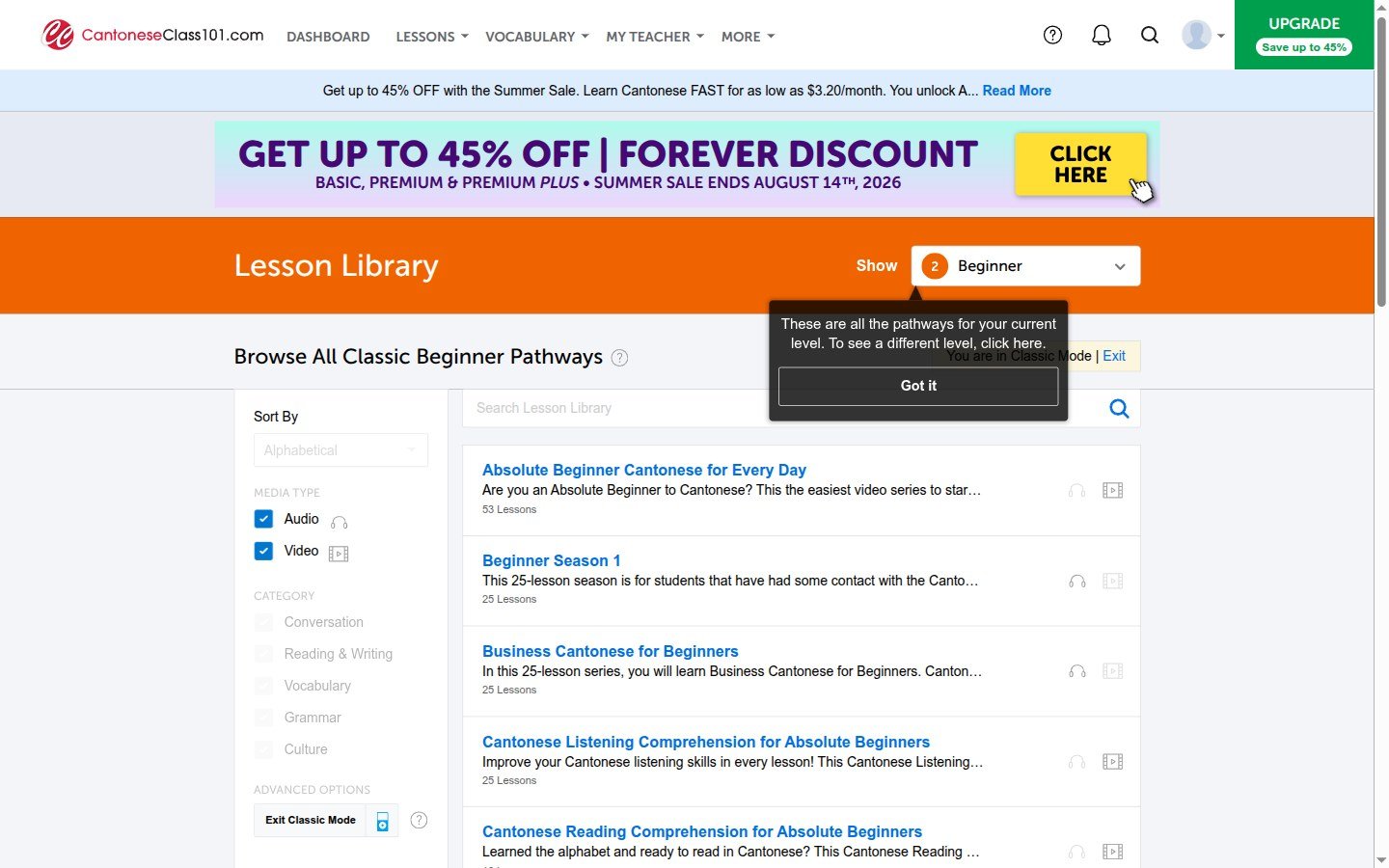
Like the rest of the 101 family, CantoneseClass101 is built around short audio and video lessons taught by native speakers, organised into level-based pathways: Absolute Beginner, Beginner, Intermediate, Upper Intermediate and Advanced, mapped to CEFR levels A1 through C1.
Signing up is painless. You create a free lifetime account with just an email (no card needed), pick your level, and new accounts get a 7-day Premium trial so you can test the paid features before committing to anything. Not sure where you sit? Start at Absolute Beginner and move up later.
Once you’re in, your dashboard hands you a learning pathway for your level, so you’re not staring at hundreds of lessons wondering where to start. The flagship “Level 1 Cantonese” track is 55 lessons with 50 assessments, around 11 hours of core material, and the Beginner level includes the biggest single pathway on the site, a 121-lesson “Core Words and Phrases” season. The whole library is browsable too: find a pathway you like, hit “add to dashboard”, and you’ve built your own syllabus.

Tones, Jyutping and Characters: Does It Handle the Hard Parts?
This is the section that decides the review, and honestly, CantoneseClass101 does better here than I expected from one of the smaller lines in the family.
The tones and pronunciation get a dedicated pathway: the “Ultimate Cantonese Pronunciation Guide”, 10 lessons at Absolute Beginner level built around the sounds that don’t exist in English. Because every lesson on the platform is native-speaker audio with slowed-down playback and line-by-line breakdowns on the paid tiers, your ear gets the constant, repeated exposure that six subtle tones demand. On Premium there’s also a voice-recorder tool that records you and plays your attempt back against the native speaker, which for tone work is exactly the right feature: you can hear your own flat si3 next to a native rising si2 and actually notice the difference.
Jyutping gets a proper standalone resource: the “Cantonese Alphabet” page carries a full syllable chart (initials by finals, with all six tone numbers shown) plus video explainers on how jyutping works and how Cantonese writing fits together. Every lesson’s dialogue and vocab comes annotated with it, so you’re never guessing at a pronunciation from characters alone.
The characters are the genuine surprise. There’s a pathway called “One-Minute Radicals” that teaches the graphical building blocks of Chinese characters in one-minute bites, and it runs to 78 lessons, unusually deep for a smaller Class101 line. Around it sit standalone resources on radicals, the basic rules of stroke order, and printable character practice sheets with stroke order and pronunciation. It won’t replace a dedicated writing app if beautiful handwriting is your goal, but as a route into reading traditional characters it’s far more than the token effort I’ve seen elsewhere.
And on challenge number four, the written-versus-spoken gap? The site has a dedicated article laying out exactly how spoken Cantonese differs from Standard Written Chinese, with side-by-side examples (the table above is built from the same comparison). Most courses never even tell you this gap exists, so finding it addressed head-on is a real point in CantoneseClass101’s favour.
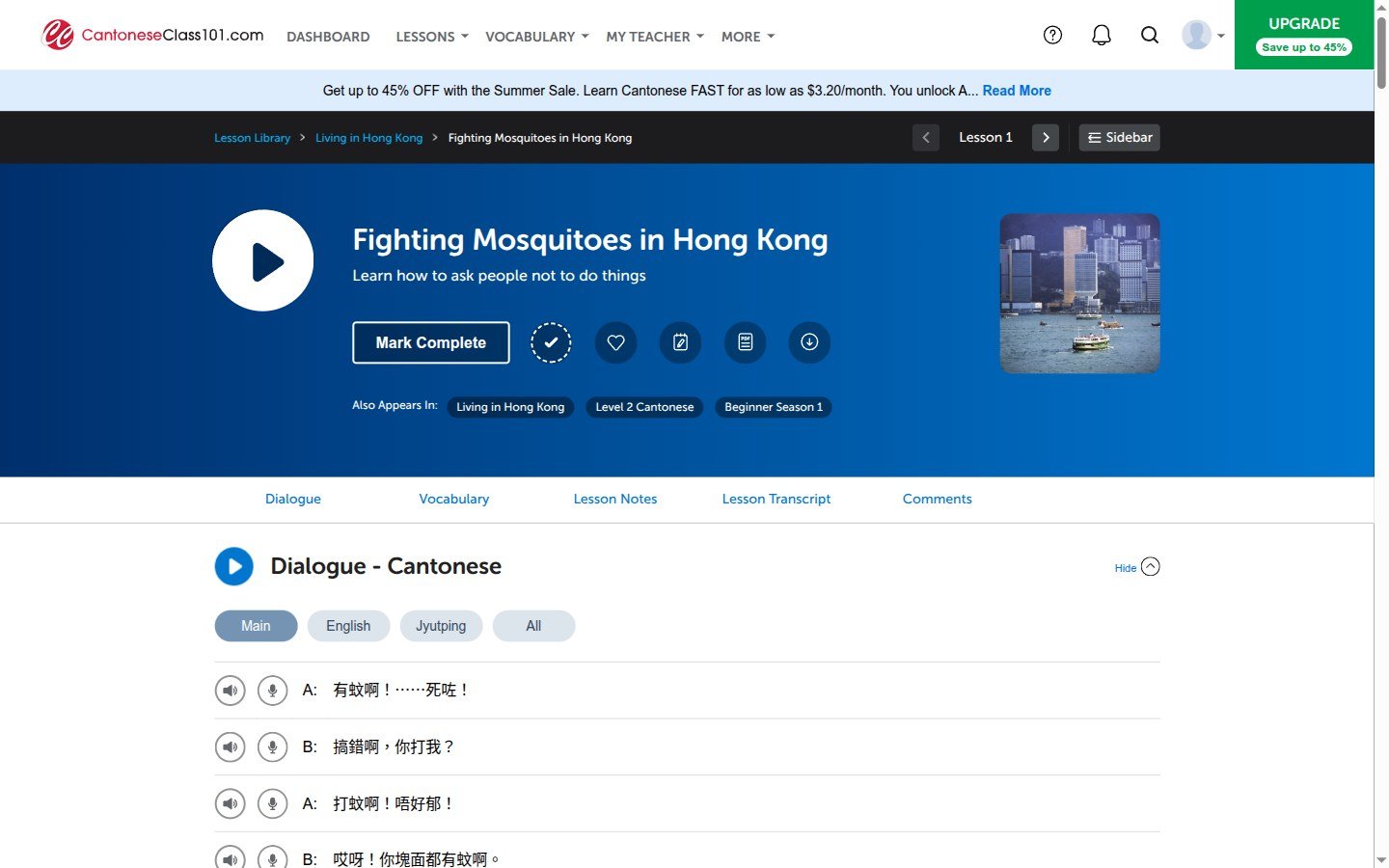
Inside a CantoneseClass101 Lesson
A typical lesson is short (most run 3 to 15 minutes) and follows a consistent shape: a native dialogue, a slow line-by-line breakdown, vocabulary with natural-then-slow pronunciation, a grammar point, and a cultural note. You get the audio, the full scripted dialogue with characters and jyutping, a vocab list, and downloadable lesson notes as a PDF.
The dialogue-first format suits Cantonese well. The dialogues are natural and real rather than stilted textbook exchanges, and independent reviewers single out the listening practice as the platform’s strongest suit, which for an ear-first language is precisely where the strength should be. English usage also tapers off noticeably at the higher levels, so lessons get more immersive as you progress.
The flip side, and it’s a familiar one across the family: there’s too much English chat in the lower-level lessons, so early on you get less Cantonese in your ears per minute than the format promises. It improves as you climb, but expect it at the start.
The Study Tools
On a Premium plan, the lessons are wrapped in a solid set of study tools:
- Spaced-repetition flashcards and a word bank that auto-populate with audio and example sentences straight from your lessons, brilliant for hammering in tone-and-syllable pairs.
- Line-by-line audio dialogue, so you can replay a single sentence in both languages until your ear catches it.
- A Grammar Bank collecting the course’s grammar points in one place.
- Assessments to check a section has actually gone in (the flagship pathways carry 37 to 64 of them each).
- The voice-recorder pronunciation tool, the standout feature for a six-tone language.
- 2,000 core words and phrases as a ready-made vocabulary backbone.
A small honest note: a couple of the extras, like the quiz and the vocabulary slideshow, feel more like padding than genuinely useful study tools. The flashcards, line-by-line audio and recorder are the ones that earn the subscription.

The Mobile App
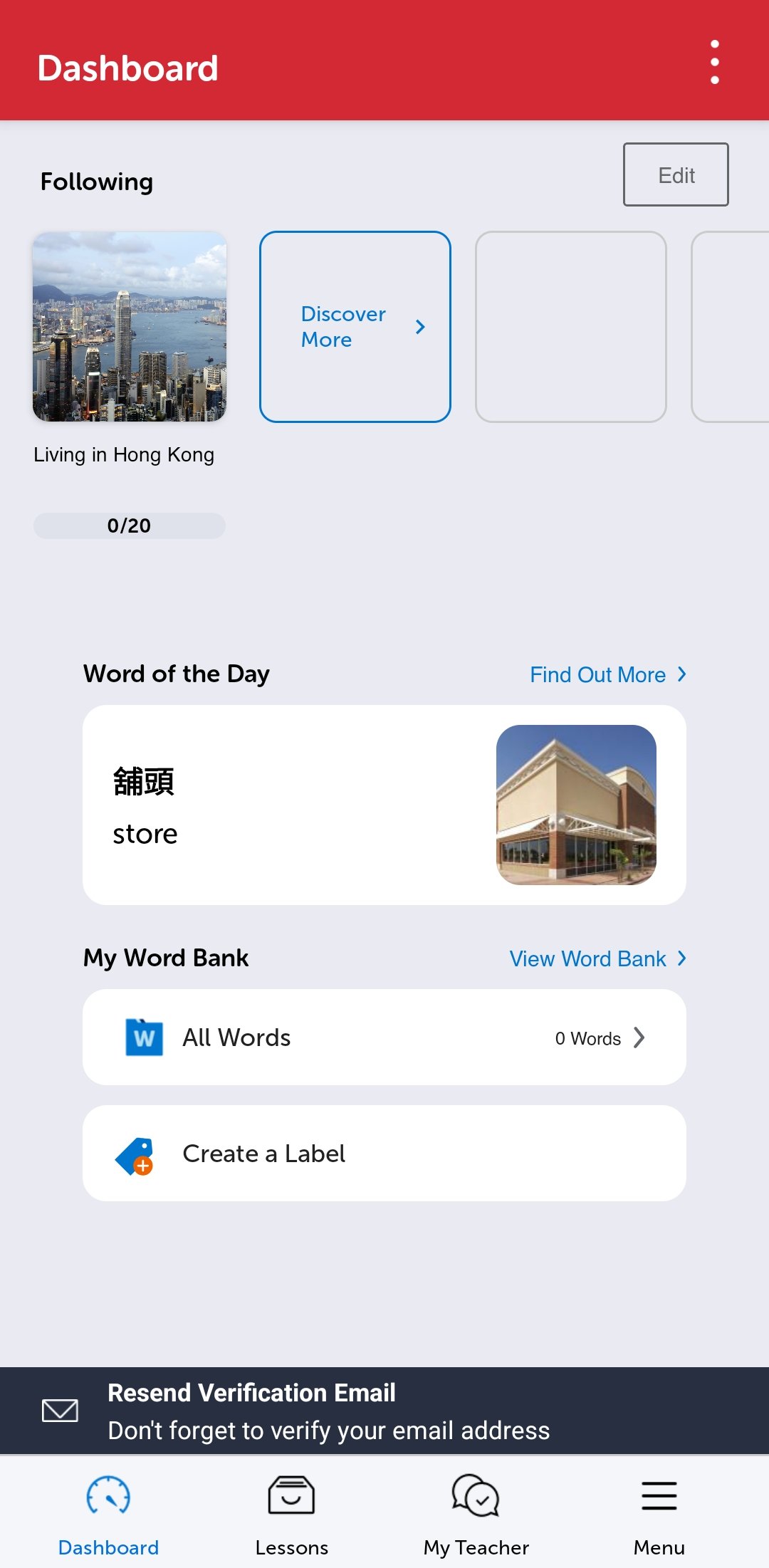
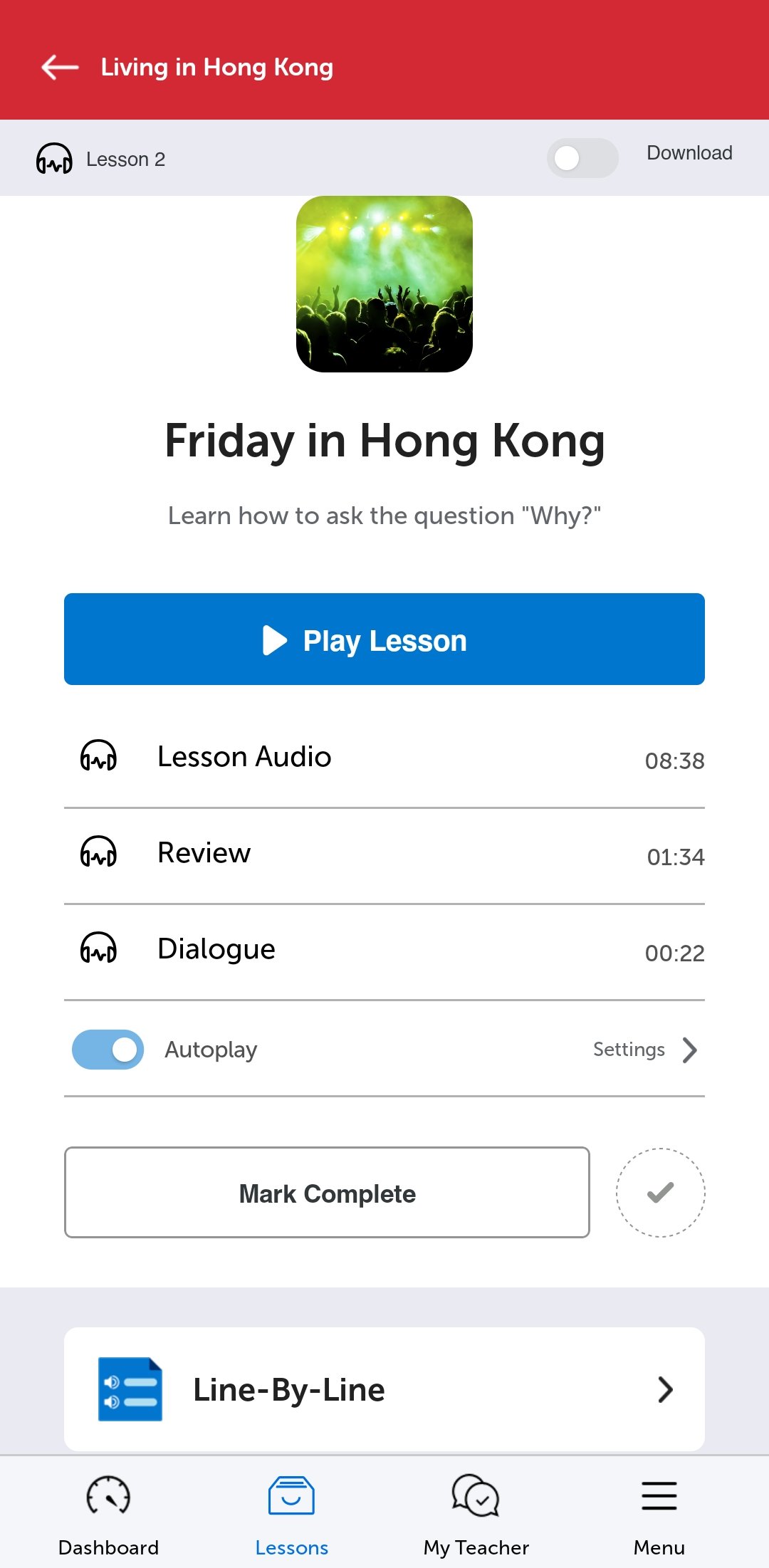
CantoneseClass101 shares one app with the whole Innovative Language family (it’s called “Innovative Language Learning”; you pick Cantonese after installing). It syncs with your account, so a lesson you finish on your laptop shows as done on your phone, and you can download lessons for offline listening on the commute. It’s well rated too, sitting at 4.7 out of 5 across some 34,000 ratings on the App Store.
The usual family caveats apply. The app is gated by your subscription tier just like the website, a few of the best study features live more comfortably in the browser, and there’s a minority-but-real pattern of complaints about the app freezing on some devices until it’s reinstalled. The workaround for the feature gap is the same one I use elsewhere: pull the site up in your phone’s browser when you want the full experience.
What Other Cantonese Learners Say
I dug through the independent reviews to test my own take against other people’s, and the patterns are consistent.
The praise: learners rate it highly as listening practice, with natural, real dialogues taught by native speakers that are singled out as good for the tones specifically. The CEFR-aligned pathway system gets credit for letting you build your own syllabus, the downloadable audio, transcripts and lesson notes make offline study easy, and the flashcards auto-filling with lesson audio saves loads of manual deck-building. At the discounted price, reviewers generally call it good value.
The criticism is worth being upfront about. The big one: advanced content is genuinely thin. The pathway count roughly halves at each step up, from around 19 pathways at Absolute Beginner down to just 5 at Advanced, and independent reviewers say the same thing my own count shows: you’ll likely run out of material past intermediate level, so a long multi-year subscription is hard to justify. Beyond that, the lesson pathways have accumulated over many years and aren’t uniformly well structured, so finding your way around the platform can be confusing; both major independent reviews recommend pairing it with a textbook or structured course rather than using it standalone. And expect aggressive marketing emails after signup.
Pricing and Plans
CantoneseClass101 runs the same four-tier structure as the rest of the family:
| Plan | Roughly… | What you get |
|---|---|---|
| Free | Free forever | A free lifetime account, the first 3 lessons of every series, Word of the Day, 100+ vocab lists, the app, plus a 7-day Premium trial |
| Basic | ~$4/mo | Everything free + access to all lessons and in-depth PDF lesson notes |
| Premium | ~$5–10/mo | Everything in Basic + line-by-line audio, flashcards, word bank, the Grammar Bank, assessments, the voice-recorder tool, and the 2,000 core words |
| Premium PLUS | ~$13–23/mo | Everything in Premium + your own teacher via messenger, hand-graded assessments, personalised guidance, and writing, pronunciation and role-play practice |
A few honest notes on the pricing. The headline per-month figures are based on the longest (24-month) plan, and on top of that Innovative runs a more-or-less permanent discount (often around 45% off list price), so the real price depends heavily on the billing period and whatever sale is running; check the checkout before you commit, and know that paying month to month costs noticeably more than the headline numbers suggest. There’s a 60-day money-back guarantee, which takes the risk out of trying Premium, and a lifetime-access option shows up periodically at a steep discount if you know Cantonese is a long-term commitment. Expect the usual upsell banners nudging you up the tiers; mildly annoying, easy to ignore.
For most people, Premium is the sweet spot: that’s the tier with the flashcards, the line-by-line audio and the voice recorder, which are exactly the tools a six-tone language needs. Premium PLUS only makes sense if you specifically want a teacher correcting your tones and writing, which, to be fair, is the closest thing the platform has to live feedback.
Pros and Cons
Pros
- Loads of native-speaker audio with line-by-line playback, exactly what six subtle tones demand.
- A voice-recorder tool that plays you back against the native speaker, the right feature for tone work.
- Jyutping taught properly, with a full syllable chart and every lesson annotated.
- An unusually deep character pathway, 78 one-minute radical lessons plus stroke-order resources.
- Honest coverage of the written-versus-spoken gap, which most Cantonese resources never mention.
- Genuinely affordable, with a usable free tier and a 60-day guarantee.
Cons
- Advanced content is thin, so plan to outgrow it after intermediate level.
- Too much English chat in the lower-level lessons.
- Pathway organisation is uneven, and the platform can be confusing to find your way around.
- Some extras (quiz, slideshow) feel like padding.
- Aggressive marketing emails, plus the shared app is lighter than the website.
Who CantoneseClass101 Is (and Isn’t) For
It’s a brilliant fit if you’re starting Cantonese from zero or working through the beginner and intermediate levels; if you learn well by ear and want natural dialogues in your headphones on the commute; if you want jyutping and traditional characters taught properly rather than skated over; or if you’re coming from Mandarin and need your ear retrained on six tones instead of four.
It’s less ideal if you’re already a strong intermediate or advanced speaker, because the catalogue thins out exactly where you’d be studying; or if you want one resource to do everything, since the grammar is taught as it comes up in dialogues rather than as a sequenced syllabus. In those cases, use CantoneseClass101 as your listening-and-vocabulary core and pair it with a structured textbook and real conversation practice.
The Verdict
CantoneseClass101 gets the fundamentals of this particular language right. It floods your ear with native audio and gives you the recorder to check yourself against it, it teaches jyutping properly while being honest that natives won’t know it, its 78-lesson radicals pathway is a genuinely deep route into traditional characters, and it’s one of the only resources anywhere that tells you upfront about the written-versus-spoken gap. The catalogue is front-loaded, deep at beginner and intermediate and thin at advanced, and for once that’s a forgivable shape: Cantonese’s hardest walls, the ear and the script, are at the beginner end anyway. But it does mean this is a course you’ll eventually graduate from rather than grow old with, and that honesty costs it a few points against the flagship Pod101 lines.
My rating: 4.2 out of 5.
If you want to give it a go, you can start with CantoneseClass101 here. That link also carries our reader discount (Innovative’s near-permanent deal is applied for you at checkout), so you won’t be paying full list price. Set up a free account, run through the pronunciation guide, and see if your ear starts catching those six tones.

Social