



ChineseClass101 Review: Is It the Best Way to Learn Chinese?

Full disclosure: This post contains affiliate links. ?
What is ChineseClass101?
ChineseClass101 is part of the Innovative Language family, built to get you understanding and speaking Mandarin Chinese from the very first lesson. Audio and video lessons taught by native speakers are its main feature.
- what it’s for:
- First contact with Mandarin, listening practice, vocabulary, the tones, pinyin and characters, and phrases and conversation material
- languages:
- Mandarin Chinese
- level:
- Absolute Beginner to Advanced
+ PROS
- tone & pronunciation training with masses of native audio
- records-and-compares for your tones
- supports simplified + traditional
- guided learning path
- strong for vocab & listening, brilliant lesson-notes PDFs
- affordable, free tier + 60-day guarantee
- CONS
- too much English even at higher levels
- light on character writing
- grammar bank thin + advanced content thins out
- best as an audio-and-vocab engine (pair with a grammar reference + character app)
- the mobile app doesn’t have all the best features
Mandarin Chinese is one of the hardest languages an English speaker can take on. The US Foreign Service Institute puts it in its very top “super-hard” category, alongside Japanese, Korean and Arabic, and reckons it takes around 2,200 class hours to reach professional fluency. So when you pick your main Chinese resource, you want one that actually grapples with the things that make Chinese Chinese, not a generic app that treats it like Spanish with funny symbols.
I’ve been reviewing the Innovative Language “101” courses for a while now (you might have seen my SpanishPod101 and JapanesePod101 reviews), and I’ve leaned on these podcasts myself over the years, as have loads of the Fluent in 3 Months team on their own language missions. ChineseClass101 is the Mandarin member of that family.
So what I’m weighing in this review is whether ChineseClass101 handles the bits of Chinese that actually trip people up.
What Makes Chinese So Different (and Where a Course Has to Earn Its Keep)
Before we get to the platform itself, let’s be clear about what you’re signing up to learn. Here are the five things that set Mandarin apart from a European language, and they’re the yardstick I’ll measure ChineseClass101 against.
1. Tones. This is the big one, the wall that stops most beginners. Mandarin has four tones plus a neutral one, and the tone changes the meaning of the word, not just its mood. The classic example: ma said with a high flat tone (mā) means “mother”, with a rising tone (má) means “hemp”, with a dipping tone (mǎ) means “horse”, and with a sharp falling tone (mà) means “to scold”. Same syllable, four completely different words. English simply doesn’t use pitch this way, so your ear has to learn a skill it has never needed. Any Chinese course worth paying for has to drill tones hard, with masses of native audio.
2. The characters (Hanzi). There’s no alphabet. Chinese is written with characters, each one a whole syllable and usually a whole unit of meaning, and you need somewhere around 2,000 to 3,000 of them just to read a newspaper. On top of that there are two versions: simplified characters (used in mainland China and Singapore) and traditional characters (used in Taiwan, Hong Kong and Macau). Deciding which to learn is one of the first calls you’ll make, so it helps if your course supports both.
3. Pinyin, the scaffold you eventually have to drop. Pinyin is the system that writes Chinese sounds in our Latin alphabet (nǐ hǎo for 你好). It’s a brilliant on-ramp, and it’s how you’ll first learn pronunciation and tones. But it comes with a trap built in: lean on it too long and you never actually learn to read real Chinese. The other trap is sneakier: pinyin letters don’t sound the way an English speaker expects (q, x and zh are nothing like their English equivalents), so you have to learn the sounds, not guess them.
4. Measure words. In Chinese you can’t just say “three books”. You need a little classifier word between the number and the noun, and the word changes depending on what you’re counting: 本 (běn) for books, 张 (zhāng) for flat things like paper or tickets, 个 (gè) as the catch-all. There are dozens of them. It feels fiddly at first, then becomes automatic, a bit like learning which preposition goes with which verb in English.
5. The good news: the grammar is refreshingly simple. Once you’re past the tones and the characters, Chinese grammar is far kinder than most European languages. There’s no verb conjugation, no tenses, no genders for nouns, no plural endings, no cases. A verb is the same whether it’s “I”, “you” or “they” doing it, and whether it happened yesterday or will happen tomorrow. Word order is mostly Subject-Verb-Object, just like English. This is a big part of why I’ve argued before that Chinese is easier than its reputation suggests. So the difficulty in Chinese is front-loaded onto pronunciation and writing, and a good course should be pouring its energy exactly there.
Keep those five in mind. Here’s how ChineseClass101 stacks up against them.
Getting Started with ChineseClass101
Like the rest of the 101 family, ChineseClass101 is built around audio and video lessons taught by native speakers, organised into level-based pathways: Absolute Beginner, Beginner, Intermediate, Upper Intermediate and Advanced. The levels are loosely mapped to the HSK exam bands, so you’ve got a rough sense of where you sit against the official standard.
Signing up is painless. You create a free lifetime account with just an email (no card needed) and pick your level. Not sure where you sit? Choose Absolute Beginner; you can move up later. New accounts also get a 7-day Premium trial, so you get a proper taste of the paid features before deciding anything.
Once you’re in, your dashboard hands you a learning path for your level, so you’re not left staring at a library of well over a thousand lessons wondering where to start. That guided pathway is one of the platform’s real strengths; the flagship “Level 1.1 Can Do Chinese” track for absolute beginners alone runs to over a hundred short lessons with built-in assessments.

Does It Handle the Tones?
This is where ChineseClass101 is at its best, and it’s the most important box for a Chinese course to tick. Because every lesson is built on native-speaker recordings with slowed-down, line-by-line playback, you spend your whole time hearing the tones in real words rather than squinting at tone marks on a page. That ear training is exactly what Mandarin demands.
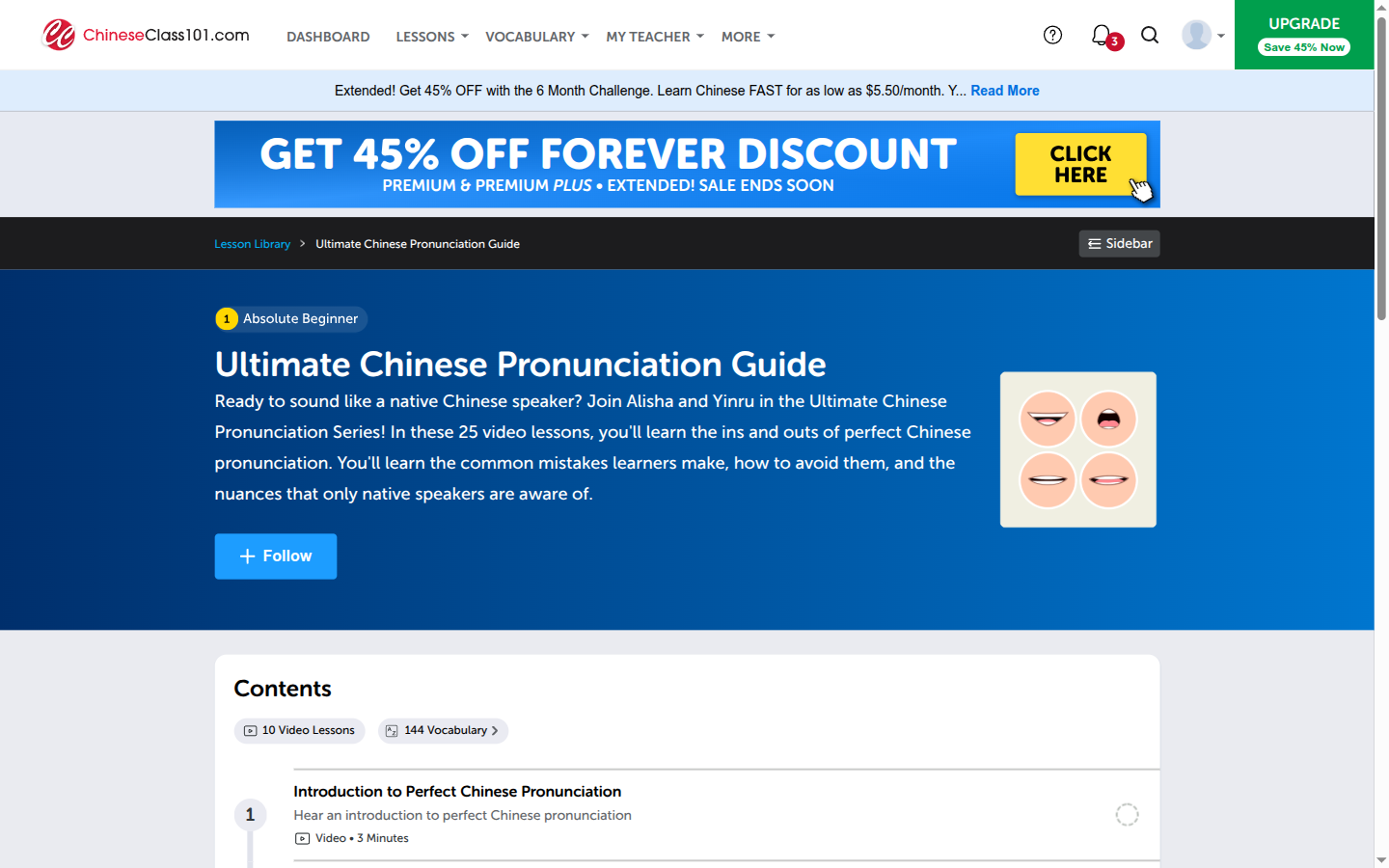
It also has a dedicated “Ultimate Chinese Pronunciation Guide” series that walks you through the four tones, the tone-change rules (like the two third-tones-in-a-row shift) and the tricky pinyin sounds from scratch, plus an interactive pinyin chart you can click to hear every syllable-and-tone combination. On a Premium plan you also get a voice-recorder tool that records you and lets you compare your attempt against the native audio, which is really useful for checking your tones aren’t drifting.
Does It Teach the Characters Properly?
Here’s where I have to be straight with you, because it’s the platform’s weakest area and the one thing a Chinese learner most needs to know before signing up.
The good news: ChineseClass101 doesn’t hide the characters. Every dialogue can be toggled between simplified characters, traditional characters, pinyin and English, so you can choose your script and read along in real Hanzi from day one. There’s a free stroke-order series covering the fundamental characters, short radical lessons that teach the building blocks characters are made from, and downloadable writing worksheets inside lessons.
The honest news: this is not the resource that will turn you into a confident character writer. The teaching leans heavily on pinyin, especially early on, and the hands-on writing practice is thin (proper hand-graded handwriting feedback only comes with the top Premium PLUS tier). If your goal is to write Chinese by hand, you’ll want to pair ChineseClass101 with Skritter for handwriting practice, or Pleco as your dictionary. As a way to recognise characters and build reading through listening, it does a solid job; as a handwriting course, it doesn’t really try.
Inside a ChineseClass101 Lesson
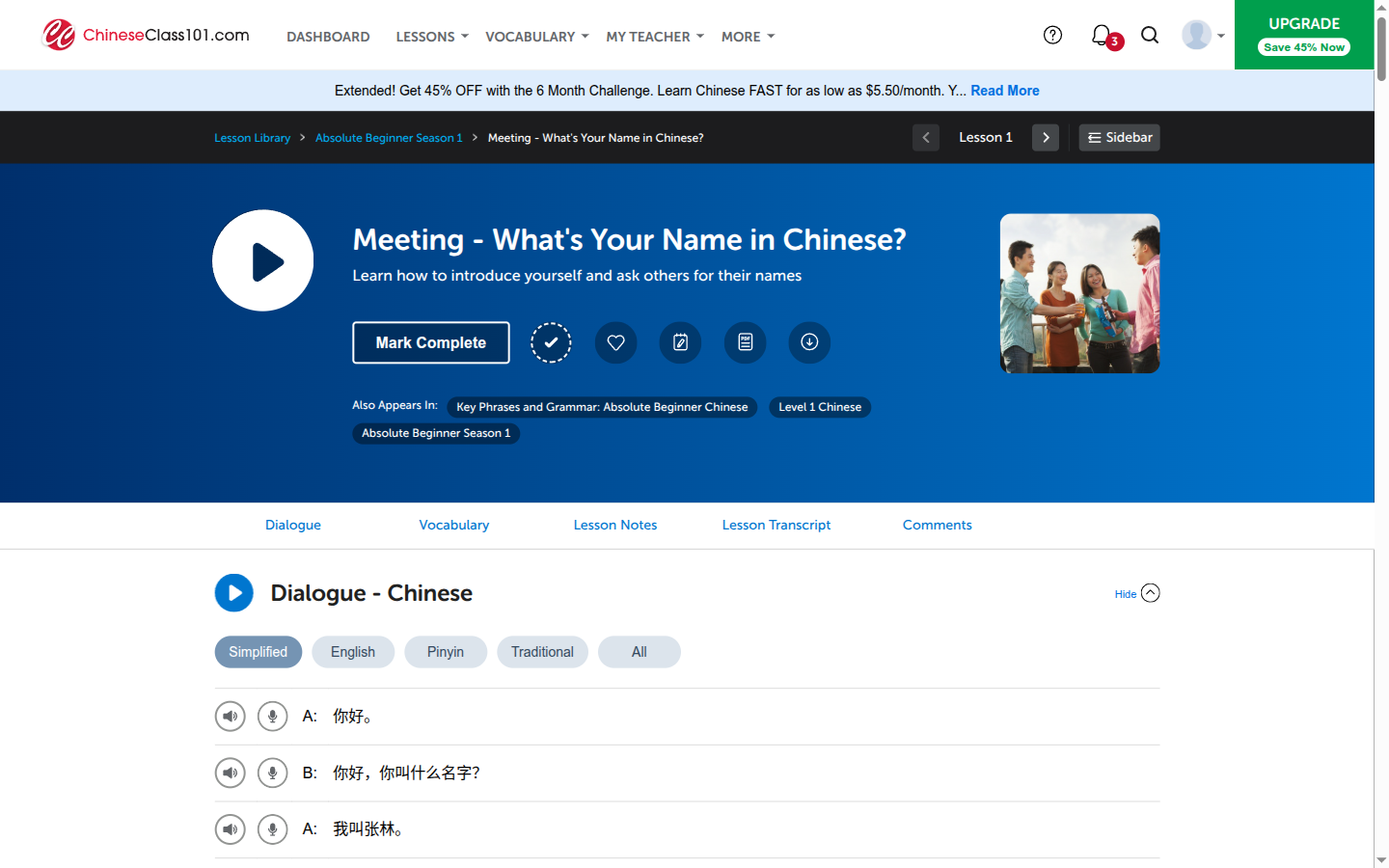
A typical lesson is short (most run roughly 3 to 15 minutes) and follows a consistent shape: a native dialogue, a slow breakdown, vocabulary with natural-then-slow pronunciation, a grammar point, and a culture note. You get the audio, the full scripted dialogue, a vocab list, and downloadable lesson notes (a PDF) that dig into the grammar and cultural context. Those PDF lesson notes are a standout, reviewers across the web rate them as some of the most thorough of any course like this.
This format suits Chinese’s quirks well. The dialogue-first approach drip-feeds vocabulary and tones in context, which beats memorising tone tables, and the lesson notes are where the grammar and measure words get unpacked in writing. One fair warning that comes up again and again: the hosts do loads of explaining in English, even in higher-level lessons. For a beginner that hand-holding is reassuring; if you’re chasing pure Chinese immersion, it can feel like there’s too much English padding around the actual Mandarin.
The Study Tools
On a Premium plan, the lessons are wrapped in a solid set of study tools:
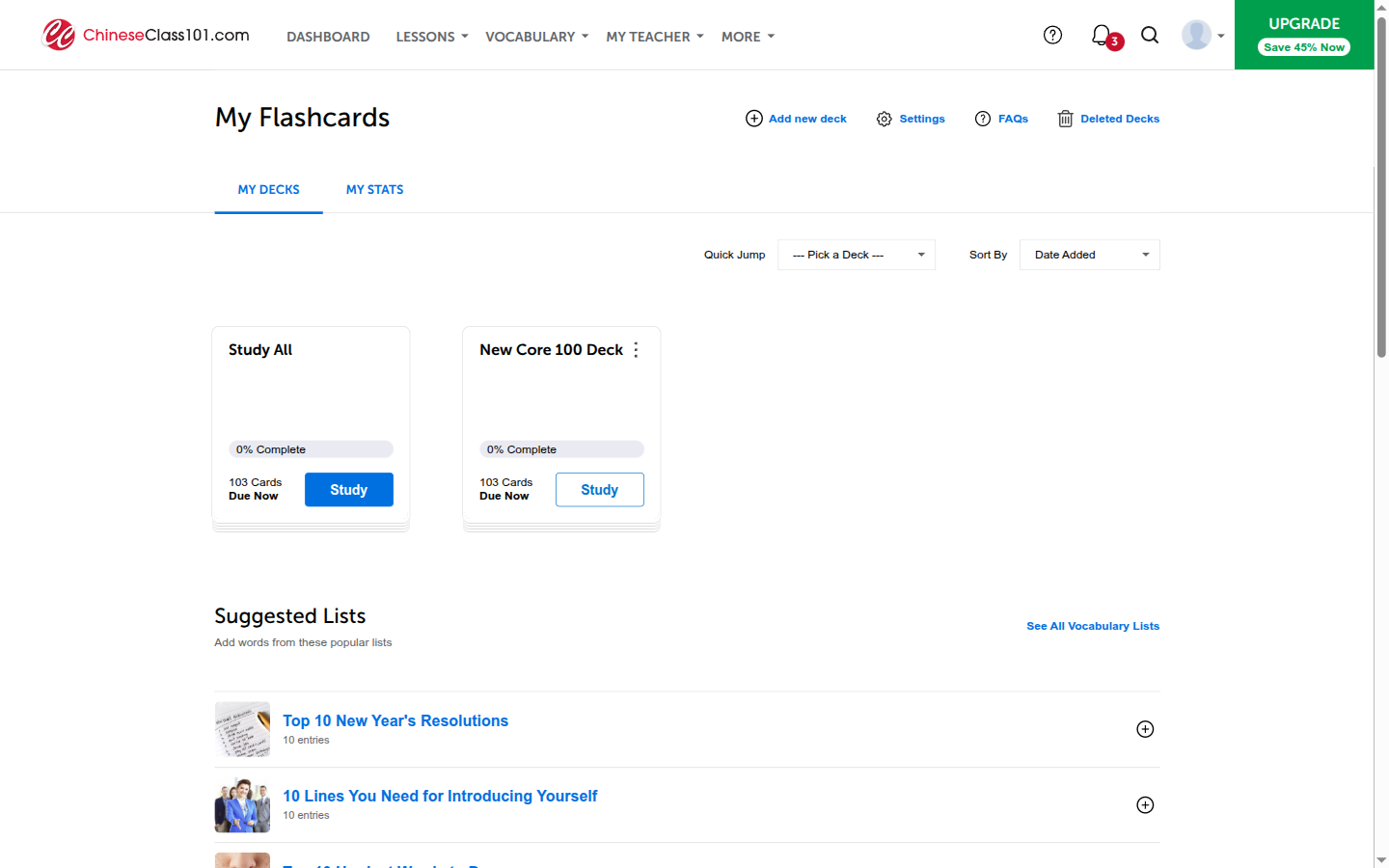
- Spaced-repetition flashcards and a personal word bank, where you add words straight from any lesson, perfect for hammering home Chinese vocabulary (and pinning a tone to each new word).
- A grammar bank collecting the grammar points in one place (handy as an index, though it’s fairly bare-bones, the real grammar lives in the lesson-note PDFs).
- Multiple-choice assessments to check you’ve actually absorbed a section.
- A pronunciation tool that records you and compares against the native audio, especially handy for tones.
- 2,000 core words and phrases as a ready-made vocabulary backbone (the free tier gives you the first 100).
The Mobile App
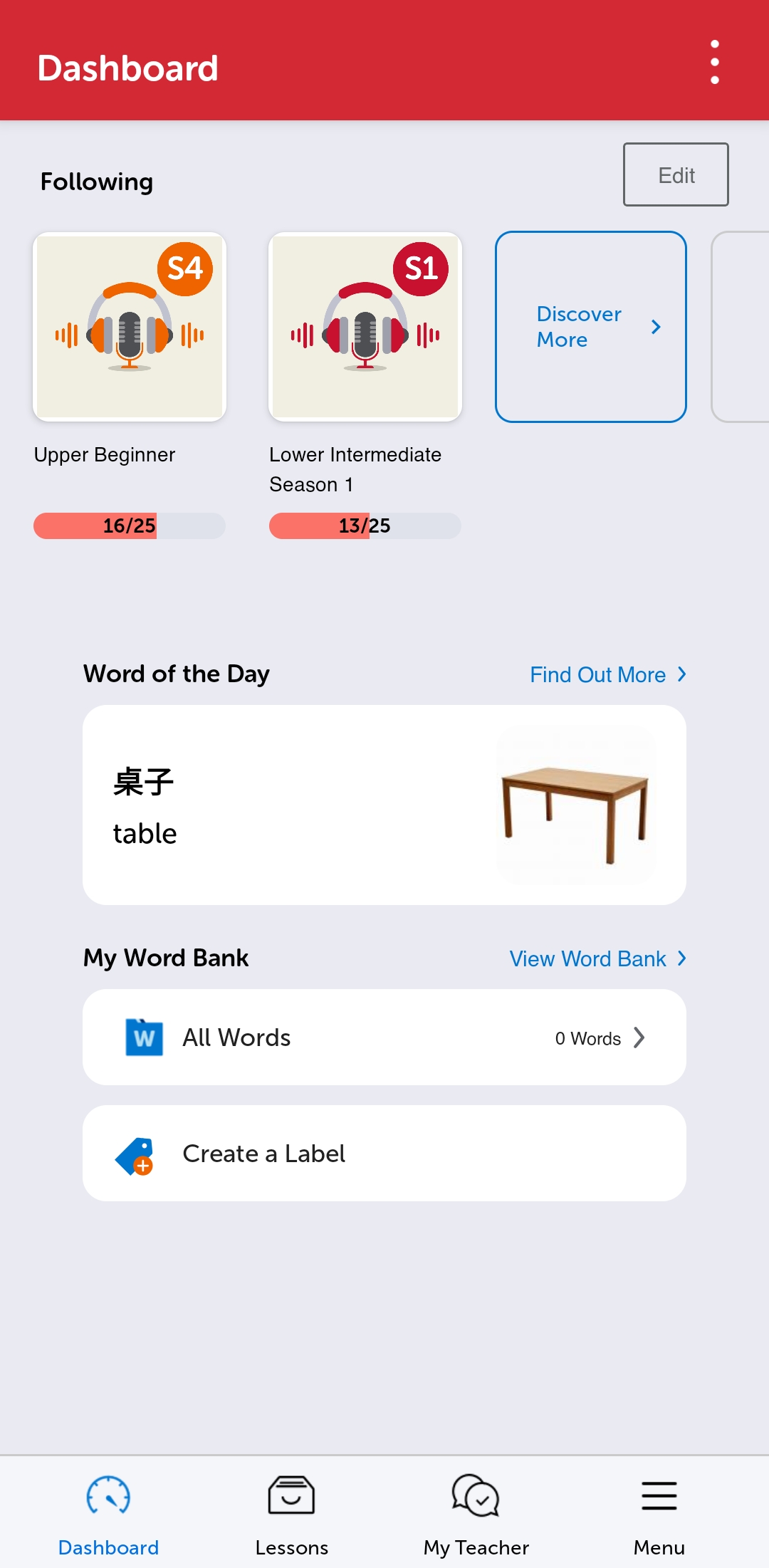
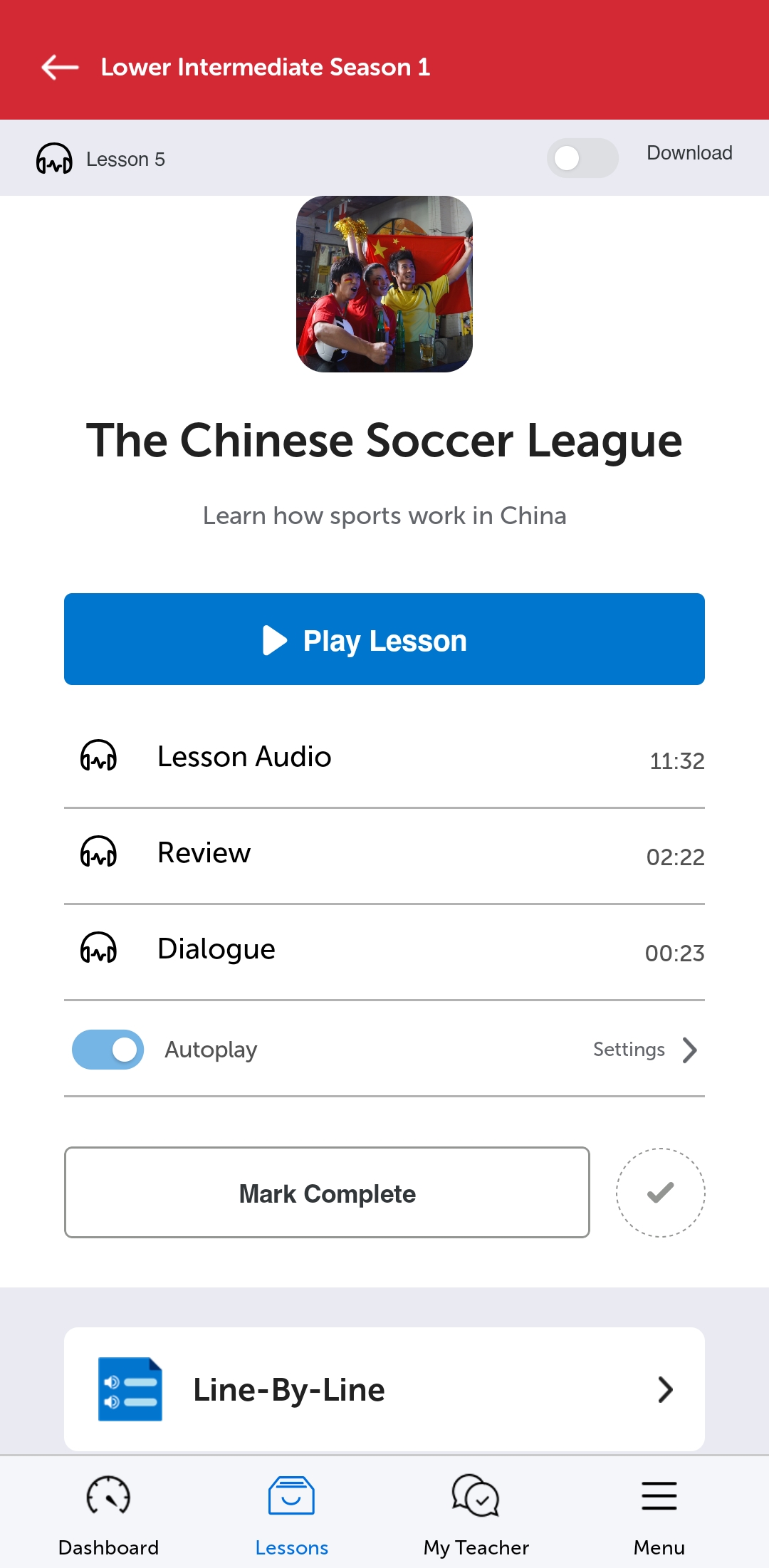
There’s an Innovative Language app that syncs with your account, so lessons you finish on your laptop show as done on your phone. It’s clean and handy for listening on the go, which is exactly how loads of people use these courses, as a podcast for the commute.
The same caveat applies as on the other 101 courses, though: the app is a slightly stripped-back version of the website. A few of the best web features (the voice recorder among them) aren’t fully there, and you can’t always follow your structured study path inside the app. The workaround is the same one I use elsewhere: pull the site up in your phone’s browser when you want the full experience.
What Other Chinese Learners Say
I dug through a stack of reviews and Chinese-learning forums to double-check my own take. A few clear patterns came up.
The praise is consistent. The audio and listening lessons are repeatedly called the best thing about it: the format is podcast-friendly and easy to turn into a daily habit. The vocabulary breadth and the depth of the written lesson notes get singled out a lot, as does the price (it’s one of the cheaper paid options out there). Beginners especially say the guided pathways got them speaking sooner than they expected.
The criticism is worth being upfront about, because no resource is perfect:
- Too much English. Even in higher-level lessons, a fair chunk of each episode is the hosts chatting in English. Beginners tend to like the support; immersion-seekers find it dilutes the Chinese.
- It runs out of steam past intermediate. The beginner and lower-intermediate content is excellent and well-structured; the advanced material is patchier. Many learners treat ChineseClass101 as their beginner backbone and move to something heavier later.
- Light on grammar mechanics and character writing. As above, the grammar bank is sparse and the writing practice is limited. The common fix is to pair it with a free grammar reference (AllSet Learning’s Chinese Grammar Wiki is the one learners name most), and Skritter for handwriting practice, or Pleco as your dictionary.
None of that is a dealbreaker. It just means ChineseClass101 is best thought of as a brilliant audio-and-vocabulary engine rather than your one-and-only resource, which is how most people use it anyway.
Pricing and Plans
ChineseClass101 runs the same four-tier structure as the rest of the family:
| Plan | Roughly… | What you get |
|---|---|---|
| Free | Free forever | First 3 lessons of every pathway, Survival Phrases, Chinese Word of the Day, 100+ vocab lists, the app, plus a 7-day Premium trial |
| Basic | ~$4/mo | Everything free + access to all lessons and in-depth lesson notes |
| Premium | ~$5–10/mo | Everything in Basic + flashcards, word bank, line-by-line audio, assessments, grammar bank, pronunciation tool, 2,000 core words |
| Premium PLUS | ~$13–23/mo | Everything in Premium + your own teacher, hand-graded work (including handwriting) and personalised guidance |
A few things worth knowing about the pricing. The headline per-month figures are based on the longest (24-month) plan, so the actual price depends on the billing period you pick, check the checkout. Innovative also runs a more-or-less permanent discount (the exact amount varies), so you should rarely if ever pay the “full” list price. And like the other 101 sites, you’ll get a fair few upsell banners nudging you towards the higher tiers, mildly annoying but easy to ignore. There’s a 60-day money-back guarantee, which takes the risk out of trying Premium.
For most people, Premium is the sweet spot: that’s the tier where the flashcards, pronunciation tool and full lesson features live. Premium PLUS only makes sense if you specifically want a teacher checking your work, and given how light the writing practice is otherwise, the hand-graded handwriting feedback is the one thing that actually tempts me towards it for Chinese.
Pros and Cons
Pros
- Excellent tone and pronunciation training, with native audio everywhere and a record-and-compare tool, exactly what Chinese demands most.
- Supports both simplified and traditional characters, toggle whichever you’re learning.
- A guided learning path so you’re never guessing what to study next.
- Strong for vocabulary and listening, with unusually thorough lesson-note PDFs.
- Genuinely affordable, with a usable free tier and a 60-day guarantee.
Cons
- Too much English in the lessons, especially frustrating if you want immersion.
- Light on character writing, lean on it for recognition, not handwriting.
- The grammar bank doesn’t go deep, and advanced content tails off too.
- Not a one-stop shop, ideally paired with a grammar reference and a character app.
- The app is a lighter version of the full website.
Who ChineseClass101 Is (and Isn’t) For
It’s a brilliant fit if you’re an absolute beginner who wants a clear, guided path into Mandarin; someone who learns well by ear and wants Chinese in your headphones on the commute; anyone who wants to nail tones early with lots of native audio; or anyone building a big vocabulary fast.
It’s less ideal if you want a single do-everything resource, are chasing full Chinese immersion with minimal English, or want to seriously master handwriting characters. In those cases, use ChineseClass101 for tones, listening and vocabulary, and bolt on a grammar reference and a character-writing app.
The Verdict
ChineseClass101 gets the most important thing right: it takes the hardest parts of Chinese seriously. It drills tones with the native audio your ear needs, it lets you read in simplified or traditional from the start, and it builds vocabulary and listening better than almost anything else at the price. It’s not a do-everything course, the character writing is light and there’s more English than immersion fans will want, but for the listening and vocabulary side of your Chinese study, especially in your first year, it’s hard to beat for the money.
My rating: 4.5 out of 5.
If you want to give it a go, you can start with ChineseClass101 here. That link lands you on the sign-up page with Innovative’s discount already applied, so if you do upgrade to Premium you won’t pay the full list price. Set up a free account, take it for a spin, and see if learning Chinese by ear clicks for you.

Social