


Six Life Lessons from Being a Blogger for Six Years

Full disclosure: This post contains affiliate links. ?
This birthday essay was published on July 10, 2015. Ages, anniversary counts, audience figures, platform names and career milestones below describe that moment.
Today, July 10th, is my 33rd birthday and my twelve-year travel anniversary (that’s 12 years of non-stop travel since I graduated from university and hit the road).
Since I've already contemplated the lessons I've learned from years of travel before, today I’ve decided to look at another important life achievement.
It turns out that I’ve been blogging on this site now for over six years. This is a major milestone for me, because it means that I’ve now been writing publicly about travel and language learning for longer than I travelled and learned languages without a blog. This is pretty much now the only life I know!
When I created my WordPress account six years ago, I had no idea where it would lead me. I wasn't trained in writing. I wasn't sure if I would be interesting enough for people to actually read my stuff. But I took the chance anyway, threw myself into becoming a blogger, and that choice led to me running a large language-learning blog and writing a published book!
You may think that travelling while blogging is hardly different from just travelling, apart from punching a keyboard a bit more often. Not really. Blogging, writing a book, sharing my life in public, speaking at events, meeting language learners from around the world who have read my words, and feeling the highs and lows of public work made those six years completely different from the previous ones.
So today, I'm sharing with you the life lessons I've learned from blogging my experiences as a traveller and language learner for the past six years.
A note from the Fluent in 3 Months team before we get started: You can chat away with a native speaker for at least 15 minutes with the “Fluent in 3 Months” method. All it takes is 90 days. Tap this link to find out more.
1. Telling a Story is A Great Way to Help People

Coming from an engineering background, I used to think that facts and data would be the best way to convince me of anything. To this day I’m still skeptical about many things that other people are confident are true, but don’t have the facts to back up. I'm a humanist (a.k.a. atheist), roll my eyes whenever I hear someone asking me what astrological sign I am, and when I hear someone make an extraordinary claim, then I want to see heaps of evidence to back it up.
That said, many of the biggest decisions I’ve made had nothing to do with facts, data or science.
No amount of convincing studies would have pushed me into language learning. What convinced me? People and their stories. All the people I met who had come to Spain, where I was living, started from scratch themselves, then achieved an ability to communicate in a language that for a long time I believed wasn’t possible for me.
Sometimes the best way to help people, or convince them to help themselves, is to show them your story. If it’s relatable, all the better. It’s why whenever I'm speaking somewhere, the very first thing I tell people is that I only spoke English until the age of 21. I tell my story, rather than giving advice.
When you tell your story, you inspire people to craft their own story between the lines of yours.
If you've considered becoming a writer or blogger, even if you don't see yourself as much of a writer, ask yourself: do you have a story that can help people, inspire them or make them laugh? In my experience, those are the main ingredients of a successful blog.
2. The Best Way to Learn is By Making Mistakes
I find it incredibly unfortunate when people believe that they’re stuck as they are, and they’ll never be able to change. I often meet people who believe their abilities and achievements are set in stone. They may only have been alive 20 years, but they’ve already decided their destiny.
While some people need a hell of a lot of encouragement to achieve great things, I believe I’ve never met anybody who doesn’t have the potential to do something incredible.
In the summer of 2009, I registered the domain name of this website and wrote my first blog post. I had never written more than just emails my entire life (outside of exam situations). Writing wasn’t something that was natural to me, but like with everything else, I learned it as I went along.
The idea of being a professional writer when I saw myself as just a maths-and-computers nerd was nothing short of absurd. But I gave it a go!
An important part of this is listening to what my readers have had to say. I don't have to worry about always being perfect, because my readers will tell me if there's a problem. My first web design was messy and hard to navigate, and people told me that, so I was able to fix it! My first few blog posts had loooong blocks of text, and someone emailed me to say they'd love to see more pictures, so I started doing that!
I've surprised myself that I can actually be good enough at this writing thing to make a living from it. But a lot of it comes from putting yourself out there, and not worrying too much about being perfect.
And I’ve found that this can work with so many things. I’ve experimented with a lot more beyond blogging. Some have been successes, and some have been huge flops. Yet with every mistake I’ve made, I’ve learned something new.
3. Authority on Subjects is a Curious Thing

By 2015, writing this blog had led to a National Geographic Traveler of the Year award, an international bestselling print book, TEDx talks and TV appearances. Our analytics at the time also showed the blog being read by almost a million people a month.
But what is kind of crazy, is that I was almost as much an authority on travel and language learning in 2009 as I am now. The main thing that’s really changed is that I understand how to best get the message out to more people.
Ultimately, a lot of authority is more about understanding how to get through to large groups of people, than it is about someone being more clever than his or her counterparts. I have found that this applies not just online, but in book publishing, people with their own TV shows, and even those who have gone through the much more demanding academic system.
There are language learners that I definitely feel are more capable than I am of picking up multiple languages, but when they write about it, they may not use a blog design that is easier to navigate or do social media as well.
This is why making it about the story is so important. Rather than abuse authority and tell people you are the guru ninja hotshot Jedi whose advice is good as gold, I find people appreciate it more when I try to make it about simply sharing my story and hoping people take inspiration from that.
4. Everybody is Still Learning, Even Influencers
One of the most interesting things about getting into blogging, writing and speaking at conferences, is that I have met some extremely influential people. While I admit that there was one occasion when I “fan-boyed” out, all other times when I've met famous people, I've actually found that speaking to them usually shows me that they are just “normal” people, thrown into unique circumstances.
Along the same lines as what I said above, I remember that they may have gotten to where they are through a combination of being good at what they write/speak about and perhaps a lot of marketing know-how, or sometimes even just luck.
If anyone, no matter how many Twitter followers or New York Times bestselling books they have, tells you something is definitely true, look past the status and evaluate the advice itself.
When I've met some people whose faces I'd been seeing, or words I'd been reading for years and had coffee with them, I always remember that they are still learning themselves. Even if they have a million dollars and are Time's man of the year, they still aspire to something.
I count myself very lucky that I've had the chance to meet some very influential people in the last six years, but I always remember that they are still people.
5. Don't Take Other People Having a Bad Day Personally
Writing and getting through to so many people has a lot of great consequences, but there is one huge downside: since everything scales up the more people you reach, that has to include negative feedback.
I never could have imagined that blogging about language learning could bring incredibly hateful comments out of the woodwork, but I have been proven wrong time and again.
There are those who hate the title of the blog, those who hate ambitious language projects, those who think that my idea of conversational fluency around B2 is not only wrong but arrogant, those who have got mad at me for having a blog when they believe they deserve an audience more, and others who don't seem to be mad at anything specific and will just call me random names because others did too.
At the worst of the negativity, when I was still getting used to it and hadn’t grown thick enough skin yet, but was going through a rough patch in my travels and feeling more angry myself too, I made the huge mistake to keep engaging with people when clearly the purpose of the exchange was for both parties to prove that the other one is wrong.
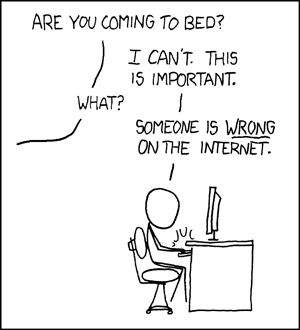
It’s really hard to think logically when you are getting so much negativity directed at you personally, but eventually I started to see how pointless the exchanges were. At first I just decided that a “don't feed the trolls” philosophy was all I needed. But then I started to meet some of these people in person and see the other side of the story.
For instance, once during my book tour I made it to a town where someone came up to me and said sorry. I was very confused because I had just met him, and was trying to think if he asked me a weird question during my speech. And then he told me his username, and I instantly remembered who it was based on some mean things he had said to me.
But he said that having met me in person, he sees that I wasn't all these bad things he thought I was. He saw that I genuinely wanted to help people learn languages, despite the impression he had decided to make of me. I gave him a hug to tell him there were no hard feelings!
The internet is an amazing thing, but it can dehumanise how people interact and make it feel as though you are arguing with a representation instead of a person. It is incredibly hard to keep this in mind when people are making personal attacks on you, but I've found that encouraging it helps nobody.
You simply can’t convince everyone. Even a positive or neutral message may attract unhelpful negative feedback, which is different from useful criticism. My philosophy now is to shrug my shoulders, think that perhaps the other person is having a bad day, and do something else. It has made my life online way less stressful!
6. Never Take People's Positivity for Granted: Writing is Definitely Worth It
When you read the above, you may be surprised and think that it's rough to write publicly if negativity comes eventually no matter what you do.
You may get 99 amazing emails or comments, but that one bad comment can still stick with you and ruin your day. Negative experiences often grab our attention more strongly than equally positive ones.
Knowing that bias does not make the feeling disappear, but it can help you avoid giving one bad exchange all your attention.
Because of the nature of what I write, I do get a lot of thank-yous. People email me, tweet me, write comments on posts, come up to me in person to shake my hand, make thank-you YouTube videos for me, write thank-you blog posts, and say kind things to their friends about me.
At the busiest point, I even received more than a thousand emails in a day from people saying they appreciated something I had helped them with. It was overwhelming, in a very good way!
To this day, I'm constantly amazed by how me “punching a keyboard” (as I've always called it) has helped so many people. It's an amazing time to be living in, and I'm glad to be in a position to help people, just by sharing a few thoughts.
Thank you to everyone who has been reading along so long, and you can bet that I have plenty of writing still in me!

Social