


Hero in Spanish: Superhero Words, Sounds and Characters

Full disclosure: This post contains affiliate links. ?
Why write an article about the word “hero” in Spanish?
The short answer is that “hero” is héroe. But comics and films give you a much larger set of useful words, sound effects and conversation topics.
I’m known to be a bit nerdy. You may have seen some of my cosplays on Instagram or followed my Instagram musings about the latest in superhero cinema. I’ve also taken time to learn Klingon for the Star Trek convention I went to.
So why not turn that nerdy side into a source for Spanish practice?
Finding Spanish-language material you enjoy can make it easier to return to the language. You can explore heroes created across the Spanish-speaking world, notice comic-book onomatopoeia or learn to discuss your favourite superhero films.
Films can support listening practice and expose you to regional varieties of Spanish. Films, novels and comics can also show you Spanish slang in context, though fictional dialogue is not always everyday speech.
If your goal is Spanish immersion, and you love superheroes as much as I do, then you’re in the right place.
Start with the core vocabulary, then put it to work with a comic page or a short clip.
If you want a clear structure for putting your Spanish into practice, take a look at the Fluent in 3 Months Bootcamp. It’s a 90-day programme with weekly coaching calls, a private community and a focus on speaking from day one.
How to Say “Hero” in Spanish

“Hero” is héroe, and “heroine” is heroína. A story’s main character is el protagonista or la protagonista. A protagonist is not necessarily heroic, so the words are not interchangeable in every context.
Sometimes heroes are called other things, right? Like…
- Superhero / superheroine: el superhéroe / la superheroína
- Warrior: el guerrero / la guerrera
- Knight in shining armour: el caballero de brillante armadura
- A god or goddess: un dios / una diosa
- Demigod: el semidiós / la semidiosa
- Soldier: el soldado / la soldado
- Peacekeeper: el pacificador / la pacificadora
- Champion: el campeón / la campeona
- Captain: el capitán / la capitana
- Professor: el profesor / la profesora
- Mutant: el mutante / la mutante
- Avenger: el vengador / la vengadora
So if you want to talk about Thor, God of Thunder, he’s Thor, dios del trueno. Professor X from the X-Men would be Profesor X. The Winter Soldier? El Soldado de Invierno.
Some science-fiction vocabulary is shared across English and Spanish. In Star Wars, for example, you will see jedi and padawan; “Jedi Master” is maestro jedi.
You can use this vocabulary outside fiction too. If someone has saved your day, you can call him mi héroe or her mi heroína.
Spanish Superhero Vocabulary
Some basic Spanish vocabulary for everyday things will help before you watch a film or read a comic in Spanish. You can then add the superhero-specific words below.
Before you get into your fictional universe of choice, try this tip. Read through a story summary in Spanish.
Try the back cover of a Spanish novel or a Spanish Wikipedia summary of a comic or film.
For example, Spanish-language editions often call the Avengers Los Vengadores. Some character names are translated too: Capitán América, Ojo de Halcón (Hawkeye), Viuda Negra (Black Widow), Máquina de Guerra (War Machine), Pantera Negra (Black Panther), la Avispa (the Wasp) and Valquiria (Valkyrie). Localisations can vary by country and edition, so check the version you plan to watch or read.
Learning the names and some universe-specific vocabulary gives you fewer unknowns to handle at once. Many names stay in English or resemble their English versions. Others differ, such as la Avispa for “the Wasp”.
Here is some common superhero vocabulary:
- Secret identity: la identidad secreta
- Mask: la máscara
- Cape: la capa
- Enemy: el enemigo / la enemiga
- Nemesis: la némesis
- Justice: la justicia
- Origin: el origen
- Command centre: el centro de mando / el centro de comando
- Sidekick or assistant: el ayudante / la ayudante
- Universe: el universo
- Galaxy: la galaxia
- Spaceship: la nave espacial
- Battle: la batalla
- War: la guerra
- Immortals: los inmortales / las inmortales
- Power: el poder
- Responsibility: la responsabilidad
- Duty: el deber
- Villain: el villano / la villana
- To rescue: rescatar
- To save: salvar
- To protect: proteger
- To guard: vigilar / custodiar
- To fight: luchar
A movie is una película, while el cine means cinema. A comic book is un cómic. So “I love superhero movies” is Me encantan las películas de superhéroes.
Superhero Sound FX in Spanish
Comic books are full of written sound effects such as “bam!” and “pow!” In Spanish, these are examples of onomatopeyas, or onomatopoeia.
Onomatopoeia imitate or evoke sounds. They are not universal or exact translations: English often represents a dog’s bark as “woof”, while Spanish commonly uses guau. Spellings can also vary by country, comic and context.
These clues can help you follow the action even when some of the surrounding vocabulary is new.
For example, even if you do not know that “to bark” is ladrar, guau may help you understand a sentence about a dog.
El perro seguía ladrando: guau, guau, guau…
“The dog kept barking: woof, woof, woof…”
Hubo una fuerte explosión: ¡bum!
“There was a loud explosion: boom!”
Chocamos nuestros vasos diciendo «chin chin» al brindar.
“We clinked our glasses, saying ‘cheers’, as we made a toast.”
Here are some common forms you may meet:
- Explosion or blow: ¡bum! / ¡pum!
- Creak or squeak: ñic ñic
- Heavy impact or fall: ¡cataplum! / ¡pataplum!
- Quick hit: ¡zas!
- Splash: ¡chap!
- Slap or hit: ¡paf! / ¡plaf!
- Eating: ñam ñam
- Laughter: ja ja ja
- Bell or phone ring: rin rin
- Sneeze: achís
- Toast or glasses clinking: chin chin
- Hiss: ssss
- Metallic clang: clang
- Knock: toc toc
- Crack: crac
You can practise these sounds with newspaper strips and longer comics. This round-up of comics originally written in Spanish includes Supercholo from Peru and the humorous Spanish series Pafman.
Famous Fictional Hispanic Superheroes
There are plenty of Hispanic and Latino superheroes to read about, from Zorro to characters in the Marvel and DC universes.
Zorro
Zorro is a masked, sword-wielding vigilante and one of the characters who influenced Batman. His secret identity is Don Diego de la Vega, a Californian nobleman who challenges corrupt officials and leaves behind his trademark “Z”.
The hero has appeared in books, films and television series, including The Legend of Zorro with Antonio Banderas. You could also try Isabel Allende’s Spanish-language novel Zorro: una novela.
Diablo
Chato Santana is the DC antihero known as El Diablo. His powers include generating and controlling intense flames, and he appears as a member of the Suicide Squad in the 2016 film Suicide Squad.
Miles Morales
Miles Morales is an Afro-Puerto Rican Spider-Man and the central character in the 2018 animated film Spider-Man: Into the Spider-Verse. A genetically enhanced spider bite gives him spider-like abilities, and he meets other Spider-People from parallel universes.
You can watch the official Spanish trailer and compare its dialogue with a version in a language you know well.
Araña: Spider-Girl
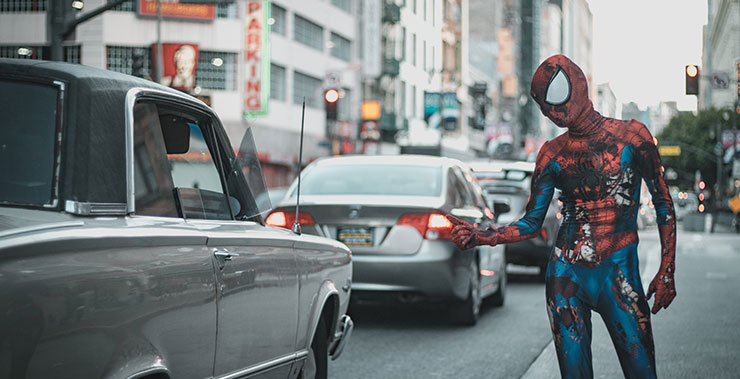
Araña means “spider” in Spanish. Anya Corazon is a bilingual superhero whose powers have included protective carapace armour and superhuman strength.
Her stories include the series Araña: The Heart of the Spider. She later used the name Spider-Girl before returning to Araña.
White Tiger
Hector Ayala was Marvel’s first White Tiger. The identity later passed to his niece Angela del Toro and his younger sister Ava Ayala. The White Tiger amulets enhance their strength, speed and martial arts abilities.
Miss America
America Chavez, also known as Miss America, can create star-shaped portals between dimensions. She has been a member of the Young Avengers and has starred in her own comic series.
Practising Your Spanish with Superhero Movies and Comics
Films and comics can expose you to conversational Spanish, although fictional dialogue may be stylised. A few simple strategies will help you make better use of them:
- Focus on what you know first. Watch a clip, or read a page of the comic, once through. Focus on identifying cognates or words you already know, and try to make sense of what you can first. Then, listen or read again. On the third try, add subtitles or look up the translation to fill in the blanks.
- Take notes. Write down useful phrases that appear often, such as “fighting crime”. Add them to an Anki deck or other flashcards, then review them before your next clip.
- Retell the scene. Practise telling a friend what happened in the film, or rewrite the dialogue as a short summary. This gives you practice discussing your interests and checks what you understood.
- Use social media as a guide. Follow Spanish-language accounts that discuss comics and films to notice the words Spanish speakers use. When you are ready, try leaving a short comment in Spanish.
- Switch the subtitles or audio to Spanish. A show or film you already know may offer Spanish audio or subtitles. Familiar context lets you focus more attention on the language.
Go Practice Your Superhero Spanish Powers
Choose one small step today. Find a Spanish edition of a comic you know, or switch a familiar film to Spanish audio. Your favourite fictional universe can become a place you return to for regular Spanish practice.

Social