


My First Week Speaking, Reading and Writing Chinese

Full disclosure: This post contains affiliate links. ?
It's the end of week 1 of what has definitely been the mission that has stirred up the most interest and discussion since I started the blog!
From the blog’s origin era (2009–2014), kept as lived proof of the method. See all the missions.
I can confirm that after this initial exposure to the language, I have not quite been “humbled” into saying what I'm attempting is impossible just yet, despite what many naysayers are suggesting 😉 What I'm attempting is extremely ambitious, and I may not achieve it precisely as I've defined it (and get something lower, but still very useful instead), but it is not impossible.
I've read the word “impossible” directed at me more in the last week than for any other mission. I'd suggest people read this post for my thoughts on impossibilities.
As annoying as all the “you'll fail miserably” comments/forum posts/Youtube videos have been, the few that care to actually explain why Chinese is “so hard” have basically given me a summary of the biggest challenges I will face, and advance warning to allow me to think of ways to get through these challenges quicker, with an example or two mentioned in this post. At this stage I believe I've heard most of the language's greatest challenges explained to me, and have some ideas to help me get through them that I'll update you on as I implement them, or otherwise have found good resources to get tips from those more experienced who are less interested in shooting me down.
Otherwise it's the usual hardest language mentality that I've seen so many times before. In each case (Hungarian, Czech, French, Chinese etc.) where an army of people are ready to inform me that THIS one is the hardest, those arguing dismiss the challenges of learning any other languages as trivial, and in the vast majority of cases they have little to no understanding or appreciation of those languages. Frankly I find this way more arrogant than someone like me saying that maybe he could get somewhere with Chinese quickly. Once I have more experience, confirming (along the lines of this post) that Chinese is not as bad as everyone is making it out to be, I'll definitely be coming back to this point to explain it in greater detail.
Call me arrogant if you will, but my purpose here is to present Chinese as a manageable task to encourage language learning, for those intimidated by it and sticking to European languages (or worse, and just speaking English) for no reason other than this intimidation.
A note from the Fluent in 3 Months team before we get started: You can chat away in Chinese for at least 15 minutes with the “Fluent in 3 Months” method. All it takes is 90 days. Tap this link to find out more.
First week summary: Arrival

Anyway, here is a blow by blow update of everything I've done this first week!
The biggest obstacle in this first week was not a feature of Mandarin. I had slept only two hours on each of the four nights before flying to Taipei, and jet lag left me tired and unable to focus. That context matters when judging the week’s progress; sleep loss is not an efficient immersion technique.
So I've been very tired for most of the day my first days, and wasting time and less able to focus because of this. Luckily I made sure to have my apartment very well naturally lit this time round (I'll give you the “grand tour” in scripted and terrible sounding but hopefully understandable Mandarin next week, although it's only a humble studio), so I'm finally adjusting to local time. Hopefully this slow first week won't affect the routine I plan to get into consistently throughout the rest of my stay.
When I arrived at the airport late on Tuesday, I took the lazy and more expensive route of getting a taxi since I was too exhausted to deal with transfers and finding my way around. I told the taxi man “Qing… Da-An MRT”, and he understood. I pronounced qing as ching, although I know now it's a different type of initial sound, but he understood me (probably simply because airport taximen are so used to foreigners, although if he spoke English he didn't care to let me know about it). Thanks to Google streetview, I knew from memory based on the buildings exactly where I needed to go. 這裡, 謝謝! Here, please! He pulled over despite my incorrect tones.
I arrived at night on Tuesday, and my PA who found the cheap apartment for me did all the talking with my landlord, handed me the keys in exchange for rent, quickly showed me some essentials on my street (explaining everything in English), and then I went to sleep. So my first day really began as soon as I was up very early on Wednesday.
Day One
I wouldn't be so consistent if I wasn't to actually speak from day one, and I can confirm that I did just that! [Note, parts of this section are copied directly from the Language Hacking League email newsletter, which you can sign up to at the bottom of this page].
I went out for some breakfast and to withdraw money. My card was giving me problems, and I just got a chocolate roll from a 7-11, with the little I had left after paying rent on arrival. So all I needed to say was “hello” and “thank you” (你好 and 謝謝). Easy enough start! Although I was saying these without the right tones, I didn't get a slap in the face. I'm confident that out of all the things I could say to the clerk, these two coming from a guy as white as me, will allow the local to extrapolate to understand what I mean. Relying on this for more than a few hours was obviously not something I was planning.
One of my bank cards wasn't working and the other was, and this was confusing me a bit. I walked to a large bookstore to get the main study materials I needed (shown in the screenshot in my introduction post). I went to the counter and gave her my credit card, and she said something back to me after trying it in the machine a few times.
I don't have a clue what she said precisely, but the context couldn't have been clearer. My credit card simply wasn't working. I realized that my bank probably blocked it from strange activity of being used in six countries over a single week thanks to airport transfers, so I took out the cash I had just withdrawn from the other card instead. I handed the notes to her using both my hands, since I've started to observe that even if something weighs one gram, they will still hand it to you with both hands here, so I want to emulate it, or I may appear rude.
And of course she was happy with that!
I went home for a “quick nap” and six hours later (thanks to jetlag) I woke up definitely ready for an evening lunch, I headed towards a huge shop (Carrefour) to get some supplies I'll need while here (buying a metro ticket was easy, since the machine was in English too). When I got out of the metro station, I went looking for some food.
In Taiwan, this isn't a problem! There are hundreds of stalls all over the place! But the catch of course is that they are all written in Chinese, and everyone I asked Ni huishuo Yingwen ma? to, gave me a blank look back. “Do you speak English?” is more complex than hello or thank you, so in this case my lack of good tones made me incomprehensible, even for a simple question.
Scratching my head at a way to feed myself with something other than what I'll get in the supermarket, I chanced upon a sign with a picture of pasta. Hardly traditional Chinese food, but as a vegetarian I wanted to not have to think too much right now. I asked the same question as before, and got yet another blank face as if I was telling her that my hovercraft is full of eels.
Even a reply indicating no would have made me feel like I was at least understood. So I pushed on, ignoring the fact that she probably doesn't understand me, and pointed at the pasta saying “this, please” in equally un-understandable Mandarin. Finally, some sign of recognition! I sat down, and a couple of minutes later received what I had ordered. A minor but important victory!
After getting everything I needed in Carrefour, I went to the checkout and had just looked up the word for “bag”, since I could see them scan the bags for people, so you have to request it or bring your own to encourage recycling. I didn't have bags yet, so would need to ask for one.
And when I walked up to him, I had my first proper exchange! He said something like blah blah blah (bag) blah (question word)? I replied with “I want please” and he scanned it through. And then I went home 😉
What is important is to have minor successes every day, rather than huge successes very rarely 😉
Next days
The tiredness issue means that I've not been social at all, and have continued in a similar vein to my first day for most interactions, while studying for a few hours every day. On my second day I prioritised pronunciation. While it's not using my favourite resource, I've got both Michel Thomas‘ Mandarin course and a full subscription to the ChinesePod course, both of which I'll be sure to share my thoughts on later, and both of which are audio based.
After going through the tones explanation in both courses, and comparing my basic experience with distinguishing Thai tones, I felt more ready to say what I had already been saying, but better. Now I clearly hear the difference and know how wrong my initial “Ni hao” and everything else was. Natives speaking these slowly for learners on audio in sound recording studios is all well and good, but it will take time to get used to these in the real world.
The most important thing is that I am more confident in knowing that people are more likely to understand me. This has been proven by the amount of blank faces I get back going down dramatically.
I was still relying on pointing. Menu items were numbered, so I used the Mandarin numbers I knew and added a memorised polite word. The number pattern felt manageable to me, but pointing and ordering did not confirm that I understood the dish or that it was vegetarian.
Starting to understand
Continuing on with numbers, Chinese has a very interesting system for large numbers (which you must learn, since use of 1,000元 notes can be normal), which actually specifies zeros before other numbers, but not so much after. For example, 5100 would be “five thousand one” and saying hundred is not necessary, since it's clear from the way the language works. But 5001 would be “five thousand zero one” and 5010 would be “five thousand zero ten”.
It's a little strange at first, but totally logical. I've learned this system (really doesn't take that long) and can recognise most numbers I'll hear now, which means that when prices are told to me I can understand them without looking at the till. The catch is that I need several seconds to do the calculations and make sure I remember all the numbers correctly. I've found that fumbling through my wallet for 2 or 3 seconds gives me the time to figure out what they said without cheating and looking at the answer.
As well as this, the little amount of vocab I've learned is starting to make its way out of the “noise”. Rather than Chinese being a stream of blah-blah-blah, I am starting to pick out very occasional words from metro announcements (names of stops) or people's conversations (not, please, coffee, big etc.)
Not looking at the language as incomprehensible noise is an important step, and I've already accepted the mentality that it's a language thanks to these rare bursts of understanding (which, easy and obvious a mentality as it seems, is simply not accepted by many learners, who see it as noise that those foreigners are making that they are trying to mimic).
Can read already!
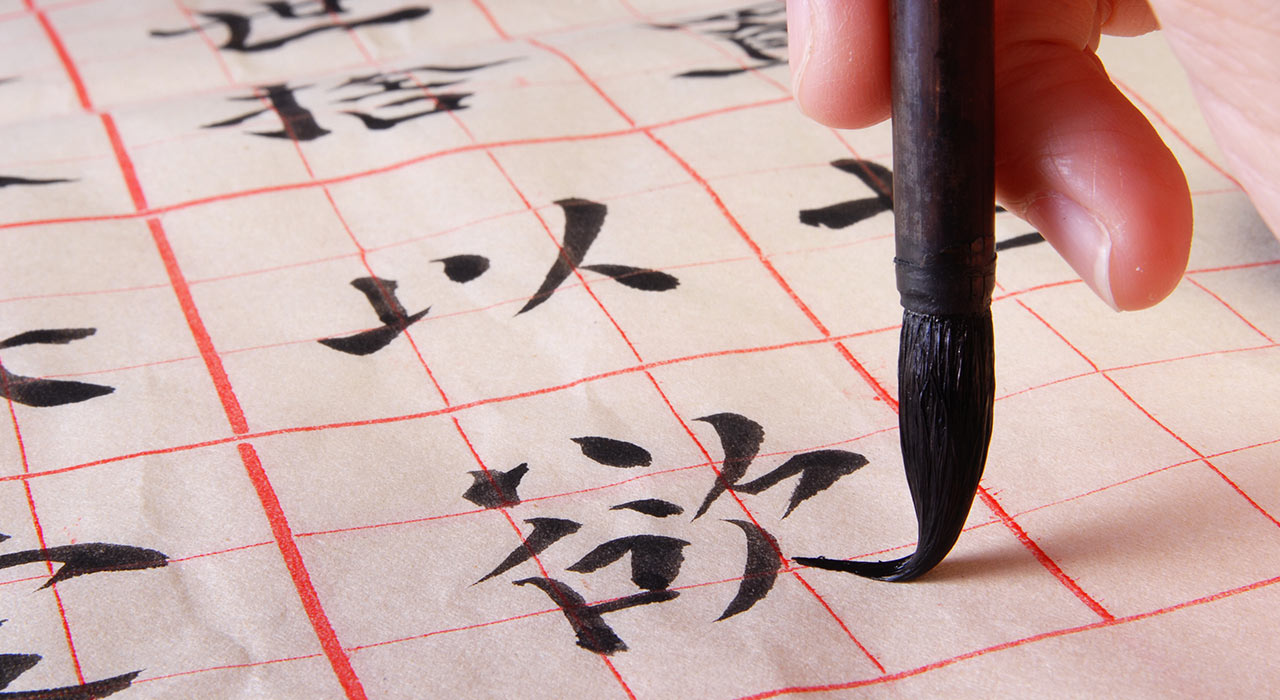
Another major milestone and important aspect of all this “impossibility” I've been warned about is that I can actually read and write already! To a very very limited extent of course, but it's not as much of an unsurmountable monster as everyone makes it out to be.
I've been using Heisig's book to learn the characters, which I have mixed feelings about. The memory techniques are similar to what I've used myself to learn vocabulary in general, and some are very clever and have been a huge help! But many don't really work for me (like references to baseball), so it's better to get inspiration from it and get going yourself asap.
Learning the book from start to finish has turned out to be a wasteful idea, since I'm given silly words I don't need like “recklessly” from the start, and more useful words like “want” are near the end! The order presented is useful for understanding the characters that are the building blocks of many words, but is more suited to those who don't plan to really expose themselves to the language until they finish the book. As well as this, there's an important difference between characters and words, so I'm focusing my vocabulary studying from other sources that are more practical for day-to-day use.
After learning the first few dozen characters in his order, I've decided to only use the book as reference. If I see a complex word I want to remember I look backwards through its components and learn them in context. This is much more memorable, although all the page turning is a little annoying. Especially since the pinyin (pronunciation) is only given at the back.
But a combination of using that book and simply being independent means that I have a few dozen characters I recognise confidently (and could write a crude version of them for you, with the wrong stroke order). While I have plenty left to go, the little I have are high frequency characters or words and I'm starting to recognise them in signs, although I still can't understand the meaning of the sign unless it's something like “exit”. I can very easily see the 不 “no(t)” component in No smoking signs and the like.
This means that this idea of seeing Chinese as nothing but random squiggles is already gone in my mind. I've prioritised food to allow me to eat in cheaper restaurants asap, and can already see that a restaurant is vegetarian (素食) and know what to avoid, since most meat vocabulary actually includes the word meat 肉 (“cow-meat” is beef, “pig-meat” is pork etc.)
It's slower, but I've learned all these characters not just to recognise them visually, but to also say (or recognise) the sound, incorporating a story with the image to remember the pronunciation and tone. I'll explain in more detail how I'm doing this later.
A paper Chinese dictionary requires you to learn a lookup method, often based on radicals, stroke count or pronunciation. That is a useful skill, but it is not the only way to identify an unfamiliar character.
I tested the Pleco app, which let me draw a character or use the camera to identify printed text and view pronunciation information. OCR can make mistakes, so I still needed to check the result against the sign and context.
How I Typed My First Chinese Characters
I could also type a few Chinese characters. That is not the same as handwriting or being able to compose freely, but it let me use what I had learned in messages and notes.
I enabled a Chinese input method and typed pinyin. For example, entering hao offered 好 among the candidate characters. Input methods and tone-number settings vary, so you still have to recognise and select the intended character.
Typing from pinyin reduced the need to reproduce every stroke from memory. It still required pronunciation knowledge, character recognition and enough context to choose between homophones. The characters shown in this post were ones I selected through the input method rather than copied from another page.
Of course, I'm not interested in writing on dead trees for now, as I don't do this in any of my languages beyond signing my name. At most I'll have to learn to write my address, marital status etc. in Chinese for forms, and do the majority of everything else on my computer or phone.
Useful “listening” practice
For listening practice, rather than use that big TV you saw behind me in the intro video to keep up with cheesy soap operas, I've got a much more fun idea!
Four months in America last year combined with several weeks ill in Istanbul, meant that I didn't eat very healthy food and put on a bit of weight. Losing this is a priority for me while I'm not travelling and have some consistency, and so I joined a gym. But I didn't join for the threadmills and dumbbells (quite boring). My gym membership includes unlimited access to group classes in everything from yoga, to hip hop dance lessons to random aerobic bouncing around… which apparently they give classes in too. These take place all day every day.
And of course these classes are in Mandarin! I went to one and it was confusing as hell, and I relied too much on copying those around me, but the instructor is yelling at us to do something, and when you hear him say something and perform a motion you start to get the idea and learn that word. I plan on going to these classes several times a week. Exhausting both physically and mentally, but definitely worth it!
How's that for trying to get a bit more “active” in my listening practice? 😉
So, there you have it. I had a long road ahead, and I planned to work intensely. Claims that Mandarin requires a fixed five or ten years were no more useful than my assumption that my approach would outpace most learners. This first-week diary records my method and confidence, not a universal timetable.
I was happy with my central neighbourhood because I heard and saw Mandarin throughout ordinary errands. My old count of how many other Westerners I noticed says more about what caught my attention than about the neighbourhood itself.
I had also been warned that everyone would speak English with me. In practice, some people could not or did not, while English was easier to use in a few international businesses. That variation created chances to use the little Mandarin I knew without proving a rule about Taipei.
The week was difficult. I sometimes went too long without eating because I did not yet know where to find suitable vegetarian food, and I had not built a social circle. Those were problems to solve, not desirable pressure or proof that avoiding other expatriates makes a language develop faster.
This was only week one, and tiredness meant I did less than planned. I had begun distinguishing tones, recognising some characters and typing with pinyin, but each skill was still at an early stage. Later updates would show what the next three months actually produced.
Let me know your thoughts on the progress I've made, and any suggestions to help make sure I keep on track. Thanks! 🙂

Social