


Christmas Food Around the World: 15 Holiday Traditions

Full disclosure: This post contains affiliate links. ?
Christmas food changes dramatically from one table to the next. Salt cod, fried chicken, saffron buns and roast goose can all be part of the season, depending on the country, region and family.
This list covers 14 Christmas foods and one Hanukkah tradition from around the world. They are examples, not rules for an entire country. Recipes vary too, so check the actual ingredients if you avoid meat, fish, dairy, eggs, gluten, nuts or alcohol.
You can also explore Christmas traditions around the world and the different names people use for Santa around the world.
A note from the Fluent in 3 Months team before we get started: You can chat away with a native speaker for at least 15 minutes with the “Fluent in 3 Months” method. All it takes is 90 days. Tap this link to find out more.
Table of contents
- 1. Bacalao a la vizcaína in Mexico
- 2. Weihnachtsgans in Germany
- 3. Fruitcake in the United States
- 4. Christmas fried chicken in Japan
- 5. Kūčios in Lithuania
- 6. Latkes and sufganiyot for Hanukkah
- 7. Panettone in Italy
- 8. Christmas tamales in Costa Rica
- 9. Christmas pudding in Britain
- 10. Bûche de Noël in France
- 11. Melomakarona in Greece
- 12. Kołaczki in Polish-American holiday baking
- 13. Lussekatter for St Lucia Day in Sweden
- 14. Noche Buena in the Philippines
- 15. Joulupöytä in Finland
- Food gives you a way into the language
1. Bacalao a la vizcaína in Mexico
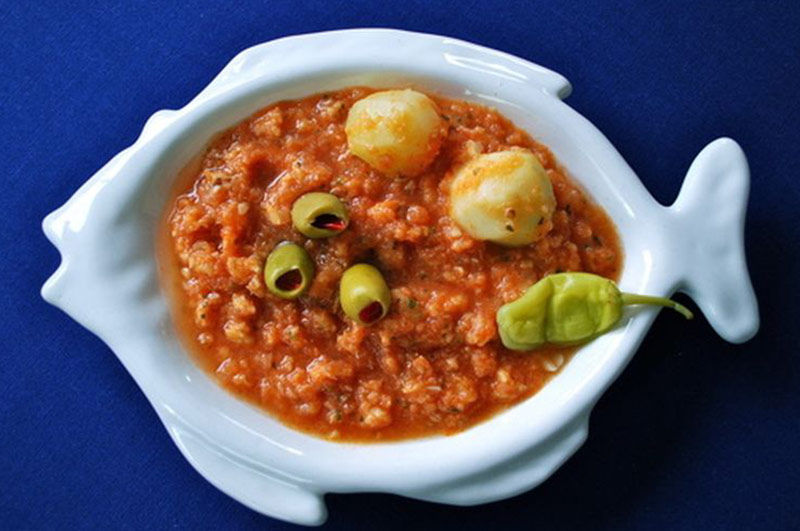
Bacalao means cod, and bacalao a la vizcaína is a familiar dish on some Mexican Christmas and New Year tables. The salt cod is soaked, then cooked in a tomato-based sauce with ingredients such as olives, potatoes and peppers. The recipe came to Mexico through Spanish culinary traditions and developed local variations.
This is a fish dish, and some versions also contain almonds. You can learn more seasonal vocabulary in our guide to saying Merry Christmas in Spanish.
2. Weihnachtsgans in Germany
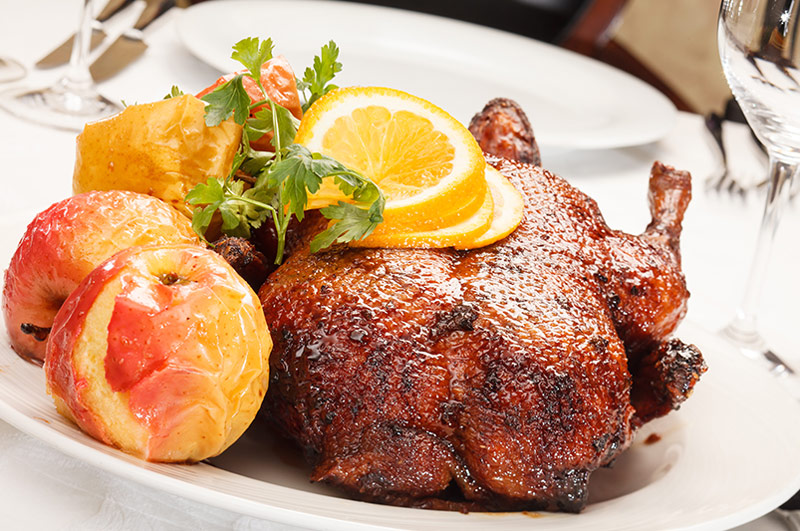
Weihnachtsgans literally means “Christmas goose”. Roast goose is one traditional centrepiece in Germany, though Christmas meals vary by region and household. It may be stuffed with apples, onions or prunes and served with red cabbage, dumplings and gravy.
Goose is meat, of course, and the stuffing, gravy and side dishes may contain gluten, dairy or nuts. Our guide to German Christmas greetings and traditions has more seasonal language.
3. Fruitcake in the United States
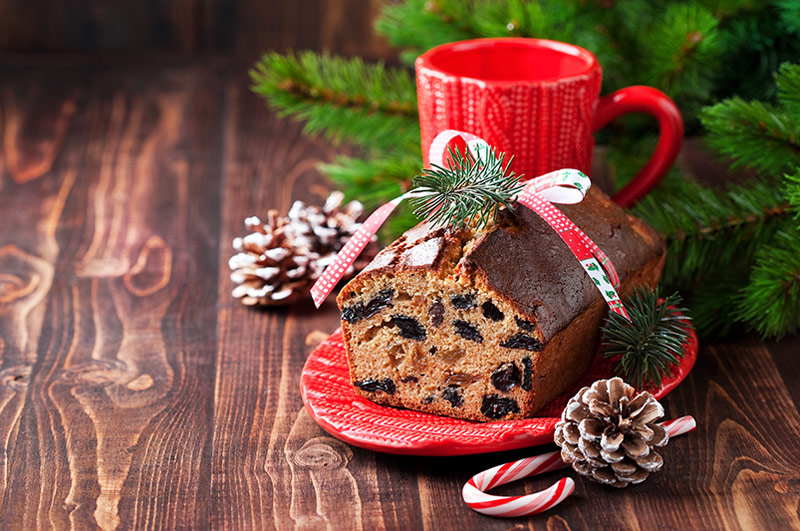
Fruitcake has a long European history, and versions of it travelled widely. In the United States it became both a Christmas gift and the subject of a running joke: the dense cake lasts so long that the same one could supposedly be passed from family to family.
As a kid growing up, my parents always had two or three fruitcakes hidden in the pantry around Christmas. They received them as gifts and stepped around them until, whoops, they were forgotten. Once they had “expired”, as much as a fruitcake can expire, they could be discarded without offending the person who gave them.
Recipes commonly include dried fruit and may contain nuts, gluten, eggs and alcohol. Alcohol can help preserve some fruitcakes, but it does not make every fruitcake safe to keep indefinitely.
4. Christmas fried chicken in Japan
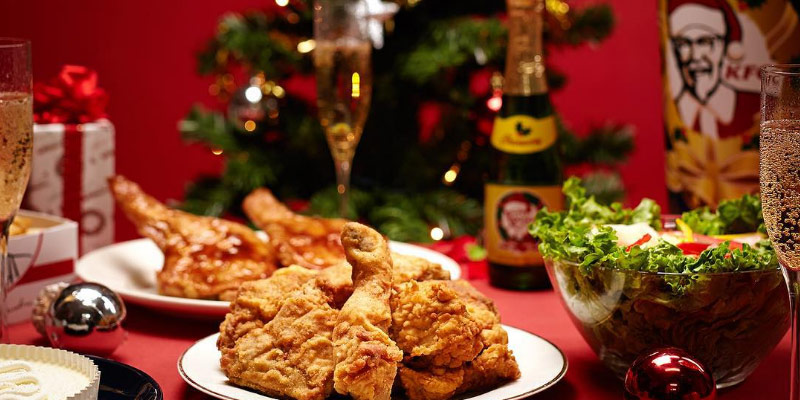
KFC Japan launched its first Christmas campaign in December 1974. The promotion helped turn fried chicken into a recognisable modern Christmas custom, and seasonal chicken orders remain associated with Christmas Eve.
Christmas cake, often a light sponge with cream and strawberries, is another familiar seasonal food in Japan. Fried chicken contains meat, while the cake usually contains dairy, eggs and gluten. If the menu has inspired you, our Japanese food vocabulary guide is a useful next stop.
5. Kūčios in Lithuania
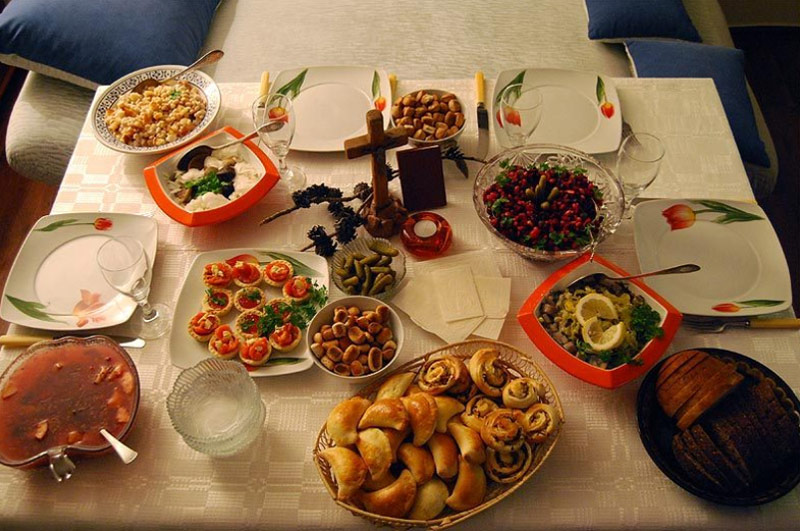
Kūčios is the Lithuanian Christmas Eve supper. A traditional table has 12 dishes, a number associated with the apostles or the months of the year. Fish, herring, mushrooms, potatoes, bread, poppy seeds and dried fruit are among the foods that may appear.
The meal traditionally avoids meat and dairy, but fish means it is not vegetarian. Individual dishes can also contain gluten, nuts or other allergens, and present-day family menus do not all follow the same rules.
6. Latkes and sufganiyot for Hanukkah
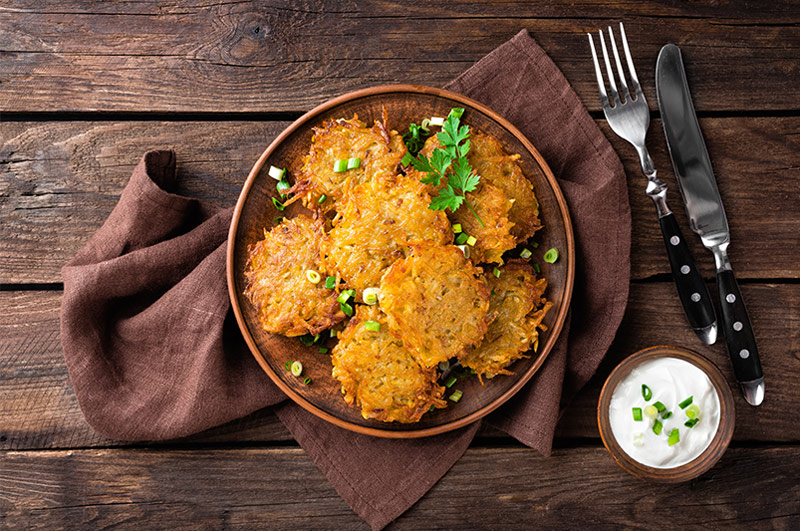
Hanukkah is not Christmas, but it often falls in the same part of the calendar. Fried foods recall the oil in the Hanukkah story. Latkes, or potato pancakes, are well known across many Jewish communities, while jam-filled sufganiyot are especially prominent in Israel.
Latkes may contain egg or flour, depending on the recipe. Sufganiyot normally contain gluten and may contain eggs or dairy. If you are learning the language, start with our list of Hebrew learning resources.
7. Panettone in Italy
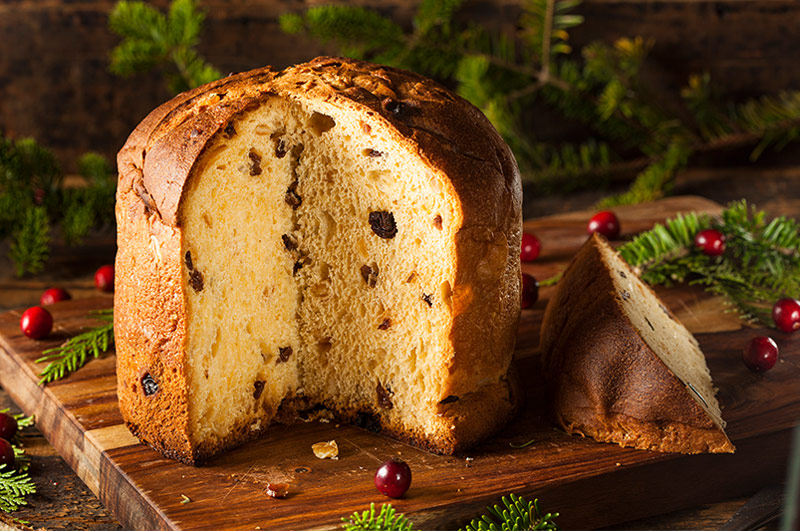
Panettone comes from Milan and is now eaten across Italy and far beyond it during the Christmas season. It is a tall, airy enriched bread, commonly made with raisins and candied citrus peel. Chocolate and other fillings are newer variations rather than required ingredients.
Traditional panettone contains gluten, eggs and butter. Italy has many other regional Christmas foods, so no single bread or meal represents every Italian table. You can read more in our guide to Italian Christmas greetings and traditions.
8. Christmas tamales in Costa Rica
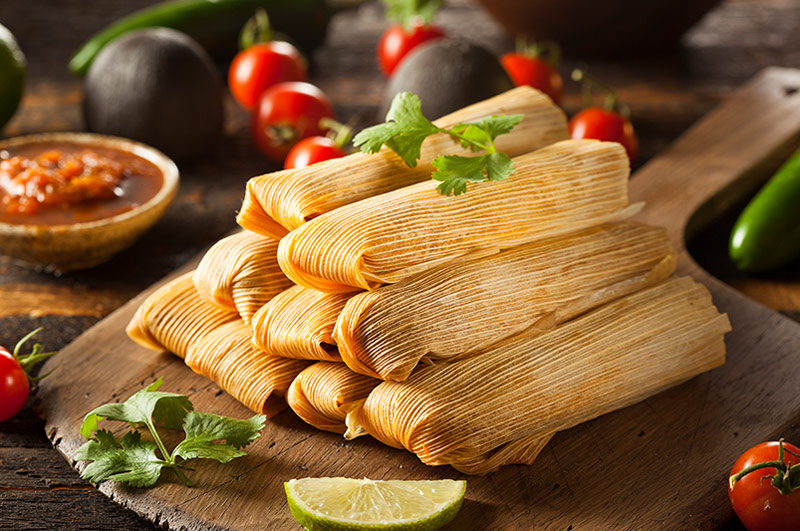
Making tamales is a Christmas tradition in many Costa Rican households. The Costa Rican version uses a seasoned maize dough, fillings and a plantain leaf wrapper. Families often make them together, and recipes vary.
Pork or chicken and rice are common fillings, but bean-based versions also exist. Check the stock, fat and fillings before assuming a tamal is vegetarian. Our Spanish food vocabulary guide will help you talk about what is inside.
9. Christmas pudding in Britain
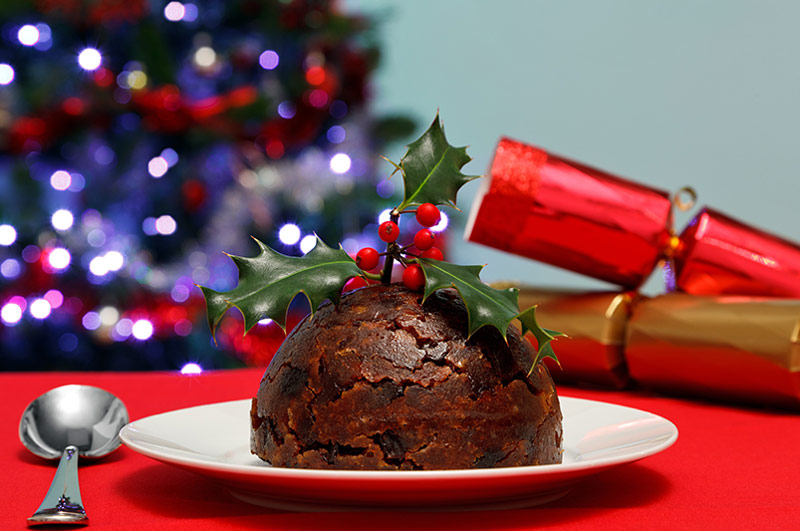
Christmas pudding developed from earlier British boiled puddings and became strongly associated with the Victorian Christmas table. Despite the old name “plum pudding”, modern versions usually rely on raisins, currants and other dried fruit rather than fresh plums.
Some people warm brandy over the pudding and light it before serving, but that is a presentation choice rather than a requirement. Traditional recipes may contain beef suet, gluten, eggs and alcohol. Vegetarian suet and alcohol-free recipes are available.
10. Bûche de Noël in France
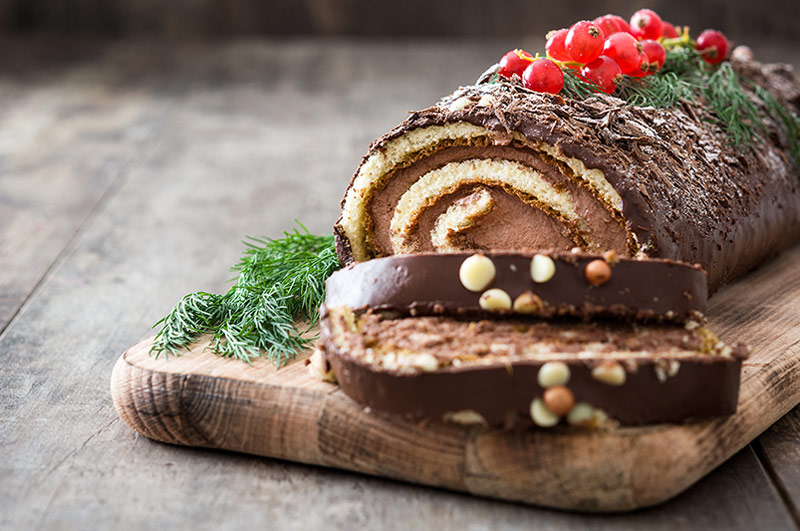
Bûche de Noël means “Christmas log”. The classic version is a rolled sponge cake decorated to look like a log, often with chocolate buttercream. French pastry shops now make many versions, including frozen and fruit-flavoured logs.
The dessert's exact origin is disputed, and there is no reliable single invention date. Most cake versions contain gluten, eggs and dairy. Our guide to French Christmas greetings and traditions has more seasonal vocabulary.
11. Melomakarona (μελομακάρονα) in Greece
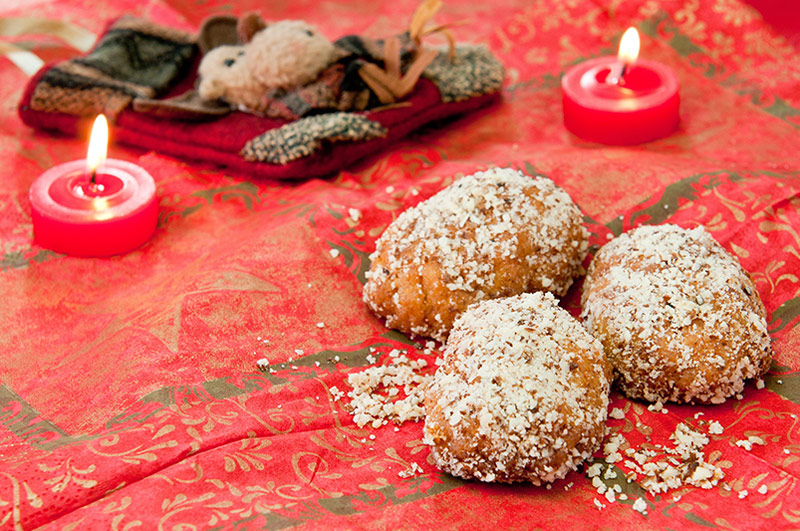
Melomakarona are Greek Christmas biscuits made with ingredients such as flour, olive oil and orange. After baking, they are soaked in honey syrup and commonly topped with chopped walnuts.
They contain gluten and usually walnuts. Honey means the standard version is not vegan, even when a particular recipe contains no dairy or eggs. If Greek is on your list for the new year, here are some places to learn Greek online.
12. Kołaczki in Polish-American holiday baking
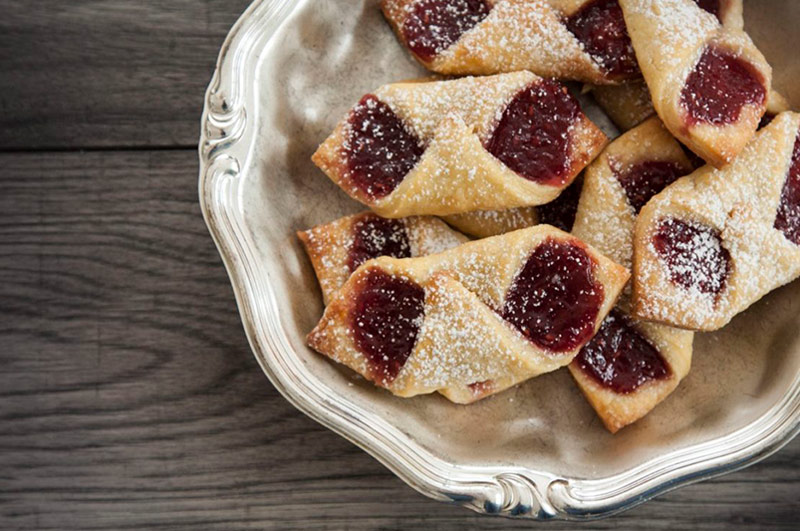
The folded, jam-filled biscuits commonly called kołaczki are especially familiar in Polish-American holiday baking. The name covers related pastries, and the cream-cheese or sour-cream dough used in many American recipes should not be presented as one fixed national Christmas recipe for Poland.
Apricot, raspberry, poppy-seed, nut and sweet-cheese fillings are all possible. The dough generally contains gluten and dairy, while the filling may add nuts. See our Polish language guide if the name has made you curious about Polish.
13. Lussekatter for St Lucia Day in Sweden
Lussekatter are yellow saffron buns, often shaped like a curled “S” and decorated with raisins. They are most closely associated with St Lucia Day on 13 December, which places them firmly in Sweden's Christmas season without making them a universal Christmas Day dessert.
The buns usually contain gluten, dairy and sometimes egg. Sweden's Christmas julbord is a buffet with dishes served in rounds, not a fixed three-course meal. It can include pickled herring, ham, meatballs, sausages and Janssons frestelse. Our guide to learning Swedish has more from the language and culture.
14. Noche Buena in the Philippines
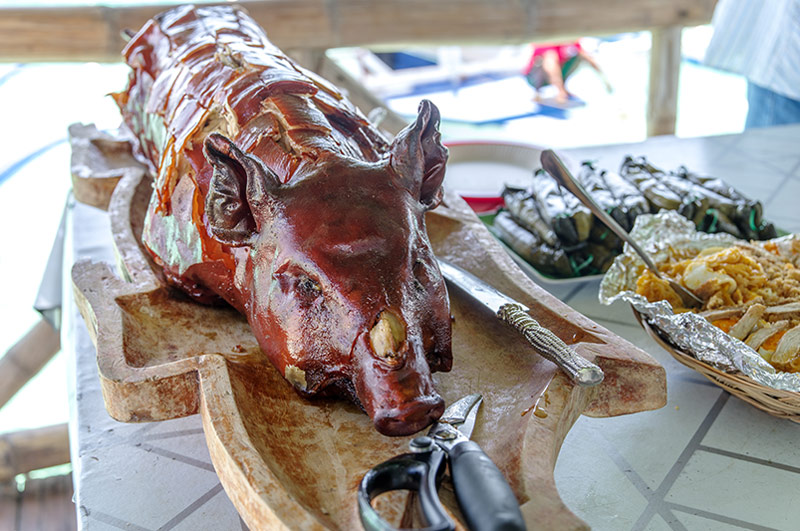
Noche Buena is the Christmas Eve meal in the Philippines. Depending on the family and budget, the table might include lechon, hamon, queso de bola, pasta, lumpia, fruit salad or local rice cakes.
Simbang Gabi is a sequence of nine dawn masses from 16 to 24 December, rather than one service immediately before every family's meal. Lechon and hamon are meat, while queso de bola contains dairy. Our list of Tagalog learning resources can help you continue from the food names.
15. Joulupöytä in Finland
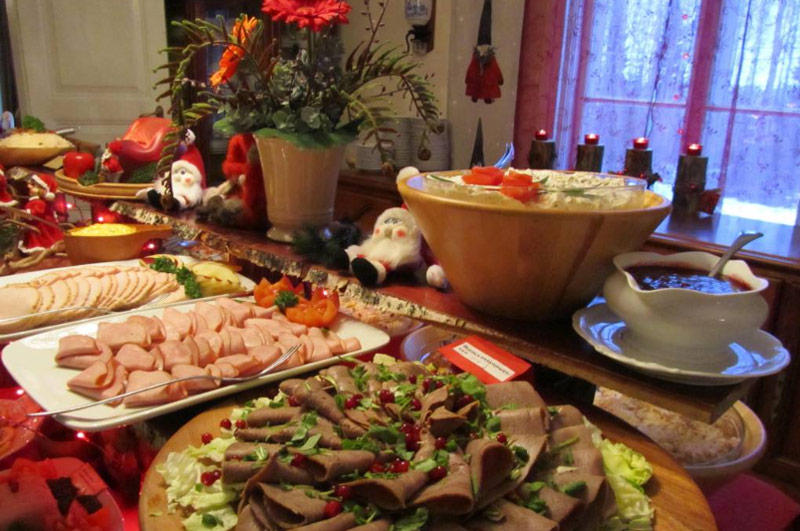
Joulupöytä means “Christmas table”. A Finnish Christmas buffet may include ham, fish, beetroot salad and casseroles made with swede, carrot or potato. The exact spread changes between homes.
Seasonal sweets include joulutortut, star-shaped pastries commonly filled with prune jam, and piparkakut, Finnish gingerbread biscuits. Riisipuuro, rice porridge, is another Christmas favourite. A full buffet can contain meat, fish, dairy and gluten, so each dish needs its own check.
Food gives you a way into the language
A food name is a small piece of language with a story attached. Pick one dish from this list, listen to a native-speaker recording of its name, and learn how to ask what is in it. That gives you vocabulary you can use at a real table, along with a better question than “What does everyone in this country eat?”

Social