


Stories from India: Life at Palolem beach and the Taj

Full disclosure: This post contains affiliate links. ?
This travel diary records a trip from 2014 to 2015, when I arrived in Melbourne after a month and a half in India. Prices, transport and accommodation details are historical, so check current official guidance before planning a trip. I had spent most of the preceding months in Chiang Mai, Bali and Palolem Beach in Goa.
I was glad to have reliable hot showers again, and I came out of those months with plenty of stories to tell.
A note from the Fluent in 3 Months team before we get started: You can chat away with a native speaker for at least 15 minutes with the “Fluent in 3 Months” method. All it takes is 90 days. Tap this link to find out more.
Arriving in a new country with no place to stay
If you’re not a frequent traveller, arriving without accommodation may sound terrifying. It would usually worry me too. On this particular trip, I put my bags in a taxi for the three-hour drive south into Goa with no booking for the next month and a half.
That was my choice on this trip, not advice for a current visit.
At the time, walking around and asking about huts gave me more low-cost options than the booking sites I checked. Availability, seasonal demand and booking practices change, so research them before you travel.
During my visit, many small restaurants and beach huts had little online presence, while the places I found on booking sites tended to cost more. Seasonal rains also meant that some beach structures were taken down and rebuilt. This describes what I saw then, not the current accommodation market.
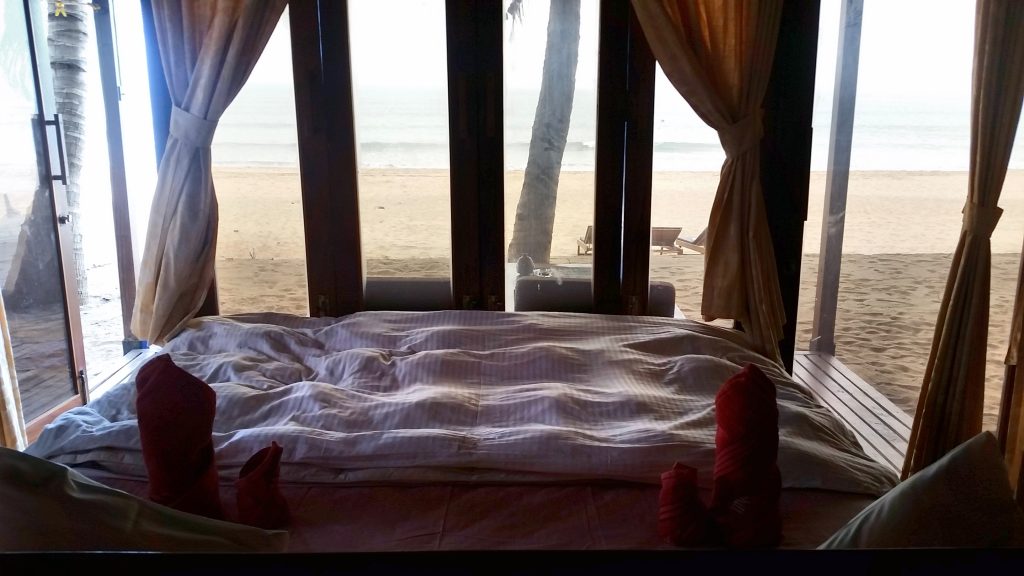
The huts varied widely in finish and comfort.
As the photos show, I still found places I enjoyed. In 2009, before I started this blog, I paid about US$2 per day for a very basic hut with no hot water and a creaking floor. On this later trip, I paid about US$15 per day for air conditioning and intermittent hot water. These are historical prices.
The hot showers would typically last for 2 minutes, or be a weak drip from above rather than an actual shower. For New Year's we had to use a bucket of hot water as we downgraded our accommodation to avoid peak rates.
But despite all this, we were on the beach and lulled to sleep by the sound of waves crashing.
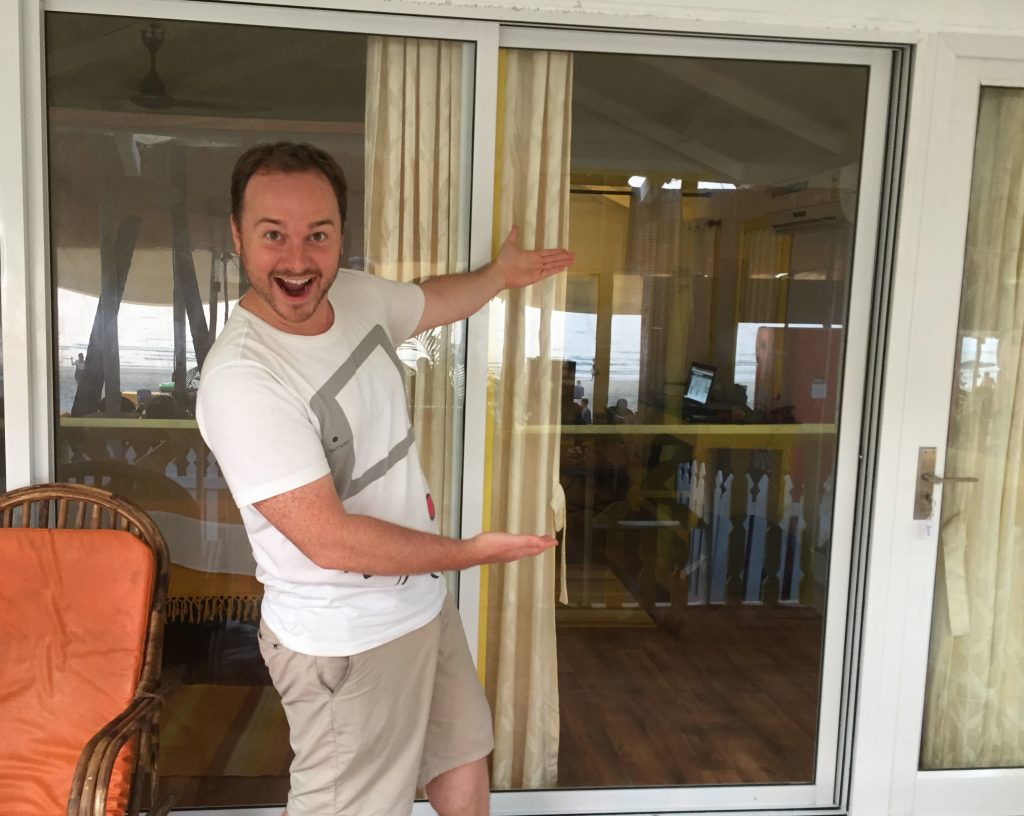
Many huts I saw were basic, with little more than four walls, a bed and a toilet. I spent my first morning walking along the beach, asking about vacancies and looking for a hut with hot water and air conditioning.
After a few hours of searching and haggling, I landed on a great little hut facing the water, with a rocking chair out front and semi-reliable A/C, right in front of a restaurant where I could get my morning cereal. Not bad!
Daily Life on Palolem: Waking up to the sounds of waves crashing and cows mooing
I spent each morning on Palolem with a walk along the beach, hanging out with the Palolem cows. They roam freely there, just as cows do all over India.
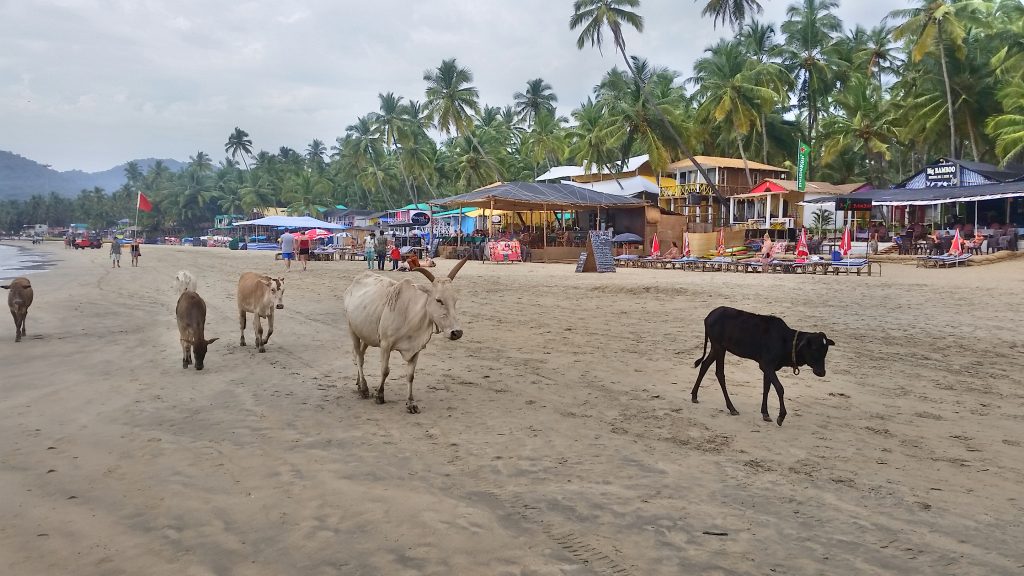
I also saw many free-roaming dogs around Palolem. Some rested near the restaurants while people ate, which became part of the beach scene I remember.
During this visit, a meal at a beach restaurant often cost me about 200 rupees. On the street, I sometimes paid 90 rupees for a large bowl of fried noodles with vegetables. These figures are a snapshot of that trip, not a current budget.
After an intense year and book tour, we needed to slow down for a few weeks. We read, stayed nearby and left our schedule mostly empty.
We read, we walked up the beach and we appreciated the views.
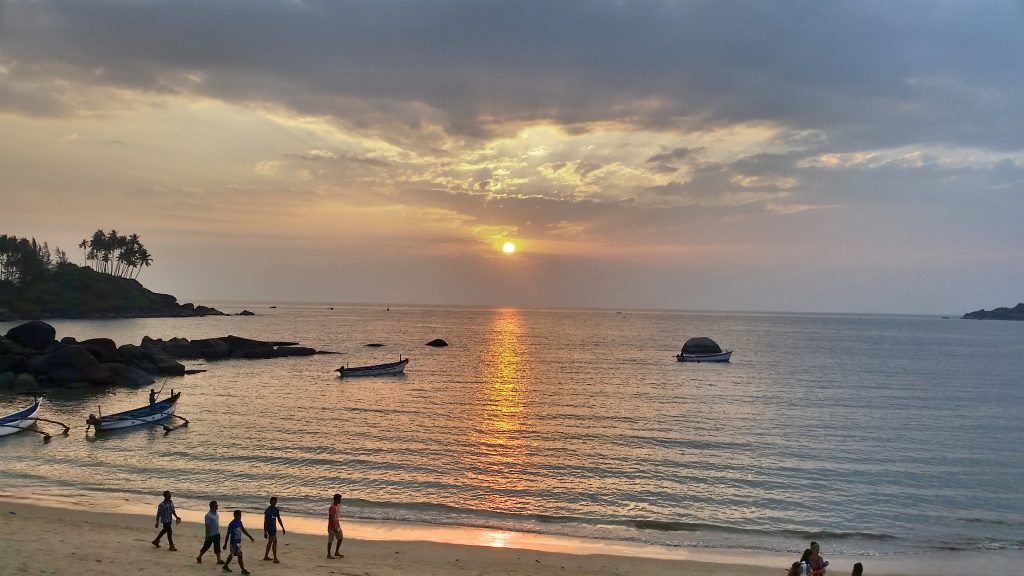
Palolem is a beach town that's in the middle of the spectrum between crazy party beach (head to North Goa if that's what you're looking for) and quiet-tranquil (head to nearby Agonda). It's active, but relaxed.
There's loads to do during the day, whether it's to walk around the town to look through the many shops (and very willing shopkeepers eager to show you their wares), or to take a boat or kayak out onto the water. At night, you can find a bonfire or live music going on somewhere on the beach, but you can also escape it if you feel like it.
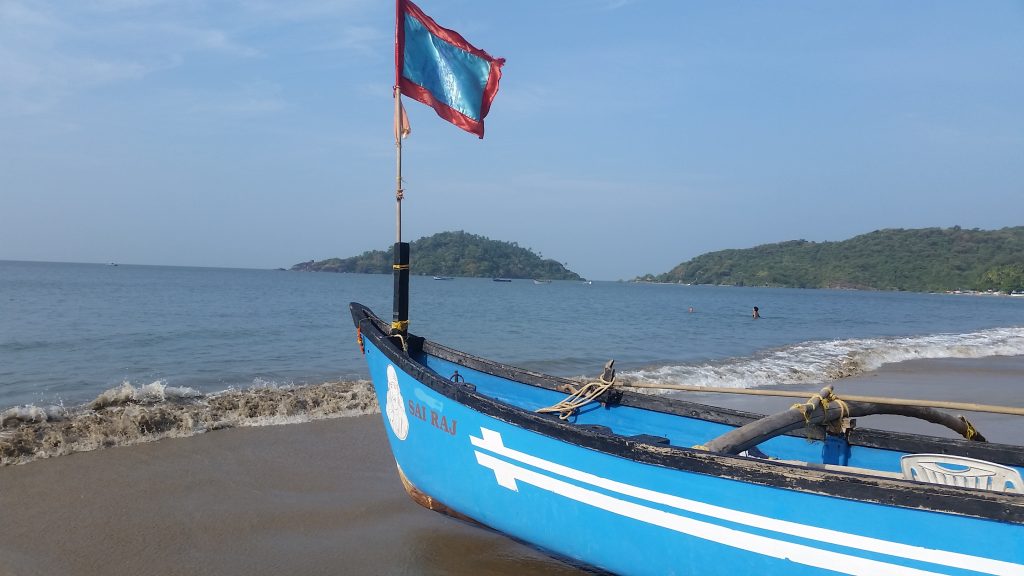
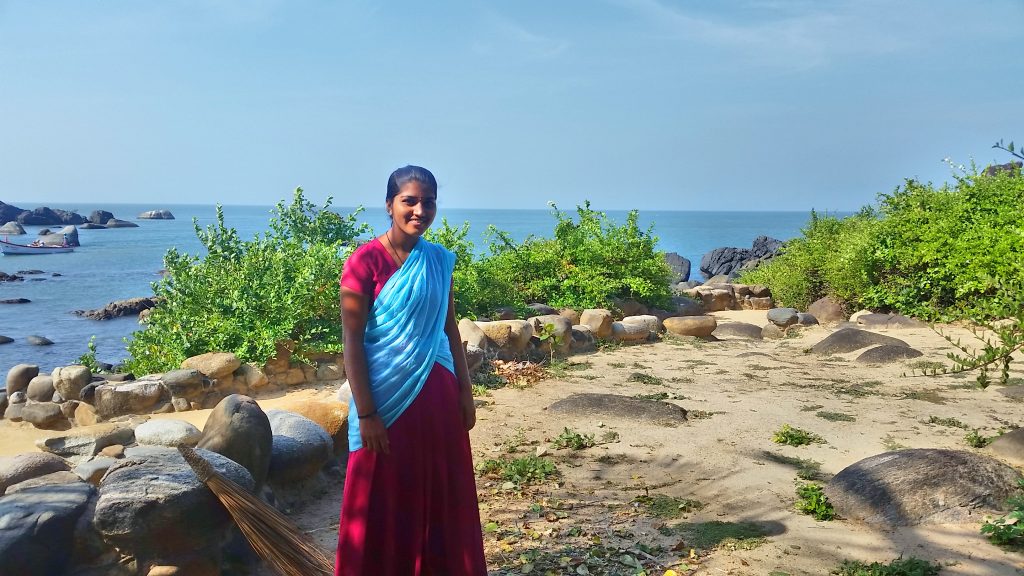
We also talked with people who lived and worked there.
Many people I met in Goa were relaxed and friendly. Centuries of Portuguese colonial rule left visible influences in architecture, religion, names and food, alongside Goa’s many other cultures.
Portuguese influence was also visible in place names, and I heard that some older residents still spoke the language.
While we ideally would have stayed put for all six weeks, we had to move around a few times to avoid peak Christmas and New Year rates, and to switch between very basic accommodation, and standard accommodation. One thing that was pretty consistent though was that no matter how much you were paying, every place on the beach had regular power outages.
We adjusted our plans when the power went out.
For the Christmas period, we moved to a nearby beach Agonda to avoid the rush of tourists and take it easy. I had been working in Palolem to catch up on a backlog of emails and writing, but I resolved to do no work at all in Agonda and in a single week I managed to catch up on my Goodreads book reading backlog!
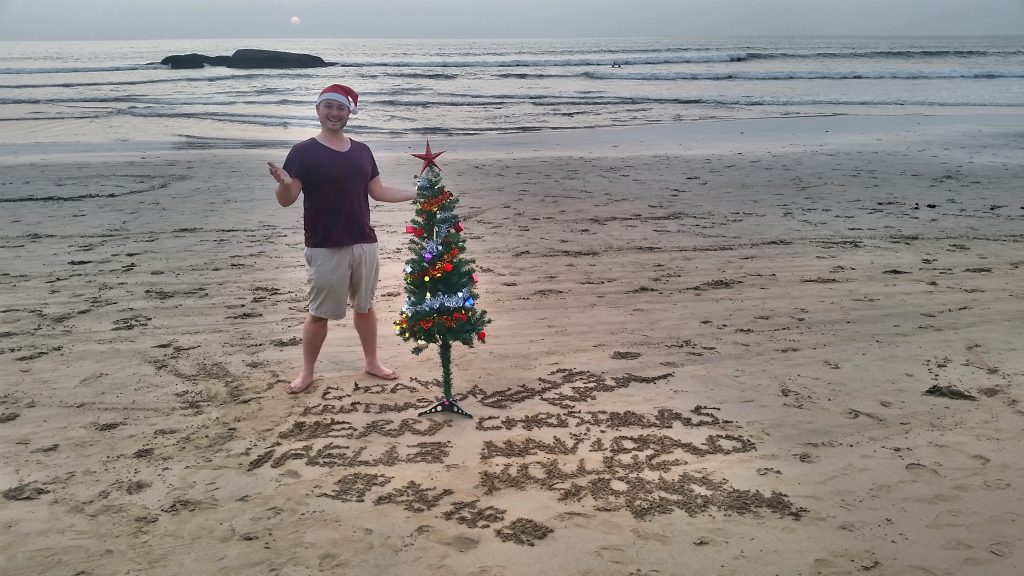
Despite the fact that I've been on the road for twelve years at this stage, I've never missed a Christmas in my hometown in Ireland a single time… until this year. I'm not actually religious, but I do like family time and believe it or not, I missed the cold and huddling up by the fire.
I think this will actually be the only Christmas I ever don't spend with family. It was a new experience, but sometimes traditions are better!
One thing I did find interesting though was seeing the Goan Christmas celebrations. We spent Christmas Eve in the bustling tourist zone of north Goa for the day and drove back at night and I got to see mass take place outside with huge amounts of people attending. Goa has many churches, but on Christmas when most residents may attend, they have to create concert style stages beside the church to hold the amount of people coming.
I couldn't help but think how impossible that would be in freezing late December temperatures back in the west!
After Christmas, we returned to Palolem and started a fresh routine for the New Year. We loved our time there, but eventually we were ready for a change of setting.
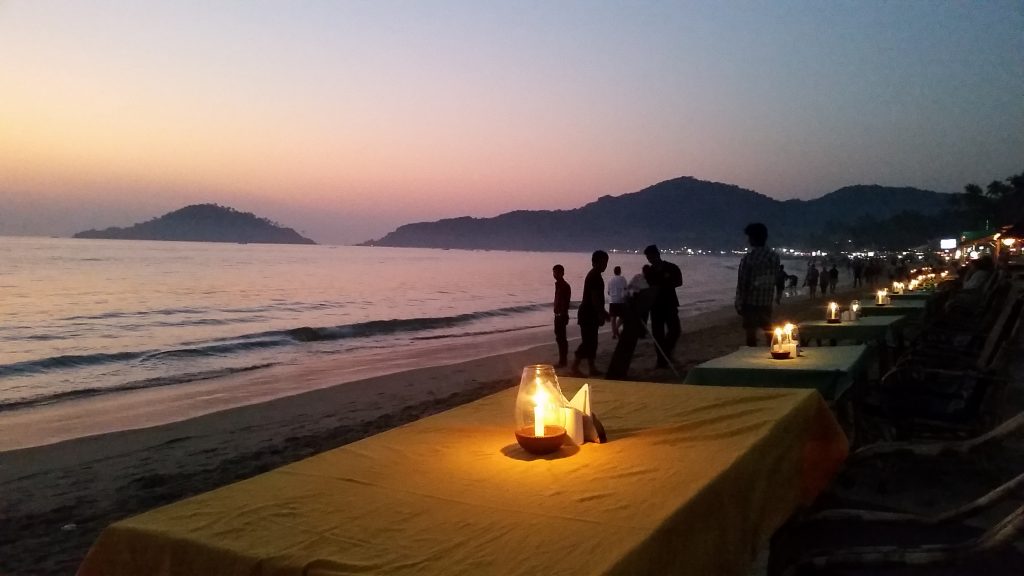
Once I reached Australia, even simple takeaway food cost much more than the meals I had bought in Goa. I missed those inexpensive dinners with this view:
A Day trip to the Taj Mahal
One thing I didn't do on my first trip to India in 2009 was make it up north.
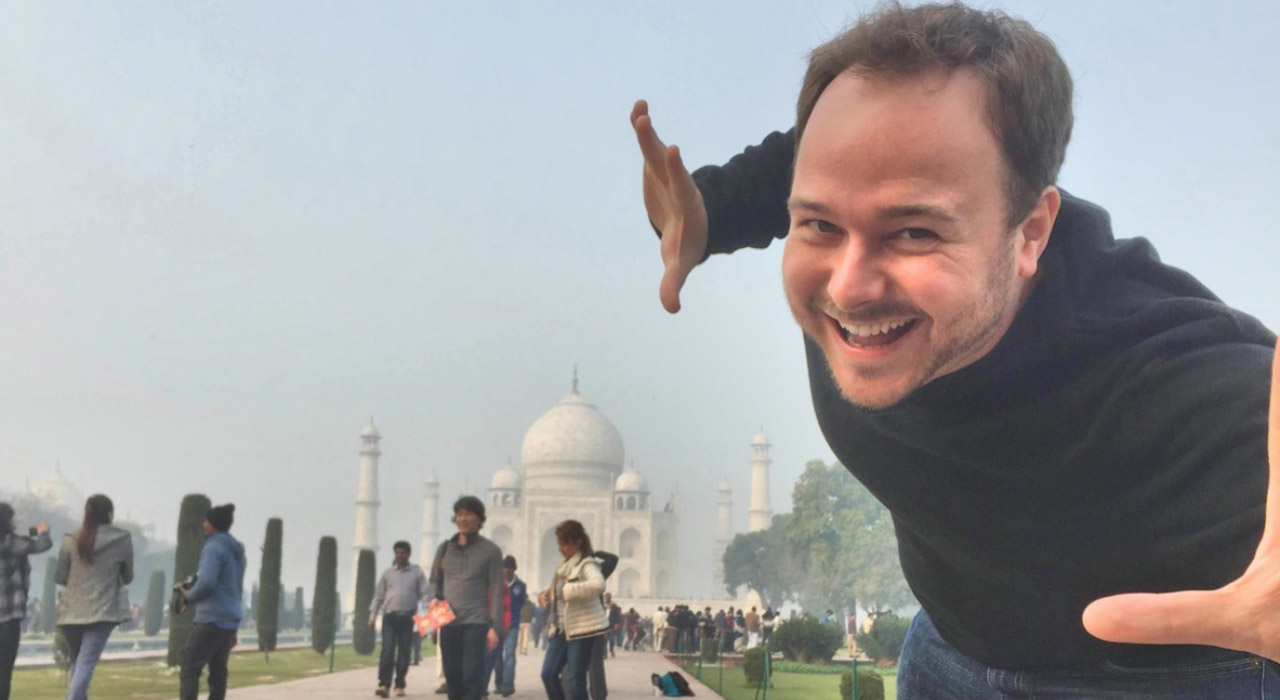
Seeing the Taj Mahal was one of the highlights of my trip.
My day trip there was also stressful. The transport and sales pressure I encountered in Agra felt very different from my time in Goa.
By the time I reached the gates, I had dealt with several misleading sales pitches and conflicting claims about what I needed to enter. This is my account of one visit, not a guide to present-day entry.
Here’s what happened on that day.
I left New Delhi at around 10 am. Based on the options I found at the time, I hired a driver for the seven-hour return journey. The ride became one of the most memorable parts of the day.
I got into the cab a little after 10 am. The driver was talkative and cheerful, and he showed me pictures of his children. Soon he began making repeated sales pitches. First, he asked, What are your plans for tomorrow? I said we were staying near our hotel in New Delhi. Have you been to Jaipur? No, we hadn’t. I’ll take you tomorrow, okay? No, thank you. He kept asking.
This goes on and on. He stops to pay a toll and asks me for the money, which would be fine, except he tells me a much higher price than the one I can clearly see on the sign in front of me. I give him the amount on the sign, and I ask him why he told me a different amount. He suddenly struggles to understand my English.
A while later, his English returns and he tells me I really need to go shopping while in Agra, since its “the best place in India” to shop, as the prices are so low – when in fact I know the exact opposite is true and that it's one of the most expensive cities to shop in. When we arrive in Agra, we ask to stop somewhere particular for lunch I found good reviews for; the cabby suggests we go somewhere else instead, somewhere “much better.”
I suspected that the driver would receive commission for bringing us to particular shops and restaurants, so I didn’t treat his recommendations as neutral. Near the end of the drive, he said fog would prevent our planned return to New Delhi and recommended a place to stay in Agra.
I declined and got out of the cab at the Taj Mahal. Based on the ticket information I had read, I used the included shuttle and declined offers for a guide or a paid shortcut through the queue.
I joined the line and kept my belongings with me. For current entry, security and storage rules, use the monument’s official visitor information.
The line doesn't take longer than a minute to get through.
Getting through all of this, it feels like climbing a mountain. It takes persistence, confidence, prior research and a lot of patience.
But then you get to see the Taj Mahal.
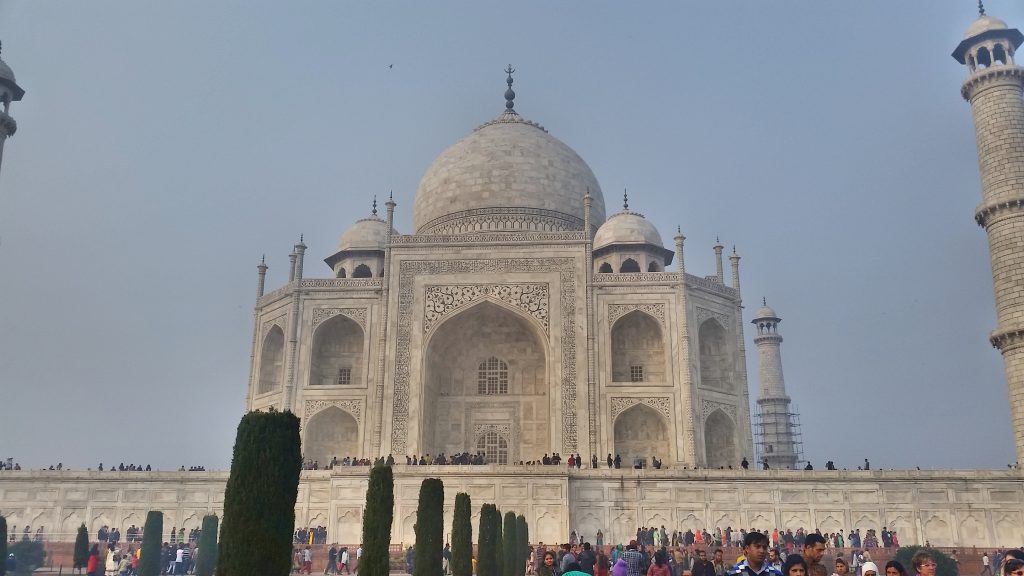
People from all over the world – and from all over India – come to stand in front of the Taj Mahal and to walk through its doors to see the tombs of the famous lovers.
In fact, the vast majority of the other tourists I saw here were Indians, come to visit the monument from other parts of the country.
The monument is massive, with a hazy fog surrounding it that gives it kind of a magical quality.
Inside the monument, the sales pitches stopped. The visitors around me were taking photographs and enjoying the site.
This gave me a chance to meet Indian visitors outside the commercial interactions that had dominated the journey. Some people were curious about us and asked for photographs together.
After I did my had-to-be-done poses in front of the Taj, someone came up and asked to take a photo with me. I didn't mind, so I went along with it, but before I knew it, I had a crowd of people, each one scrambling in saying “just one more moment!” and posing next to me.
People had asked to take photographs with me elsewhere in India, but I was surprised by how often it happened at such a famous international site. After a while, we said goodbye and continued towards the building.
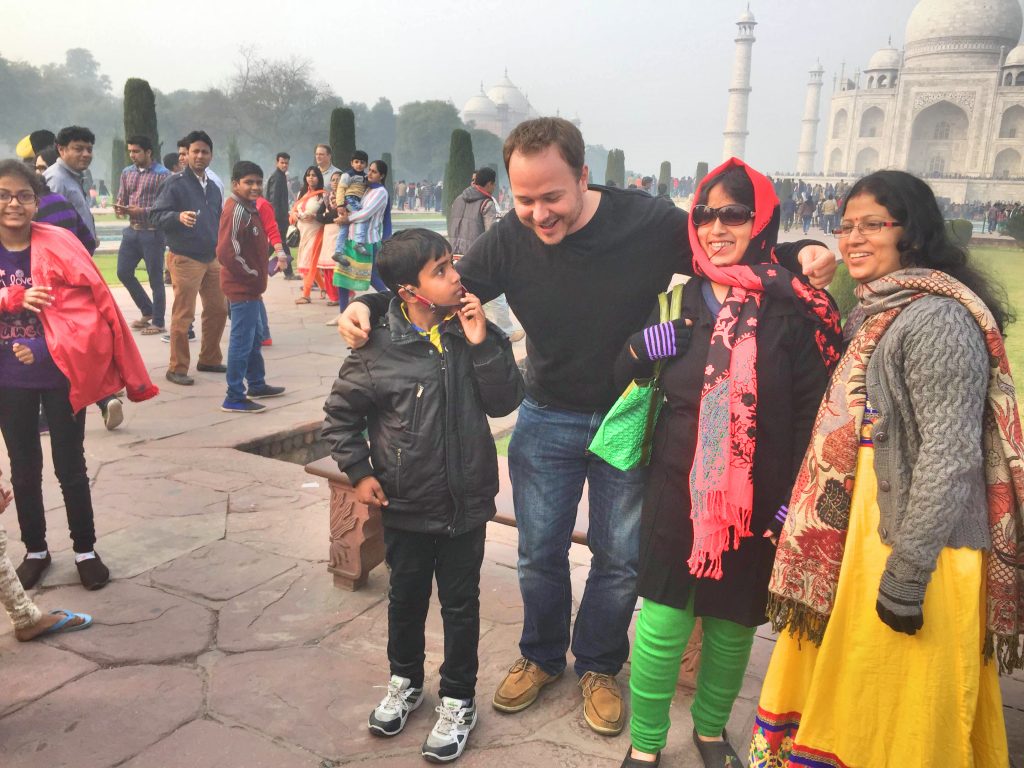
Outside the building, drivers and sellers were working for a living, although some pitches I heard were misleading. Inside, I met visitors enjoying their holidays and sharing their sense of humour.
And there were plenty of types of personalities. As well as those who boldly went up to us to ask if they could take a selfie with us, I noticed quite a lot of people who would be taking pictures and framing the camera for us to be in the shot! When we sat down at the building, one guy kept inching his way closer to us as inconspicuously as he could, so that his friend could get us in the corner of this shot.
I thought it was really charming, and made sure to give them the best shots I could! On someone's Facebook wall somewhere out there is a picture of a shy Indian guy sitting next to a girl I was with, with me on the other side pretending like I'm shocked and jealous, in as ridiculous a pose as I could muster up. He was extremely appreciative of the comic gesture!
Travel can bring both difficult and generous interactions. One stressful exchange should not stand in for a whole city or country.
It's important to remember the roles of those you meet. We all say we want to “get off the beaten path”, but I don't think that's the problem.
The Taj Mahal is firmly on the tourist route, and I still had a wonderful experience there. People enrich my travels, though a visitor also has to distinguish conversation from a sales pitch.
That's why I'm glad the opportunities came up for strangers to approach us and just chat. It meant that we left India very happy about our entire experience.

Social