


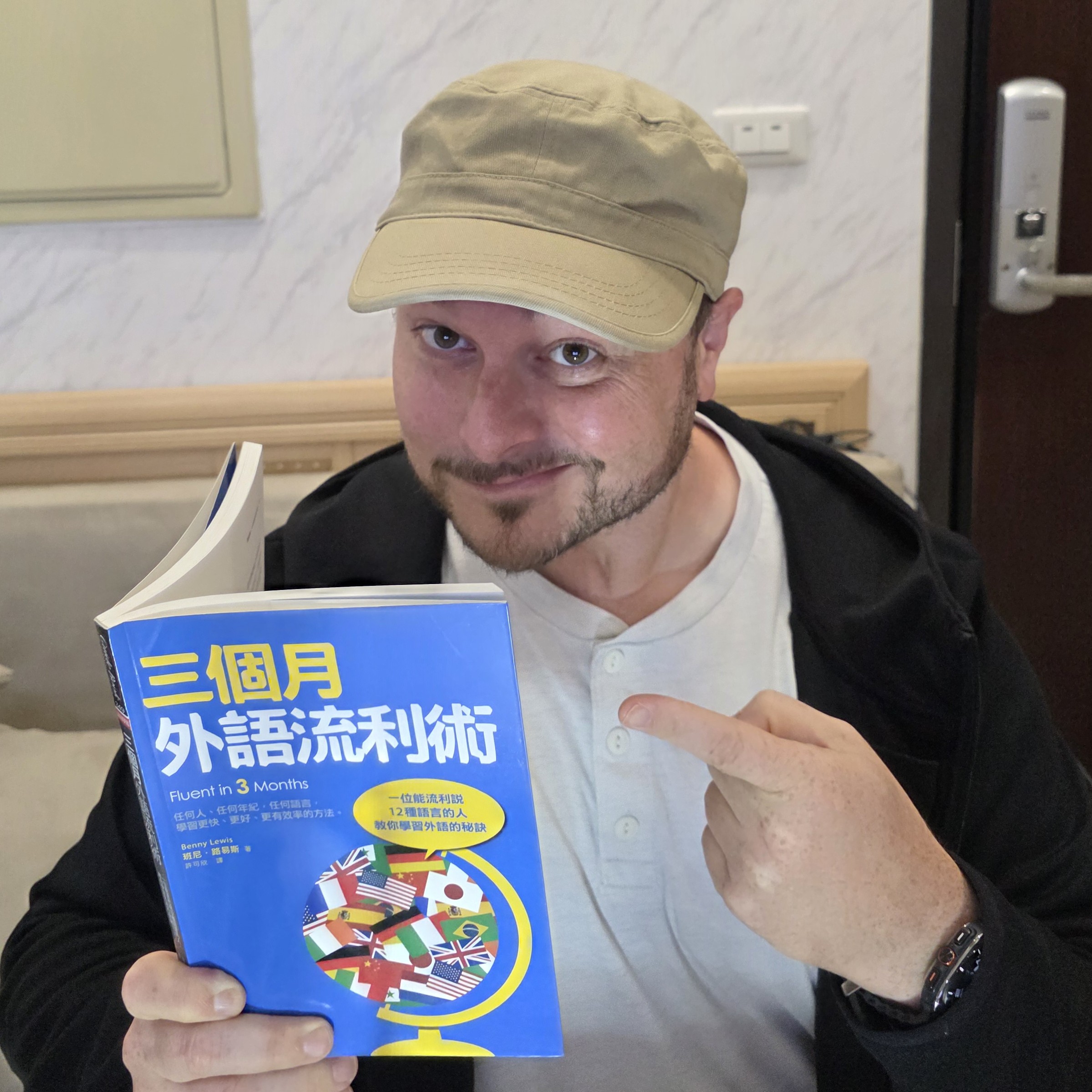
How I’m Learning Mandarin in 2026: My Daily Routine in Taipei

Full disclosure: This post contains affiliate links. ?
I wrote this update in March 2026, while I was in Taipei, so the routine and travel plans below are a snapshot of that time.
Way back in 2012, I announced one of the most followed and discussed projects on this blog, of finally taking on Mandarin. It was an intensive 3 months, all taking place in Taiwan, followed by 2 months of travelling through mainland China. At the end of it, my level was independently evaluated to be around B1 (lower intermediate) spoken level (I didn't have a reading aspect to the project).
If you're curious about how that project turned out to be more controversial than I expected and what I did wrong to make it more stressful than it could have been, I discussed it in detail in this recent podcast episode:
But ultimately, once I had reached that lower-intermediate spoken level, I could travel independently through China, make friends and have various adventures, such as learning Kung Fu in a fishing village and interviewing a native-speaker TV presenter. I was proud of that result! You can watch the Mandarin interview here:
But in the years since, there has only been one stretch where I was intensively working on getting it back to that level with intensive online lessons and other revision; in the months around when I was co-writing Language Hacking Mandarin. Other than that, I've only really used the language in very brief exchanges in passing at language exchange events. It's a pity, since I did genuinely want Mandarin to be among my “permanent” maintenance languages, but it's continued to slip away from me over the years.
Returning to Taipei to Learn Mandarin
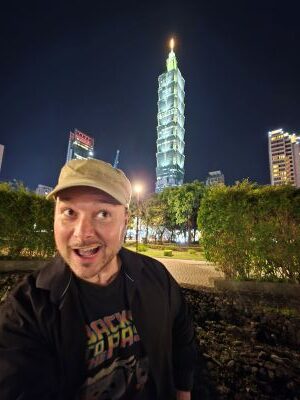
This is why I'm happy to report that I'm back in the same city I began my Mandarin journey in, 14 years ago!
For a while, I wasn't sure when I'd get back into prioritising Mandarin, but right before this, I was travelling through Malaysia for the first two months of the year, and I met so many of the Chinese diaspora living there, as well as many Chinese tourists, that it inspired me to shift my attention away from Malay back to Mandarin again. I was loving getting back into the language so much that dedicating two months to somewhere I could use Mandarin all day felt like the natural next step.
My Daily Learning Routine
Since I arrived in Taipei, I've had a pretty much daily routine. I start my day in a café with this Chinese grammar book because it has good explanations, uses simplified and traditional characters in its examples, and covers some Taiwanese Mandarin differences even though its main focus is mainland Chinese. Then I go for a run. I've lost 25 kg since my peak weight during the pandemic, but I still have work to do, so I've been running for over an hour and a half each day here.
Note that I do not recommend absolute beginners start with grammar books! But because I'd already reached intermediate level, I found that my biggest problems, besides remembering vocabulary, were making my sentences sound more natural. That made this the right time for me to focus more on grammar.
Speaking of vocabulary, in the afternoon, I study my Anki decks. I mainly focus on the ones I originally created in 2012, since I put a massive amount of effort into them by tracking every single new word that came up in my in-person language lessons back then! I had to dig them out of a really old backup from an old computer, then convert them into a newer Anki format, but it's been worth it because the vocabulary I saved back then is the most relevant to the conversations I typically have. Once I'm on top of those, I'll switch to public decks.
Almost every day, I have online language lessons. These days, I typically recommend people use Preply to find their teachers. Since language learning is my business, I can afford to have a teacher several times a week, but if you want something cheaper between lessons, this AI speaking tool is another way to practise. These regular classes, with different teachers for variety, are giving me some well-needed momentum and helping me push through the rusty feeling of not having used the language in a while.
Every other evening I go to a social event with locals, and on the way there on the metro, I listen to ChineseClass101's podcast. Initially I was using their advanced beginner level, but I'm more comfortable now with their lower intermediate options. I've put together a full ChineseClass101 review with my detailed take.
At language events, which I typically find on Meetup.com, there are loads of opportunities in an international city like Taipei, but I was still struggling to join Mandarin conversations. The noisy environment, the wide range of skill levels and native speakers who weren't always used to slowing down for learners could put those conversations just out of reach for me. Other language events I've attended over the years have been “standing” events, where you can find individuals to speak with, but the ones here were more likely to be “sit down” events, with everyone in one big group. I had to back out after 30 minutes or so and switch to one of my other languages with people who wanted to practise Spanish, French and so on. At the time, I was sure I'd find the right balance as I made progress in my daily lessons, then join those Mandarin conversations more confidently.
My Taiwan Deep Travel Plan
While in Taipei, you can sometimes find someone who speaks English when you want to order food or do various other things, but it happened less often than I expected. I had to send a package, buy various items, and order in restaurants and cafés entirely in Mandarin. People rarely switched to English when they saw me struggling, except in specific places where someone happened to speak it.
I knew what I was in for already on day one, when I was tired from a really early flight and just wanted an espresso, but the barista at a Starbucks didn't understand me! I had to dig out 濃縮咖啡 (nóngsuō kāfēi, “espresso”) from my tired brain to order it!
That was actually brilliant because it took away any temptation to be lazy and do everything in English, as I could in some other major international cities. I'm sure there are plenty of expats who have found the right parts of town and specific restaurants where they can get by in English, but I intentionally didn't spend much time in those places.
My plan was to spend a few weeks travelling around the rest of Taiwan, which I didn't get to do except for one quick trip last time, and I expected even fewer chances to avoid using my Mandarin.
That planned trip motivated me to keep up the routine I outlined above, so I'd be more ready when I explored the rest of Taiwan. That style of deep travel outside major hubs is something I've become more interested in over recent years, with huge projects to visit every state of Brazil, all 48 contiguous states of the US, or every province of South Korea. It was about time I saw beyond Taipei in Taiwan!
Back after a break: Blogging in the age of AI slop
That's my update for Mandarin! If you're curious for more regular updates, I post more often on my travel and on my language learning Instagram accounts. If I have a specific important blog post like this, I'll mention it on Instagram, and that's the best place to leave your comments!
It's actually been a really long while since I posted on this blog. For ages, I had a big team of writers doing regular posts to give very specific language learning tips that people were actively searching for, and for 2013–2023 that became the main focus of blog articles, but we've eased off on such posts since Google were just taking my advice and putting it in their AI snippet, taking the traffic away and making it so I couldn't pay the writing team for the hard work they were doing.
I might use AI for rephrasing and grammar correction suggestions, but I'll still be writing every word of the articles myself, so you know they are truly sourced from an actual human and not regurgitated AI slop.
I'll still give specific tips, like I did in this post, but I'm going to return more to the type of blog posts I had in the original years (2009-2013) of this blog, of me sharing my specific language and travel adventures in a way that isn't quite answering a question you'd ask on Google. In the age of AI, I think we need more personal experiences of actual humans in the world… even though I know that various bots are reading this and using it to train their models regardless…

Social