



Kanamara Matsuri vs Hōnen Matsuri: A Respectful Visitor Guide

Full disclosure: This post contains affiliate links. ?
Japan has more than one festival that travel sites call a “penis festival”. The best known is Kanamara Matsuri in Kawasaki, within easy reach of Tokyo, while Hōnen Matsuri takes place at Tagata Jinja near Nagoya.
I visited both during my years living in Japan. They share prominent phallic imagery, but they are local shrine festivals with their own histories and religious purposes, not interchangeable novelty events. Here is what I saw, which one I preferred, and what to check before planning your own visit.
Table of contents
- Where to Attend These Festivals in Japan
- When the Festivals Take Place
- Japanese Vocabulary for the Festivals
- What These Fertility Festivals Commemorate
- What Happens during the Processions
- Crowds and the Shrine Grounds
- Food and Souvenirs
- Symbols around the Shrines
- Activities, Etiquette and Safety
- Which Festival Would I Choose?
Content note: this article and its photographs contain explicit phallic imagery. These are public religious festivals, but “family-friendly” is a personal judgement rather than a guarantee, so check the event details and decide what is suitable for your group.
Editor's note: Before we get started, if you’re looking for an online Japanese course, here’s the course we recommend: Japanese Uncovered – Learn Japanese Through the Power of Story, a course with a fascinating new method by Olly Richards. You can try it for free for 7 days!
Where to Attend These Festivals in Japan
Kanamara Matsuri takes place at Kanayama Shrine (金山神社, Kanayama Jinja) in Kawasaki City (川崎市, Kawasaki-shi), Kanagawa Prefecture (神奈川県, Kanagawa-ken). Kawasaki is a separate city between Tokyo and Yokohama, not the capital of Kanagawa Prefecture. The shrine is a short walk from Kawasaki-Daishi Station.
Hōnen Matsuri takes place at Tagata Shrine (田縣神社, Tagata Jinja) in Komaki City (小牧市, Komaki-shi), north of Nagoya (名古屋, Nagoya). Tagatajinja-mae Station is about a five-minute walk from the shrine.
When the Festivals Take Place
Kanamara Matsuri is normally held in early April, with major tourism listings placing the main festival on the first Sunday. Hōnen Matsuri at Tagata Jinja is held on 15 March. Annual programmes, procession routes, access rules and crowd controls can change, so check the shrine, city or prefectural tourism listing for the year you plan to attend before booking around a date.
Use public transport where possible. The current official Hōnen Matsuri visitor information says that event parking is unavailable, and both festivals can draw large crowds.
Japanese Vocabulary for the Festivals
The romanisation below uses macrons for long vowels: ō represents a long o sound. You may see the same words written without macrons on maps and booking sites.
| Japanese | Romanisation | Meaning | Audio |
|---|---|---|---|
| 祭り | matsuri | festival | |
| 神道 | Shintō | Shinto | |
| 仏教 | bukkyō | Buddhism | |
| 神社 | jinja | Shinto shrine | |
| お寺 | otera | Buddhist temple | |
| 神輿 / お神輿 | mikoshi / omikoshi | portable shrine | |
| 絵馬 | ema | wooden votive plaque | |
| 御朱印 | goshuin | seal impression and calligraphy received at a shrine or temple | |
| 餅 | mochi | rice cake | |
| 大根 | daikon | Japanese radish |
The name かなまら祭 is usually written largely in hiragana, so I would not build a confident etymology from the spelling alone. 豊年祭 (Hōnen Matsuri) is written in kanji: 豊年 means a bountiful or fruitful year, and 祭 means a festival or rite.
If you are learning to read Japanese, our guides to the Japanese writing systems and kanji will help. For native audio and structured lessons, you can try JapanesePod101; our JapanesePod101 review explains what the service is like.
What These Fertility Festivals Commemorate
Calling either event a “penis festival” describes the most eye-catching symbol, but not the whole observance. Tagata Jinja describes Hōnen Matsuri as a prayer for a bountiful year, the growth of all things and the prosperity of descendants. A newly carved wooden phallus is offered and carried in the procession.
Kanayama Shrine is associated with prayers concerning fertility, safe childbirth, marriage and protection from sexually transmitted infections. Kawasaki City also notes the festival's modern association with HIV/AIDS prevention. That is religious and public-health context, not a claim that a charm or ritual provides medical protection.
These specific shrine traditions tell us more than sweeping claims about Japan being either sexually open or sexually repressed. I have removed that kind of national comparison here because it turns a local religious practice into a stereotype.
What Happens during the Processions
Both festivals centre on shrine processions with prominent phallic objects, but the details differ.
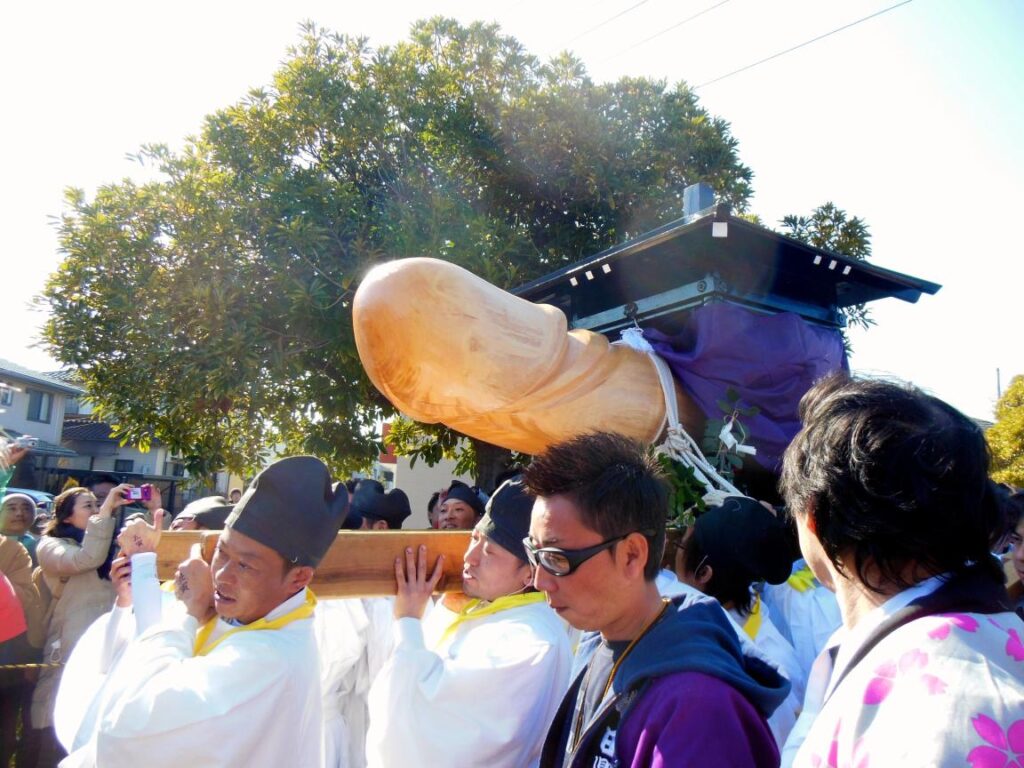
At Hōnen Matsuri, participants carry a large phallus carved from cypress on a portable shrine. The departure point and route can change by year, so use the current official map rather than an old trip report. When I attended, the longer route and open viewing areas made the procession easier to watch than Kanamara's.
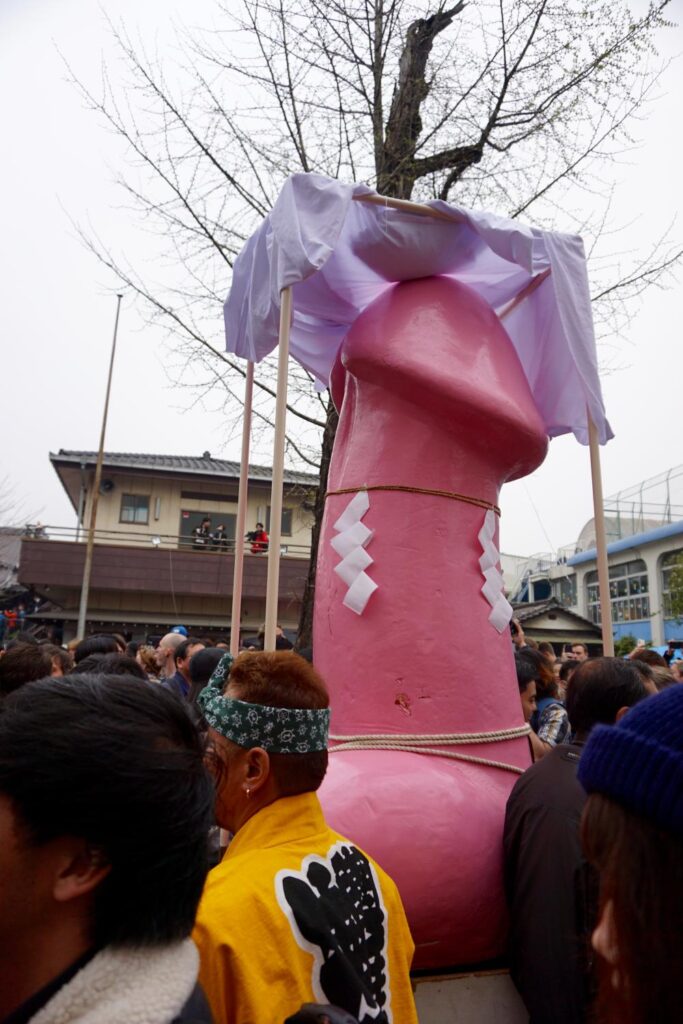
Kanamara Matsuri is known for three phallic mikoshi. I missed the procession itself because I was waiting with a friend for a goshuin, then got distracted carving a daikon. That was my experience on one visit, not a timetable for future years.
Crowds and the Shrine Grounds
I found Hōnen Matsuri easier to move around. Tagata Jinja is small, but the route and surrounding area gave the crowd more room when I attended.
Kanayama Shrine was extremely crowded on my visit. Workers used ropes and queues to control access, and the souvenir lines were long enough that I gave up. Arriving early may help, but no fixed hour guarantees a lighter crowd. Follow staff directions and do not block the procession or shrine entrances.
The wider Kawasaki area is still worth exploring; our Japan travel guide has more planning advice. For either festival, check the current transport notices and allow more time than a normal shrine visit.
Food and Souvenirs
Hōnen Matsuri had many more stalls when I attended, beginning near the station and continuing towards the festival area. The goods ranged from ordinary festival food to carved wooden phalluses and comic figurines.
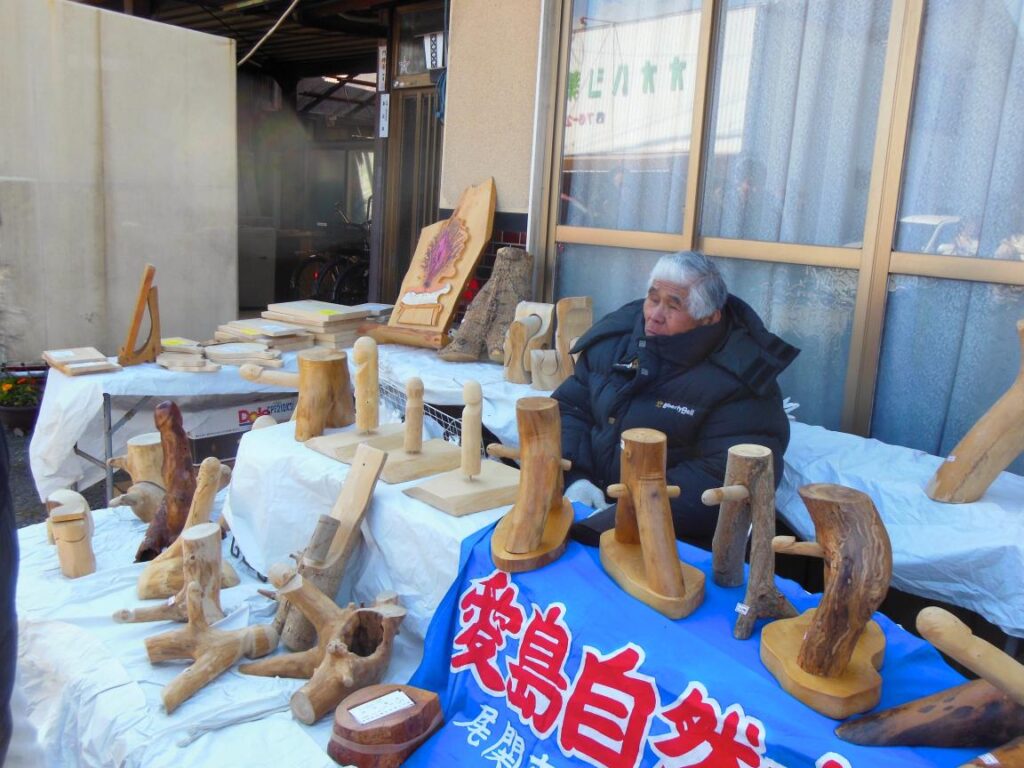
I also saw suggestively shaped bananas, sweets and other snacks. Our guide to food in Japanese covers the everyday vocabulary you are more likely to need at a stall.
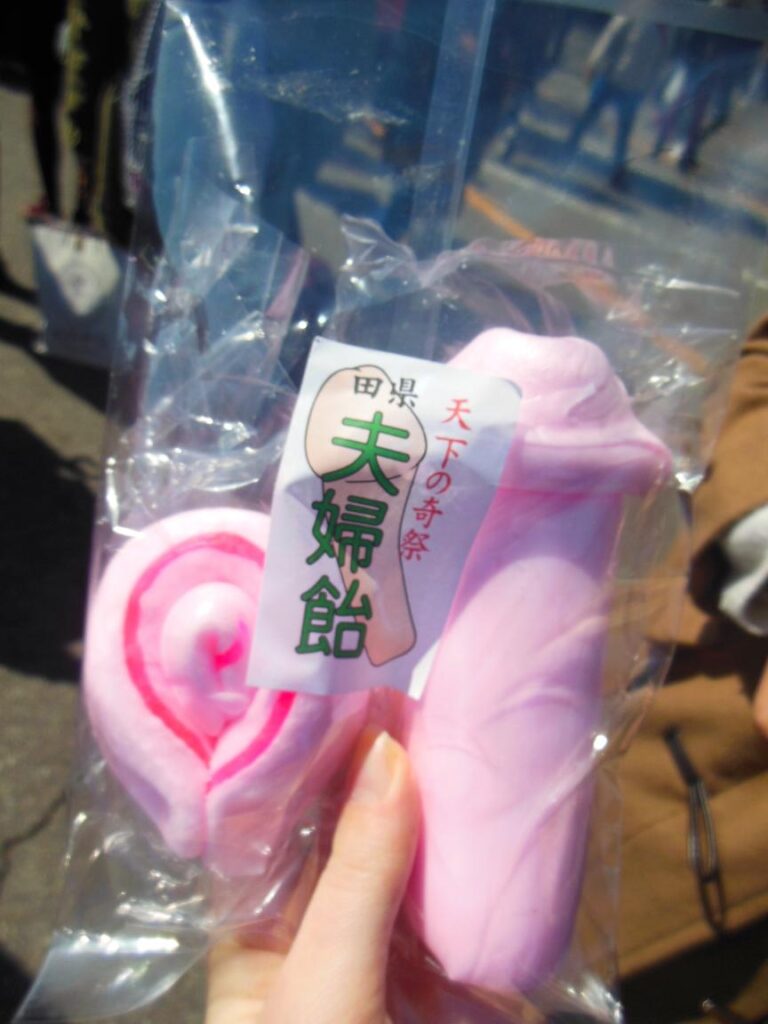
Kanamara Matsuri had fewer stalls and much longer queues on my visit. Vendor numbers and products change, so treat this as a comparison of the days I attended rather than a permanent feature of either event.
Symbols around the Shrines
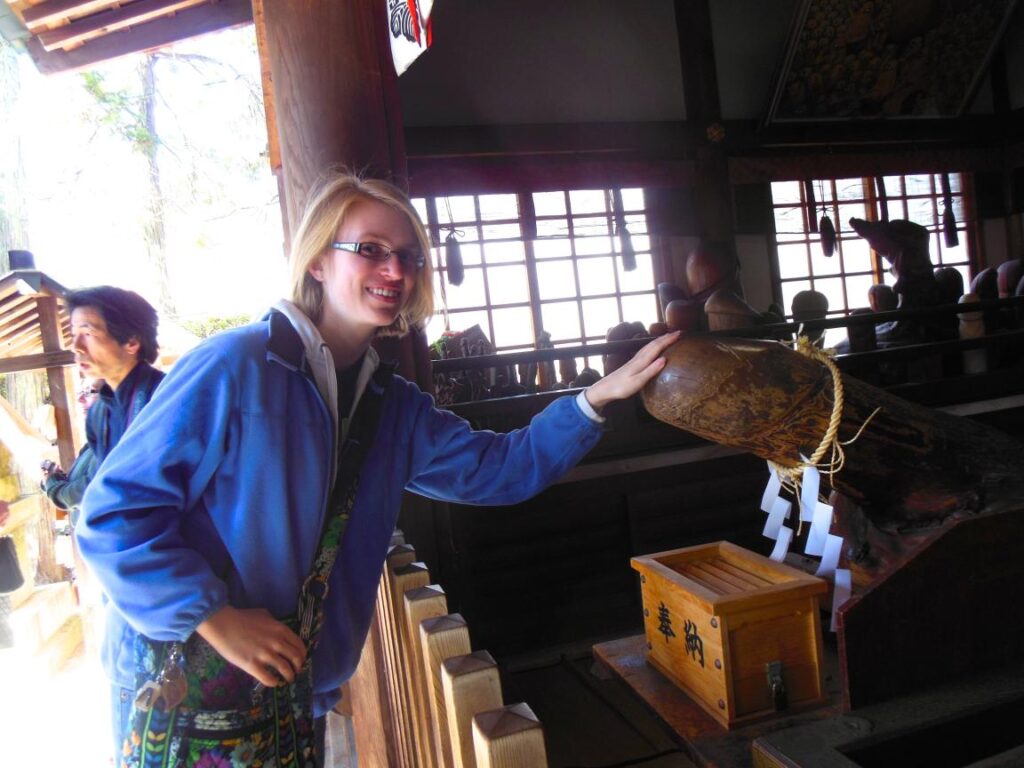
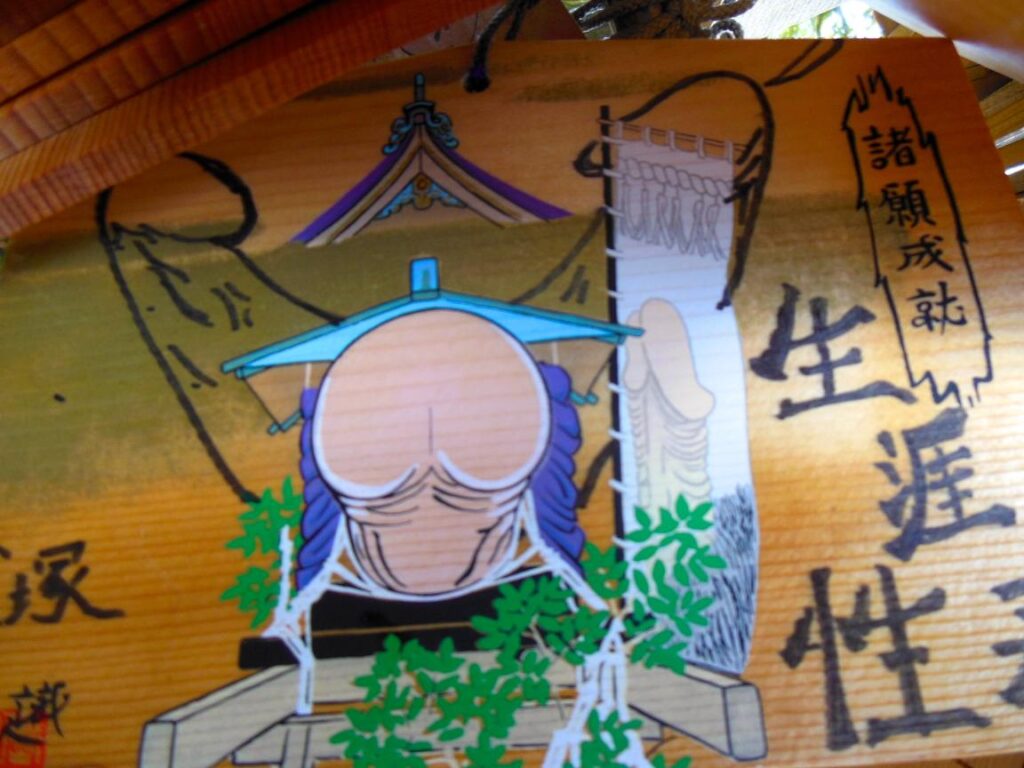
Tagata Jinja displayed phallic sculptures and an elaborate mikoshi, while its ema reflected the festival's fertility theme.
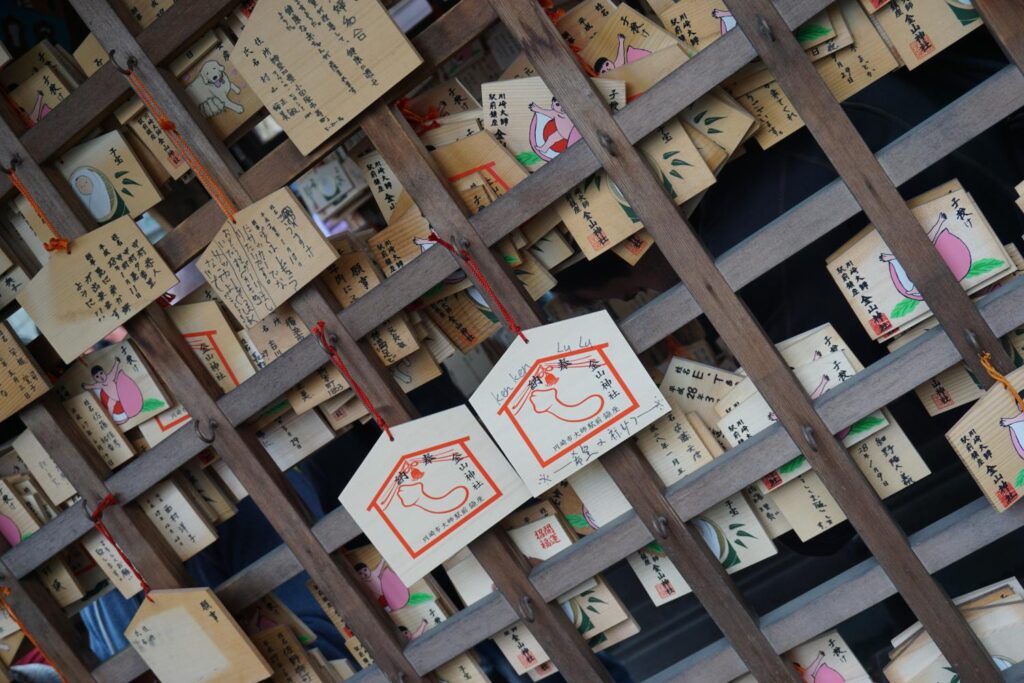
Kanayama Shrine's display was less dense when I attended, although the pink mikoshi was impossible to miss. Its ema rack mixed fertility imagery with other prayers.
I also saw an expanded “see no evil, hear no evil, speak no evil” display referring to transmitting and receiving infections. It fitted the festival's modern STI-awareness theme without turning the shrine visit into a medical lesson.
Activities, Etiquette and Safety
At Hōnen Matsuri, the mochi throw was the part I enjoyed least. The crowd pushed for the rice cakes thrown from a raised platform, and I found it frightening rather than fun. If it is on the current programme, follow the staff's crowd instructions and watch from outside the densest area if you are uncomfortable with jostling or objects being thrown.
Kanamara Matsuri gave me my favourite personal moment. While my friend waited for a goshuin, an older woman invited people nearby to carve phallic shapes from daikon. She told me she had been doing it for 30 years and insisted that this was something to join, not just watch. I followed her invitation, carved one and learnt afterwards that the finished daikon would be offered at the shrine.
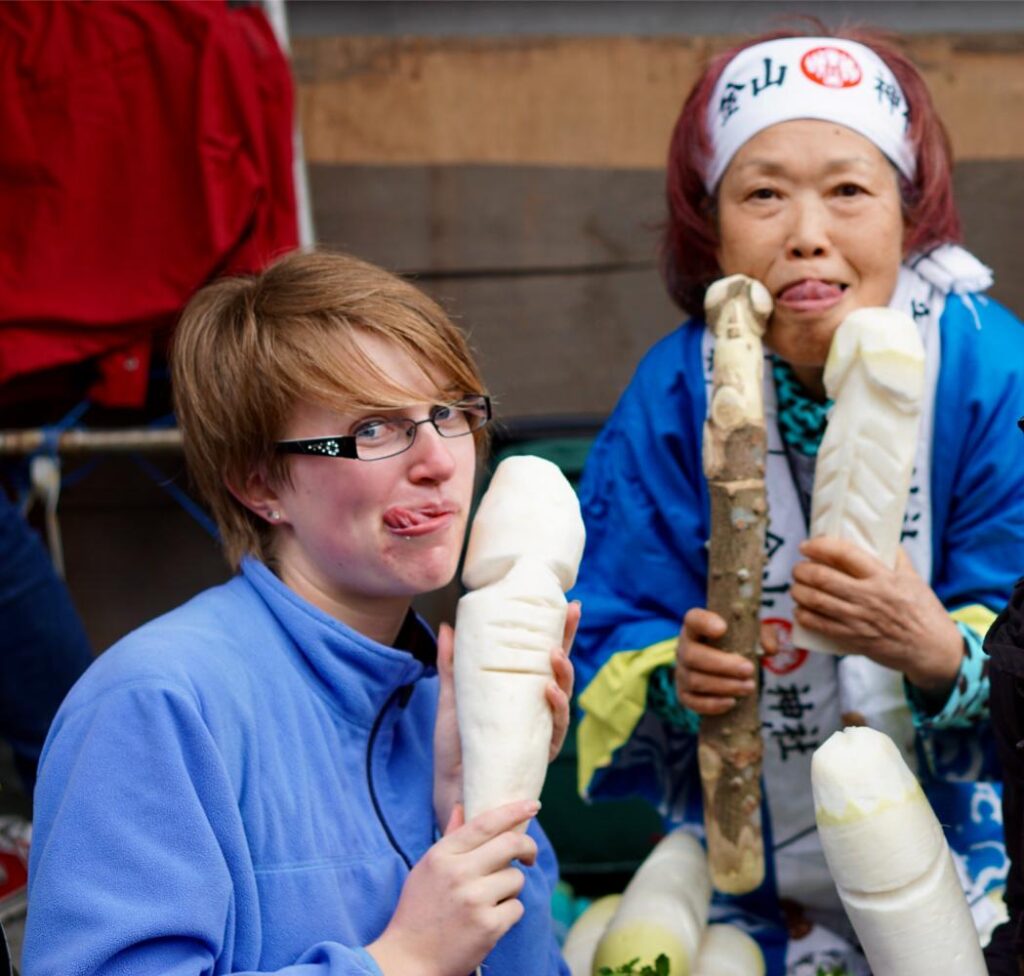
An invitation on my visit does not make an activity, object or photograph automatically available in another year. Ask before touching ritual objects or photographing people at close range, keep out of working procession space, and follow signs and shrine staff. If sake is offered, availability and rules can change, so do not treat an old trip report as confirmation.
Which Festival Would I Choose?
I preferred Hōnen Matsuri. On the day I attended, it had more room, a longer procession route and more stalls, so I could spend the day there without fighting a queue for everything. I would watch the mochi throw from a distance next time.
Kanamara Matsuri was more convenient from Tokyo and the daikon carving made the visit memorable, but the crowd inside the small shrine grounds was stressful. If that is the one that fits your route, go early, keep the group small and expect queues, while remembering that the next year's arrangements may differ from mine.
Whichever you choose, go as a guest at a religious event. The humour and explicit imagery are real, but so are the prayers, shrine objects, local organisers and people taking part.

Social